
Remembering World War II's Battle of Monte Cassino
How the Allies Broke Germany's Gustav Line From January to May 1944
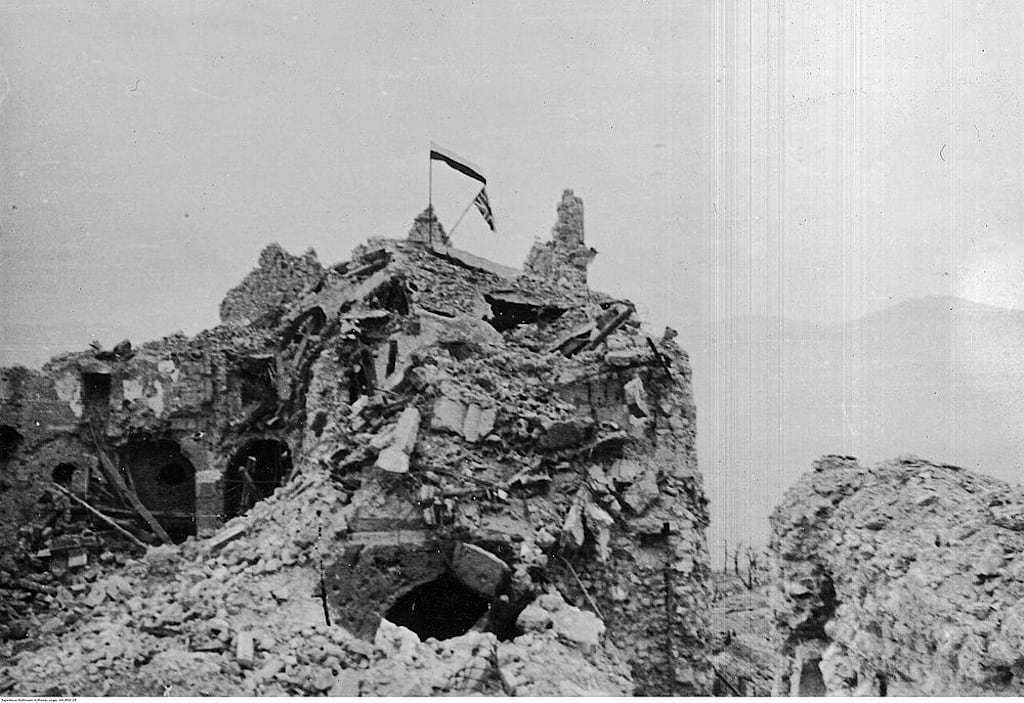
The Battle of Monte Cassino was the largest battle of the Italian Campaign, which lasted for many months. The battle took place along the Gustav Line (along the Liri Valley), which had been established in 1943. It would take months for the Allies to penetrate that line.
December 1943 to January 1944
Allied troops advanced towards the Gustav Line in December 1943. Early advances ensured that Monte Cassino was surrounded to the north, west, and south. It would not be until January 17, 1944, that the first Allied wave of attacks at Monte Cassino began.
To hold the line, Germany sent reinforcements to Monte Cassino. With these re-enforcements the first wave of Allied strikes at Monte Cassino failed to penetrate the Gustav Line. By the end of January, the battle was far from won.
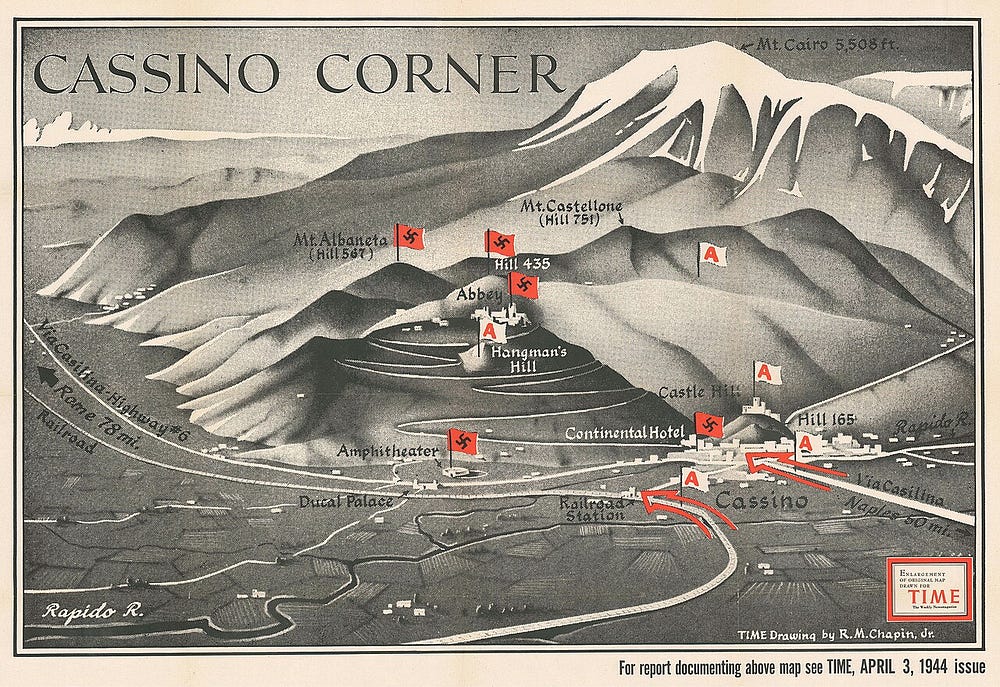
February 15
The failure of the first battles at Monte Cassino convinced the Allies that the Germans had established a stronghold at the monastery on the peak of Monte Cassino. The Allies bombed the monastery with B-17 Flying Fortresses, effectively reducing the monastery to rubble. The Germans had not fortified the abbey with troops. Further Allied advances in February were also ineffective.
March 15
The third phase of the Battle of Monte Cassino would begin on March 15. For this, the Allies had planned preliminary bombing campaigns, which it was hoped would pave the way for further Allied advances along the Rapido Valley. The loss of Allied tanks during further advances undermined the Allies. The Germans held the line by the end of March as the Allies were halted on the 22nd.
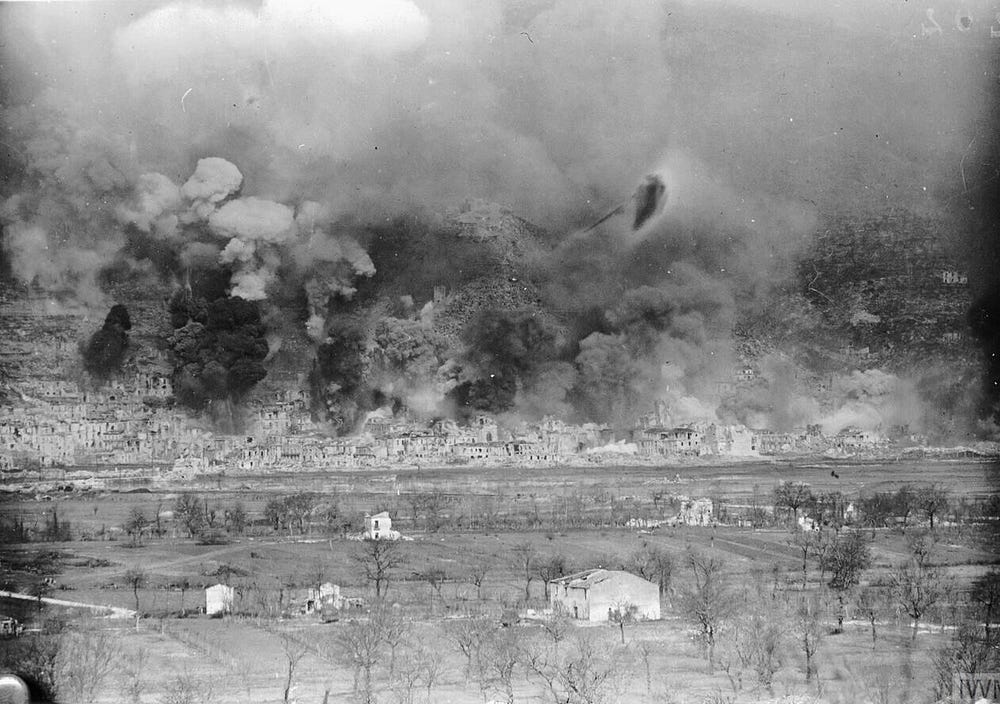
May 11
After March, the Allies began to draft new plans for the battle. Operation Diadem became the new plan, which included troops from the Polish and French divisions in a flanking maneuver around the monastery. This began on May 11, and by May 13, the French had opened up a direct route to Rome. On May 17, German soldiers began to retreat from Monte Cassino, and Polish troops occupied the ruins of the monastery on the 18th. Then, the Polish flag was raised, and the Battle of Monte Cassino was all but over.
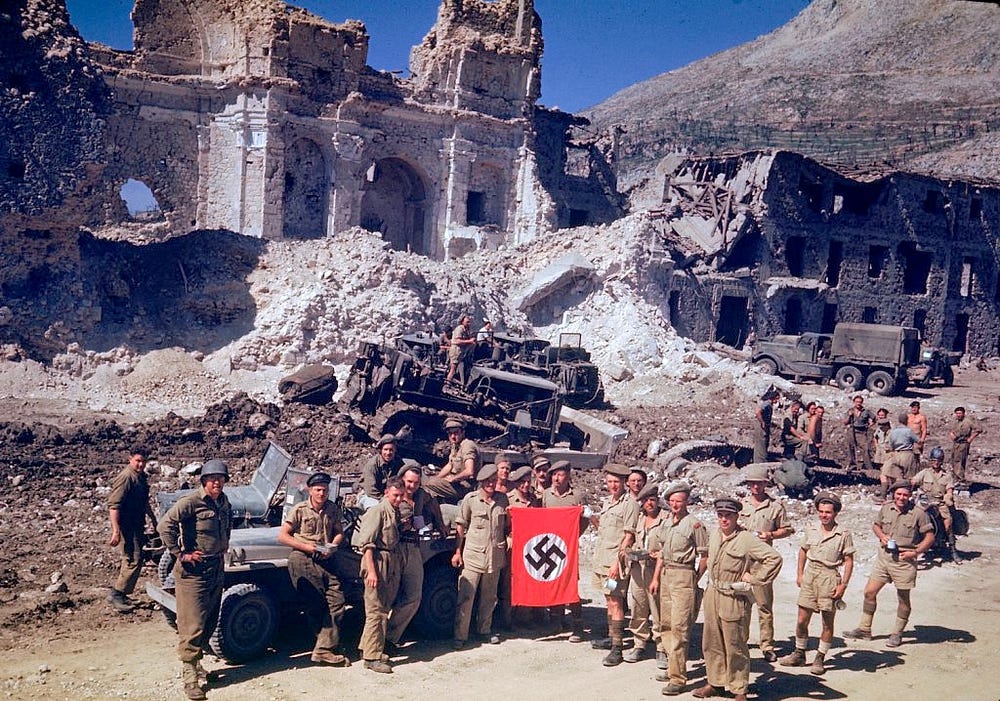
As the Allies broke out from Anzio, they advanced towards Rome. Rome was then occupied by the Allies, while German troops retreated north. The Italian Campaign would continue into 1945 when the remaining German armies in Italy surrendered.
Why is the Battle of Monte Cassino Significant Today?
Although a triumph for the Allies, the Battle of Monte Cassino was a more costly victory than they had hoped. The Allies got caught in a battle of attrition against the Germans. Today, prominent Commonwealth and Polish memorials in Monte Cassino remember this battle.
The iconic Cassino Abbey, destroyed during the battle, has since been rebuilt. Today, it is an important attraction representing a strong symbol of rebirth where tourists and pilgrims flock. The destruction of Monte Cassino Abbey, followed by its immaculate post-war rebuilding, embodies the spirit of rising from the ashes.
Visitors also flock to the Battle of Monte Cassino museums in and around the original location. The Historiale di Cassino is a multimedia museum devoted to the 1944 battle that incorporates cinema, visual arts, and other special effects. Tourists can also see numerous artifacts from the Monte Cassino battle on display at the War Exposition - Gustav Line museum.
The Battle of Monte Cassino has a complicated legacy today. The battle was almost a pyrrhic victory for the Allies in a World War II campaign, and some historians have questioned whether it was worth it. Today, many tourists explore the legacy of this battle in Cassino every year.
This article of mine was originally submitted to Medium, where you can read it here.
Read more of my World War II articles on Vocal:
Remembering the Events That Led to the Darwin Raid in February 1942
A Timeline of the Yamato Battleship from Construction to Sinking
From Pearl Harbor to V-J Day: A Brief History of the Pacific War
The Hidden Pivot: How the Mediterranean Theater Shaped World War II
Remembering the Great Allied Carrier-Based Aircraft of the 1940s
About the Creator
Matthew A
Matthew is the author of Battles of the Pacific War 1941-1945. Battles of the Pacific War is available on Amazon and Lulu in e-book and paperback formats. Check out the book’s blog at battlesofthepacificwar.blogspot.co.uk.
Enjoyed the story? Support the Creator.
Subscribe for free to receive all their stories in your feed.
Comments
There are no comments for this story
Be the first to respond and start the conversation.