Humanity
Humanity
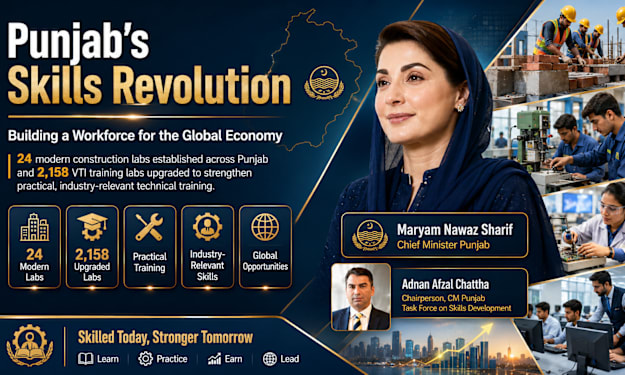
Punjab Skills Revolution Could Change the Future of Work
Across the world, economic competition is no longer defined only by roads, factories, technology parks, or investment figures. Increasingly, the real measure of a region’s future strength lies in the quality of its people: how well they are trained, how quickly they can adapt, and whether their skills match the demands of a changing labour market.
By Muddasar Rasheed5 months ago in FYI
Smoke in Cabin American Eagle Incident Shook Nervous Flyers
Air travel depends heavily on trust. Passengers board airplanes believing the crew is trained, the aircraft is safe, and every system has been checked carefully before takeoff. Most flights end quietly without problems. But when unusual incidents happen inside an aircraft cabin, fear spreads quickly.
By Muqadas khan5 months ago in FYI
The Fall of Movie Theaters
For decades, going to the movie theater was one of the most popular forms of entertainment in the world. Families planned weekend trips around new releases, teenagers met friends at the cinema on Friday nights, and blockbuster premieres felt like cultural events. But today, movie theaters are struggling to fill seats the way they once did. While theaters still attract crowds for major films, overall attendance has dropped significantly compared to past decades. The question is simple: why are fewer people going to the movies?
By AnthonyBTV6 months ago in FYI
How Looking Rich Now, Can Make You Broke Later
In a world driven by social media, flashy lifestyles, and instant gratification, luxury has become less of a reward and more of a performance. Young people today are constantly exposed to influencers driving exotic cars, wearing designer brands, and vacationing in places most people only dream of. The pressure to “look successful” before actually becoming successful has never been stronger. But chasing luxury too early in life can quietly destroy your future financial stability, personal growth, and long-term opportunities.
By AnthonyBTV6 months ago in FYI
Institutions Fear Inference More Than Lies
Institutions are often willing to tolerate isolated falsehoods, minor inaccuracies, selective framing, and even outright contradictions. A single lie can be corrected, buried, explained away, or isolated from the larger structure. What institutions consistently resist is not merely factual disagreement. They resist inference. They resist the moment when separate observations are connected into a pattern, and the pattern begins to imply responsibility.
By Peter Thwing - Host of the FST Podcast6 months ago in FYI
Backlash 2026 and the Noise Shaping Public Opinion
There are moments when public conversation feels louder than the event that started it. A small incident appears online, and within hours it becomes something much larger, shaped by emotion, interpretation, and disagreement. This pattern is often described as “backlash 2026.” Backlash 2026 is not a single situation or story. It is a way of understanding how quickly reactions form and spread in today’s connected world. People no longer wait for full information before responding. Instead, opinions form in real time, often shaped by fragments, headlines, or short clips. The result is a rising wave of public tension that can feel overwhelming. Backlash 2026 reflects more than disagreement. It shows how emotions travel through digital spaces and how quickly perception can shift before facts are fully understood.
By Muqadas khan6 months ago in FYI
Anna Jarvis: The Woman Who Had The Idea For Mother's Day And Later Wanted It Rescinded
Millions of people celebrate the second Sunday in May every year. However, very few of them know the origin of Mother's Day. Perhaps they would appreciate the day more if they knew how it came to be and the tragic story of the woman who single-handedly worked just as hard to get it abolished.
By Margaret Minnicks6 months ago in FYI
Every Alternative Is an Admission
The Current System Should Not Be Treated as the Neutral Baseline The current redistricting system is often treated as the normal starting point, while every alternative is treated as an experiment that must justify itself. That framing is backwards. The current system is already an experiment in political assignment. It already decides which voters belong together before they vote. It already gives enormous power to whoever controls the boundaries. It already allows voters to be packed, cracked, attached, diluted, concentrated, divided, or rearranged while still maintaining the appearance of legal process. The familiar system should not receive moral credit merely because people are used to it.
By Peter Thwing - Host of the FST Podcast6 months ago in FYI
Why This Conversation Has to Happen Now
This Is Not an Abstract Exercise Brainstorming alternatives to redistricting can sound theoretical until the country enters a moment when the map itself becomes one of the main weapons of national power. At that point, the question stops being academic. It becomes immediate. If congressional control can be altered not mainly by persuading voters, but by changing the containers those voters are placed into, then redistricting is not a procedural side issue. It is one of the most consequential political powers in the country.
By Peter Thwing - Host of the FST Podcast6 months ago in FYI