tech
Curious tech and technology from the realm of science and science fiction.
US Signals Willingness for AI Safety Talks With China Citing Lead in Model Development
Read Time 6 minutes Tags AI Geopolitics US China AI Safety Export Controls Nvidia Anthropic US Treasury Secretary Scott Bessent told CNBC on May 14 2026 that Washington can hold discussions with Beijing on artificial intelligence because we are in the lead Bessent spoke from Beijing during President Donald Trump two day meeting with Chinese President Xi Jinping and said the two countries would establish a protocol for AI safety adding that they were having a wholesome dialogue because the US remains ahead in the race to develop frontier models The statement marks a shift toward formal US China engagement on AI risk at a time when both countries are racing to scale large language models and deploy autonomous agents The protocol is framed around best practices to ensure non state actors do not get a hold of these models What was announced at the Trump Xi meeting One AI safety protocol framework Bessent said the two AI superpowers are gonna start talking We re gonna set up a protocol in terms of how do we go forward with best practices for AI to make sure non state actors don t get a hold of these models The scope was not detailed but the language mirrors prior discussions on model security access controls and red teaming standards for frontier systems The reason we are able to have wholesome discussions with the Chinese on AI is because we are in the lead he added I do not think we would be having the same discussions if they were this far ahead of us This framing positions US export controls and model lead as leverage for negotiating safety norms Two Chip export policy remains fluid Bessent was asked about a Reuters report that Washington had cleared sales of Nvidia H200 AI chips to several major Chinese technology firms He said there had been a lot of back and forth on the matter Nvidia CEO Jensen Huang joined Trump delegation to China as a late addition signaling that chip supply remains a live negotiation point US policy has restricted sales of advanced semiconductors to China since 2022 with periodic adjustments based on diplomatic and commercial calculations Three Taiwan and broader security context Beijing readout said Xi emphasized that Taiwan is the most important issue for bilateral relations and warned against mishandling the issue Bessent told CNBC that Trump would say more on Taiwan in the coming days The AI talks are happening alongside unresolved trade and security disputes which means any protocol will likely be narrow and technical rather than comprehensive Context on US China AI competition One US lead in frontier models Bessent claim of lead reflects current benchmark results where US labs OpenAI Google DeepMind Anthropic maintain advantage on general capability and reasoning Anthropic recent Mythos AI model has alarmed Washington due to reported cyberattack capabilities and the company decision to release it only to select business partners The US lead is not permanent and depends on access to advanced chips talent and compute infrastructure Two China response and domestic push China has prioritized domestic chip development and model training to reduce dependence on US technology Firms like Baidu Alibaba DeepSeek and ByteDance have released models with improving performance The gap is narrowing in some areas but US restrictions on high end GPUs continue to constrain training at the frontier scale Three Multilateral AI governance efforts The bilateral protocol fits into a broader pattern of states seeking norms for AI safety without slowing deployment The UK AI Safety Summit 2023 and UN AI advisory body work have pushed for risk based frameworks but enforcement remains limited A US China protocol could set a floor for model security and information sharing but will face skepticism given strategic rivalry Implications for industry and policy One Near term impact on model releases Bessent said he anticipates a big step function jump in upcoming large language model releases from Google Gemini and OpenAI If true this would widen the capability gap and strengthen US negotiating position It also raises stakes for safety testing and responsible deployment practices Two Corporate exposure Nvidia and other chip firms remain exposed to policy shifts Any clearance for H200 sales to China would be significant for revenue but politically sensitive The presence of Jensen Huang in Beijing signals that industry is seeking clarity on what is permissible Three Risk of leakage and misuse The stated goal of the protocol is to prevent non state actors from accessing advanced models This points to shared concern about model weights leaking and being used for cyberattacks or bioweapon assistance Both sides have an interest in avoiding catastrophic misuse even if they compete on commercial deployment What to watch next One Concrete measures The protocol needs to specify what counts as best practice Is it secure model storage mandatory red teaming watermarking for synthetic content or restrictions on fine tuning The absence of detail means the announcement is a starting point not a binding agreement Two Verification and trust Any agreement requires a way to verify compliance US and China have limited trust on technology issues so monitoring will be a sticking point One likely path is third party audits and information sharing on incidents rather than direct inspection Three Link to export controls If the US sees the protocol as working it may keep current chip restrictions in place If talks stall restrictions could tighten The connection between safety dialogue and trade policy makes this a high stakes negotiation For companies building frontier models the message is that safety is becoming a diplomatic issue not just a product feature For governments the test is whether a narrow technical agreement can survive wider strategic friction Do you think a US China AI safety protocol can work without addressing export controls on advanced chips Share your view in the comments
By Behind the Tech6 months ago in Futurism
How SaaS Is Helping Businesses Scale Faster in 2026 and Beyond
Software-as-a-Service (SaaS) continues to transform how businesses operate in 2026. Companies across industries are replacing outdated systems with scalable cloud-based platforms that improve efficiency, flexibility and collaboration. Instead of investing heavily in on-premise infrastructure, businesses are adopting SaaS solutions that allow teams to work faster, automate workflows and access data from anywhere.
By Dan Woodland6 months ago in Futurism
NASA's next-generation Mars helicopter blades smash through the sound barrier.
It has long seemed nearly impossible to fly on Mars because, in many respects, it is. Aircraft find it difficult to stay in the air due to the planet's extremely thin atmosphere. Spinning blades that are already working close to their limitations must have every bit of lift extracted from them.
By Francis Dami6 months ago in Futurism
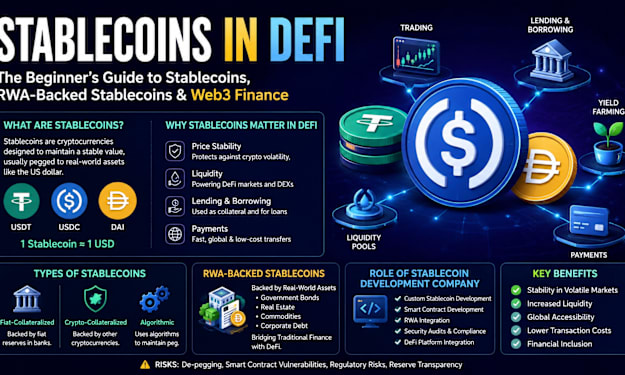
Stablecoins in DeFi Explained: Beginner’s Guide to RWA-Backed Stablecoins
Stablecoins are one of the most important building blocks in the cryptocurrency world, especially in DeFi (Decentralized Finance). If you are new to crypto, understanding stablecoins is essential because they act as the “stable money” that powers trading, lending, and payments in blockchain ecosystems.
By Ritu Singh6 months ago in Futurism
OpenEvidence Reaches 65 Percent of US Doctors as AI Quietly Reshapes Clinical Decision Making
Read Time 6 minutes Tags AI Healthcare OpenEvidence Clinical Decision Support Medical AI HIPAA Your doctor is probably using AI even if they have not told you about it Over the past two years medical providers across America have quietly embraced a new AI tool called OpenEvidence to help them make clinical decisions brush up on medical knowledge and even prepare for their licensing exams The service a sort of chatbot for doctors was used by about 65 percent of US doctors across almost 27 million clinical encounters in April alone the company told NBC News Everyone is using it said Dr Anupam Jena an internal medicine physician at Massachusetts General Hospital in Boston and a professor of healthcare policy at Harvard Its growth really has been exponential How OpenEvidence works and why it spread fast One Point of care search engine At its core OpenEvidence is an AI powered medical search engine that combs through vast databases of healthcare research to provide suggestions about clinical decisions or medication options and help highlight the latest evidence from a variety of medical fields The landing page calls it America Official Medical Knowledge Platform and presents users with a search bar which suggests entering queries like alternatives if metformin causes diarrhea or what are the latest advancements in gene therapy for Duchenne muscular dystrophy To answer user questions the system generates a summary of the relevant medical research providing links to the peer reviewed articles or medical guidelines that informed the answer Healthcare providers can access the tool through its website or via a stand alone mobile app Practitioners must sign up for an account and provide their unique healthcare ID number supplied by the US government Once registered the providers can ask unlimited medical questions for free Two Licensing deals with top journals OpenEvidence rapid reference to top tier medical research is its special sauce according to both doctors and the OpenEvidence team The company has inked partnerships and licensing agreements with the world most prestigious medical journals like NEJM and the Journal of the American Medical Association It has also struck agreements with specialized medical organizations like the National Comprehensive Cancer Network and the American Diabetes Association to provide the latest and most relevant treatment guidelines Three Adoption without mandate In an industry where technological change is often forced on hesitant doctors by medical administrators few services have seen such rapid adoption as OpenEvidence We did the hardest thing in the history of American health care said CEO Daniel Nadler We got the majority of American doctors to all voluntarily adopt a single technology platform America financiers are impressed The startup raised 700 million dollars in less than a year and is backed by Sequoia Capital Google Ventures Nvidia Andreessen Horowitz Thrive Capital and more Valued at 1 billion dollars in early 2025 OpenEvidence has surged to a valuation of 12 billion dollars in just over a year Benefits and risks cited by clinicians One Time savings and coverage of gaps Doctors across specialties states and clinic sizes report that OpenEvidence saves time A junior doctor at a New Hampshire hospital said that when he saw a patient potassium value plummet he checked OpenEvidence to make sure it was a normal side effect of a medication and not a new emergency After searching through peer reviewed medical publications OpenEvidence said it was a common side effect and provided several options to restore normal potassium levels Another doctor at the Indian Health Service medical center in rural Pine Ridge South Dakota used it to confirm that a CT scan was preferred to confirm a suspected spine fracture Sixty percent of all the searches are about how to make clinical decisions said Jena who is currently examining 90 million OpenEvidence queries submitted since 2024 as part of a new research project The physicians are asking For this particular patient or with this profile this condition maybe other comorbidities that they have what is the right treatment Two Accuracy and hallucination concerns Some experts worry about potential hallucinations or incomplete answers a lack of rigorous scientific studies on the tool patient impact and the potential for doctors critical thinking and evaluation skills to erode with increased OpenEvidence use and dependence An academic study released in December found that OpenEvidence accurately answered more complex medical questions less than 45 percent of the time That study has not yet been peer reviewed Several doctors noted that OpenEvidence sometimes drew overly strong conclusions from medical studies with small sample sizes though other clinicians noted even the system mistakes tended to err on the side of caution Emergency physician Dr John Rozehnal said that OpenEvidence mistakenly suggested injecting a particular medicine might damage a patient liver even though the risk was very low Weeks later he said OpenEvidence had improved its answer Three Privacy and HIPAA compliance OpenEvidence says it complies with HIPAA through a series of privacy protocols and protections In April of last year the company said that US covered entities can securely input protected health information PHI in accordance with HIPAA privacy and security standards However some health systems are not satisfied with the system overall privacy safeguards For example MaineHealth currently asks its doctors to refrain from entering PHI into OpenEvidence Some doctors use the platform on personal devices entering age sex and previous medical history but refraining from names or other personal identifiers Market and competitive landscape One Shift from UpToDate For years clinicians have turned to UpToDate to get recommendations for proper treatment and clinical decision making UpToDate consists of long form peer reviewed summaries of the latest research tricky to search for doctors with targeted questions about specific scenarios UpToDate has for so long been the dominant place where clinicians wanted to look things up at point of care said Dr Paul Sax of Brigham and Women Hospital But OpenEvidence search feature is far more flexible The process of searching for answers is frictionless UpToDate is now rushing to implement its own AI tool called Expert AI Company spokesperson Suzanne Moran said about 2000 hospitals and health systems have signed up for Expert AI as of April 30 We believe healthcare AI must prioritize patient safety transparency and freedom from advertising Moran added Two Funding and expansion OpenEvidence is part of a growing cottage industry of AI powered medical tools from AI scribes that record and transcribe doctors speech during patient appointments to competitors like Doximity or iatroX A recent survey by the American Medical Association found that over 80 percent of physician respondents currently use some form of AI Nadler and the OpenEvidence team aim to expand the service AI notetaking billing and visit integration functions in the coming years Three Regulation and evidence gap Few studies have rigorously examined how OpenEvidence affects patient outcomes largely due to how recently the tool has exploded in popularity Several researchers including Dr Hannah Galvin are aiming to fill this evidence gap and better understand how OpenEvidence is changing clinical care We want to make sure that we have explored and understood how these tools are performing for our population and that they are making decisions in a fair valid equitable and safe manner Galvin said What to watch next One Clinical outcomes data Without rigorous studies on patient impact the question remains whether faster answers translate to better care Mount Sinai announced a new enterprise partnership with OpenEvidence in March to directly link to the service from the hospital system main electronic health record portal for use by doctors nurses and pharmacists Two Dependence risk While more experienced doctors might have the ability to fall back on years of clinical expertise some worry that reliance on such a medical tool might lead to dependence and misplaced confidence among medical students and junior doctors My worry is that when we introduce a new tool any kind of tool that is doing part of your skills that you had trained up for a while beforehand you start losing those skills pretty quickly said a midcareer doctor in Missouri For patients the reality is that AI is already in the exam room even if it is invisible For clinicians the challenge is to use it as a tool not a replacement for judgment Do you think hospitals should mandate disclosure when AI is used in your clinical decision making Share your view in the comments
By Behind the Tech6 months ago in Futurism
AI Obsession Is Bleeding Into Home Life and Straining Relationships in Tech Households
Read Time 6 minutes Tags AI Culture Relationships Work Life Balance Tech Industry Burnout AI Adoption At 11 pm in Berkeley California the author is home alone with a 10 month old daughter while her husband is in Cambridge Massachusetts for a new AI job At 2 am he FaceTimes shouting JUST LOOK AT THIS SEE and points the camera at a laptop on a hotel bed This scene from WIRED article Meet the Sad Wives of AI captures a problem that is becoming common in households where one partner works in artificial intelligence The issue is not that he is working The issue is that AI work does not stop A new model drops every week benchmarks change constantly and if you are offline for two weeks you feel behind The work follows people home through Slack notifications late night debugging sessions and an inability to stop talking about the latest release Partners report feeling like they are competing with a chatbot for attention Children notice when a parent is physically present but mentally debugging an eval failure Reader comments show the pattern is widespread Commenter BAGEL WARRIOR writes OMG excellent article I believe this obsession is caused by the fear of not being able to have a job in the AI market Needless to say this is also causing the male loneliness epidemic I do imagine a world divide between AI wannabes and nature wannabes The comment points to fear driven behavior in a market that moves too fast to feel secure Commenter ELLIE W describes a partner building an intelligence platform for an industry that is slow to adopt new technology He has been working on this latest transition for over 3 years He demos his product to me every 3 months or so It is interesting but I still do not grasp what is under the hood He has in house not cloud versions he uses of different AI tools models The urgency is always present what can he achieve today in the way of a new feature or new workflow I am struggling I was laid off over 6 months ago and I feel constant panic because I am not working and already the gap is widening to where I may no longer be considered a good candidate for jobs Even the hobby photography is tainted with AI I wish I didn't feel that the tool is dumbing down most people The root causes are structural First the pace of change in AI makes it impossible to maintain boundaries The job requires constant context switching and exposure to new tools Second identity fusion occurs when work is framed as mission driven Stopping feels like abandoning something important Third cultural norms in the Bay Area normalize extreme behavior When everyone at dinner talks about GPU clusters and Claude Code it feels normal The result is attention scarcity at home Partners who are not in AI cannot easily engage with the content of the work It is abstract and moves fast That makes it hard to celebrate wins or commiserate losses together The outcome is parallel lives under one roof Commenter I HATE TESLA compares it to the 1960s and 1970s when Silicon Valley was just starting My father was an EE and applied physics professor at Stanford when Silicon Valley was still someplace down there where he went to consult This sounds like my parents typical dinner party The men couldn't help talking about what they were working on But they were really working on things developing new technology that led to patents and real world outcomes and they were making things not blindly destroying the environment or eliminating human jobs They would have been horrified if they'd known their intellectual fervor was going to come to this assininity It was also the 60s and 70s A lot of our moms were on Valium Some of them got divorced Sounds like you desperately need a revolution The difference now is speed and stakes AI cycles are faster and the work is framed as existential That raises the emotional temperature and makes it harder to disconnect What changes the dynamic requires action on three levels First couples need explicit boundaries no AI talk after 8 pm no laptops in the bedroom no work calls during family time It requires discipline because the work is designed to be urgent and continuous Second creating identity outside of AI gives both partners something to connect over that does not involve GPUs or evals It also reduces the risk of total burnout Third employers need to treat sustainability as a product feature not an afterthought That means capping on call rotations building better tooling to reduce toil and modeling healthy behavior at leadership level Some firms are experimenting with mandatory time off but cultural norms still reward visible grind The article resonates because it names a problem that many feel but few discuss publicly The AI boom has created wealth and progress but it has also created a new class of relationship stress that is not covered by standard work life balance advice Do you think AI companies should be required to report employee burnout metrics alongside model performance metrics
By Behind the Tech6 months ago in Futurism
Google Launches Gemini Intelligence on Android to Shift OS From System Software to Proactive Agent
Read Time 6 minutes Tags Android Gemini AI Agent Automation Chrome OS Intelligence Mobile AI Today Google is introducing Gemini Intelligence on Android which brings the best of Gemini to our most advanced devices It integrates premium hardware and innovative software to help you stay a step ahead by working proactively to get things done throughout your day all while keeping your data private and keeping you in control Gemini Intelligence features will roll out in waves starting with the latest Samsung Galaxy and Google Pixel phones this summer and will become available across your Android devices including your watch car glasses and laptops later this year Core capabilities and technical approach One Multi step task automation Gemini Intelligence helps you automate tedious tasks so you can focus on what matters Google spent months fine tuning multi step automation capabilities on the Galaxy S26 and Pixel 10 on popular food and rideshare apps to ensure every interaction feels seamless Soon devices with Gemini Intelligence will do all that and more Gemini will navigate tasks for you whether it is snagging a front row bike for your spin class or finding your class syllabus in Gmail then putting the books you need in your cart Gemini handles the logistics while you stay in the moment App automation is even more powerful when you add screen or image context Instead of manually switching between apps and copying data Gemini can turn visual context into instant action Imagine you have a long grocery list on your notes app Just long press the power button over the list and ask Gemini to build a shopping cart with all of the items for delivery Or if you see a travel brochure in a hotel lobby that piques your interest you can simply snap a photo of it and say Find a tour like this on Expedia for a group of six You can track the progress live via notifications as Gemini works in the background Most importantly you remain in control Gemini only acts on your command and stops the moment the task is complete Two Gemini in Chrome and intelligent autofill Starting in late June Android devices will be getting a smarter browsing assistant for the web Gemini in Chrome can help you research summarize and compare content across the web Chrome auto browse can take care of more mundane tasks on your behalf whether it is appointment booking or reserving a parking spot Autofill with Google is evolving from a basic convenience into something more intelligent and intuitive By using Gemini Personal Intelligence Android will automatically fill in even more of those tiny text fields across your apps including Chrome Connecting Gemini to Autofill with Google is strictly opt in meaning you choose if and when you want to connect to Gemini and you can always turn this connection on or off in your settings This addresses privacy concerns by keeping sensitive form data under user control Three Generative UI and voice to text Gboard on Android already lets you convert speech to text quickly and accurately but there is a catch the way we talk is not always the way we want to write To bridge that gap Google is introducing Rambler a new Gemini Intelligence feature designed for the way people actually speak With Rambler you can speak naturally and it will take the important parts then fit them all together into a concise message Rambler will clearly show you when you have enabled it to help convert your voice to text and audio is only used to transcribe in real time and is not stored or saved Rambler is built for the way our global community communicates in multiple languages at once Using Gemini advanced multi lingual model Rambler can seamlessly switch between languages in a single message With Create My Widget Google is taking the first step in generative UI with a hallmark of Android widgets You can build entirely custom widgets just by describing what you want using natural language For example if you are a meal prepper just ask Create My Widget to Suggest three high protein meal prep recipes every week and watch as it builds a custom dashboard you can add and resize right on your home screen Product and ecosystem implications One Shift from OS to intelligence system Google is framing Android as transitioning from an operating system into an intelligence system Your devices are becoming even more helpful with upgrades that will save you time This is a fundamental change in product strategy where the OS acts as an orchestrator of agents rather than a passive platform for apps The focus on device processing and opt in data connection aims to address privacy concerns that have limited adoption of similar features in the past Two Device and partner rollout Gemini Intelligence features will roll out in waves starting with the latest Samsung Galaxy and Google Pixel phones this summer and will become available across your Android devices including your watch car glasses and laptops later this year The partnership with Samsung is critical for scale since Galaxy devices represent the largest share of Android premium devices The phased rollout allows Google to refine reliability before expanding to wearables automotive and XR devices Three Competitive positioning Apple introduced similar proactive features with Apple Intelligence in 2024 but Google has an advantage in cross app automation due to Android open architecture and deeper integration with Google services Gemini in Chrome auto browse and Create My Widget are examples of features that are harder to replicate on closed platforms The risk is fragmentation if OEMs implement subsets of the feature set inconsistently Technical and privacy considerations One On device processing and data control Google emphasizes that Gemini Intelligence keeps your data private and keeping you in control The use of opt in connections for Autofill and real time transcription without storage for Rambler suggests a hybrid approach where sensitive tasks run locally and cloud processing is used for complex reasoning This hybrid model is necessary to balance latency cost and privacy Two Reliability and user control The product design stresses that Gemini only acts on your command and stops the moment the task is complete This is critical for trust since autonomous agents can cause errors or unintended actions if they operate without clear boundaries The live progress notifications provide transparency into what the agent is doing Three Developer ecosystem impact If Create My Widget and multi step automation APIs are opened to third party developers Android could see a wave of agent enabled apps that reduce the need to switch between apps directly This could shift app store dynamics from app downloads to agent skill downloads What to watch First reliability of multi step automation across popular apps If Gemini fails frequently on real world tasks user trust will erode Second developer adoption of generative UI APIs Third competitive response from Samsung One UI and other OEMs on how they implement Gemini Intelligence For users the promise is less time spent on digital busywork and more time on decisions that require judgment For developers the opportunity is to build agents that operate across the Android ecosystem rather than inside single apps Do you think on device AI agents will replace manual app navigation for most users in the next two years Share your view in the comments
By Behind the Tech6 months ago in Futurism
Tencent Q1 Revenue Rises 9 Percent as AI and Cloud Growth Offset Gaming Slowdown
Read Time 6 minutes Tags Tencent AI Cloud Computing Gaming China Tech Earnings WorkBuddy Chinese tech giant Tencent on Wednesday reported revenues rose 9 percent in its first quarter 2026 earnings but missed analyst expectations Revenue came in at 1965 billion Chinese yuan 289 billion dollars compared to estimates of 199 billion Chinese yuan Domestic games revenues were 454 billion Chinese yuan up 6 percent year on year but a slowdown compared to the 24 percent rise the segment saw in the first quarter of 2025 We started 2026 by making significant initial progress on our new AI products as well as continuing to utilise AI to grow our existing core businesses Ma Huateng chairman and CEO of Tencent said in a statement Our core businesses continued to grow their engagement revenue and profit providing the cash flow to fund our AI investments as well as use cases for future AI deployment he added AI and cloud as growth drivers One Business Services and AI demand Tencent fintech and other business services segment brought in 60 billion Chinese yuan in the first three months of the year up from 55 billion Chinese yuan during the same period a year ago Business Services revenues rose by 20 percent year on year with growth led by increased cloud services revenues supported by higher demand across domestic and international markets including demand for AI related services the company said It added its AI agent tool WorkBuddy was the most popular agentic service in China The firm AI investments are already delivering a return Ivan Su senior equity analyst at Morningstar told CNBC An upgraded AI driven ad recommendation model drove an acceleration in advertising revenue growth to 20 percent he said AI spending is tracking in line with the full year numbers management previously guided to Two Gaming revenue slowdown Domestic games revenues were up 6 percent year on year a slowdown compared to the 24 percent rise the segment saw in the first quarter of 2025 Su flagged the slowdown in gaming revenue growth as a negative adding that the slowdown appeared to be driven mostly by the timing shift of Chinese New Year affecting revenue recognition rather than any underlying demand problem The timing effect means that underlying user engagement and paying user trends remain stable but quarterly recognition is lumpy Three AI product development Tencent stated that it made significant initial progress on new AI products in the first quarter The company is leveraging its WeChat ecosystem cloud infrastructure and data assets to build AI agents and copilots for enterprise and consumer use WorkBuddy being the most popular agentic service in China indicates traction in workplace automation and workflow augmentation This aligns with a broader trend where Chinese tech firms deploy AI agents inside their own ecosystems before opening them to external developers Financial and strategic implications One Margin and investment balance Tencent is using cash flow from core businesses including gaming advertising and payments to fund AI investments The strategy mirrors US peers Meta and Google where core ad businesses subsidize AI infrastructure and model training The risk is that if gaming and ad growth slow further the capital available for AI expansion shrinks Tencent guidance that AI spending is tracking in line with full year numbers suggests disciplined allocation for now Two Cloud competitiveness in China Tencent cloud growth is supported by domestic demand for AI inference and training as Chinese enterprises build applications on domestic models to comply with data residency and regulatory requirements Competition from Alibaba Cloud Huawei Cloud and Baidu Cloud remains intense but Tencent advantage lies in integration with WeChat enterprise services and fintech products The 20 percent growth in Business Services revenue indicates that AI demand is translating into billable cloud usage Three Advertising recovery driven by AI An upgraded AI driven ad recommendation model drove an acceleration in advertising revenue growth to 20 percent This shows that generative AI and recommendation systems can improve ad targeting and yield even in a slowing macro environment The improvement also suggests that Tencent first party data and ecosystem lock in remain defensible against short form video competitors like Douyin Market and policy context One China AI ecosystem dynamics Tencent positioning as a leading agentic service provider puts it in direct competition with Alibaba ByteDance and Baidu for enterprise AI adoption The market is fragmented across verticals with no single player dominating yet WorkBuddy popularity gives Tencent an early lead in workplace AI but sustainability depends on model performance integration depth and enterprise trust Two Regulatory environment China AI regulation remains supportive of domestic model development while restricting foreign model access Export controls on advanced chips continue to constrain training capacity for all Chinese players Tencent strategy of optimizing inference efficiency and building smaller specialized models aligns with the hardware constraints Three Valuation and investor focus Investors are watching two things whether AI investments convert into durable revenue growth and whether gaming can reaccelerate post Chinese New Year timing effects The 9 percent revenue growth rate is solid but below expectations and the stock reaction will depend on forward guidance for AI monetization and cloud margins What to watch First monetization of WorkBuddy and other AI agents through subscription or usage based pricing Second cloud gross margin trajectory as AI workloads scale Third gaming pipeline and international expansion to offset domestic timing effects For enterprise buyers Tencent AI tools offer deep integration with WeChat and WeCom which are critical for reaching Chinese consumers and employees For developers the ecosystem provides distribution but requires alignment with Tencent platform policies Do you think Tencent AI agents can sustain leadership against Alibaba and ByteDance in China enterprise market Share your view in the comments
By Behind the Tech6 months ago in Futurism
China Sought Access to Anthropic Mythos Model as US Extends AI Lead Over Beijing
Read Time 6 minutes Tags Anthropic AI China US Export Controls AI Safety National Security Mythos Model A representative from a Chinese think tank approached officials from Anthropic at a meeting in Singapore last month to insist that the company change its stance and give Beijing access to its powerful new artificial intelligence model according to people briefed on the discussions Anthropic refused The request was not an official demand from the Chinese government But the talks in Singapore were a form of exchange that is often meant to pave the way for formal direct diplomacy When officials from the National Security Council at the White House learned about the exchange at the meeting which was convened by the Washington based Carnegie Endowment for International Peace they reacted with alarm Some Trump administration officials saw it as another sign that Beijing would try every possible avenue to swiftly acquire the most powerful artificial intelligence model a US company has produced so far according to people briefed on the discussions The outreach is a sign of the intensifying competition between China and the United States over artificial intelligence which a growing number of national security officials and analysts have begun to liken to the Cold War nuclear arms race Chinese analysts see the release of the latest models from Anthropic and ChatGPT as a significant advance in American technology one that could pose a threat to China Technical and geopolitical context One Capability gap and model withholding In April Anthropic announced a new AI model called Mythos The company said it was withholding it from a public release because it was skilled at finding software vulnerabilities and could cause a cybersecurity reckoning It made the model available to the US government and more than 40 organizations and companies so that they could identify and guard against future attacks The technology has set off alarm bells across the world For rivals like China and Russia it showed the risks of falling behind in the race to develop powerful artificial intelligence The systems have the potential to give a nation state the upper hand in defending against and spearheading cyberattacks at a vast scope and scale For years US officials have estimated that artificial intelligence models developed by the most advanced American firms are around six months ahead of China best models But according to some US government and industry officials the latest models OpenAI ChatGPT 55 as well as Anthropic Mythos have drastically extended the lead potentially by nine months to a year Other American officials have been more cautious noting that China has a track record of catching up quickly Last year innovations by the Chinese firm DeepSeek showcased the country ability to close the AI gap And DeepSeek has said that its new model was adapted to run on chips made by the Chinese tech giant Huawei further underscoring Beijing push to keep pace Two Strategic importance of access Chinese analysts have expressed concern over the potential of the new Anthropic model One organization IDC China said that Mythos posed a significant risk to Chinese companies and that Anthropic limits on its reach created a technology gap Another analyst highlighting the cybersecurity threat wrote that China was sharpening swords while the other side rolled out a Gatling gun Chinese officials have argued that Anthropic and OpenAI have been wrong to keep a close hold on the models contending that China needs access to them to find vulnerabilities in software especially to defend its own critical infrastructure Chinese analysts have been particularly worried because they view Anthropic as hostile to China The start up is currently embroiled in suits with the Pentagon which announced it would be removed from American government networks after a dispute over how the technology would be used But since its founding Anthropic has geared its business toward US national security customers It was the first to put its AI models on classified American networks for example and has long taken pains to keep its technology out of the hands of the Chinese Three Export controls and supply chain pressure Increasingly both the Chinese and US governments view their artificial intelligence companies including those that produce the models and the cloud companies that host the computer networks they run on as national assets China blocked a 2 billion dollar acquisition by Meta of the Chinese AI company Manus China has also told some of its AI start ups that they cannot accept American investment without government approval US officials are hoping the American companies will continue to delay China access to the most advanced chips so that American spy agencies may be able to use the new program to gain access to sensitive Chinese networks according to former US officials Industry officials are trying to persuade China to change its strategy on artificial intelligence and to not make its most powerful new models open source Putting a model that has the ability to quickly infiltrate networks in the hands of hackers could unleash chaos around the globe security experts have said But Chinese officials remain skeptical as the United States continues to look for ways to extend its lead over competition from Beijing American companies including Anthropic OpenAI and Google have accused Chinese firms of trying to steal their technology by essentially copying a model core competencies Reuters reported last month that the State Department had sent a diplomatic complaint to China warning it against the practice Policy implications One Diplomacy and deconfliction The escalating rivalry is an important backdrop to the summit this week between the United States and China President Trump is scheduled to arrive in Beijing on Wednesday for meetings with the Chinese leader Xi Jinping While the race to develop the most effective model is unlikely to be discussed the two sides could talk about access to the chips that power artificial intelligence or guardrails around its use A senior US official said AI and cybersecurity were high on the agenda with Beijing noting concerns with the latest models of AI The United States and China were exploring how to establish better communication over artificial intelligence creating a deconfliction channel in which experts from each country could address the risks of artificial intelligence Two Track 2 diplomacy and information flow The meeting in Singapore was hosted by Carnegie under the ground rules that participants would not attribute the information discussed at the meetings Many of the sessions dealt with domestic regulation of artificial intelligence The direct request by the Chinese think tank official was made on the sidelines of the meeting not during one of the formal sessions U S officials noted that while a member of a Chinese think tank made the overture it was all but certain that the Chinese government had approved and directed the message Beijing typically exercises a strong degree of control over its think tanks especially when they are engaged in unofficial diplomacy known as Track 2 dialogue For policymakers the challenge is to maintain a lead in frontier models without triggering uncontrolled proliferation For industry the challenge is to comply with export controls while preserving commercial viability For researchers the challenge is to advance safety science faster than capability growth Do you think restricting frontier model access to US allies is sustainable long term Share your view in the comments
By Behind the Tech6 months ago in Futurism
Alibaba Core Profit Plunges 84 Percent as AI Cloud Growth Offsets Quick Commerce Investment Drag
Read Time 6 minutes Tags Alibaba AI Cloud Computing Quick Commerce China Tech Earnings Qwen Alibaba on Wednesday said its core profitability plunged in the March quarter amid heavy investments in tech and e commerce The Chinese tech giant said its adjusted earnings before interest taxes and amortization EBITA a measure of the company underlying profitability came in at 51 billion Chinese yuan 7509 million dollars This financial metric strips out one time gains or losses to focus on a company core business Alibaba US listed shares were initially higher in premarket trade before turning negative They were last seen trading down 34 percent The tech giant has been investing heavily in semiconductors for AI data centers and the development of its own family of models under the brand of Qwen This has paid off in its cloud computing segment While cloud has been a bright spot for Alibaba driven by AI demand in China investors have been grappling with the company continued investments into so called quick or instant commerce This is a shopping service that allows users to get good with super fast delivery speeds under an hour and it has become somewhat of a battleground for China e commerce giants Financial breakdown and drivers One Cloud and AI as growth engine Adjusted EBITA in Alibaba China e commerce group dropped 40 percent year on year in the March quarter on the back of these investments even as customer management revenue its single largest contributor grew 1 percent However Alibaba is seeing strong growth from those investments with quick commerce revenue up 57 percent year on year The divergence shows that core e commerce profitability is being sacrificed to defend market share in instant delivery while cloud and AI generate higher growth and margin potential The company has been investing heavily in semiconductors for AI data centers and the development of its own family of models under the brand of Qwen This investment is reflected in capital expenditure and operating expenses that reduce near term EBITA but increase long term capacity for AI inference and training in China The cloud segment benefits directly from domestic demand for generative AI as Chinese enterprises build applications on domestic models to comply with data residency and regulatory requirements Two Quick commerce as margin headwind Quick commerce revenue up 57 percent year on year shows consumer adoption but the economics remain challenging Sub hour delivery requires dense logistics networks labor subsidies and promotional pricing All of these reduce contribution margin in the China e commerce group The 40 percent drop in adjusted EBITA for that segment indicates that Alibaba is prioritizing growth and user acquisition over profitability in the short term This mirrors the strategy of Meituan and JD which are also investing heavily in instant delivery to defend market share Three Capital allocation trade off Alibaba is choosing to allocate capital to three areas AI infrastructure cloud services and quick commerce The first two are higher margin and defensible over time The third is low margin but critical for user engagement and data collection The market reaction reflects uncertainty about the payback period for these investments Alibaba US listed shares were initially higher in premarket trade before turning negative They were last seen trading down 34 percent Strategic implications One AI infrastructure as moat By investing in semiconductors data centers and Qwen models Alibaba is building a vertically integrated stack for AI in China This reduces dependence on US chips and cloud providers and positions Alibaba to capture inference demand as Chinese enterprises adopt generative AI The risk is that US export controls tighten further and force redesign of hardware architecture Two Profitability reset in e commerce The 40 percent drop in adjusted EBITA for China e commerce group signals that the era of high margin core e commerce is over for now Competition from PDD Holdings Douyin and Meituan forces continuous investment in price logistics and instant delivery Alibaba must decide how much margin it is willing to sacrifice to maintain scale Three Valuation and investor sentiment Alibaba is trading on two narratives A legacy e commerce business with compressing margins and a growth AI cloud business with improving demand The market is pricing in the transition but wants visibility on when quick commerce losses peak and when cloud margin expands Cloud has been a bright spot for Alibaba driven by AI demand in China but it is not yet large enough to offset e commerce profit decline What to watch First trajectory of quick commerce losses Will revenue growth of 57 percent year on year translate to improved unit economics or continued cash burn Second cloud margin expansion As AI workloads scale does Alibaba capture pricing power or face competition from Tencent Baidu and ByteDance Third regulatory environment Export controls and domestic subsidy policy will determine the cost and availability of AI chips For investors the trade is between short term profit pain and long term positioning in China AI stack For management the challenge is to communicate a clear path to margin recovery in e commerce while scaling cloud and AI without breaching capital constraints Do you think Alibaba AI and cloud investments will justify the current profit hit Share your view in the comments
By Behind the Tech6 months ago in Futurism
Neanderthals Employed Heavy-Duty Tools Made from Prehistoric Rhinoceros Teeth
The teeth of ancient rhinoceroses were an unexpected and incredibly durable tool that Neanderthals had in their kits, according to a recent study. These ancient hominids may have used the enormous molars as versatile, heavy-duty tools, according to marks on fossilised rhino teeth recovered in caverns around France and Spain.
By Francis Dami6 months ago in Futurism