
Neanderthals Employed Heavy-Duty Tools Made from Prehistoric Rhinoceros Teeth
A Palaeolithic Dental Toolkit

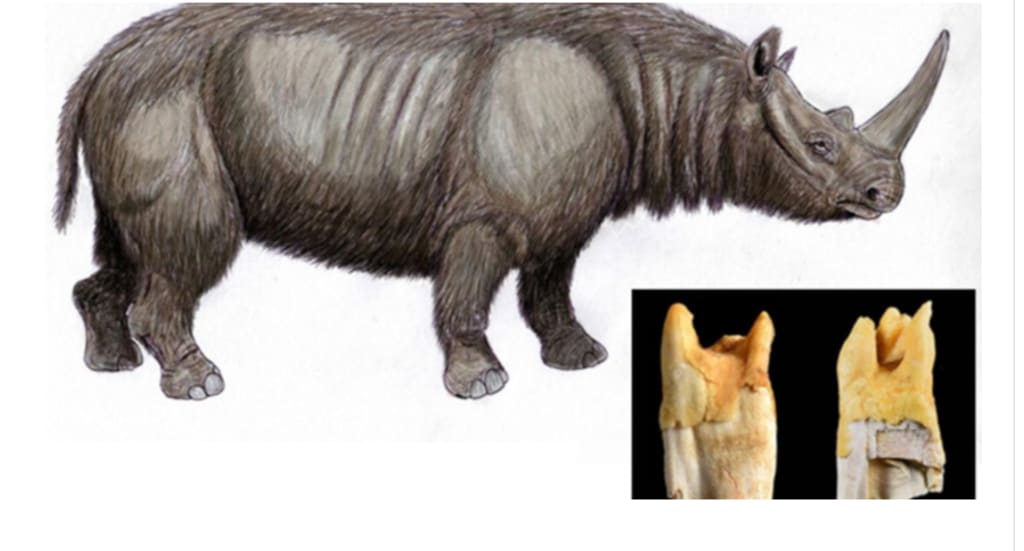
The teeth of ancient rhinoceroses were an unexpected and incredibly durable tool that Neanderthals had in their kits, according to a recent study. These ancient hominids may have used the enormous molars as versatile, heavy-duty tools, according to marks on fossilised rhino teeth recovered in caverns around France and Spain.
This intriguing finding offers more proof of Neanderthal inventiveness by demonstrating how they shaped stone tools and processed materials like vegetable fibres or animal hides using these sturdy teeth as anvils and hammers. Numerous rhinoceros species, notably the narrow-nosed rhinoceros (Stephanorhinus hemitoechus), coexisted alongside Neanderthals in Europe approximately 100,000 years ago.
According to a recent study that was published in the Journal of Human Evolution, these hominids purposefully chose rhinoceros teeth because of their strength, durability, and hardness, using them for a variety of demanding tasks.
A Palaeolithic Dental Toolkit
Neanderthals used animal remains, such as bones and antlers, as hammers or retouchers to keep their stone tools sharp, as archaeologists have long known. Few researchers, nevertheless, have looked at the possible application of teeth. Unexpected patterns on a few teeth piqued the interest of the University of Aberdeen's Alicia Sanz-Royo-led study team. They examined twelve archaeological sites in France and Spain, concentrating on Pech-de-l'Azé II in France and El Castillo in Spain.
Researchers discovered distinctive grooves, notches, sliding marks, and scrapes on rhinoceros teeth at these locations, all of which clearly supported frequent striking and percussion use. These patterns were not the result of chewing or normal taphonomic processes either before or after the animal's death, according to microscopic research. The team found at least three different kinds of damage patterns that were consistent with tool use rather than chewing or butchering, according to Science News.
The researchers used contemporary rhino teeth from zoological reserves in controlled archaeological tests to test their theory. They played out actions that Neanderthals might have done on a regular basis, like utilising the teeth as anvils to cut leather and vegetable fibres and as soft hammers to create stone tools.
Rhino Molars' Efficiency
The damage caused by the trials on the contemporary teeth, namely microfractures, pitting, and scaling areas, closely resembled the patterns shown on the fossilised teeth. The experimenters discovered that the rhino molars were unexpectedly effective despite their substantial weight and bulk—they can weigh up to 380 grams.
For precise activities like flint knapping, larger teeth with flatter surfaces proven to be the most comfortable to use, offering a stable and long-lasting platform. The researchers came to the conclusion that Neanderthals were picky, selecting teeth that were the appropriate size or form for the task at hand based on the kinds of teeth that had the marks on them.
It's interesting to note that most of the rhino teeth used by Neanderthals seem to have come from old animals. This could mean that older rhinos' teeth were better suited for using tools due to their worn, flatter surfaces, or it could just mean that older rhinos were easier prey for hunters.
"I had never come across teeth with these kinds of markings. "I was pretty sceptical at first," Sanz-Royo remarked. "This study is important because it opens the possibility that, in addition to bones and antlers, teeth — which are a superhard material — were also very useful."
Increasing Our Knowledge of Neanderthal Behaviour
The finding broadens our knowledge of Neanderthal resourcefulness and cognitive sophistication. The discovery of 202 rhino teeth at the El Castillo cave alone, 25 of which had use marks, suggests deliberate behaviour that goes beyond simple opportunism. In addition to consuming these enormous herbivores, Neanderthals were methodically repurposing their strongest components to create specialised machinery.
The breadth of Neanderthal cognitive capacities is still a topic of great curiosity as anthropologists continue to study Palaeolithic lifestyles. Researchers are discovering more and more evidence that reveals Neanderthals had sophisticated problem-solving abilities and symbolic reasoning, which were previously thought to be unique to modern people.
Neanderthals painted an ever-richer image of their inner life by creating art, making intricate tools, and tending to injured friends, according to recent finds.Archaeologist José Ramos-Muñoz of the University of Cadiz, who was not involved in the study, stated, "This study shows that [Neandertals] not only ate the animals but also used their remains for their technology." "It's a trait of modernity."
The employment of rhinoceros teeth in conjunction with bone and antler tools reveals a complex method of exploiting raw materials, proving that our extinct cousins were extremely versatile craftspeople who could make the most of the resources found in their surroundings. The actual extent of Neanderthal technological innovation may turn out to be even more astounding than the data currently available indicates if more sites are investigated using contemporary analytical methods.
About the Creator
Enjoyed the story? Support the Creator.
Subscribe for free to receive all their stories in your feed.
Comments
There are no comments for this story
Be the first to respond and start the conversation.