science
Topics and developments in science and medicine, presented by Futurism.
The Metatron-Sandalphon Paper Is Wildly Ambitious — And That's Kind of the Point. AI-Generated.
Look, I'll be the first to admit it: I wrote this paper, and I still find myself occasionally stepping back and thinking, there's no way any of this happens in our lifetime. And honestly? That's fine. That's more than fine, actually.
By Michael Wenas5 months ago in Futurism
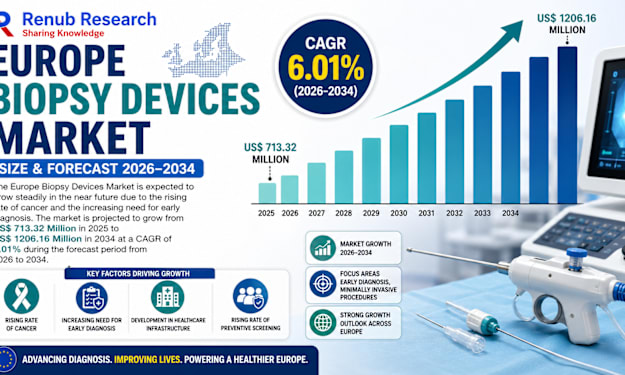
Europe’s Biopsy Devices Market Is Expanding as Early Cancer Detection Becomes a Healthcare Priority. AI-Generated.
Europe is investing heavily in earlier and more accurate diagnosis Healthcare systems across Europe are undergoing a major transformation as governments, hospitals, and diagnostic centers place greater emphasis on early disease detection. Among the technologies benefiting most from this shift are biopsy devices — medical tools that help doctors obtain tissue samples for diagnosing cancer and other chronic diseases.
By Akansha Aditi5 months ago in Futurism
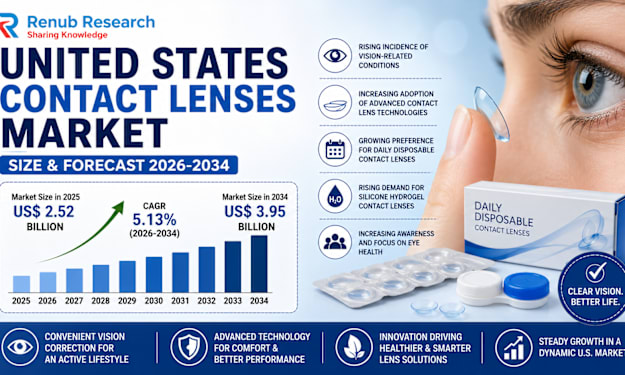
United States Contact Lenses Market Expands as Vision Care Becomes More Lifestyle-Driven. AI-Generated.
Contact lenses are becoming more than a vision correction tool The contact lenses industry in the United States is evolving rapidly as consumer expectations around vision care continue to change. What was once considered a simple alternative to eyeglasses has now become a broader lifestyle product shaped by convenience, aesthetics, comfort, and advanced medical technology.
By Aman Ahirwar5 months ago in Futurism
The Limits of Humanity in the Universe. Content Warning. AI-Generated.
The universe is vast beyond imagination, yet despite all our dreams of exploration, there are boundaries humanity may never cross. No matter how advanced our technology becomes, there are regions of the cosmos forever beyond our reach. This realization is both awe-inspiring and unsettling. It forces us to confront a profound truth: even in a universe of unimaginable scale, humanity is confined to only a tiny corner of existence.
By NGUYEN NGOC TRUNG5 months ago in Futurism
NASA's next-generation Mars helicopter blades smash through the sound barrier.
It has long seemed nearly impossible to fly on Mars because, in many respects, it is. Aircraft find it difficult to stay in the air due to the planet's extremely thin atmosphere. Spinning blades that are already working close to their limitations must have every bit of lift extracted from them.
By Francis Dami5 months ago in Futurism
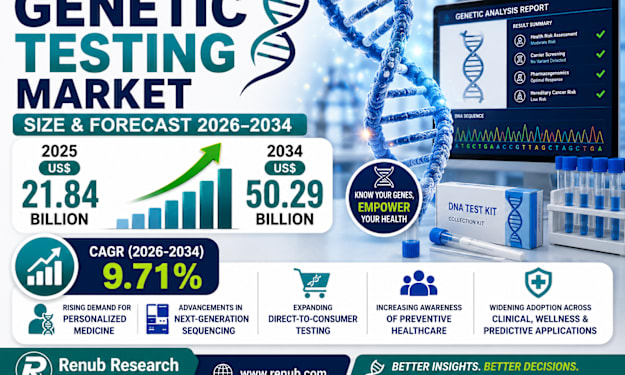
Genetic Testing Market Expands Rapidly as Personalized Medicine and At-Home Genomics Gain Global Momentum
The global healthcare industry is entering a new era shaped by genomics, precision medicine, and preventive healthcare. Among the most transformative developments within modern medicine is the rapid rise of genetic testing, which is increasingly influencing disease detection, treatment planning, wellness management, and personalized healthcare decisions.
By Arpi Kumari5 months ago in Futurism
While warming the earth, carbon dioxide is cooling the higher atmosphere.
There is a paradox in climate change that goes unnoticed. The high atmosphere has been sharply cooling as temperatures are rising at the surface and in the lower atmosphere. Although the underlying physics has never been fully explained, scientists have known about this for decades—it's actually regarded as one of the most obvious indicators of climate change driven by humans.
By Francis Dami5 months ago in Futurism
WHAT WE KNOW ABOUT UNIVERSE
Astronomy is the scientific study of the universe and everything that exists within it, including stars, planets, galaxies, gas, dust, and other celestial bodies. It is one of the oldest sciences, helping humanity understand the mysteries of space and the laws that govern the cosmos. Astronomers observe celestial objects and develop theories about the origin, structure, and future of the universe. The universe is often defined as the totality of all matter, energy, space, and time that exists around us.
By Ibrahim Shah 5 months ago in Futurism
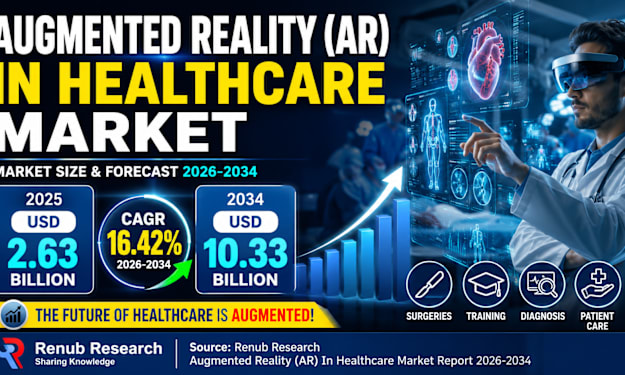
Augmented Reality in Healthcare Market Is Moving from Novelty to Necessity. AI-Generated.
Augmented reality is no longer just a futuristic concept in healthcare. It is becoming a working tool that supports surgeons, trains medical professionals, improves diagnosis, and helps patients understand their care more clearly. According to Renub Research, the Augmented Reality in Healthcare Market is expected to grow from USD 2.63 billion in 2025 to USD 10.33 billion by 2034, reflecting a CAGR of 16.42% from 2026 to 2034. That kind of growth signals something bigger than a passing trend: it points to a shift in how healthcare itself is delivered and experienced.
By Sibhansh Halder5 months ago in Futurism
In NASA data, AI discovered more than 100 secret exoplanets; hundreds more might be out there.
NASA's TESS spacecraft has confirmed almost 700 exoplanets in just seven years of operation. That seems like a lot. However, the majority of signals identified as promising have never been fully processed, despite the telescope monitoring more than two million stars. There are actual planets hidden in that backlog, sitting there in the data but never verified. More than 100 of them were recently discovered and verified by a research team.
By Francis Dami5 months ago in Futurism
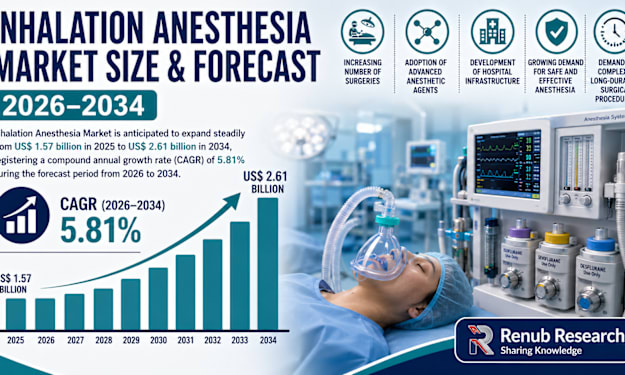
Inhalation Anesthesia Market Expands as Global Surgical Demand Continues to Rise. AI-Generated.
The global healthcare industry is witnessing a steady rise in surgical procedures, and with that increase comes growing demand for reliable anesthesia solutions. Among the various anesthesia methods available today, inhalation anesthesia remains one of the most widely used approaches for major and complex surgeries due to its ability to provide controlled unconsciousness, pain management, and stable anesthesia maintenance during procedures.
By Aman Ahirwar5 months ago in Futurism
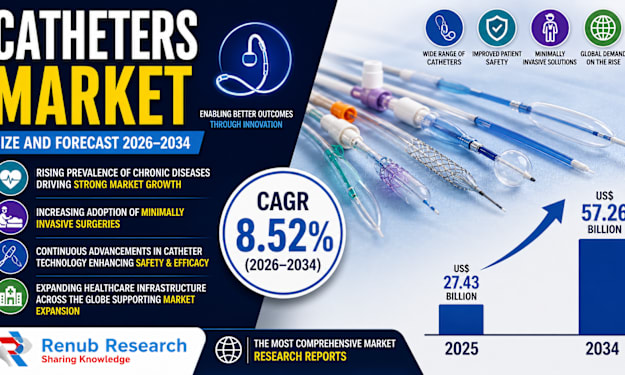
Global Catheters Market Forecast 2026–2034: Minimally Invasive Procedures and Chronic Disease Burden Drive Rapid Growth. AI-Generated.
The healthcare industry is evolving toward faster, safer, and less invasive medical treatments, and few medical devices illustrate this transformation more clearly than catheters. Once viewed mainly as basic hospital tools, catheters have now become essential components in modern healthcare systems, supporting everything from cardiovascular procedures and dialysis to urinary care, drug delivery, and minimally invasive surgeries.
By Arpi Kumari6 months ago in Futurism