science
Topics and developments in science and medicine, presented by Futurism.
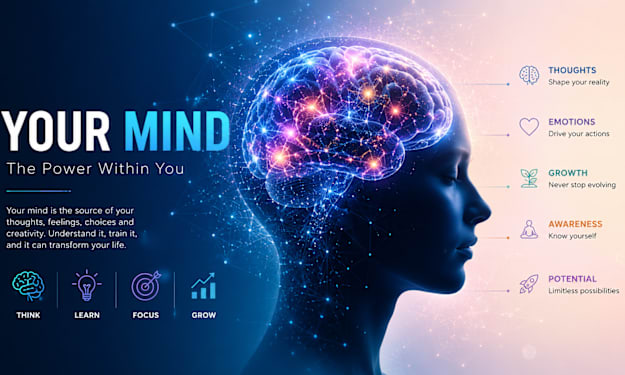
Your Mind. Content Warning. AI-Generated.
Where do you truly live? Not your house or city, but the spot where your thoughts spin and feelings hit hard. That spot is your mind, the secret place nobody but you can enter. It's the full package of your inner world, the core spot of who you are. We share the outside world with everyone, but this internal space stays yours alone. Let's map out what makes it so private and powerful.
By NGUYEN NGOC TRUNG6 months ago in Futurism
The "engine of creation" is our galaxy's largest star-forming cloud.
The European Space Agency's Image of the Day for today shows a breathtaking image of stars being produced at a breakneck pace deep within the Milky Way. The largest and most prolific star-forming cloud in the Milky Way, Sagittarius B2, has been photographed by the James Webb Space Telescope.
By Francis Dami6 months ago in Futurism
Space debris falls toward Earth more quickly due to solar activity.
Spent rocket stages and dead satellites can remain in orbit for decades. Launch relics from the 1960s are currently circling the earth. Although scientists have known that the Sun accelerates their descent, it has been difficult to pinpoint the precise beginning of this rapid decline.
By Francis Dami6 months ago in Futurism
Authorship vs Refinement
Much of the confusion surrounding artificial intelligence and writing comes from a failure to distinguish between two fundamentally different acts: originating ideas and refining their expression. These acts are often treated as interchangeable, as though whoever touches the final form must also be the source of the thought itself. That assumption does not reflect how writing has ever worked, nor does it reflect how human thinking actually unfolds.
By Peter Thwing - Host of the FST Podcast6 months ago in Futurism
THE SOLAR SYSTEM
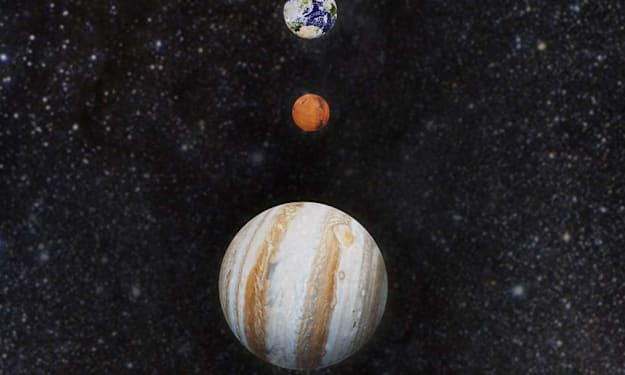
THE NATURAL SYSTEM WHERE WE LIVE The solar system, a vast expanse of space, contains eight planets, each displaying the wonders and diversity of nature in its unique way. These celestial bodies have fascinated humanity for centuries, inspiring scientific exploration and ordinary people's boundless curiosity. Mercury : Mercury, the smallest planet in the solar system, is also the nearest to the sun. Its surface is riddled with impact craters because it lacks an atmosphere to protect it from asteroids and comets. The planet has a prolonged rotation period, taking 88 Earth days to complete one rotation. Due to Mercury's proximity to the sun, it is challenging to observe from Earth, making it a relatively elusive object in the night sky. Mercury’s extreme temperature fluctuations, from scorching heat during the day to cold at night, further highlight its harsh environment. Venus : Venus is the closest planet to Earth in the solar system and is often referred to as Earth's sister planet due to their similar size and composition. However, Venus’s surface temperature is extremely high, reaching up to 465°C. This intense heat is due to its thick atmosphere, which contains a large amount of carbon dioxide, creating a strong greenhouse effect. The surface of Venus is covered with craters, canyons, and plains, but these features are obscured from Earth-based telescopes by dense clouds of sulfuric acid. Venus rotates on its axis very slowly and in the opposite direction to most planets, resulting in prolonged days and nights. Earth : Earth, our home, is the only planet in the solar system known to support life. Approximately 70% of Earth's surface is covered by oceans, with the remaining 30% consisting of continents and islands. The planet's atmosphere, composed primarily of nitrogen, oxygen, and water vapor, provides the essential conditions for life. Earth’s diverse ecosystems, ranging from lush forests to arid deserts, are a testament to the planet’s ability to support a wide variety of life forms. The presence of liquid water, a stable climate, and a protective atmosphere are crucial factors that make Earth unique. Mars : Mars, often called the "Red Planet" due to its reddish appearance, is one of the most Earth-like planets in the solar system. Its surface is covered with craters, mountains, and canyons, including the largest volcano and the deepest canyon in the solar system. The thin Martian atmosphere, composed mostly of carbon dioxide, offers little protection from the solar wind and asteroid impacts. Recent missions to Mars have discovered evidence of liquid water in the past, raising the possibility of ancient life. Mars has been the focus of many scientific explorations, with numerous probes and rovers sent to study its geology, climate, and potential for future human colonization. Jupiter : Jupiter is the largest planet in the solar system, with a volume greater than the combined volumes of all the other planets. Its thick atmosphere is primarily composed of hydrogen, with traces of helium and other gases. Jupiter’s most prominent feature, the Great Red Spot, is a massive storm that has been raging for at least 400 years. This gas giant has a strong magnetic field and numerous moons, including Ganymede, the largest moon in the solar system. Jupiter’s dynamic atmosphere, characterized by swirling clouds and powerful storms, makes it a fascinating subject of study. Saturn : Saturn is famous for its stunning ring system, composed of countless ice particles and rocky debris. These rings, which can be seen from Earth with a small telescope, make Saturn one of the most visually striking objects in the solar system. Saturn's atmosphere, similar to Jupiter's, mainly consists of hydrogen and helium. Despite its size, Saturn has a very low density, less than that of water. This gas giant is also home to numerous moons, including Titan, which has a thick atmosphere and lakes of liquid methane. The intricate structure and dynamics of Saturn’s rings and its diverse moon system continue to captivate astronomers. Uranus : Uranus is one of the most mysterious planets in the solar system, known for its unique tilt. The planet's axis is tilted by about 98 degrees, causing it to rotate on its side. This unusual orientation results in extreme seasonal variations, with each pole getting 21 years of continuous sunlight followed by 21 years of darkness. Uranus’s atmosphere is composed of hydrogen, helium, and methane, which gives the planet its blue-green color. The planet also has a system of faint rings and numerous moons. Uranus’s distant location from the sun makes it difficult to observe, but recent studies have revealed more about its composition and structure. Neptune : Neptune is the farthest planet from the sun, located about 30 astronomical units away. This distant, cold, and dark planet has a dynamic atmosphere with powerful storms and high-speed winds. Neptune’s striking blue color is due to the presence of methane in its atmosphere. The planet has a faint ring system and several moons, with Triton being the largest. Triton is geologically active and has geysers that spew nitrogen gas. Despite its remote location, Neptune has been studied through telescopic observations and a flyby mission by Voyager 2, which provided valuable insights into its atmosphere and moons. In Conclusion : The eight planets in the solar system each have distinct characteristics and phenomena. These wonders not only showcase the infinite possibilities of nature but also fuel humanity’s relentless desire to explore the universe. Each planet reveals a different aspect of the cosmos, offering a glimpse into the diverse and dynamic processes that shape our solar system. As technology advances, our ability to study and understand these celestial neighbors will continue to grow, uncovering more secrets and deepening our appreciation of the vast and varied universe we inhabit.
By Muhammad Talha6 months ago in Futurism
The UFO Files That Refuse to Die
The UFO Files That Refuse to Die: Why Millions Believe the Truth Is Still Hidden Writer: Said Idrees Sadat For decades, people laughed at the idea of UFOs. Anyone who spoke seriously about mysterious objects in the sky was often called paranoid, dramatic, or obsessed with science fiction. But something changed over the last few years. Governments stopped completely denying the subject. Military pilots began speaking publicly. Secret footage was released. And now, with another wave of UFO files being made public, the internet is once again asking the same dangerous question:
By king pokhtoon6 months ago in Futurism
Hip Replacement Market Expands as Aging Populations and Advanced Surgical Technologies Drive Global Demand. AI-Generated.
The global hip replacement market is entering a period of sustained growth as rising life expectancy, increasing rates of osteoarthritis, and advancements in orthopedic technology continue reshaping patient care. What was once considered a procedure primarily for elderly patients has evolved into a highly advanced and increasingly accessible surgical solution benefiting millions of people worldwide.
By Manish Singh6 months ago in Futurism
Tools That Empower and Tools That Numb
A tool is never neutral in its effect, even when it may be neutral in its design. What a tool does to a person depends not only on what it enables, but also on what it quietly replaces. A hammer extends the hand. A calculator extends memory. A map extends orientation. Each tool amplifies a capacity, but each one also changes the relationship between effort and outcome.
By Peter Thwing - Host of the FST Podcast6 months ago in Futurism
The Nimitz UFO Incident and the Navy Sailors Who Witnessed the Mysterious “Tic Tac” Craft
A UFO Encounter That Still Puzzles the World In November 2004, a group of U.S. Navy personnel serving aboard the aircraft carrier strike group led by the USS Nimitz witnessed one of the most mysterious aerial incidents in modern military history. The event occurred roughly one hundred miles off the coast of Southern California during routine naval exercises. What began as strange radar anomalies soon developed into a series of encounters involving Navy radar operators, fighter pilots, aviation technicians, and crew members who all observed or recorded an unidentified object later described as a glowing white “Tic Tac”-shaped craft.
By History Seeker6 months ago in Futurism
Global Liquid Biopsy Market 2026–2034: Transforming Cancer Diagnosis with Non-Invasive Precision. AI-Generated.
A New Era in Cancer Diagnostics Cancer diagnosis is entering a transformative phase, and liquid biopsy is at the forefront of this shift. According to Renub Research, the Global Liquid Biopsy Market is projected to grow from US$ 2.83 billion in 2025 to US$ 5.49 billion by 2034, expanding at a CAGR of 7.63% from 2026 to 2034.
By Aman Ahirwar6 months ago in Futurism