humanity
The evolution of humanity, from one advancement to the next.
The Economist 2026 Cover: A Symbolic and Conspiratorial Analysis of the Future. Content Warning.
Every year, the cover of The Economist generates intense debate among political analysts, researchers, and conspiracy theorists alike. Supporters of symbolic interpretation argue that these covers are not merely artistic illustrations but coded messages that hint at major global events expected in the coming year. Whether one sees them as predictions, warnings, or simply clever editorial design, the imagery often reflects the fears, ambitions, and uncertainties shaping the world.
By JONATAN DAVID VEGA4 months ago in Futurism
The Price We Pay for Convenience. Top Story - June 2026.
When I was a teenager, I had five lights in my bedroom. One was the overhead. They call it a boob light now, which is hilarious. That was the first one to go out as I settled into my bed for evening reading. I had to get up to turn it off, so I had to be really annoyed by all the extra light to put forth the effort. The second two were on pullstrings that hung in my very open-plan closet. I usually got those two at the same time. The next was a lamp by my mirror. It was hideous, but it gave off a pretty light, so I liked it. By then, I was down to one light by my bed that I didn't have to stand up to turn off. It was a touch lamp that you could whack in any way at all to make it turn on to three different levels of brightness. I bought it for $13, and it was one of my favourite objects as a teen.
By Stephanie Van Orman4 months ago in Futurism
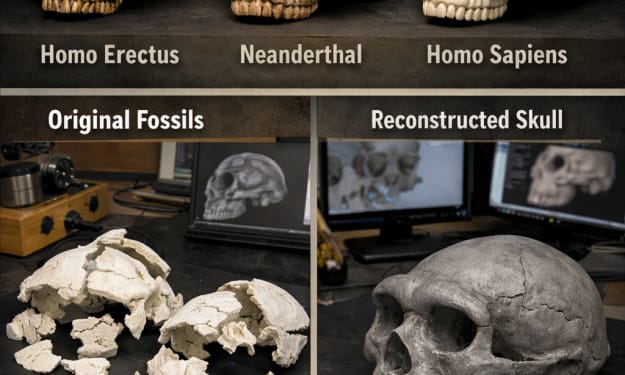
Yuxian Skull discovered in China has challenged this long-standing narrative of Human Evolution
Rethinking Human Evolution: A Discovery That Changes the Timeline For decades, the story of human evolution appeared relatively straightforward. Scientists believed that early advanced humans emerged around one million years ago, belonging to the species Homo erectus. According to this widely accepted model, this species eventually split into two major branches around 600,000 years ago. One branch led to the Neanderthals, while the other gave rise to modern humans, Homo sapiens. This linear and orderly progression formed the foundation of how we understood our origins.
By Ibrahim Shah 5 months ago in Futurism
Software Market in India : Share, Size, Cloud Adoption, and AI-Driven Innovation Fueling Industry Forecast. AI-Generated.
India's software industry continues to play a pivotal role in the country's digital transformation journey, driven by rapid technological advancements, increasing enterprise digitization, and widespread adoption of cloud-based solutions. Businesses across sectors are investing heavily in software applications to improve operational efficiency, enhance customer experiences, and support data-driven decision-making. Furthermore, the growing integration of artificial intelligence (AI), machine learning (ML), cybersecurity solutions, and automation technologies is reshaping the software landscape and creating significant growth opportunities for industry participants.
By Chetan Pal5 months ago in Futurism
Mechanical Animals
Introduction My writing takes two forms, creations and observations on things that exist where I just report about them. Sometimes the two blur a little and maybe that is what this is. I also like to share things with friends and my Vocal audience, that they may be unaware of and may actually find interesting.
By Mike Singleton 💜 Mikeydred 5 months ago in Futurism
Knowledge Over Wisdom or Wisdom Over Knowledge?
I am a stubborn woman. In many ways, that is a good quality, but it is also a hindrance. I have thought about what I would have told my younger self if I had had the chance. I am not sure anything I would say to a younger, more impulsive, and idealistic me would make a difference. I would not have listened. I am from the school of hard knocks.
By Alexandra Grant5 months ago in Futurism
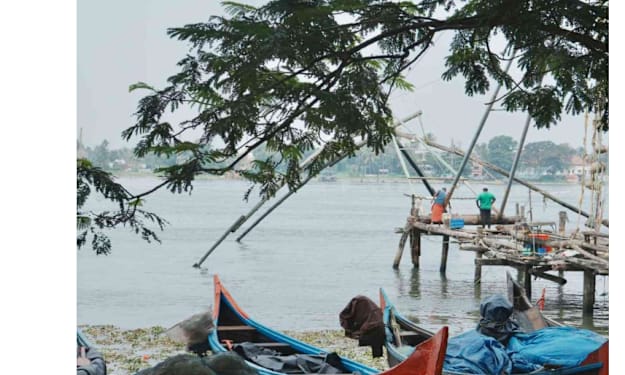
In five countries, coastal communities are safeguarding the environment; this new evaluation demonstrates what truly works.
Without government patrols, fishing communities in the Southwest Indian Ocean have long managed their own reefs. They have accomplished this through collective decisions, established boundaries, and local laws. It has been difficult to ascertain whether those agreements truly protect anything.
By Francis Dami5 months ago in Futurism