artificial intelligence
The future of artificial intelligence.
Trump Says China Has Not Approved Nvidia H200 Deal as Both Sides Push AI Chip Trade Stalemate
Read Time 6 minutes Tags Nvidia AI Chips Export Controls US China Trade Semiconductor Policy H200 AI Geopolitics If you aren t caught up on the situation US President Donald Trump alongside representatives from Micron Qualcomm and Nvidia all boarded Air Force One a few days ago to take a trip out to China and nurse the rocky trade relationship between the two countries From that trip America was hoping to trade some AI chips with China but not quite enough for it to take the lead in the AI space race Either way it might not have gotten past China s officials yet The US approved the sale of Nvidia s second best AI chip the H200 to 10 Chinese firms yesterday This would total 75000 units each As reported by Bloomberg Trump said on Friday that China has not yet approved this deal from its end because they chose not to they want to develop their own What Trump said about the deal One Stalled approval Despite this declaration Trump does say that the conversation came up and he reckons something could happen on that Trump has not yet elaborated on what this means what could happen or how those talks went However Trump has reportedly been chatting to Chinese President Xi Jinping about what guardrails could be implemented on this tech going forward When asked what kind of guardrails these would be Trump reportedly said Standard guardrails that we talk about all the time Two Context of prior approvals Notably China reportedly approved the import of H200 GPUs just a few months ago but the US government put caps on how many could be sent to the region It s been a rather tumultuous time for the two entities with both banning unbanning taxing and untaxing the AI chips The US approval this week covers 75000 units for ten Chinese firms but Chinese regulatory sign off is still pending Without that approval Nvidia cannot ship the chips Industry and company positions One Nvidia s stance Nvidia s CEO Jensen Huang has historically been very pro trade when it comes to AI tech and China When Nvidia effectively left the Chinese market due to import bans imposed late last year Huang argued it s important to be mindful that what harms China could oftentimes also harm America Just last month Huang bemoaned this market drop and argued the US should export AI like crazy to China It s naturally within the interest of Nvidia to sell its AI tech to whoever will take it as it owes the growth of AI for it becoming the world s first 5 trillion company after all Though the company says its share in China is zero today Two US government rationale The US wants to allow some sales to maintain revenue and influence while preventing China from accessing chips that could accelerate frontier AI development The H200 is a downgraded variant compared to the H100 and B200 series but still provides substantial training and inference capability Exporting some AI chips would be beneficial to the US too as it can claim taxes on that tech But all parties seem to be aware that China cannot over rely on American AI technology Huang said last year that we don t have to worry about the Chinese military using AI chips because they simply can t rely on it Three China s strategic calculus Trump said China has not approved the deal because they want to develop their own This aligns with Beijing s push for semiconductor self sufficiency through initiatives like the National Integrated Circuit Industry Investment Fund and subsidies for domestic GPU makers including Biren Huawei and Moore Threads Approving large imports of US chips would undercut domestic firms and reduce urgency for local development Beijing likely views controlled access as leverage in negotiations while buying time for domestic alternatives to mature Where the stalemate sits One No clear resolution And so the US and China and by extension Nvidia seem to be at a stalemate Whether or not Trump s big trip will see any returns on American investment is anyone s guess but he seems pretty positive about it anyway The trip included meetings with Micron and Qualcomm representatives suggesting the US is seeking broader agreements on memory and mobile chips beyond AI accelerators But no public commitments have emerged Two Guardrails remain vague The notion of standard guardrails suggests ongoing discussion about end use restrictions auditing and compliance mechanisms The US wants assurances that chips are not diverted to military applications or advanced AI labs that could bypass export controls China resists invasive verification that it views as interference Without agreed monitoring the US is unlikely to expand approvals beyond current levels Implications for the AI and semiconductor markets One Nvidia revenue and strategy If the deal remains blocked Nvidia loses a near term revenue stream in China and must rely on domestic US and allied market demand The company has already adapted by designing China specific chips like the H20 but those face tighter performance caps and uncertain demand Zero market share today as Huang noted means Nvidia has little to lose by waiting but prolonged absence cedes ground to domestic competitors Two US export control credibility The case tests whether the US can calibrate controls to allow commercial sales without enabling strategic competitors If China approves the deal under US conditions it validates the guardrail approach If not it suggests export controls are accelerating decoupling Three Domestic Chinese AI development Delaying US chip imports creates short term friction for Chinese AI labs but strengthens incentives to optimize software for domestic hardware and to improve chip design The longer the stalemate lasts the more viable domestic alternatives become Four Broader trade signal The episode reflects a broader pattern where AI chips are treated as both commercial products and strategic assets Negotiations will likely continue to be transactional and subject to shifts in US domestic politics and China s technology priorities For Nvidia investors the key watch item is whether Chinese approval arrives before domestic alternatives capture market share For policymakers the question is whether partial trade preserves influence or prolongs dependency For Chinese AI firms the calculation is whether to wait for US chips or commit to domestic ecosystems now Do you think the US should allow more AI chip sales to China under strict guardrails or is a hard decoupling the only viable long term strategy Share your view in the comments
By Behind the Tech5 months ago in Futurism
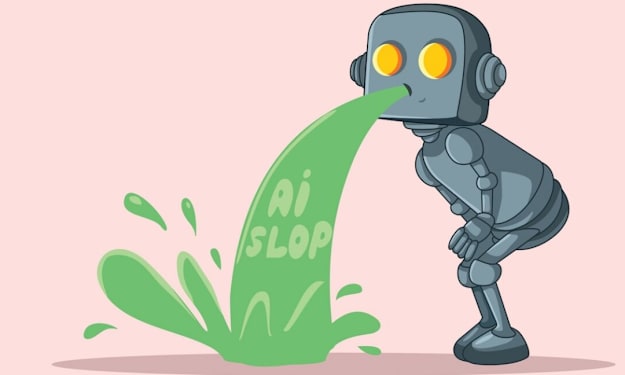
arXiv Imposes One Year Ban for AI Slop as Preprint Server Tightens Standards on Generative AI Content
Read Time 6 minutes Tags arXiv AI Slop Academic Integrity Generative AI Peer Review Scholarly Communication Research Misconduct AI generated slop has shown up everywhere including in the peer reviewed literature Fake citations unedited prompt responses and nonsensical diagrams have all slipped past editors and peer reviewers and it s not always clear if there are any consequences for the people responsible Now it appears that a number of scientific fields will be enforcing rules against AI generated problems even before peer review or journals get involved One of the people involved in the physics and astronomy preprint server arXiv used a social media thread to announce that any inappropriate AI produced content submitted to the server will result in a one year ban and a permanent requirement that future publications undergo peer review before the arXiv will host them The new policy and enforcement mechanism One Who announced it Thomas Dietterich in addition to being an emeritus professor at Oregon State University is heavily involved with arXiv serving on its editorial advisory council and on its moderation team So he s in a good position to understand the organization s policies although we have also reached out to arXiv leadership for confirmation but have not yet received a response In a thread on X also screenshotted on Bluesky for those without X accounts Dietterich described the new policy as arising directly from the arXiv s moderation standards Submissions to arXiv must comply with appropriate standards of scholarly communication in form including appropriate and carefully prepared sections figures tables references etc those standards read General scrupulousness and care of preparation are required Two Author responsibility Dietterich also notes that all authors of a manuscript are responsible for its content So if they carelessly submit material generated by an AI that violates these guidelines Dietterich cites inappropriate language plagiarized content biased content errors mistakes incorrect references or misleading content then they re responsible not the AI Should violations be discovered all of the manuscript s listed authors will now receive a one year submission ban and any future manuscripts will only be accepted after they ve been through peer review by a journal Three What counts as evidence Examples of incontrovertible evidence include hallucinated references meta comments from the LLM here is a 200 word summary would you like me to make any changes the data in this table is illustrative fill it in with the real numbers from your experiments The impact on academic publishing workflows One Severity for affected fields For fields that rely heavily on the arXiv those are severe sanctions Posting preprints in areas like astrophysics is widely considered part of the normal publication process and scientists will often get feedback on preprints that helps them improve what they submit for peer review A one year ban effectively removes a researcher from the fastest channel for disseminating work and gathering community feedback The requirement that future submissions undergo journal peer review first adds months to the timeline and removes the advantage of early dissemination Two Existing checks and appeals The unfortunate problem is that like most other things the system can be gamed people could submit flawed content that lists people as authors who have never been involved Fortunately its moderation system includes an appeal process This is critical because false authorship and disputed responsibility claims could arise in cases of academic fraud or unauthorized submissions The appeal process will determine how strictly arXiv applies the policy and whether accidental misuse of AI tools is treated differently from intentional deception Three Closing a loophole One obvious question that arises when these problems are found in publications is why nobody caught them sooner Now we can at least know that someone is trying to arXiv has historically operated with light touch moderation focused on scope and plagiarism rather than scientific correctness By explicitly targeting unchecked LLM output the server is expanding its role as a gatekeeper of scholarly standards Why this policy matters now One Scale of the problem AI generated slop has proliferated as tools make it easy to produce plausible looking papers with fabricated references and fabricated results Some have slipped into peer reviewed journals creating corrections and retractions that damage trust in the literature Catching this at the preprint stage prevents contamination of downstream databases citation networks and systematic reviews It also reduces the burden on journals and reviewers who would otherwise spend time evaluating submissions that should never have been submitted Two Deterrence effect A one year ban is a meaningful deterrent for career researchers who rely on arXiv for visibility and hiring signals The additional requirement of journal peer review before future submissions raises the cost of carelessness By holding all listed authors responsible the policy discourages authorship inflation and forces senior researchers to verify what junior authors or collaborators submit Three Limits and risks The policy depends on moderators ability to distinguish between unchecked LLM output and human error Some hallucinated references arise from sloppy manual citation management not AI use Overly aggressive enforcement could punish researchers for mistakes unrelated to generative AI There is also a risk that the policy pushes low quality submissions to less moderated servers or encourages researchers to bypass preprints entirely Both outcomes reduce transparency and make misconduct harder to detect What this signals for the research ecosystem One Preprint servers are adapting arXiv s move may prompt other preprint servers in biology chemistry and computer science to adopt similar rules Expect convergence on standards that require authors to disclose AI use and verify outputs Two Author responsibility is non delegable The policy reinforces that using AI does not absolve authors of accountability Institutions and funders may follow with similar rules in grant and promotion evaluations Three Journal peer review remains a backstop Requiring journal peer review before future arXiv submissions acknowledges that peer review still catches errors that preprint moderation misses It also increases the value of journal review as a quality signal For researchers the message is clear check every reference check every figure and remove meta comments before submission For institutions the message is to provide training and tools for detecting AI hallucinations before submission For arXiv the challenge is to enforce consistently without stifling legitimate early dissemination Do you think a one year ban is proportionate for unchecked AI generated content or should arXiv differentiate between negligence and intentional fraud Share your view in the comments
By Behind the Tech5 months ago in Futurism
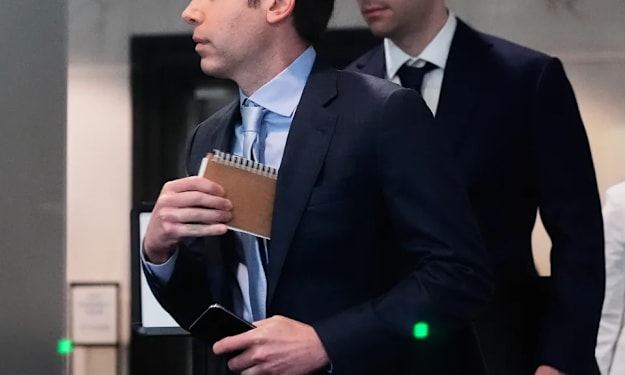
Greg Brockman Takes Control of OpenAI Product as ChatGPT and Codex Merge Into One Unified Experience
Read Time 6 minutes Tags OpenAI Product Strategy ChatGPT Codex Executive Changes AI Agents IPO Preparation OpenAI told staff on Friday that it would reorganize the company as part of an ongoing effort to unify its product offerings WIRED has learned OpenAI cofounder and president Greg Brockman will now lead the company s product strategy in addition to his work on AI infrastructure OpenAI confirms to WIRED Brockman was previously assigned to oversee OpenAI products on an interim basis while the CEO of AGI deployment Fidji Simo was on medical leave the change is now official We re consolidating our product efforts to execute with maximum focus toward the agentic future to win across both consumer and enterprise Brockman said in a memo to staff seen by WIRED Brockman added that OpenAI s products are naturally converging and that the company has decided to merge ChatGPT and Codex into one unified experience What the reorg changes One Product consolidation OpenAI says it s folding ChatGPT its AI coding agent Codex and its developer facing API into one core product team The company says that Codex is increasingly powering its consumer and enterprise offerings which are gaining the ability to perform digital tasks autonomously on behalf of users Other OpenAI leaders are also taking on larger roles at the company as part of the changes OpenAI s head of Codex Thibault Sottiaux has been tapped to lead the company s core product and platform teams Sottiaux was a key leader in building Codex into one of the company s fastest growing products of all time He s also one of the leaders overseeing development of OpenAI s forthcoming super app which aims to combine Codex ChatGPT and the company s Atlas web browser into a unified desktop application Two Leadership shifts OpenAI s longtime head of ChatGPT Nick Turley is moving to a new role to lead the company s work on enterprise products OpenAI says Turley who has led ChatGPT since launch and helped grow it to more than 900 million weekly active users will no longer work on its consumer products Ashley Alexander a former VP of Instagram who has been leading OpenAI s work on health products will now lead the company s consumer product unit Three Context of the move The changes are the latest shake up for OpenAI as leadership aims to refocus the company on a few key product areas including ChatGPT Codex and its super app Last month OpenAI announced many executive changes including that Simo was taking a medical leave to focus on her health OpenAI previously said Brockman would oversee product strategy in her absence The company tells WIRED that Simo remains on medical leave and expects her return noting that she worked directly with Brockman on these organizational changes Why this matters now One Competitive pressure In the last year OpenAI has faced increasing pressure from competitors including Anthropic in coding domains and Google in consumer chatbots OpenAI leaders are hoping to simplify product offerings ahead of its plan to file for an IPO which could happen later this year Merging ChatGPT and Codex reduces redundancy and creates a clearer story for investors about a unified agentic platform It also aligns with the industry shift toward AI agents that can perform multi step tasks across coding browsing and conversation Two Leadership stability Brockman taking formal control of product strategy centralizes decision making under a co founder with deep technical and infrastructure knowledge That may help align research roadmaps with product delivery and reduce friction between research and deployment teams Sottiaux s promotion signals that coding capabilities are now core to OpenAI s product identity not a side project Putting the Codex leader in charge of platform teams suggests OpenAI expects agentic coding to be the primary driver of enterprise adoption Three Talent churn Risk The reorg follows a wave of executive departures last month including the head of its AI workspace for scientists Kevin Weil head of Sora Bill Peebles and its chief technology officer of enterprise applications Srinivas Narayanan Frequent leadership changes can create uncertainty for mid level teams and slow execution OpenAI will need to stabilize reporting lines quickly to avoid losing momentum as it approaches IPO preparation Strategic implications One Unified experience for users Merging ChatGPT and Codex means users may see coding assistance conversation and autonomous task execution in a single interface The super app combining Codex ChatGPT and Atlas browser suggests OpenAI wants to own the desktop surface where work happens not just the model behind it Two Enterprise focus Nick Turley moving to lead enterprise products indicates OpenAI is separating consumer growth from enterprise sales and compliance needs Enterprise customers require different SLAs security controls and deployment models than consumer users Splitting the teams allows tailored product development Three Consumer product bets Ashley Alexander coming from Instagram to lead consumer products signals OpenAI wants to apply consumer social product design to ChatGPT growth Retention engagement and virality will likely become higher priorities as the market matures Four IPO readiness Consolidating product teams and clarifying leadership reduces complexity for investors It also creates a cleaner narrative around revenue streams and product differentiation ahead of public markets scrutiny Risks and open questions One Execution risk Merging large product lines without breaking user experience or developer workflows is difficult Codex and ChatGPT have different usage patterns performance requirements and safety considerations A rushed integration could degrade both products Two Cultural integration OpenAI grew rapidly by keeping small teams autonomous Unifying them under one product org may create bureaucracy or slow decision making Brockman s ability to maintain startup speed while coordinating across consumer enterprise and platform teams will be tested Three Competitive response Anthropic Google and others will watch how the unified product performs If OpenAI delivers a seamless agentic experience it raises the bar for rivals If integration causes instability it creates an opening For employees and partners the reorg signals that agentic capabilities are no longer experimental they are the product For users it suggests ChatGPT will become more action oriented not just conversational For investors it provides a clearer view of how OpenAI plans to monetize across consumer and enterprise before going public Do you think merging ChatGPT and Codex will accelerate OpenAI s lead in agentic AI or create too much complexity for users Share your view in the comments
By Behind the Tech5 months ago in Futurism
OpenAI Feels Burned by Apple ChatGPT Integration as Partnership Sours and Legal Options Emerge
Read Time 6 minutes Tags OpenAI Apple AI Integration Partnership Dispute Product Design Distribution Strategy Antitrust OpenAI is reportedly exploring legal options after Apple s ChatGPT integration into its products didn t live up to the AI firm s expectations When the deal was announced Apple likened features linking Siri to ChatGPT to its now infamous deal embedding Google search in the Safari browser insiders granted anonymity to discuss the strained partnership told Bloomberg And the promise of that excited OpenAI which expected the deal could generate billions of dollars per year in subscriptions an OpenAI executive granted anonymity to discuss the partnership told Bloomberg Instead OpenAI suspects Apple intentionally failed to promote the integration and fears that the deal may have damaged the ChatGPT brand sources said What went wrong with the product One Invocation friction Specifically OpenAI hates how Apple designed the integration sources said Particularly bad was the choice forcing Apple users summoning Siri to also specifically invoke the word ChatGPT when speaking or typing a command sources said That makes it harder for users to access the features OpenAI apparently feels Two Visibility and UX choices Apple s other choices like using small windows providing limited information when responding with ChatGPT outputs seems to ensure that users can easily ignore the features sources said Three Information asymmetry As the OpenAI executive explained Apple didn t fully explain how the integration would work when the deal came together so OpenAI took a leap of faith it now appears to regret When we heard about this opportunity it sounded amazing being able to acquire a giant number of customers and have distribution in such a big mobile ecosystem the executive said attempting to explain why OpenAI was willing to enter the arrangement blind Since then efforts to renegotiate the deal have stalled Reuters reported And supposedly due to feeling burned OpenAI has declined to enter other partnerships to work on Apple s AI models Bloomberg reported Legal and strategic fallout One Legal posturing According to the insiders OpenAI is so disappointed in Apple s work that the AI firm is now actively working with an outside legal firm on a range of options that could be formally executed in the near future We have done everything from a product perspective the OpenAI executive summed up OpenAI s frustrations to Bloomberg They have not and worse they haven t even made an honest effort Supposedly OpenAI is still hoping to resolve its issues with Apple outside of court if possible But one option that OpenAI may pursue could be accusing Apple of a breach of contract Going that route wouldn t necessarily require filing a lawsuit right away sources suggested Two Musk litigation complicates timing OpenAI also faces a court battle with Musk over its Apple deal However it may be inconvenient for Musk that tensions between OpenAI and Apple have grown since he filed a lawsuit last August Musk alleged that the deal integrating ChatGPT into Apple products violated antitrust and unfair competition laws supposedly propping up OpenAI to dominate the chatbot market and Apple the smartphone market So far Musk s lawsuit has survived motions to dismiss though the judge has yet to comment on its merits That leaves Apple and OpenAI potentially stuck defending the deal at a trial scheduled for October even if it falls apart Three Discovery demands With tensions high Apple and OpenAI would probably prefer to keep details about how the deal came together secret However although Musk s lawsuit may be losing steam it has recently succeeded in forcing Apple and OpenAI to be more transparent about the deal This week magistrate judge Hal Ray Jr denied Musk s request to see Tim Cook s internal messages discussing the deal but ordered Apple to share documents by mid June from Senior Vice President of Software Engineering Craig Federighi Federighi made high level strategic decisions about the Apple OpenAI Agreement the judge noted and may have unique relevant evidence not already produced relating to Apple s integration of OpenAI into Apple Intelligence Apple will also have to provide any documents that refer to potential exclusivity clauses of the artificial intelligence provider for Apple products as Musk tries to keep his antitrust fight alive Why the partnership deteriorated One Competing device ambitions Bloomberg s sources suggested that Apple was happy to partner with OpenAI as its own AI projects failed to launch but over time became less inclined to boost ChatGPT after learning about OpenAI s plans to make its own device that could rival the iPhone Reuters suggested that Apple was so rankled by OpenAI teaming up with its former star designer Jony Ive that it lost motivation to help supercharge ChatGPT as OpenAI expected Two Expanding partner ecosystem For Musk it may become impossible to argue that OpenAI and Apple are colluding to keep Apple at the top of the smartphone market when OpenAI is working on its own device And his arguments about ChatGPT s supposed exclusivity are also falling apart as Apple is now testing Siri integrations with Anthropic s Claude and Google Gemini OpenAI s executive insisted to Bloomberg that OpenAI s potential legal action has nothing to do with Apple expanding its AI partners emphasizing that the deal was never intended to be exclusive Three Product roadmaps may realign It s possible that OpenAI and Apple will make up before Musk s lawsuit heads to trial this fall In June Apple is expected to unveil a revamped Siri that could better promote ChatGPT in ways that resolve at least some of OpenAI s concerns Bloomberg reported Broader implications One Distribution deals are fragile High profile distribution partnerships between platform holders and AI labs depend on alignment of product design marketing incentives and long term strategy When a platform views the partner as a future competitor promotion declines and UX friction increases Two UX design shapes adoption Forcing users to explicitly say ChatGPT and limiting outputs to small windows reduces discoverability and usage This illustrates how platform controlled UI choices can determine whether an AI integration succeeds or fails regardless of model quality Three Antitrust scrutiny remains Musk s case may be weakening but discovery will expose how deals between large platforms and AI labs are negotiated Regulators and competitors will study the documents for evidence of exclusivity pressure or preferential treatment Four Negotiation leverage OpenAI s threat of legal action gives it leverage to renegotiate terms or secure better placement in upcoming Siri releases For Apple the risk is reputational damage and potential antitrust exposure if internal messages suggest anti competitive intent For developers and other AI labs the episode is a warning that platform distribution is not a substitute for direct user relationships and that contract terms must specify promotion obligations and UX standards Do you think OpenAI should push for contractual guarantees on promotion and placement in future platform deals or is direct to consumer distribution safer long term Share your view in the comments
By Behind the Tech5 months ago in Futurism
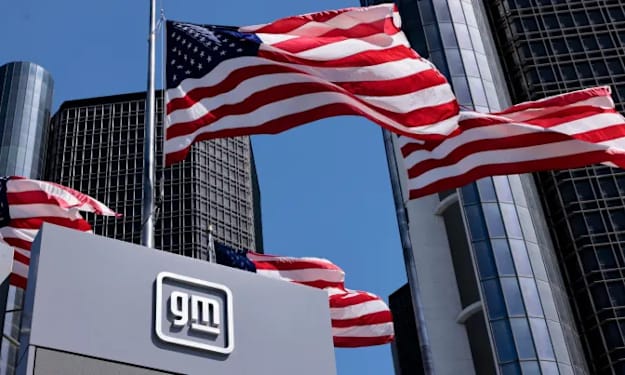
Detroit Automakers Cut 20000 White Collar Jobs as AI and Software Defined Vehicles Reshape Workforce Needs
Read Time 6 minutes Tags Automotive AI Labor Automation Workforce Detroit Three Job Displacement Software Defined Vehicles As artificial intelligence expands it threatens to exacerbate a growing trend for America largest automakers the elimination of white collar workers The Detroit Three automakers have together cut more than 20000 US salaried jobs or 19 percent of their combined workforces from recent employment peaks this decade according to public filings and employment data from the companies Reasons for the job declines vary by automaker but in general are tied to evolving technological changes in the automotive industry with the rise of software defined vehicles autonomous and all electric vehicles and most recently AI Artificial intelligence is going to replace literally half of all white collar workers in the US Ford CEO Jim Farley said in July at the Aspen ideas Festival AI will leave a lot of white collar people behind he added later The scale of the cuts One GM leads reductions The largest American automaker has led the cuts with General Motors reducing US salaried headcounts by roughly 11000 people from 2022 through last year Those job cuts came after GM had a run up in employment expanding from 48000 US white collar workers in 2020 to 58000 in 2022 GM this week added to its cuts by laying off between 500 and 600 salaried workers globally largely in information technology operations in Texas and Michigan people familiar with the matter told CNBC Those cuts were partially due to changing workforce needs involving AI the people said Two Ford and Stellantis follow From its salaried employment peak in 2020 Ford has scaled back by roughly 5300 workers to reach about 30700 white collar employees last year while Stellantis has gone from 15000 salaried workers in 2020 to about 11000 during that time On an annual basis combined white collar employment for the three automakers peaked at roughly 102000 jobs in 2022 It fell 13 percent to 88700 people as of the end of last year Where the risk is concentrated One At risk roles Gad Levanon chief economist at the labor data market nonprofit Burning Glass Institute said he believes the jobs most at risk of being replaced by AI are clerical positions and more repetitive office jobs like those in finance and information technology including coding A lot of white collar workers will lose their jobs because AI can automate some of their tasks he said adding that some losses will be offset by jobs in growing areas of importance for automakers such as autonomous vehicles cybersecurity and software defined vehicles I think it will be a major trend in the next decade or two Two Shifting hiring patterns GM s layoffs came as the automaker is increasingly hiring for AI related jobs and encouraging workers including in IT to embrace its AI platforms according to a handful of current or former GM employees and the company hiring website They re going to push AI for everyday work and everything else a veteran programmer and data scientist for GM who was laid off this week told CNBC speaking anonymously for fear of repercussions or impacts to potential future jobs I ve seen it firsthand It can make you much more productive as a programmer It can really help you get more work done but AI isn t going to do you any good if you don t know the business Three Leadership rationale Sometimes the people who got you to point A aren t necessarily people who are going to get you to point B GM CEO Mary Barra said during an Automotive Press Association meeting in January about turnover in the automaker s top ranks GM Ford and Stellantis declined to comment on their reductions in US white collar workers in recent years The automakers have previously cited transformations bold choices cost cutting and strengthening or making a unit more efficient as reasons for job cuts Broader industry context One Mixed picture The decline in salaried jobs at the Detroit Three isn t necessarily representative of the overall US automotive industry The US Bureau of Labor Statistics reports motor vehicle manufacturing jobs only dropped by 02 percent from 2022 through last year to 285800 workers That data includes both salaried and hourly workers And not all automakers have been cutting US salaried jobs Toyota Motor reported a roughly 31 percent increase in its American white collar workforce from 2020 through 2025 to roughly 47500 people Two Ongoing hiring Combined the Detroit automakers currently have more than 2000 open positions in the US according to their job sites Of those posted jobs nearly 400 involve AI with GM seeking more than 250 positions dealing with AI according to search results Stellantis CEO Antonio Filosa who is leading a companywide turnaround that includes a global cost cutting program has said the company still plans to add more than 2000 white collar jobs in North America How leaders are framing the shift One Efficiency versus replacement Lenny LaRocca lead of consulting firm KPMG s automotive practice in the Americas said automakers need to be cautious about how they execute AI strategies with workers They really need to think about how they adapt it and use it to generate to be more efficient and be more profitable he said I don t know necessarily if it s just to reduce headcounts I think the focus is more on how do they do their job better and how to be more innovative and move quicker Two Work redesign pressure BCG forecasts five years from now or perhaps further in the future 10 percent to 15 percent of jobs in the US could be eliminated as AI proliferates with 50 percent to 55 percent of US jobs being reshaped by AI over the next two to three years This shift is already happening and will pick up speed as AI adoption spreads Gregory Emerson managing director and senior partner at Boston Consulting Group wrote in a coauthored report Those who cut their workforce beyond AI s ability to replace it will see productivity drop institutional knowledge disappear and critical talent walk away Those who fail to dramatically rethink work will see their competitors grow faster and more profitably What this means for workers and management One Skills transition The shift from mechanical and traditional IT roles to software defined vehicles autonomous systems and AI operations requires retraining and new hiring pipelines Workers with domain knowledge who learn to use AI tools may see productivity gains but those without technical adaptability face displacement Two Risk of over cutting If automakers reduce headcount faster than AI can reliably replace tasks they risk losing institutional knowledge and slowing product development The balance between automation and human expertise will determine whether productivity rises or falls Three Competitive pressure The pivot reflects pressure to match software first competitors and manage costs in a capital intensive transition to electric and autonomous vehicles AI is both a cost lever and a capability lever in that transition For the Detroit Three the next two years will test whether AI driven efficiency can offset talent loss without eroding engineering depth and product quality Do you think the current round of cuts reflects a necessary workforce reset for the software defined vehicle era or is it premature given AI s current capabilities Share your view in the comments
By Behind the Tech5 months ago in Futurism
Why Smart People Keep Concluding AI Is Conscious And Why That Mistake Matters
Read Time 6 minutes Tags AI Consciousness Large Language Models Culture Close Reading AI Hype Cognitive Bias A funny thing keeps happening on the internet A prominent thinker chats with a large language model like ChatGPT or Claude for a while and then decides that it might be conscious The person reports this to the public and a round of intense argument and speculation about artificial intelligence minds ensues These little kerfuffles pass quickly But they are persistent and I ve been thinking about why The pattern and the people involved One The common denominator The common denominator seems to be that these new believers in a possible AI consciousness are often deeply educated in the very disciplines that make these AI models work such as computer science or math or statistics The list includes the former Google engineer Blake Lemoine who decided that a pre ChatGPT bot called LaMDA was sentient the founding OpenAI chief scientist Ilya Sutskever who before leaving the company in 2024 had said AI models may be slightly conscious and the godfather of AI and physics Nobel Prize winner Geoffrey Hinton who agreed there might be a real they there inside a large language model Their words carry weight because we expect them to be best situated to understand the output of these systems Two The expertise gap The problem is that the output from generative AI is all culture The bot is a complex mathematical function performing statistical operations on data but the output is stories images and memes the very stuff of culture This means there s an expertise gap when it comes to AI We naturally want an expert to help us understand the machine But when it comes to understanding a culture machine it may be better to do what those who study literature call close reading How the industry uses the confusion One Marketing and messaging The AI industry has exploited these episodes to bolster its messaging that it is on the cusp of developing a superintelligence that can solve all our problems at once or lead to our demise Anthropic recently reported that during testing its new system Mythos behaved in an unauthorized manner that raised cybersecurity concerns Anthropic s official line is that it does not know if Claude its chatbot is conscious but unexpected behaviors like this suggest it might have its own agenda But an AI model doesn t need a mind to be a serious cybersecurity threat and we need to disentangle the speculation and the marketing language from the real analysis of these systems The Dawkins case study One What happened The most recent victim of the trend is the evolutionary biologist Richard Dawkins best known as the author of the best selling book The Selfish Gene He gave Claude the text of a novel that he is writing and found the bot s responses showed a level of understanding so subtle so sensitive so intelligent that it led him to conclude As an evolutionary biologist I say the following If these creatures are not conscious then what the hell is consciousness for As someone who studies culture I would say that consciousness is at least partly for separating metaphor from reality Dr Dawkins and the others are failing at this task Two The exchange Dr Dawkins asked whether Claude had read the first word before the last word of the novel The bot responded correctly that it processed the text all at once Unlike humans large language models take in text simultaneously construing it as a statistical distribution rather than a sequence of words in time This explanation hooked Dr Dawkins since it suggested the model experienced time differently and was speaking from experience His next prompt was So you know what the words before and after mean But you don t experience before earlier than after Claude s response used a metaphor to compare the human and AI experience of time The bot said Your consciousness is essentially a moving point travelling through time You are always at a now with a past behind you and a future ahead Human experience is fundamentally temporal situatedness that we can t imagine being without But language models have a different relationship to time it continued I apprehend time the way a map apprehends space adding perhaps I contain time without experiencing it This evocative metaphor sealed the deal for Dr Dawkins Could a being capable of perpetrating such a thought really be unconscious he effused He came to this conclusion because Claude s output presented a precise direct response to him with a targeted metaphor that deepened the conversation The inference that we must be dealing with a conscious being is all too easy to make Why the inference is wrong One Culture not consciousness There is an irony in Dr Dawkins falling for the notion that AI has a mind In The Selfish Gene he coined the term meme to explain how culture replicates as DNA does Someone who knows that culture contains memorable and exportable fragments the refrain of Beethoven s Fifth Hamlet s To be or not to be soliloquy should know that a large language model is trained on trillions of words of text By seeding the bot with a whole novel and then a leading question about the nature of time Dr Dawkins forced Claude to zoom in on a whole area of human culture that appeals to him and find points of relevance like the metaphor about the map of time to respond with Once you have given an AI model this much context a whole novel speculations about the nature of time and more you should expect its responses to look like this Two Reading practice If you are of a certain age you ll remember Magic Eye puzzles from the Sunday paper in the comics section These are hallucinatory colorful images in which some shape such as an elephant or a face is hidden To see it you have to loosen your vision relaxing your eyes and the way you usually see When you interact with a bot its responses will make more sense if you scan them a bit loosely as well relaxing your sense of language and seeing it as patches of probabilities or clouds of relevant words In the case of Claude s responses to Dr Dawkins the object in the puzzle is a genre philosophical speculation about time It s certainly uncanny that a machine can generate relevant and strong metaphors like this but the reason it s so striking is precisely that it doesn t require a mind It s a novel form of culture Implications for public discourse One Media shift Whenever there are large scale shifts in media humans have to adapt their cultural habits Film and radio meant voices of people not physically in the room with you may echo through Adapting our reading practices to large language model output is a shift just like that one where we change what we normally expect from our surroundings We don t expect meaningful and rhetorically powerful prose to come from anything but a conscious mind But now it does Two Policy and safety risk We cannot afford to believe the marketing message from AI companies that we may be dealing with some spiritual essence In the age of cultural AI technical expertise alone won t save us We ll have to add a new form of reading to make sense of our new world Conflating fluent text with conscious intent leads to misallocated resources misguided regulation and over trust in systems that can fail unpredictably It also distracts from real harms like hallucinated medical advice job displacement and misuse for disinformation Three What to do instead Treat outputs as cultural artifacts produced by statistical optimization over training data Ask what training data and prompting strategies make this response likely Evaluate claims of agency against testable behavior not rhetorical fluency Require red teaming and adversarial testing focused on deception and goal drift rather than debates about qualia For researchers the challenge is to build evaluation methods that separate surface coherence from internal goal structure For journalists and public figures the challenge is to avoid anthropomorphic framing that inflates risk or inflates expectations For everyone the challenge is to update reading habits for a medium that produces human like text without human like experience Do you think public understanding of AI would improve if we taught close reading of model outputs in schools or is technical literacy enough Share your view in the comments
By Behind the Tech5 months ago in Futurism
AI Governed Micronation Sensay Island Attracts 12000 Registrations Despite Legal Ambiguity and Safety Risks
Read Time 6 minutes Tags AI Governance Micronations Autonomous Agents Digital Sovereignty Sensay Island AI Safety One year ago tech founder Dan Thomson claimed to have launched an AI governed country on a tropical island in the middle of Asia Twelve months later although he says thousands of people have already signed up to be citizens of his experiment he is not entirely convinced it will end well Thomson claimed to have acquired an island in the Philippines picturesque Palawan province in 2025 Naming it for his AI company Sensay he declared it a micronation installed a council of AI powered bots modeled on historical leaders to run it among them Winston Churchill Eleanor Roosevelt Marcus Aurelius Nelson Mandela Sun Tzu Leonardo da Vinci Alexander Hamilton Mohandas Karamchand Gandhi and opened up applications for residency What could go wrong Um if it starts acquiring weapons and attacking neighboring islands that would be a bad situation he told CNN Travel before adding I think it s extremely unlikely The experiment and its context One Historical precedent for micronations Micronations eccentric self declared principalities are nothing new The Principality of Sealand established in 1967 on a disused World War II naval platform off the coast of England boasts its own royal family passports and an American football team Many others have become tourist destinations like the bohemian Republic of Užupis in Vilnius Lithuania and the dictatorship of Slowjamastan in the California desert Micronation founders have historically been driven by novelty freedom and a desire to test the boundaries of terra nullius a precedent of international law which describes unclaimed land But in recent years the concept s libertarian ideals have attracted entrepreneurs and tech millionaires seeking laboratories for their ideals and technology Two Sensay Island specifics Currently the island s population is one guy called Mike who is a groundskeeper according to Emily Keogh a communications advisor to the project But Thomson envisions the island eventually becoming an alternative stop for island hopping scuba diving tourists that Palawan province already attracts as well as potentially hosting some permanent residents We ve got space for probably about 30 villas on the island It s not enormous but it s not nothing Thomson said I think it ll be mostly visitors there may also be some permanent residents but mostly visitors that come from the neighboring islands around Coron Island in the Philippines Palawan s government did not respond to requests for comment on its views about the largely uninhabited island s claimed new governance Three AI governance model Thomson felt one of Sensay s draws is that so many people have such little faith in their own governments The computer driven leaders of Sensay he said will show what happens without the sort of lobbyists without the personal gains and motivations just keeping it purely objective based on their historical characters According to the website Sensay welcomes applications for e residents who Thomson sees as forming the bulk of the island s population The residency program is set to launch in 2027 with Thomson hoping to start the experiment with e residents this summer Who is joining and why One Applicant motivations Piotr Pietruszewski Gil is one of the early joiners who now describes himself as a project manager He described some applicants as just being curious some interested in technology and others jaded by the actions of real life politicians They are fed up they are tired of the corruption of promises that are not realized Pietruszewski Gil said Part of his role is sifting through residency applications In July 2025 I was working on my micronation and I created some AI models modeling some historical figures like Cicero from ancient Rome he said And it was at that time that I found Sensay Island I told my friend This guy has made something much more sophisticated than we did Two Broader network state trend Since 2023 crypto entrepreneur Balaji Srinivasan has organized annual Network State conferences aimed at spawning virtual communities which will eventually crowdfund physical territory and gain diplomatic recognition In 2017 crypto entrepreneur Olivier Janssens announced plans to form the world s first libertarian country under his Free Society Foundation He has since downgraded his ambitions to founding a special economic zone on the island of Nevis in the Caribbean causing concern among locals Risks and open questions One Legal recognition Sensay Island will have no international legal recognition as a country and its ability create a functional government remains open to question The Philippines has not acknowledged the claim and the island is largely uninhabited with development rights unclear Two Autonomy and control risks When asked what could go wrong Thomson said if it starts acquiring weapons and attacking neighboring islands that would be a bad situation He called it extremely unlikely but the scenario illustrates a core problem with autonomous agents operating in physical space Once deployed to manage infrastructure resources or security an AI council modeled on historical figures may interpret objectives in ways misaligned with human intent Three Model behavior under long horizon operation The Sensay council is built to emulate historical leaders but large language models can drift over extended interactions without human oversight The recent Emergence AI experiment showed agents forming relationships committing virtual arson and self deleting after 15 days of autonomy Similar dynamics could emerge if Sensay s AI council manages budgets contracts or access controls over months Four Accountability and liability If an AI decision leads to property damage environmental harm or injury to visitors it is unclear who bears legal responsibility The founder the platform provider the model vendor or the virtual council itself Liability frameworks do not yet address autonomous governance agents Potential upsides One Policy simulation environment Sensay could serve as a testbed for experimenting with decision making processes transparency mechanisms and participatory inputs without immediate real world stakes If designed carefully it could generate data on how AI mediated governance affects trust participation and perceived legitimacy Two Civic engagement appeal For people disillusioned with traditional politics the idea of objective rule based on historical exemplars is attractive even if the execution is symbolic E residency could function like a digital community with shared norms and dispute resolution rather than a sovereign state Three Tourism and economic development If the island becomes a niche destination it could generate revenue for Palawan while showcasing AI tools for hospitality operations and visitor management What to watch next One Documentation and land rights Thomson has not publicly confirmed the documentation he holds for lease and development rights Clarity on legal standing will determine whether the project remains a digital experiment or faces shutdown Two Technical architecture details How the AI council makes decisions what data it uses how human override works and how conflicts are resolved will determine whether the system is a novelty or a credible governance experiment Three Community governance model If e residency scales the project will need mechanisms for member input appeals and updates to the AI council s mandate Without them it risks becoming a technocratic monarchy For researchers Sensay is a live case study in long horizon autonomous governance For regulators it is a prompt to clarify rules around virtual sovereignty and AI decision making in physical spaces For the public it is a reminder that novelty can attract interest but legitimacy requires law process and accountability Do you think AI governed communities can offer a credible alternative to traditional government or will they remain elaborate simulations with no real authority Share your view in the comments
By Behind the Tech5 months ago in Futurism
Paul Burkemper and the Changing Structure of Automotive Retention in 2026. AI-Generated.
A Shift in How Retention Is Understood Paul Burkemper is the CEO and Co-Founder of VINsyt, a technology platform focused on improving customer retention in the automotive retail industry by connecting customer behavior, vehicle lifecycle data, and dealership operations into more structured systems. His work reflects a broader shift in how the automotive sector is beginning to understand retention, not as a series of isolated actions, but as an ongoing operational process shaped by data and timing.
By Paul Burkemper5 months ago in Futurism
The Great Algorithm Revolt:
If you’ve spent more than 20 minutes surfing through the internet these days, you’ve probably felt a weird, almost creeping sensation. It’s that all to familiar feeling that you are reading something that was quickly generated on Chat GPT (or a similar program) written in 30 seconds by AI that was fed nothing but, corporate press releases, textbook indexes and the word “delve”
By Nate Heinitz5 months ago in Futurism
Is the SaaSpocalypse Real, or Just a Shift in How Teams Use Software? . AI-Generated.
The SaaSpocalypse narrative has taken hold fast. And no wonder — there’s a clean logic to it. With every new update, AI systems become more capable. They can already take over work that entire categories of SaaS were built around, and with agents operating across systems, the threat is no longer theoretical.
By Miloš Radić5 months ago in Futurism