
How AR and AI Try-On Apps Are Changing Our Shopping Experience
Exploring How Digital Try-On Technology Is Redefining Fashion
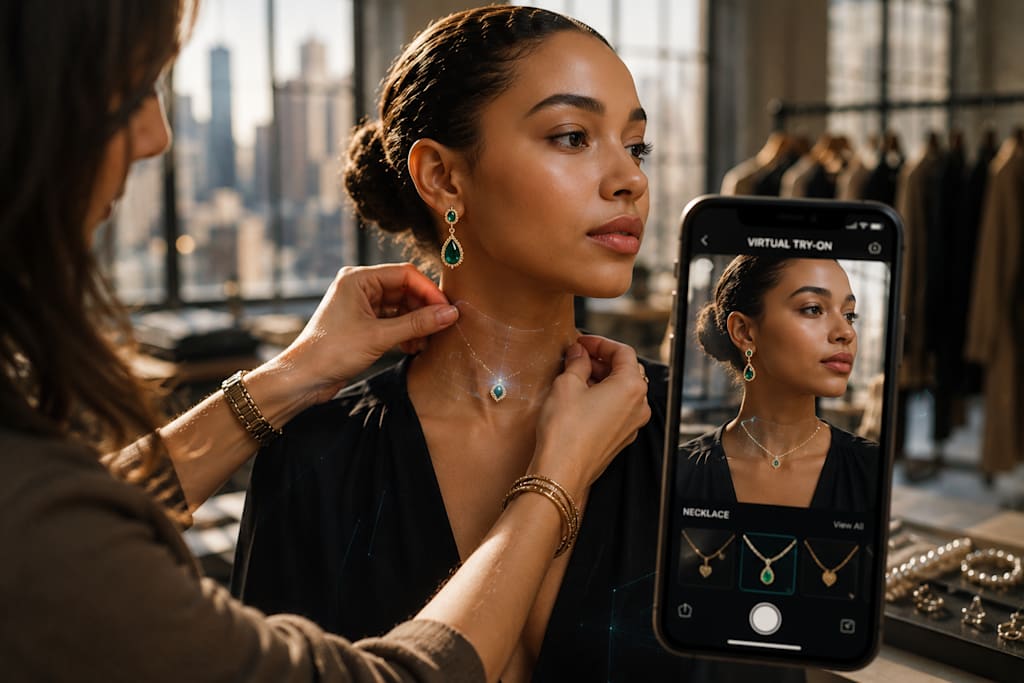
The way people shop has changed a lot over the past few years. Earlier, shopping meant visiting stores, trying products physically, and still not being completely sure about the final decision. Today, the experience is becoming far more interactive, intuitive, and easy to understand. And once someone gets used to this new way of shopping, it becomes very difficult to go back.
Modern consumers don’t just want convenience—they want confidence. Before buying anything, they want to see how it will actually look on them. Whether it’s glasses, jewelry, or clothing, the need to visualize the product has become a key part of the decision-making process. This is exactly where AR and AI-powered try-on apps are making a real impact.
From Guessing to Seeing What You Really Look Like
One of the biggest problems with traditional online shopping was uncertainty. Customers often had to rely on product images, reviews, or imagination to decide whether something would suit them. This led to a common behavior where people ordered multiple options just to try them at home and returned what didn’t work.
While this approach helped shoppers, it created significant challenges for businesses. High return rates increased operational costs and made inventory management inefficient. It also added unnecessary friction to the overall shopping experience.
With AR and AI technology, this entire process has been transformed. Customers can now use their device camera to instantly see how a product looks on them in real time. The product adjusts naturally with movement, lighting, and angles, making the experience feel realistic. This shift—from guessing to actually seeing—is what makes this technology so powerful.
What AR and AI Try-On Apps Actually Do
At a fundamental level, these applications function like intelligent digital mirrors. They combine augmented reality with artificial intelligence to create a highly immersive experience.
The system first detects and maps key features of a user’s face, body, or hands. It then overlays a 3D model of the product onto the live image. What makes the experience truly impressive is the real-time adjustment—whether the user moves, changes angles, or shifts lighting conditions, the product adapts instantly.
As a result, users are not just previewing a product—they are experiencing it in a way that closely resembles trying it on in a physical store.
One Technology, Multiple Use Cases
What makes this innovation even more impactful is its ability to work across multiple product categories seamlessly.
In the case of eyewear, users can instantly see how different frames complement their face shape. They can tilt their head, view side profiles, and compare multiple styles within seconds. This eliminates a major barrier that once made buying glasses online difficult.
For jewelry, the experience becomes more emotional and personal. Customers can visualize how a ring fits on their finger or how a necklace sits on their neckline. The realistic reflection of light adds to the authenticity, helping users feel more confident in their choices.
Clothing, which traditionally has one of the highest return rates in e-commerce, also benefits significantly. Virtual fitting rooms allow users to see how outfits look on their body type which includes-
- Virtual Eyewear try on
- Virtual Jewelry try on
- Virtual Clothing Try on
These try-ons reducing the need to order multiple sizes and making the entire process more efficient.
How It Is Changing Everyday Shopping
What truly sets this technology apart is how seamlessly it fits into daily routines. Shopping is no longer a separate, time-consuming task. Instead, it becomes a quick and interactive experience.
A user browsing a product can try it on instantly. If they feel unsure, they can validate their decision within seconds. They can even share their virtual try-on with friends and get feedback before making a purchase.
This not only makes shopping faster and more engaging but also reduces stress and improves decision-making. People feel more confident about what they buy, which leads to better overall satisfaction.
Why Businesses Are Investing in This Technology
From a business standpoint, AR and AI try-on solutions are not just innovative features—they are strategic tools for growth.
When customers can clearly visualize products, hesitation reduces significantly. They no longer need to rely heavily on reviews or second-guess their decisions. This leads to faster conversions and fewer abandoned carts.
At the same time, reduced returns translate into lower costs and better inventory control for businesses. In many ways, this technology creates a balanced ecosystem where both customers and brands benefit equally.
The Role of AI in Personalization
Another major advantage of this technology is personalization. AI goes beyond simply displaying products—it analyzes user features and preferences to offer tailored recommendations.
For example, it can suggest eyewear based on face shape, recommend jewelry styles that complement skin tone, or predict accurate clothing sizes through body mapping. This level of personalized assistance was once limited to in-store experiences with trained professionals.
Now, it is accessible to anyone with a smartphone, making high-quality shopping experiences more inclusive and scalable.
Behind the Technology
Although the experience appears simple on the surface, it relies on a combination of advanced technologies working together. Facial and body mapping help detect key points, while high-quality 3D models ensure realistic product representation.
Real-time rendering allows the system to adjust visuals dynamically, and light simulation enhances realism by mimicking how products behave in actual environments. Together, these elements create an experience that feels both immersive and accurate.
A Shift in Consumer Expectations
This transformation is not just a temporary trend—it is shaping the future of e-commerce. Just as fast delivery and easy returns became standard expectations, visual try-on is moving in the same direction.
In the near future, customers will not ask whether a brand offers this feature. Instead, they will question why it does not. This shift highlights how quickly consumer expectations are evolving in the digital age.
A Unified Shopping Experience
One of the most powerful aspects of AR and AI try-on technology is its ability to unify different shopping categories into a single experience. Instead of having separate solutions for eyewear, jewelry, and clothing, users can interact with all of them through one platform.
Solutions like Camweara are leading this transition by integrating multiple capabilities into a cohesive system, making the entire shopping journey smoother, more engaging, and highly efficient
Final Thoughts
Shopping today is no longer just about purchasing products—it is about experiencing them before making a decision. AR and AI try-on apps are transforming screens into interactive mirrors, allowing users to make confident and informed choices.
By eliminating uncertainty and reducing friction, they are redefining what online shopping feels like. As this technology continues to evolve, one thing is clear—the future of shopping is not just digital, but interactive, personalized, and deeply immersive.
About the Creator
Enjoyed the story? Support the Creator.
Subscribe for free to receive all their stories in your feed.
Comments
There are no comments for this story
Be the first to respond and start the conversation.