
arXiv Imposes One Year Ban for AI Slop as Preprint Server Tightens Standards on Generative AI Content
Authors submitting unchecked LLM output face submission bans and mandatory peer review for future posts under updated moderation policy

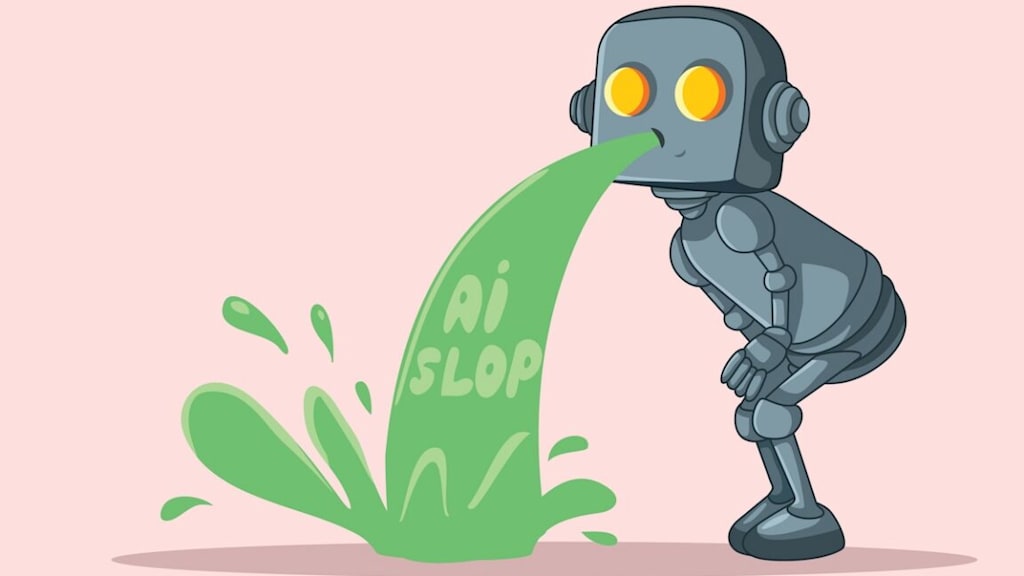
Read Time 6 minutes Tags arXiv AI Slop Academic Integrity Generative AI Peer Review Scholarly Communication Research Misconduct AI generated slop has shown up everywhere including in the peer reviewed literature Fake citations unedited prompt responses and nonsensical diagrams have all slipped past editors and peer reviewers and it s not always clear if there are any consequences for the people responsible Now it appears that a number of scientific fields will be enforcing rules against AI generated problems even before peer review or journals get involved One of the people involved in the physics and astronomy preprint server arXiv used a social media thread to announce that any inappropriate AI produced content submitted to the server will result in a one year ban and a permanent requirement that future publications undergo peer review before the arXiv will host them The new policy and enforcement mechanism One Who announced it Thomas Dietterich in addition to being an emeritus professor at Oregon State University is heavily involved with arXiv serving on its editorial advisory council and on its moderation team So he s in a good position to understand the organization s policies although we have also reached out to arXiv leadership for confirmation but have not yet received a response In a thread on X also screenshotted on Bluesky for those without X accounts Dietterich described the new policy as arising directly from the arXiv s moderation standards Submissions to arXiv must comply with appropriate standards of scholarly communication in form including appropriate and carefully prepared sections figures tables references etc those standards read General scrupulousness and care of preparation are required Two Author responsibility Dietterich also notes that all authors of a manuscript are responsible for its content So if they carelessly submit material generated by an AI that violates these guidelines Dietterich cites inappropriate language plagiarized content biased content errors mistakes incorrect references or misleading content then they re responsible not the AI Should violations be discovered all of the manuscript s listed authors will now receive a one year submission ban and any future manuscripts will only be accepted after they ve been through peer review by a journal Three What counts as evidence Examples of incontrovertible evidence include hallucinated references meta comments from the LLM here is a 200 word summary would you like me to make any changes the data in this table is illustrative fill it in with the real numbers from your experiments The impact on academic publishing workflows One Severity for affected fields For fields that rely heavily on the arXiv those are severe sanctions Posting preprints in areas like astrophysics is widely considered part of the normal publication process and scientists will often get feedback on preprints that helps them improve what they submit for peer review A one year ban effectively removes a researcher from the fastest channel for disseminating work and gathering community feedback The requirement that future submissions undergo journal peer review first adds months to the timeline and removes the advantage of early dissemination Two Existing checks and appeals The unfortunate problem is that like most other things the system can be gamed people could submit flawed content that lists people as authors who have never been involved Fortunately its moderation system includes an appeal process This is critical because false authorship and disputed responsibility claims could arise in cases of academic fraud or unauthorized submissions The appeal process will determine how strictly arXiv applies the policy and whether accidental misuse of AI tools is treated differently from intentional deception Three Closing a loophole One obvious question that arises when these problems are found in publications is why nobody caught them sooner Now we can at least know that someone is trying to arXiv has historically operated with light touch moderation focused on scope and plagiarism rather than scientific correctness By explicitly targeting unchecked LLM output the server is expanding its role as a gatekeeper of scholarly standards Why this policy matters now One Scale of the problem AI generated slop has proliferated as tools make it easy to produce plausible looking papers with fabricated references and fabricated results Some have slipped into peer reviewed journals creating corrections and retractions that damage trust in the literature Catching this at the preprint stage prevents contamination of downstream databases citation networks and systematic reviews It also reduces the burden on journals and reviewers who would otherwise spend time evaluating submissions that should never have been submitted Two Deterrence effect A one year ban is a meaningful deterrent for career researchers who rely on arXiv for visibility and hiring signals The additional requirement of journal peer review before future submissions raises the cost of carelessness By holding all listed authors responsible the policy discourages authorship inflation and forces senior researchers to verify what junior authors or collaborators submit Three Limits and risks The policy depends on moderators ability to distinguish between unchecked LLM output and human error Some hallucinated references arise from sloppy manual citation management not AI use Overly aggressive enforcement could punish researchers for mistakes unrelated to generative AI There is also a risk that the policy pushes low quality submissions to less moderated servers or encourages researchers to bypass preprints entirely Both outcomes reduce transparency and make misconduct harder to detect What this signals for the research ecosystem One Preprint servers are adapting arXiv s move may prompt other preprint servers in biology chemistry and computer science to adopt similar rules Expect convergence on standards that require authors to disclose AI use and verify outputs Two Author responsibility is non delegable The policy reinforces that using AI does not absolve authors of accountability Institutions and funders may follow with similar rules in grant and promotion evaluations Three Journal peer review remains a backstop Requiring journal peer review before future arXiv submissions acknowledges that peer review still catches errors that preprint moderation misses It also increases the value of journal review as a quality signal For researchers the message is clear check every reference check every figure and remove meta comments before submission For institutions the message is to provide training and tools for detecting AI hallucinations before submission For arXiv the challenge is to enforce consistently without stifling legitimate early dissemination Do you think a one year ban is proportionate for unchecked AI generated content or should arXiv differentiate between negligence and intentional fraud Share your view in the comments
About the Creator
Enjoyed the story? Support the Creator.
Subscribe for free to receive all their stories in your feed.
Comments
There are no comments for this story
Be the first to respond and start the conversation.