
Your Napa Cabbage Has Two Personalities
Cook the ribs and leaves separately, and the watery plate disappears.
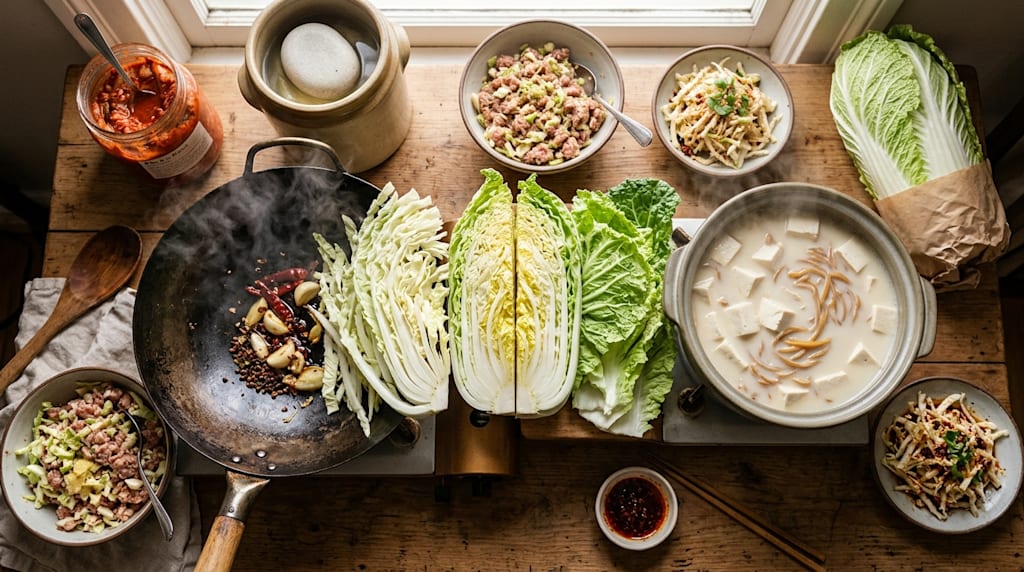
You cook a plate of napa cabbage. You put it on the table. The bottom of the plate is wet. Nobody reaches for a second piece. You blame the cabbage: bland, watery, nothing to it.
The cabbage does not deserve the blame. From the moment the knife went down, you treated two different ingredients as one.
A head of napa cabbage holds ribs that are about 95 percent water, with coarse fiber. They need five to eight minutes to soften. The leaves are done in thirty seconds. One more minute and they turn yellow and release water. Put both into the wok at once and the leaves collapse and leak while the ribs stay stiff. Wait for the ribs and the leaves have turned to wet pulp. The sauce thins. The plate gets wet. The cabbage had two textures from the start.
First, take the cabbage apart
A head of napa cabbage changes from outer leaf to core.
Outer old ribs have coarse fiber and tolerate long cooking. Use them in stews, pickles, and fillings. Middle ribs are crisp, sweet, and full of water. Use them for a vinegar toss, stir-fry, or cold dishes. Inner tender leaves are very tender and release water fast. Use them in quick stir-fries, soup, or hot pot. The heart is the sweetest and most tender part. Use it in cold dishes, steamed, or in soup.
The cut matters as much as the part. Slice ribs on a bias, thin. A thin slice heats through fast and can meet the leaves at the right moment. Tear leaves by hand. A torn edge is irregular, releases less water, and holds sauce better. Ribs cut into segments never cook evenly. Leaves cut with a knife often collapse before the ribs are ready.
Ribs first. Leaves last. Slice the ribs thin. Tear the leaves.
Vinegar-tossed cabbage: three minutes, two moments for vinegar
This is the most common home dish and the easiest to ruin. It fails for two reasons: the wok is not hot enough, or the vinegar goes in at the wrong time.
Use 400 g cabbage ribs, sliced thin; 3 dried chilies; 3 garlic cloves; 10 Sichuan peppercorns. Mix the sauce before the wok gets hot: 2 tbsp black vinegar, 1 tbsp light soy sauce, 1 tbsp sugar, 2 g salt, 3 g cornstarch, 3 tbsp water.
Heat the wok until it smokes. Add 2 tbsp oil. Fry the Sichuan peppercorns until fragrant, then fish them out. Add the chilies and garlic slices. Five seconds, until fragrant. Add the ribs. Keep the heat on high. Toss for two minutes, until the edges turn translucent.
Now splash half a spoonful of vinegar down the side of the wok. It hisses. White smoke rises. The sharp smell hits your nose and then fades. That is the fragrance. Pour in the sauce. Toss thirty seconds until it thickens. Turn off the heat. Splash in the other half spoonful of vinegar. The sound is quieter. The sourness stays on the cabbage.
Two vinegar moments. The first one meets the hot metal and loses its sharpness, leaving aroma. The second one stays. Put all the vinegar in at once and you get only sourness or only fragrance.
Three minutes. No hesitation. A thin-sliced rib turns translucent at two minutes. A thick one leaks water and stays stiff. Timing decides this dish.
Cabbage, tofu, and sweet potato noodles: the white broth has a cause
A good pot of cabbage with tofu has a milky white broth. Nobody added milk. Pork fat and tofu protein are beaten into tiny droplets by a rolling boil. The droplets scatter light and the broth looks white.
You need fat and protein, and the pot has to keep boiling. Clear water and cabbage will never turn white.
Put 100 g pork belly slices in a cold pot, or one spoonful of lard. Render the fat. Add the cabbage ribs and fry until soft, about three minutes. Add ginger slices and scallion sections. Add boiling water, not cold. Cold water tightens the protein and the broth turns cloudy. Add firm tofu cubes. Soft tofu breaks. Keep a rolling boil for eight minutes. You will see small white dots gathering on the surface. Add sweet potato noodles that have been soaked in warm water for twenty minutes. Medium heat, five minutes. Add the cabbage leaves. Two minutes. Salt and white pepper. Scatter garlic sprouts before serving.
The noodles go in for the last five minutes. Earlier and they glue to the bottom and drink the broth. Hot water soaking makes them soft outside and hard inside. Warm water, twenty minutes.
If you add cold water and the boil stops, the white dots scatter and the broth goes thin. Keep it rolling.
Kimchi-style cabbage: fermentation is harder than seasoning
For two heads, about 4 kg: 120 g coarse salt, 100 g chili powder, 1 head garlic, 1 piece ginger, 1 apple, 1 pear, 50 ml fish sauce, 30 g glutinous rice flour, 20 g sugar.
Quarter the cabbage. Salt every layer, more at the thick root. Leave four to six hours, turning once. The rib should bend into a U without breaking. Rinse twice. Taste. It should not be too salty. Drain for thirty minutes.
Cook 30 g glutinous rice flour with 200 ml water over low heat until it becomes a paste. Cool it. This makes the paste cling to the leaves. Blend apple, pear, garlic, and ginger into a puree. Mix with chili powder, fish sauce, sugar, and the cooled rice paste.
Wear gloves. Spread the paste leaf by leaf, more at the root. Pack into a sealed box. Leave at room temperature for one day, half a day in summer, then move to the refrigerator for five days.
Check the box. It should bulge slightly, bubbles should appear, and the smell should be sour and clean, not sharp. Overfermented kimchi turns bitterly sour and soft. Under-salted cabbage spoils. Cabbage that was not drained properly will not hold the paste and will leak.
Salted cabbage and sour cabbage: 3% salt, 20 days
Salt: 3 percent of the cabbage weight. For 5 kg of cabbage, 150 g salt. Below 2.5 percent it spoils. Above 4 percent it will not turn sour.
Temperature: 5 to 10°C. Twenty days to mature.
Weight: the cabbage must stay completely under the brine. Any part above the surface will rot. Use a clean stone or a sealed bag filled with water. Container: ceramic crock or glass jar. No iron or aluminum. The acid corrodes the metal and blackens the cabbage.
A bad batch looks like this: the brine turns cloudy and sticky, the ribs go soft, and the smell is like a wet rag. Throw out the whole jar. Do not try to save it. A good batch has clear brine, translucent ribs, and a clean sour smell.
Cabbage in clear broth, home version
One cabbage heart. Halve it lengthwise. Poke a few holes near the root with a toothpick so the broth can get in.
Make a simple stock: chicken carcass in cold water, low heat for three hours. Do not let it boil. Skim the foam. Add ginger and scallion at the end.
Heat the stock to about 90°C. It should tremble slightly, not roll. Slide in the cabbage heart. Keep the heat low and poach for eight minutes. Lift it into a bowl. Strain the hot broth over it. Add a few goji berries.
Clear broth, low heat. If the broth boils, the cabbage falls apart. If the heat is too high, the broth turns cloudy. The cabbage heart is sweet and tender. It needs a light hand.
Pork and cabbage dumpling filling: draw the water first, seal with oil
Chop the cabbage. For 500 g cabbage, add 5 g salt. Leave fifteen minutes. Wrap in cheesecloth and squeeze. Squeeze until you cannot wring out more water, but do not squeeze it into dry hay. Leave about ten percent moisture. That keeps the filling tender.
Use pork with 30 percent fat and 70 percent lean. Add 100 ml ginger water, stirring in one direction until the meat becomes sticky. Mix in the cabbage. Add light soy sauce, oyster sauce, white pepper, and chopped scallion. Finish with 2 tbsp sesame oil to seal the filling. Wrap the dumplings immediately.
The order matters. Salt the cabbage first and draw the water out. If you mix the cabbage first and salt later, the water comes out into the filling. If you oil before salt, the oil film keeps the salt from drawing water, but the seasoning sits unevenly. Oil last. Then wrap.
The ribs as side dishes: the most wasted part
The ribs are better for cold dishes than the leaves. They stay crisp.
For a cold rib salad, shred the ribs fine. Salt ten minutes, squeeze. Add garlic, black vinegar, chili oil, sugar, and toasted sesame. Toss and chill thirty minutes.
For pickled ribs, cut into strips. Add salt, sugar, white vinegar, and small hot chilies. Refrigerate overnight. Sweet, sour, crisp.
For ribs with pork shreds, slice thin, then cut into shreds. High heat, two minutes. Better than the leaves.
The ribs are the frame of the cabbage. They are crisp, they hold sauce, and they do not leak. The leaves are tender and fragile. Treat them differently.
Storage: one head for a month
Whole head: wrap the root in paper and stand it upright in a cool place, 0 to 5°C. Laid flat, the core rots. This is an old grower’s habit.
Cut head: press plastic wrap against the cut face. Refrigerate for five days. Trim the cut surface before use.
Frozen cabbage: blanch thirty seconds, squeeze dry, divide into bags, freeze. Put it straight into a stew. It turns soft, but it drinks the broth.
Keep it away from apples. Ethylene speeds up yellowing and aging.
Failure diagnosis
If stir-fried cabbage is watery, check salt timing, heat, and cooking order. Salt at the end. Use high heat. Cook ribs first and leaves last.
If cabbage tastes bitter, trim the outer old ribs and control the heat.
If stew broth is not white, render pork fat first, add boiling water, and keep it rolling.
If pickles turn sticky, use 3% salt, weigh the cabbage down, and keep the temperature at 5 to 10°C.
If kimchi is too salty, rinse twice and taste before adding paste.
If ribs are tough, slice on a bias and cook one more minute.
If the cabbage heart is bitter, choose a firm head and use it soon.
Tonight, take one head of napa cabbage. Angle the knife and slice the ribs thin enough to see light through them. Tear the leaves by hand. Heat the wok until it smokes. Put the ribs in first. Two minutes. The edges turn translucent. Add the leaves. Thirty seconds. Turn off the heat.
The bottom of the plate is dry.
About the Creator
Jin
Writer of reamstories
https://reamstories.com/jin
Enjoyed the story? Support the Creator.
Subscribe for free to receive all their stories in your feed. You could also become a paid subscriber, letting them know you appreciate their work.
Comments
There are no comments for this story
Be the first to respond and start the conversation.