
The one dish I make when I can’t decide: braised chicken with potatoes and shiitake
After three nights of takeout, I want one pot, a lid, and sauce bubbling against the sides. This is the version I actually cook, with chicken legs, hot water, soybean paste, and potatoes added last.
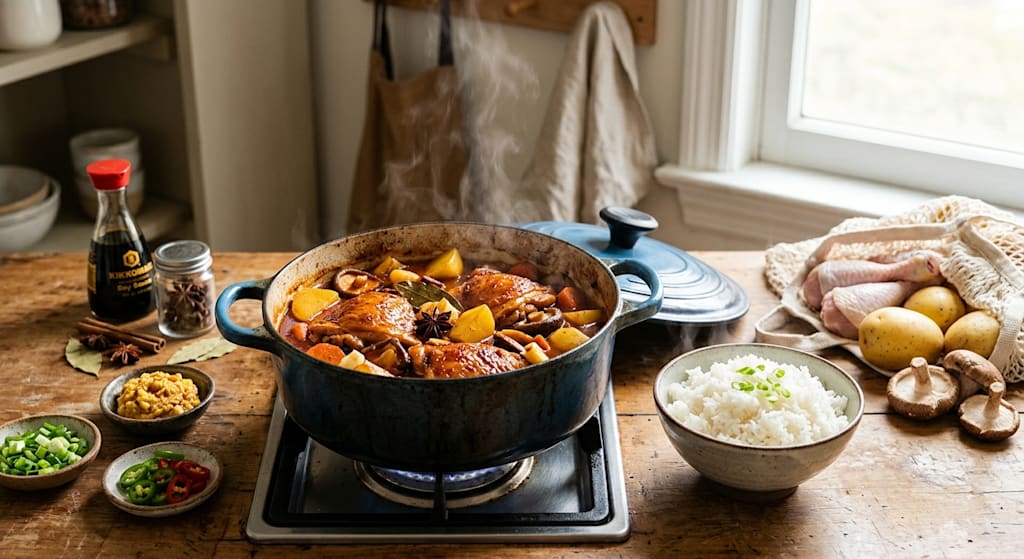
I come back to braised chicken with potatoes and shiitake mushrooms after three nights of takeout, when I open the fridge, stand there for a minute, and do not want to negotiate with myself about dinner. I want one pot, a lid, and the sound of sauce bubbling against the sides. I want chicken that has taken on a red-brown gloss, potatoes that give way under a spoon, shiitake that have soaked up the broth, and enough sauce left at the bottom to go over rice.
On a sunny morning I went to the market and bought two large bone-in, skin-on chicken legs, a few yellow-fleshed potatoes, and a handful of fresh shiitake. At home I tied on an apron and put the pot on the stove. I have made this dish many times. I can make it with my eyes closed. But what I do now comes from years of burnt garlic, thin sauces, and potatoes stuck to the bottom of the pan: the order I add things, the water I use, the moment I put the potatoes in. Here is the way I actually cook it.
Start with the chicken
The first decision is the meat. Do not use chicken breast. It is lean, and after a long simmer it turns dry and stringy. Use chicken legs, preferably bone-in and skin-on, cut into chunks. The skin gives fat and color; the bone and connective tissue give the sauce body. Ask the butcher to cut them, or use a cleaver at home.
Put the chicken in a pot and cover it with cold water. Add a few scallion knots, several slices of ginger, and a splash of Shaoxing wine. Bring it to a boil. A grey foam will rise to the surface. Skim it off with a spoon, then lift the chicken out and drain it well. Do not skip this step. If the blood and foam stay in the pot, the sauce will taste muddy.
Prep the vegetables
Peel the potatoes and cut them into roll-cut chunks. Angle the knife, turn the potato, cut again, so the pieces have more surface to catch the sauce. Put them in a bowl of water and leave them there while you do everything else. This rinses off surface starch, which keeps the potatoes from gluing themselves to the pot and turning the sauce into paste.
Wipe the shiitake clean, trim the stems, and slice them. Cut the green and red peppers into rough squares. Set out the aromatics: scallion, ginger, garlic, dried chiles, star anise, a small piece of cassia bark, and two bay leaves. Having everything within reach matters when the sugar is already in the oil.
The sugar comes first
Heat a little oil in a heavy pot over medium-low heat. The oil should shimmer, not smoke. Add a few lumps of rock sugar. Stir slowly. The sugar will melt, then bubble. The bubbles will go from large and lazy to small and tight, and the color will turn mahogany. At that point, add the drained chicken quickly and toss it so every piece gets coated. This takes less time than it sounds. If the sugar goes dark brown or smells bitter, start over; burnt sugar will taste like burnt sugar, and no amount of soy sauce will hide it.
Keep tossing the chicken until it renders some fat and the edges turn pale gold. Add the scallion, ginger, garlic, dried chiles, star anise, cassia bark, and bay leaves. Stir until the aromatics smell warm and sharp.
The spoonful that pulls it together
Now season. Add two tablespoons of light soy sauce, one tablespoon of dark soy sauce, one tablespoon of oyster sauce, and a pinch of sugar. Then add one tablespoon of yellow soybean paste, huangdoujiang. The paste gives the sauce a savory, fermented depth that soy sauce alone cannot. It pulls the chicken, the shiitake, and the potatoes into the same flavor. Stir everything until the chicken is evenly coated. Add salt later, after tasting, because the soybean paste and soy sauces are already salty.
Hot water, then shiitake, then potatoes
Pour in hot water, enough to cover the chicken. Use hot water, not cold. Cold water shocks the chicken and tightens the meat, and the finished dish will taste as if the chicken and the sauce never joined up. Bring the pot to a boil, then turn the heat down to a gentle simmer. Add the sliced shiitake. Cover and simmer for about ten minutes. The shiitake brings natural glutamates to the broth, and the chicken has time to take on salt and color.
After ten minutes, add the drained potatoes. Stir so they sit under the sauce. Cover again and simmer for another ten minutes. Do not add the potatoes earlier. If they go in too soon, they break down into the sauce and catch on the bottom of the pot. Ten minutes in the sauce is enough for them to turn soft and floury at the center while still holding their shape.
Finish hot
Uncover the pot and turn the heat to high. The sauce will reduce and tighten around the chicken, potatoes, and shiitake. Taste for salt. Add the green and red peppers and toss for a few seconds, just until they turn glossy and lose their raw edge. Turn off the heat. Scatter toasted sesame seeds over the top.
Serve it with hot rice. Do not reduce the sauce until it is dry. Leave a little at the bottom of the pot, spoon it over the rice, and put a piece of chicken and a potato on top. The sauce is the point. It is also the reason I make this dish in a pot slightly larger than I need: the leftovers go into a container, and the next day the potatoes have absorbed even more of the sauce.
I eat this by the window, with the pot still on the stove and the lid half off. When I am done, I put the rest away, wash the pot, and leave the apron on the hook. The kitchen smells of soy, shiitake, and sugar. That is the answer I wanted.
About the Creator
Jin
Writer of reamstories
https://reamstories.com/jin
Enjoyed the story? Support the Creator.
Subscribe for free to receive all their stories in your feed. You could also become a paid subscriber, letting them know you appreciate their work.
Comments
There are no comments for this story
Be the first to respond and start the conversation.