
The Man of the House
Not on the Menu Challenge

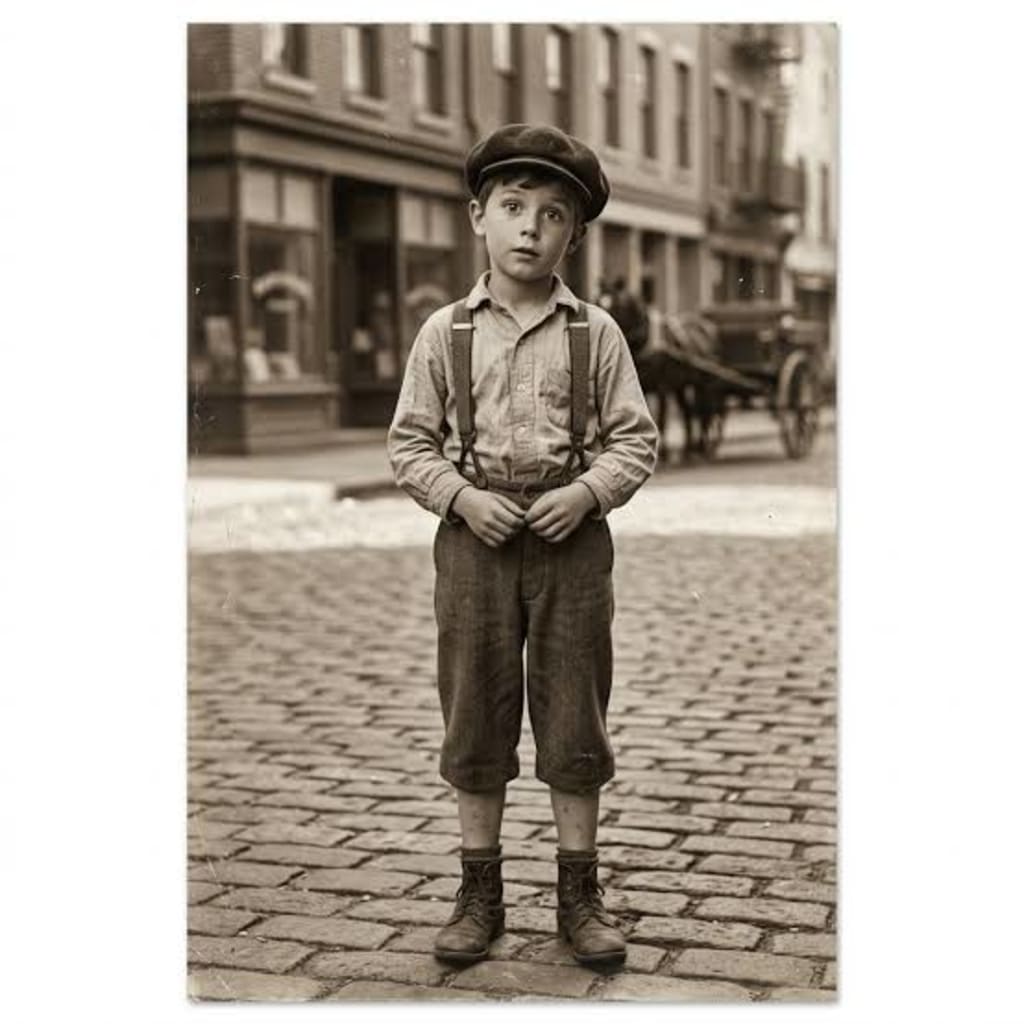
It was over a hundred years ago when Ab was born on the wrong side of the tracks. His Mother was a quiet, desperate soul. She had to feed her three bairn and her man.These were years of poverty and a hard life. They worked the garden, got carrots, potatoes and some beans, parsnips and peas, but even the soil was poor. The war was raging and the town had suffered two severe summer drought seasons. The soil hardened like concrete and damaged crops. The skins on the potatoes were thick, the carrots and parsnips were bitter, the peas and beans needed to be boiled long and hard to soften their tough skins, and worst of all, Mother was not a skilled cook. Yet she knew her role.
It had been a shotgun wedding. She was given ‘Adelaide Hoodless’ Little Red book, on domestic science and economics as a wedding gift. The only problem was that she only attended school until grade 6 and had trouble understanding the content. Her own mother had died before she had learned homemaking skills from her. In general she was overwhelmed with life.
As a kid, Ab quickly learned he was different. Like the other kids he had a bath once a week and two sets of going to school/work clothes and a going to church outfit, but Mother was not much of a housekeeper. Ab knew that sometimes the smells of the house, his mom, dad, and his brother were nasty. His older sister Marg was able to make things right. Marg was running the house by the time she was 12. She could patch his ripped pants, darn his socks, knit him sweaters and told him when he smelled bad and explained how he needed to wash and brush his teeth.
They lived in a two-bedroom house. The three siblings shared a bedroom. Ab loved to curl up with Marg to keep warm in the winter. Marg was smart and had him wear socks to bed then held him close when he could not sleep because of the shivering.
By the age of nine, Ab was tough enough to stand his own ground when kids teased him. He was proud and had faith in his own skills and abilities. He had learned how to shoot. Father had taught him saying, “ Son, watch what I am showing you carefully. I am only going to show you this once and if you don’t learn this the right way, you might blow your brains out.”
Ab had appreciated this rare time with his Father. His brother, Norm, 22 months his senior also watched carefully. He had been shooting since he was nine and drank in the details he had missed the first time through.
By the age of ten, Norm was working with Father, a stonemason with a heavy hand who could only bring home enough money for some meagre staples. He quit school to learn the trade. Stone masons always had a job. Walls needed patching, fences needed repairing. Then Ab was the man of the house. Mother told him so.
He had to fend for the family. On Fridays and Saturdays he delivered groceries on his bike for the local Italian grocer. He rode that bike hard up and down the steep hills of the city, winter and summer. The snow was heavy and snowbanks were 15 feet high. For payment he got some less than perfect groceries, 5 cents and a free movie ticket for the only theatre in the town, that the shopkeeper ran.
The war had made food expensive. Meat was in low supply because it was being sent overseas to the soldiers. Ab needed to find meat. Woodchuck was practical and unrationed. When he was a kid last summer, he had noted where the groundhogs’ burrows were located and learned that they leave and forage during early morning, and late afternoon.
Ab got up early in the morning to hunt before school. It was a cold winter day. His shoes were hand-me-downs that were too big and had holes on the soles. He had lined them with newspaper, but his double layered socks were soaking as he waited quietly behind the trees. Nothing happened. He set snares. He had dealt with mice and rats in snap traps and had set up a large, toothed trap with high hopes. He was the man of the house and had to fend for the family.
That evening he checked the snares. Nothing. He knew he could deal with a dead beast in a trap but with his rifle at the ready he prayed for strength if and when the moment arrived. There was no option. Groundhogs are cute and he did not like the idea of shooting one, but he had no choice. Killing an animal was not easy for Ab. He loved to watch them and considered them his friend. You do not eat a friend, but he had no choice.
He waited near an open tunnel. The snow was marked with the tracks. He had about 90 minutes of daylight. At around 45 minutes, the moment arrived. A woodchuck lifted his nose out of the tunnel and then trundled out. Ab had shot in the rifle, squinted his eyes, lined up the site and pulled the trigger. It was a clean kill.
He knew what he had to do. He prided himself on keeping a razor-sharp knife. He made a small incision at the sternum then slipped it beneath the outer layer to avoid puncturing the viscera below. Looping the hook on the backside of the hunting knife into the slit, he unzipped the groundhog from his chest to the centerline of the stomach. At the groin he made an X. Working his fingers between the skin and the meat he loosened the skin away from the meat then slipped his fingers behind the stomach, to the back then loosened the skin from head down to the toes.
Removing the viscera was not much different than gutting a fish. He pulled the viscera from esophagus to anus. The warmth of the groundhog on his hands helped him from noticing the cold. He reached into the chest cavity and removed the lungs, liver and heart that he saved for the stew and buried the offal under leaves.
With teeth clenched Ab chopped off the head and feet. Ab did not like the fleas but was sure he could tan the hide and use it later.
At home, Marg gave him a glance to let him know she knew how hard this was but there was more to do. He put the cadaver on the chopping block, then removed the scent glands under the armpits, along the back and near the genitals. Ab could not help but think of how they must be arranged like that in humans. He had to work fast to keep the meat from developing a musky off flavor. Many of the glands were hard to see.
Next came the waiting. Marg and Mother worked together.They put the remains of the 8-pound beast in salted water overnight to draw out the musky flavor.
The next day, in the morning before school, Marg pat dry the meat, then dredged it in seasoned flour. By the time Ab had come back from setting the snares again, the meat was simmering in oil, onions and garlic with thyme. Marg told him she had added a little mustard for tang and that she would save the liver and heart to give him, for his warrior heart and soul.
Ab left for school standing a little taller than ever before. He might have come from the wrong side of the tracks, but Marg knew how to honour the man of the house who could fend for his family.
That day, he had a harder time than usual focussing at school. He was hungry. That was not unusual, but the thought of supper made his mouth water and stomach growl. He got through the day, then checked the traps and waited for the next meal. No luck. He returned home empty handed but knew he had done his best.
Upon entering the house, the smell drew him into a trance. He washed up and soon after, when Dad and his brother came home, they sat down at the table ready for a feast. The shame of having to kill a rodent was replaced with gratitude for the meat, carrots, potatoes, gravy and biscuits, and the gift from heaven that Marg made possible.
At age nine, Ab realized that his family might be poor, and uneducated, but he could fend for his family thanks to the help of his sister. Until he died at the ripe age of 103, Ab accepted the effort of those who offered him food they prepared, with gratitude and appreciation, and never complained.
About the Creator
Katherine D. Graham
My stories usually present facts, supported by science as we know it, that are often spoken of in myths. Both can help survival in an ever-changing world.
Enjoyed the story? Support the Creator.
Subscribe for free to receive all their stories in your feed. You could also become a paid subscriber, letting them know you appreciate their work.
Comments
There are no comments for this story
Be the first to respond and start the conversation.