
The Four Shrimp Dishes I Make When Guests Come Over
A bag of shrimp in the fridge is the only finale I need. These are the four versions I rotate, from a red-glossy braise to an ice-water blanch.
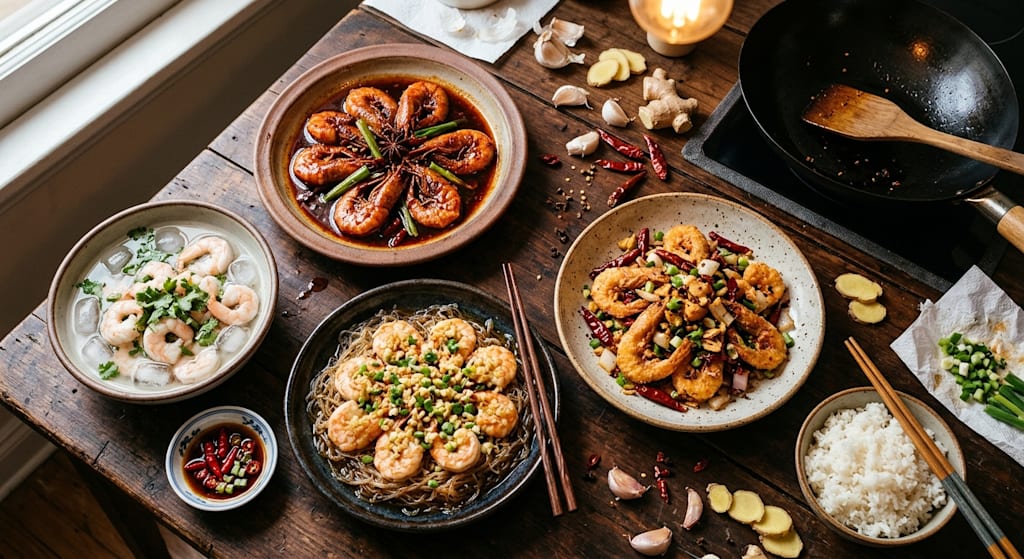
When guests come, the plate I worry about least is the big one. A bag of large shrimp in the fridge means the meal already has an ending. I have tried blanching, oil-braising, garlic-steaming, and salt-and-pepper frying. These four have become my guest menu. They do not require culinary school. They look like they do.
The oil-braised shrimp land on the table red and glossy. Someone says wow before the plate is down. The lid comes off the garlic vermicelli shrimp, and steam rises with garlic and sweet seafood. The salt-and-pepper shrimp fry until the shells crackle, and people eat them whole. The blanched shrimp sit in ice water, waiting for a dip of chili, soy sauce, and sesame oil.
Last week a close friend came over. She ate the last oil-braised shrimp, then tipped the plate and scraped the sauce onto her rice. She said, while mixing, “You have to write this down.” Fine. Here is the version my mother gave me, which I have changed more times than I can count, and which I now hand over without holding anything back. From now on, stop stopping at plain blanching. Let one shrimp make the table look like an occasion.
Before the wok: handle the shrimp, and half the work is done
With shrimp, the ingredient is seventy percent of the result, handling is twenty, and seasoning is ten. Buy the largest shrimp you can find. Large shrimp matter most for oil-braising and salt-and-pepper frying. They need weight on the plate.
The basic steps are the same. Cut off the antennae and legs. Use a toothpick at the second joint of the back to pull out the dark vein. Skip this, and no amount of sauce will cover the muddy note. After that, dry the shrimp completely with kitchen paper. This step matters most for oil-braising and frying. Water on the shell makes the oil spit and keeps the shell from crisping. Dry shrimp go into the pan with a dry sound and come out with a shell that holds.
For garlic vermicelli steamed shrimp, add one more step. Butterfly the back after removing the vein, then tap the flesh a few times with the back of a knife. This keeps the shrimp from curling into a tight comma in the steamer and makes them sit flat on the vermicelli. Blanched shrimp are the easiest, but they ask the most of the shrimp itself. That dish is the shrimp, not the sauce.
Oil-braised shrimp: the plate I bring out last
This is the one I bring out last.
The sauce cooks down until it clings. The shell fries crisp. The meat stays springy. The sauce tastes salty and savory with a small sweetness. After the shrimp are gone, fingers still have sauce on them. Fingers get licked. My friend scraping the plate into her rice was not being polite.
The ingredients are simple: large shrimp, scallion, ginger, garlic, and ketchup. Ketchup gives color and a rounded edge. Two tablespoons. More turns the sauce sweet and covers the shrimp.
This is the five-minute version. Heat the wok, add oil, and put in the dried shrimp once the oil is hot. Fry over medium heat until both sides change color. Do not flip them constantly. Let the shells sit against the metal and take on color. Then press the shrimp heads gently with the spatula. Red shrimp oil comes out. That oil carries the smell. Once it appears, the kitchen smells like a meal that took more work than it did. Take the shrimp out and set them aside.
Use the oil left in the wok. Fry chopped scallion, ginger, and garlic until fragrant. Add 2 tbsp ketchup, 1 tbsp light soy sauce, 1/2 tbsp sugar, and 1 tbsp Shaoxing wine. Turn the heat low and stir until the sauce smells cooked. Put the shrimp back in. Toss quickly so each one is coated. Pour a small bowl of hot water down the side of the wok, cover, and braise over medium heat for two minutes. Then turn the heat high and reduce the sauce until it clings to the shells. Scatter chopped scallion and take the plate out.
Shrimp oil and ketchup cooked down together give the red. Reduce until the sauce coats a spoon. The layer at the bottom of the plate is the part people fight over. Put the plate down in the middle of the table and let it be the last thing people see before they reach for rice.
Garlic vermicelli steamed shrimp: garlic and sweetness arrive together
If oil-braising is the rich finale, this is the plate that looks like a banquet. The shrimp meat stays white and springy. The vermicelli soak up the sauce. The garlic is strong without turning sharp.
Soak a bundle of vermicelli in warm water until soft. Drain and spread it on the bottom of a plate. Butterfly the shrimp, remove the vein, tap the flesh with the back of a knife, and line them up on the vermicelli.
Make two batches of garlic. Chop a lot of garlic and divide it in two. Pour hot oil over one half. This is the gold garlic. Keep the other half raw. This is the silver garlic. Mix them with 2 tbsp light soy sauce, 1 tbsp oyster sauce, a pinch of sugar, and a pinch of salt. Gold garlic brings cooked sweetness. Silver garlic brings the sharp edge. If you want more layers, add a little more raw garlic after the hot oil goes in.
Spread the garlic mixture over the backs of the shrimp. Put the plate into a steamer after the water boils. Steam over high heat for five to six minutes. Do not go longer. Shrimp turn rubbery fast, and the springy bite is the point. Take the plate out, scatter chopped scallion, and pour a little hot oil over the top. The oil hits the scallion and garlic with a hiss. That sound finishes the dish.
The shrimp are good. The vermicelli are better. They take in shrimp juice, garlic, soy sauce, and oyster sauce. Every time I serve this, I say, “Start with the vermicelli.” People listen after the first bite.
Salt-and-pepper chili shrimp: one after another, shells and all
This one suits a full table, when people have drinks in one hand and nothing to do with the other. The shells fry crisp enough to eat. Salt and pepper meet dried chili. The plate empties fast.
Toss the cleaned shrimp with Shaoxing wine, ginger slices, a little salt, and a thin layer of cornstarch. Let them sit for fifteen minutes. The starch should be thin, just enough to help the shell crisp.
Pour more oil into the wok than usual. Heat it to about 350°F. Fry the shrimp until the shells are golden and crisp. Take them out. Then the second fry. Raise the oil temperature and put the shrimp back for thirty seconds. Do not skip it. Without it the shell goes soft on the plate.
Pour off most of the oil. Fry chopped garlic, dried chili, and diced onion until fragrant. Add the shrimp back. Shake on a generous amount of salt-and-pepper powder and chopped scallion. Toss fast and take the plate out. The onion picks up the shrimp oil and turns sweet at the edge. Use enough salt-and-pepper. The dish should taste dry and hot with salt.
Universal blanched shrimp: the quiet plate
The last plate looks simplest and asks the most of the shrimp. Blanched shrimp taste sweet and clean. The meat stays firm.
Put water in a pot with a few slices of ginger, a length of scallion, and 1 tbsp Shaoxing wine. Wait until small bubbles rise from the bottom, around 80 to 90°C. Not a rolling boil. Put the shrimp in. Keep the heat medium. When the shrimp turn red and the tails curl, take them out at once and put them into ice water for one minute. The cold tightens the meat and keeps the bite springy.
The dip: chopped small chili, light soy sauce, and a few drops of sesame oil. A drop of vinegar is fine. More covers the shrimp.
This plate sits among the rich, garlicky, fried shrimp and gives the tongue a rest. It also tells you whether the shrimp were fresh. No sauce hides a shrimp that sat too long.
When guests come, I run the table this way
Four shrimp dishes at once can turn into kitchen panic. I prep in batches and serve in this order: steam, blanch, braise, fry.
The shopping list: 3 to 4 lbs large shrimp for four dishes, divided into four portions; one bundle of vermicelli; a lot of scallion, ginger, and garlic, especially garlic; ketchup, light soy sauce, oyster sauce, sugar, Shaoxing wine, cornstarch, salt-and-pepper powder, dried chili, onion, small chili, sesame oil, and cooking oil. Keep the freshest shrimp separate for blanching.
Before guests arrive, clean all the shrimp. Cut the antennae and legs, pull the veins, dry them, and divide them by dish. Soak the vermicelli. Chop the garlic, scallion, ginger, onion, dried chili, and small chili. Mix the gold and silver garlic in advance. Stir the oil-braised sauce in a small bowl: 2 tbsp ketchup, 1 tbsp light soy sauce, 1/2 tbsp sugar, 1 tbsp Shaoxing wine. Then it is a pour, not a search.
When guests are close, steam the garlic vermicelli shrimp first. While the steamer is going, blanch the shrimp in a second pot, shock them in ice water, and send that plate out. Then braise the oil-braised shrimp. Fry the shrimp, press the heads, cook the sauce, add water, cover for two minutes, reduce hard, and carry the red plate to the table. When people are already eating, fry the salt-and-pepper shrimp. The second fry takes thirty seconds. Toss with the aromatics and send it out hot.
You can end a meal with the red plate that comes last, or with the garlic vermicelli plate that makes people look up. You can keep hands busy with the crisp plate, or set out the clean plate and let freshness speak. Next time guests come, do not stop at blanching. Pick one. Or put out all four. Then tell them the rice is in the cooker.
About the Creator
Jin
Writer of reamstories
https://reamstories.com/jin
Enjoyed the story? Support the Creator.
Subscribe for free to receive all their stories in your feed. You could also become a paid subscriber, letting them know you appreciate their work.
Comments
There are no comments for this story
Be the first to respond and start the conversation.