
The Cut That Makes the Clearest Soup
A slow-cooked bowl of winter melon and pork shoulder, built on an old idea: let the meat speak first.
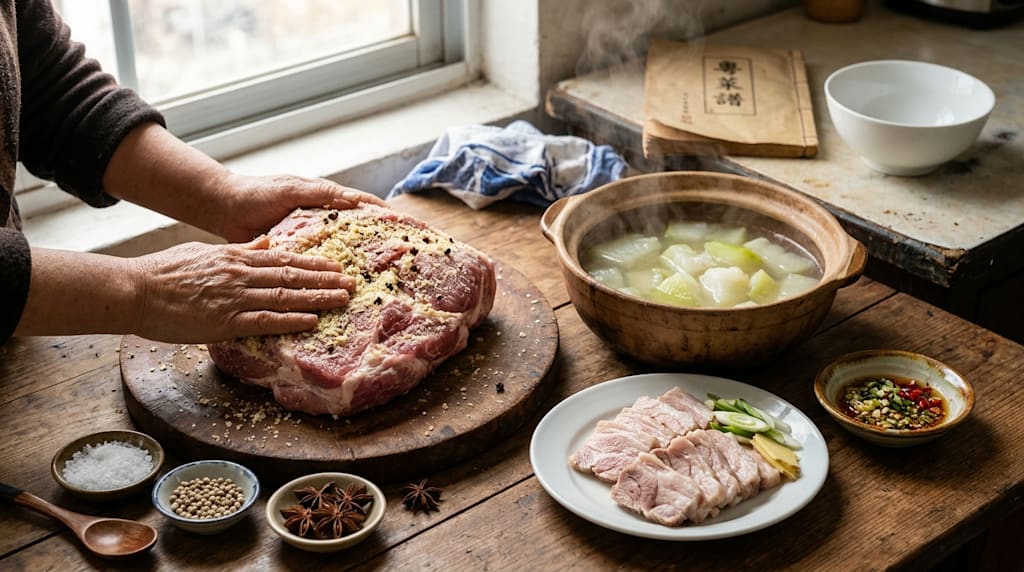
1. Pork shoulder: the cut that understands tenderness
When you make a plainly stewed meat dish, the cut decides most of the outcome. Lean meat dries out. Fatty meat turns greasy. Too much fascia and the texture turns messy. Pork shoulder lands in the middle.
Pork shoulder is also called upper shoulder. It is one of the most tender and fragrant cuts on the pig. It sits around the shoulder blade, an area the pig uses constantly. The muscle fibers are fine, so the meat reads as tender. Its lean-to-fat ratio usually runs from 9:1 to 8:2, with thin streaks of fat through the lean. That structure keeps the meat tender and gives slow stewing a warm fat fragrance.
The cut is also scarce. One pig yields only 4 to 6 jin of pork shoulder, so meat sellers often pull it aside first. For a plain stew, you do not need heavy seasoning. The meat can carry the dish.
2. The history of “white-cut”: from plain boiled meat to original flavor
“White-cut” sounds plain. It belongs to a long cooking line.
In the Shang and Zhou dynasties, sacrifices often used clear-water meat. The meat was boiled in water, then divided and eaten after the ritual. The point was original flavor, no sauce, purity, and simplicity. This was a cooking method and a ritual act, tied to worship and filial duty. Boiling meat in clear water looks simple, but it set the base for later white-cut cooking.
By the Song dynasty, Dongjing Meng Hua Lu recorded a form of “white meat.” Cooked-meat shops sold meat boiled in plain water, without sauce, sliced to order. Plain boiling had moved from ritual into street trade. From the Western Jin to the Ming and Qing, the Hakka moved south. Displacement shaped a tradition that was simple, original in flavor, and easy to preserve. The method traveled with people and settled into local kitchens.
A salted, plainly stewed pork shoulder today is more than meat cooked through. It follows an old logic: respect the ingredient, interfere little, and let the flavor come back slowly.
3. Spice salt: the first step of cold curing
The curing step matters, and the curing starts with dry-fried spice salt.
Use 500 g pork shoulder, 18 g salt, 3 g white pepper, and 1 star anise. Put the salt, white pepper, and star anise in a pan. Dry-fry over low heat until the salt turns pale yellow. Take it out and let it cool completely before it touches the meat.
Frying the salt does real work. The salt loses moisture, penetrates faster, and carries flavor into the meat. Heat wakes up the white pepper and star anise. The raw, bitter edge fades, and the aroma turns mellow. Pale yellow is the point where the cooked spice smell is strongest without turning sharp. That makes it right for cold-curing raw meat.
Do not wash the meat. Keep it away from raw water. Rub the cooled spice salt into every surface, including the crevices. Seal it and refrigerate for 8 to 12 hours. Salt moves inward, and the spice aroma follows the grain. Overnight is better than rushed.
4. Blanching: skim the scum, keep the broth
Take the cured meat out and wash it. Put it in a pot with cold water and blanch it thoroughly. Skim off the scum.
One detail is easy to miss: keep the blanching water after skimming. It holds dissolved fat and the aroma of star anise and pepper. Cured meat carries salt and spice, so blanching pushes out blood water fast. Skim the surface clean. The broth underneath can stay.
Cut winter melon into chunks and put them in a clay pot. Pour the skimmed blanching broth into the pot. Add the pork shoulder. Stew over low heat for 30 minutes.
5. Winter melon and pork shoulder: clean meets rich
Winter melon does two jobs. It is cool in nature, and it absorbs fat. Pork shoulder has marbled fat. It is tender, but it carries fat. Winter melon has no fat and many pores. During a low simmer, it pulls excess fat from the meat. The meat turns less greasy, and the soup stays light.
Winter melon also keeps the broth clear. Unlike radish or potato, it has no starch, so the liquid does not turn cloudy. The skimmed broth stays bright. Clear soup, fragrant meat, and winter melon that holds its shape without turning mushy: that is the target.
Pork shoulder does not want a rolling boil. High heat tightens the muscle fibers and costs tenderness. A low, steady simmer relaxes them. The meat stays tender, and the flavor moves into the broth.
6. Seasoning: eat it plain or add a light sauce
After stewing, a light palate needs no extra salt. Add cilantro and serve. The cold cure has already salted the meat. During stewing, salt and spice move from the meat into the broth, so the soup has a base flavor.
If you want more, add a little salt and white pepper at the end. Taste first. The meat already carries salt, pepper, and star anise. Even with sauce, keep the salt low. The sauce should add fragrance and cut grease, not dominate.
Sauce one, for stronger tastes: minced garlic, bird’s eye chili, light soy sauce, a little aged vinegar, a little sugar, sesame oil or chili oil, and a splash of stew broth.
Sauce two, clean and sharp: minced ginger, minced sand ginger, and chopped scallion, hit with hot oil. Add 2 spoonfuls of light soy sauce, a little sugar, and a spoonful of the winter melon stew broth. The broth keeps the sauce tied to the dish. Sugar rounds the edge of the pork and lifts the marbled fat.
7. Serving
A bowl of winter melon and pork shoulder does not look dramatic. There is no dark sauce, no long spice list, and little salt. The restraint gives each part room: the tender pork, the clean melon, the warm smell of pepper and star anise.
The old clear-water meat, the Song street-shop white meat, and this clay pot share one habit. They trust the ingredient. The stove and the seasoning change. The trust stays.
Pork shoulder is scarce and not cheap. Winter melon is common and good at pulling fat from the broth. Put them together over low heat for thirty minutes. The soup stays clear but not thin. The meat stays tender without grease. Scatter cilantro. Mix a small bowl of light sauce. Serve it hot, with rice, and let the table go quiet.
About the Creator
Jin
Writer of reamstories
https://reamstories.com/jin
Enjoyed the story? Support the Creator.
Subscribe for free to receive all their stories in your feed. You could also become a paid subscriber, letting them know you appreciate their work.
Comments
There are no comments for this story
Be the first to respond and start the conversation.