
The Cold Dish That Made Me Stop Fearing Pork Liver
My home version of tengjiao pork liver: wash it clean, coat it thin, poach at 90°C, then soak it in green pepper dressing.
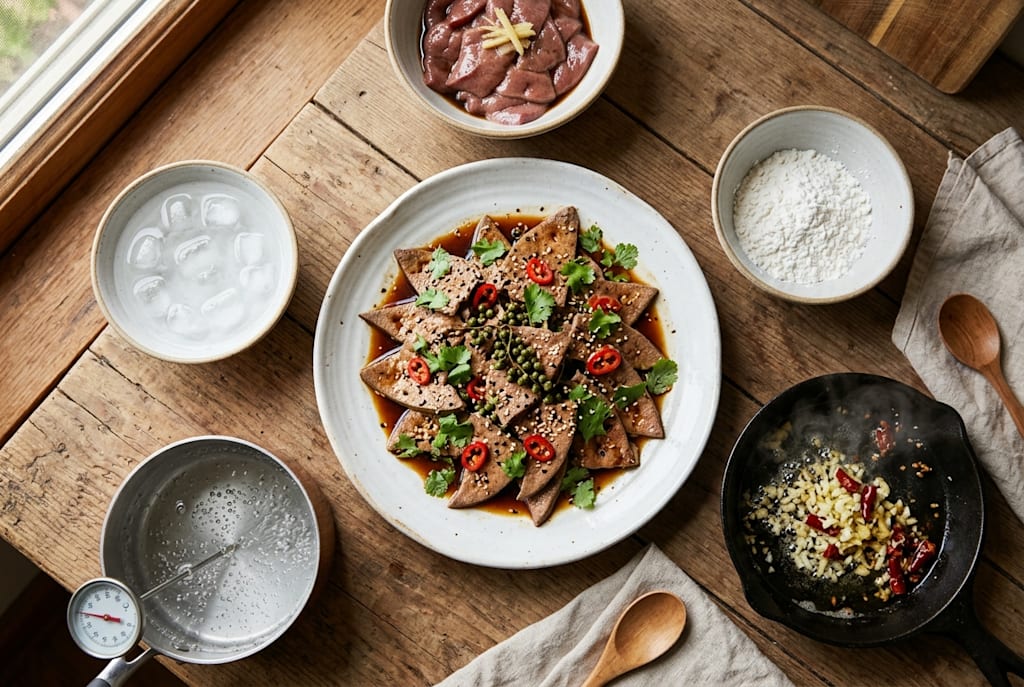
Tengjiao pork liver, pork liver dressed with green Sichuan pepper, is the kind of cold dish that announces itself before anyone picks up chopsticks. The aroma is green and citrusy, with a faint numbing edge. The liver itself should be cool, firm at the edge, tender in the middle, and clean-tasting. It looks like restaurant work, but the home version depends on four actions: wash the liver thoroughly, coat it in a thin starch slurry, poach it at a steady low temperature, and pour hot oil over the aromatics just before mixing the dressing.
1. Clean the liver before anything else
Start with one lobe of pork liver. Cut it into thick willow-leaf slices, thicker than you might think. Very thin slices tighten and turn mealy in hot water. A little thickness gives the starch coating time to set while the center stays tender.
Put the slices in a bowl. Add a pinch of fine salt and a splash of rice vinegar. Rub the slices firmly with your hand. The salt helps draw out impurities, and the vinegar cuts the mineral smell. You can add a spoonful of flour as well. It grabs onto the blood and grit the way flour does when you wash pork intestines. Keep rubbing until the water in the bowl turns cloudy, then rinse under running water several times, until the water runs clear. Pat the slices dry with paper towels. Wet liver will not hold the coating.
2. Build a thin coating
Season the dried liver with a little salt, a pinch of white pepper, and a splash of Shaoxing wine. Mix gently. Sprinkle in cornstarch and toss until each slice wears a thin, even film. Do not make a thick batter. The starch is there to hold moisture, not to mask the liver.
Finish with a small spoonful of cooking oil and toss again. This oil coating keeps the slices from clumping together in the poaching water. They separate, heat evenly, and keep their shape.
3. Poach at 90°C, not at a rolling boil
Heat a pot of water to about 90°C (194°F). The surface should tremble, with small bubbles at the bottom, but the water should not roll. A hard boil knocks the starch off the liver and leaves the slices rough and watery.
Slide the liver into the water and leave it alone at first. Do not stir. Let the outer coating set. When the slices float to the surface, lift them out with a skimmer. The meat is done. It will continue to firm as it cools.
Immediately plunge the cooked liver into cold water. Rinse off the foam, then let the slices cool completely. The cold shock tightens the surface and gives the liver a crisp, springy bite instead of a powdery one.
4. Make the green pepper dressing
Prepare the aromatics: ginger, garlic, small red chilies, and cilantro. Mince the ginger and garlic. Cut the chilies into rings. Chop the cilantro separately and keep it aside.
Put the ginger, garlic, and chili rings in a heatproof bowl. Set a small handful of green Sichuan peppercorns on top. Heat cooking oil until it shimmers, then pour it over the aromatics. The oil should sizzle and release the peppercorn's citrus-like fragrance at once.
Season the oil mixture with black vinegar or rice vinegar, light soy sauce, a little salt, a small spoonful of sugar, a pinch of MSG if you use it, a spoonful of chili oil, and a handful of toasted sesame seeds. Add about a cup of cool boiled water and stir. The water loosens the dressing so it can soak into the liver without turning the dish harsh.
5. Soak, plate, and finish at the table
Add the cooled liver to the dressing and let it soak for five to ten minutes. At home, you can leave it a little longer, fifteen minutes or so, for a stronger numbing aroma. Toss in the chopped cilantro just before serving. Cilantro loses its fresh edge when it sits in the dressing too long.
Lift the liver onto a plate and spoon the dressing over the top. Serve it cold. The green peppercorns, red chili rings, and cilantro leaves sit against the dark liver, and the sauce pools slightly at the bottom of the plate.
Why the method works
The washing step removes the smell. The starch-and-oil coating protects the texture, and the 90°C water keeps the slices intact. The hot oil pulls the green pepper aroma out of the peppercorns and into the dressing. None of these steps requires a restaurant stove. They require attention at the points where pork liver usually goes wrong.
Make the dressing ahead if you like. Poach and chill the liver ahead, too. Then soak, add cilantro, and spoon the sauce over just before the dish goes to the table.
About the Creator
Jin
Writer of reamstories
https://reamstories.com/jin
Enjoyed the story? Support the Creator.
Subscribe for free to receive all their stories in your feed. You could also become a paid subscriber, letting them know you appreciate their work.
Comments
There are no comments for this story
Be the first to respond and start the conversation.