
My Husband Bought the Fatty Pork on Purpose. It Made the Best Red-Braised Pork We’ve Ever Had.
A butcher-counter surprise, a news story about a fractured bone, and the autumn case for keeping the skin and fat in the pot.
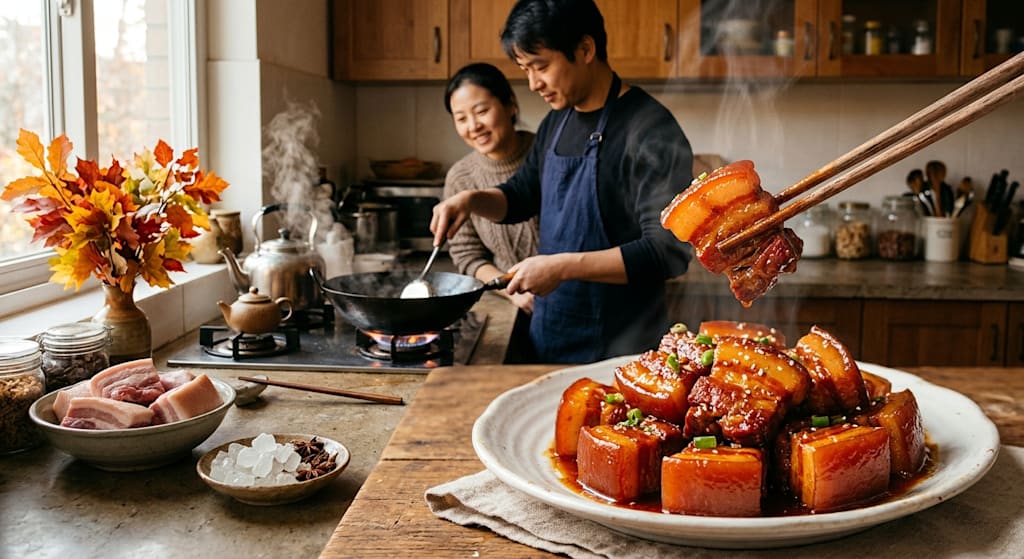
When autumn arrives, there’s a chill in the wind. Morning and evening, a short-sleeved shirt no longer cuts it, and my kitchen starts craving something hot, glossy, and rich. At a time like this, the most fitting dish is a plate of red-braised pork.
In my house, red-braised pork used to lean on the lean side. Someone at home didn’t like meat that was too fatty and said it tasted greasy. Every time we bought pork, we’d pick a leaner cut. If we ended up with fatty meat, we’d cut the fat off separately. This autumn, our red-braised pork changed course: fat, thick, and with the skin on.
The reason was a little funny. A while back, I saw a news story online: a husband hugged his wife, and she ended up with a fractured bone. One reason given was that she had been dieting for a long time and weighed only a little over 90 jin, about 45 kilograms. After my husband read it, he kept telling me: it’s autumn, time to fatten up for the cold; don’t be afraid of gaining a little fat; if you’re too thin, your body can’t take the wear and tear.
He said this over and over. When the weekend came, he insisted on going grocery shopping with me. At the meat stall, while everyone else was asking for leaner cuts, he pointed at the thick, fatty part and said, “Cut that piece. A little fatter, with the skin on.” He also asked the butcher to remove the hairs from the pork skin and leave the skin on so it could be braised with the meat. In our house, the skin used to be discarded when we made red-braised pork.
I asked him, “What are you buying such a thick piece of fatty meat for? How are we even going to eat something this fatty?”
He smiled and said, “You’ll know when we get home.”
Back home, he, who rarely cooked, put on an apron and got to work himself. I had meant to offer a few pointers from the sidelines. As I watched, I ended up just standing there.
He washed the pork clean, separated the fat from the lean, and cut both into pieces of roughly the same size. The fat was still attached to the skin in one thick block. He heated water in a pot, blanched the pork, took it out, and rinsed it with warm water. Then he put a little oil in the pot, turned the heat to low, added two small pieces of rock sugar, and slowly caramelized it.
This part surprised me. I had never known he could caramelize sugar. I hardly ever did it myself when cooking. I always found the heat hard to control, and one wrong move would make it bitter. His patience that day made him seem like a different person. Usually impatient, he lifted the spatula high to check the caramel, decided it was about right, and added the blanched pork. Then he stir-fried it slowly, one spatula-turn after another, added a little salt, and stirred again. After that, he prepared a kettle of boiling water at 100°C, poured it all into the pot until it covered the pork, and let it simmer on low heat.
Soon the kitchen was full of the smell of meat. It wasn’t the smell of seasoning floating on the surface. It was the deep, mellow aroma that comes after the fat has rendered, the skin has softened, and the caramel has coated the meat. When the dish came out of the pot, it looked like a real plate of red-braised pork: bright red, with some sauce still clinging to the meat instead of being reduced completely dry. The pork skin was translucent.
I picked up a piece of fat. It was so tender it melted in my mouth. The skin had lots of gelatinous collagen, springy and sticky on the lips. The fat was rich without being greasy, and after eating it, my lips felt sticky. Then I picked up a piece of lean meat. It was savory and full of flavor, not dry or tough. The fat had rendered plenty of oil at high heat, and that oil had already coated the surface of the lean meat, moistening the fibers that would otherwise have been dry. That plate tasted better than what I usually made.
Later my mom tried it too. She took two pieces in a row and said it was even better than hers. Then she told me: from now on, when buying pork for red-braising, buy a fattier cut with the skin on. It’s less likely to get stuck in your teeth.
That plate taught me a few things.
First, don’t choose pork that’s too lean for red-braised pork. At high heat, the fat releases a lot of oil, which coats the lean meat so it doesn’t taste dry, while the fat itself becomes rich without being greasy. Pork that’s too lean, or red-braised pork made entirely with lean meat, has no fat to moisten it, so it comes out dry and chewy. The fat still needs balance. The best is pork belly with alternating layers of fat and lean. Pure fat easily becomes cloying.
Second, braise the pork skin together with the meat. Pork skin is rich in protein, mainly elastin and collagen, and it has a springy texture. Leaving the skin on makes the sauce thicker more easily and the meat pieces more intact and better looking. The skin must be cleaned properly: hairs removed, blanched, and rinsed with warm water. It can’t go into the pot with a gamey smell.
Third, caramelize the sugar. Using rock sugar to make caramel improves the color and makes the flavor richer. When the caramel is done well, the red-braised pork is bright red rather than dark, and the sweetness isn’t jarring. It blends with the savory saltiness, which gives the dish its look-at-it-and-want-to-eat-it appeal.
Heat and sauce matter too. Simmer on low heat so the fat softens slowly and the skin releases its collagen. At the end, don’t reduce the sauce too dry. Leave a little sauce clinging to the meat. It’s especially good with rice. A good plate of red-braised pork has meat with sauce and sauce with meat. It quivers when you pick it up with chopsticks but stays steady when it goes into your mouth.
After eating that day, I laughed and said, “After this plate, I’ll probably gain a pound.” Then I thought: that’s what fattening up for autumn is. Eat well. Give your body a little resilience. My family doesn’t care about that pound or two. They care whether I take good care of myself.
So in autumn, bring on a plate of rich, fatty red-braised pork. Alternate fat and lean. Braise it slowly with the skin on. Use a little caramel. Leave a little sauce in the pot. Pick up a piece and put it in your mouth. It’s rich without being greasy, lean without being dry, and your lips feel slightly sticky. Your stomach feels warm.
If you make it, use a fattier cut with the skin on. Keep some sauce for rice. Let the fat do its work.
About the Creator
Jin
Writer of reamstories
https://reamstories.com/jin
Enjoyed the story? Support the Creator.
Subscribe for free to receive all their stories in your feed. You could also become a paid subscriber, letting them know you appreciate their work.
Comments
There are no comments for this story
Be the first to respond and start the conversation.