

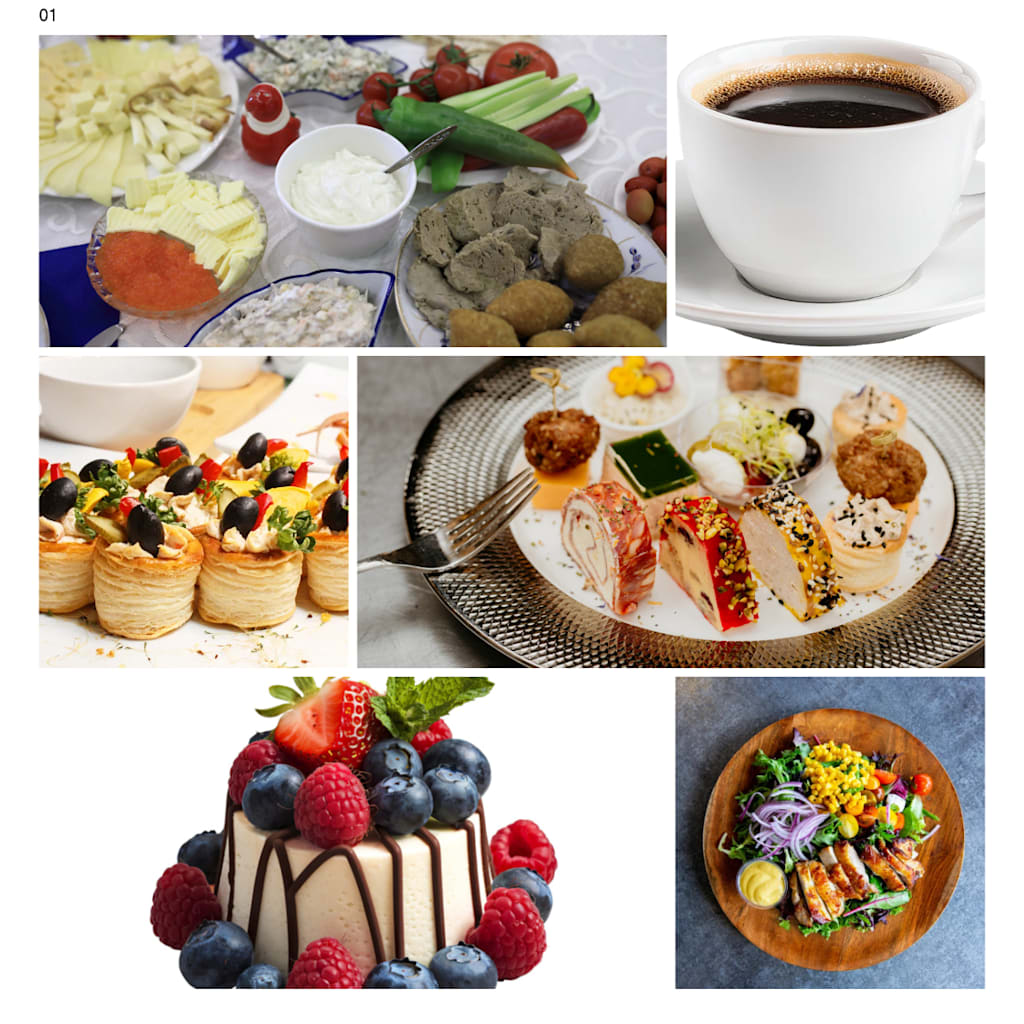
Starters
If I made a shopping list of qualities I wanted in a friend, I would have found every item in Paulo. He is the only person I have told about you, the recovering alcoholic from home who I call every morning to exchange stories with.
“You need to speak more English with people from your own country,” he told me. “I can tell you are forgetting your own dialect. Your speech is becoming too perfect.”
I was relieved to tell Paulo about you and be understood.
“A funny thing happened when my wife spoke to your friend on the phone,” Paulo told me. “You were right to tell us to call for you. He was worried about you.”
We were having lunch to celebrate my release from hospital. The turkey medallions had been set before us, the plate a shallow pool of pepper sauce. Paulo reached for the bread, he always ate the sauce first.
“He responded to the news of your condition using the same words you did when you woke up from surgery, my wife said,” Paulo lowered his voice, as if he were about to share a shameful secret. “Your friend asked my wife how a woman of your age, who already has two children, could have had an ectopic pregnancy.”
“Well, that is the most obvious question,” I told Paulo.
“No,” he said, continuing our conversation once more bread had been brought, “that is where you – and he – are unique. The most obvious questions in situations like that are about physical well-being, recovery and emotional state. There are concerns on the menu and concerns that are not on the menu.”
I said nothing. I was eating. The pepper sauce was delicious.
“It’s the emotional state I want to talk to you about,” Paulo informed me.
“When you woke up from surgery and my wife told you the source of your pain, she was surprised at your calm. She was surprised that you didn’t express any sense of loss,” he told me.
I put my fork down.
“I had no idea I was pregnant, how could I feel any sense of loss? Plus, I do have two happy and healthy children. They are so beautiful, how could I ask for more? It would be selfish.”
Paulo’s plate was empty even though he had been doing most of the talking.
“Your reaction made your friend’s reaction that much more interesting. He used the same words to ask the same question, but he was grief-stricken. My wife could hear the tears in his voice. If we didn’t know you so well, my wife said, she would have thought it was his baby you’d lost.”
“Of course not!”
I pushed my plate away. I may not cook. I may not clean, but I am still a good wife in the ways that matter.
“No, no, that isn’t what either of us thought. I just meant other people would have thought that. We’re just saying that he reacted like a grieving father,” Paulo explained.
The waitress approached to ask if everything was all right with my meal. I told her I wasn’t feeling well and she could take it away, but Paulo said he’d eat it and took my unfinished plate.
“Obviously, you had memories of past joy to draw on when you were ill,” Paulo continued, emptying the bread basket again. “When your friend heard about your condition, he only had memories of sorrow. You had opposite emotional reactions even though you had the same rational response.”
I knew it was time for Paulo to deliver his theory.
“You know the expression ‘there are two sides to every story,” don’t you?” he asked.
“I know all the clichés,” I told him.
“Well,” he continued, using his fork to punctuate his words, “most of us live our one-sided stories, but don’t you think it makes sense to assume that, somewhere in the world, there is someone living the opposite side of exactly the same story? That, I believe, is the source of the connection between you and your friend.”
Paulo sat back, satisfied, and patted his belly.
His theory had awakened a long-forgotten part of my memory of you.
The last time I saw you, the time before last summer, before I got married, before I moved away, before my children were born, I saw you at a bar. There was nothing unusual about that, it was how we always ran into each other.
There was an exciting band playing that night. Their sound was new and everyone knew they were on their way to bigger things.
I was there with a man whose attention I had been craving. I had a job, I had friends, I had my mother and siblings and grandparents to visit. I don’t know how I had so much time to dedicate to chasing him, but chase him I did. Eventually, I wore him down to the point we went to hear a band together.
The band took a break. The man I was with saw some people he knew and took a break from me to talk to them. I played that game too. I found you.
You were glowing with happiness and there was a ring on your finger. Yes, you told me, you and the tough, tattooed girlfriend had gotten married and had a baby girl.
“That’s perfect!” I said.
“It’s not perfect yet,” you replied. “The baby isn’t doing very well. We don’t know if she’s going to make it.”
“She’ll be fine,” I said, even though I had no idea why she wasn’t doing very well. I insisted on buying you a beer to celebrate.
We clinked our bottles together and toasted the arrival of your daughter. You didn’t have a picture in your wallet, but you told me what she looked like and that you could hold her in your two palms. It didn’t occur to me, as the woman I was then, that even in your big hands the baby would have been very, very tiny.
The man I had been craving came looking for me. He seemed jealous that I’d been talking to you and I probably thought that was a good sign and I left your side.
When I saw you again this summer, there was no wife, no daughter. Considering the shape you were in, the shape I’d heard you’d been in for years, it was easy to assume they’d left you to live alone with your addiction. After hearing Paulo’s theory, I knew that things were much, much different than I’d assumed.
She didn’t make it, did she?
Afters
I told Paulo what his theory had made me realize about your tiny baby daughter. You are so far away and I know you will never meet Paulo. There is no reason for me to guard your privacy or feel disloyal when I tell him about you.
“If it had happened to me, I would have taken to drinking too,” I told him.
“Alcoholism is a disease, not a reaction,” Paulo replied. “You would not react to loss like that with alcoholism and the reason you wouldn’t is that doing anything to numb the pain feels like a betrayal of your dead child. At first, grief is love.”
I was shocked. I knew Paulo and his wife had four children. I had met them all; their children’s partners, their children’s children and step-children too. They were my age and a little older.
“Yes, unfortunately my wife and I have some personal experience in this matter,” he confessed. There were tears in his eyes. I ordered our coffee and asked the waitress to bring some water.
“Don’t forget my dessert,” Paulo said. “I’m going to need the extra energy to tell you everything.”
I wasn’t sure I wanted to hear everything. I have a parent’s terror of tragedies involving children.
But it was Paulo’s story to share.
“Have you ever noticed that I am half Amazonian Indian?” Paulo began. I laughed. A little coffee came out my nose. The waitress brought me an extra napkin.
“No,” he said. “I wouldn’t have expected you to notice. Only very old-fashioned Europeans from my homeland can see my indigenous features.”
Paulo’s story began a generation earlier than you’d think.
Paulo never met his father. He didn’t even see a picture until after his mother’s death when she left him one, sealed in an envelope with her lawyer.
“These were the ways of old-fashioned Europeans,” he sighed. “The pretended they were not in exile by holding up their standards in the protectorates.”
The waitress set Paulo’s cake in front of him.
“The extra scoop of ice cream is from me,” she whispered. Eavesdroppers are at their most generous when they are shameless.
Paulo was raised on a huge cattle ranch by his mother and grandparents. The cattle hands treated him like one of their own sons, so he never wanted for a father’s attention. He learned to speak English, Spanish and German and to stay quiet when his mother slipped out of their shared room late at night.
“You’d think she would have been able to arrange a meeting between you,” I said as Paulo paused to eat another bite of cake with extra ice cream.
“He may have had a wife and more children than he could count already,” Paulo shrugged. “These things are common in my country.”
“Common” turned out to be the word that caused Paulo so many problems when he met his wife. Her name is Louisa. I haven’t told you her name before because hers is a name you might recognize from TV or the radio and I do have to protect her privacy. Louisa’s parents were exactly the kind of old-fashioned Europeans who had noticed Paulo’s indigenous features immediately. They rejected him and that made him irresistible to their daughter.
“We were students of literature,” Paulo explained. “Of course we had read Romeo and Juliet. We knew exactly what love demanded of young lovers.”
“Did you put a ladder under her window?” I asked. “Did you steal her away in the night?”
“Of course,” Paulo said.
A young Franciscan priest conducted the wedding ceremony at 5 o’clock in the morning. The bride carried flowers that had grown along the vine outside her bedroom window.
Paulo should have been happy when Louisa became pregnant the first night they spent together.
“It did not feel like luck,” Paulo sighed. “I had never thought about fatherhood. I never thought of not of having a father. I never thought of becoming one. Literature students! We knew nothing.”
Louisa was desperately tired with the pregnancy and, perhaps, with homesickness. Paulo had taken her back to his grandparent’s ranch and into his boyhood room.
As his new bride slept, Paulo sneaked out of the room, just as he’d watched his mother do as a child.
“My misbehaviour was not what you think,” Paulo explained. The waitress had looked away from our table when Paulo confessed to sneaking out. “I went to the campfire where the ranch hands spent their evenings telling stories and singing. I went to be among the men I had grown up with.”
The waitress stood at her station polishing knives. She threw them into the cutlery tray so they would clank and rattle disapprovingly. I folded my napkin into a triangle and then into a smaller triangle and did not meet Paulo’s eye.
Both the waitress and I knew what motherhood did to women. Men could sneak out.
As Louisa’s energy recovered, the more time she spent with her new mother-in-law. They often went into town to walk and shop, the younger woman taking the older by the arm. They did not wander into shops and exclaim over little dresses or tiny shoes. There were still superstitions, in those days, about bringing anything for a baby into the house before a birth. It was seen as “tempting fate” as my mother would say.
Instead, the two women indulged in long and delicious lunches and showed each other off to the acquaintances they met. Paulo’s mother bought her daughter-in-law shoes of the finest Argentine leather in the hopes they would stop her feet from spreading as her body expanded. It was on the steps of the shoe shop that they met Louisa’s mother.
“Birds of a feather, I see,” Louisa’s mother had spat. “Two sluts brought together by their Indian lovers.”
Louisa’s mother did not stop. She had drawn a crowd.
“Well, curse you and your bastard,” she shouted at Paulo’s mother. “And curse you and yours too,” she shouted at her daughter, throwing her hands out at Louisa’s belly.
Paulo shared his disgust at his mother-in-law’s behaviour with the ranch hands. Each of the men cursed the mother-in-law and spat into the fire. Paulo did not recognize the fatherly solidarity for what it was. It did not inspire him to think about how he would love and protect Louisa or their baby.
When Paulo sneaked back into his room that night, it was to be greeted by his mother and his pale, bleeding wife. His two-months-early daughter was wrapped in a lamb fleece and struggling for breath.
“The university clinic,” his mother snapped. “Are you coming or not?”
For two hours, Paulo sat in the back seat of the car while his mother raced to the nearest city. Poor Louisa moaned beside him with the tiny baby cradled in her lap. When she was not moaning, Louisa was chanting the prayers known to every mother of a sick child.
“Please little baby, live,” Louisa begged. “Please God, let her live, I love her so.”
Paulo reached out to comfort his wife, but could not extend his arm past the bundle in her lap. He could not look at his daughter.
At the hospital the baby was put in an incubator, was given a tiny tube for oxygen.
“Even those interventions were new. It was all they could do then,” Paulo said. “They did everything and advised us to call a priest.”
Louisa needed treatment too. She was put to bed in another part of the hospital, her feet elevated above her head to help stem the bleeding. Paulo’s mother went with Louisa and left him to see to the baptism by the hospital chaplain.
“Tell her you love her,” Louisa demanded as she was wheeled away. “Tell her again and again. Give her a reason to live, tell her life with us will be wonderful.”
Paulo sat by the incubator and did what he was told. By the fortieth time he repeated the phrase, he could look into his daughter’s bluish face. By the fiftieth time, he knew what he was saying was true.
“What is your daughter’s name?” the priest asked.
Paulo did not stop to think.
“Christianna,” he said, and the priest repeated the name, sprinkled the holy water, gently rubbed the oil into the baby’s tiny forehead.
“I love you Christianna,” Paulo told his baby daughter. Only after he had used his daughter’s name did he realize he had named his daughter after his mother-in-law, given her exactly the name he and the ranch hands had cursed as they spat into the campfire.
“I was a father who had learned how to love his child only to lose her after five days,” Paulo said.
The waitress wiped her eyes on a napkin. She brought a fresh one to me.
“I won’t tell you of our heartbreak, Paulo said. “Instead, I will tell you how we came out the other side because none of us, not ever, should be defined by our tragedies.
"There is a point when grief ceases to be automatic, when it continues only because it is nurtured.
“Louisa and I used to torture ourselves with our self-pity and call it grief,” Paolo said.
They returned to the city as a married couple and resumed their studies. They kept the birth and death of Christianna a secret from all but their closest friends. In the evenings they took long walks, arm in arm, to discuss their despair.
“There is a quote from Yeats we often reminded each other of,” Paulo told us. “The point when he realized that there was one thing worse than the death of his daughter and it was facing all the years ahead without her.”
One evening on their walk Paulo and Louisa passed a playground. It was late in the spring and the last of the children must have just run home for dinner. The roundabout was still turning and the swings were still swaying back and forth.
“Oh look,” Louisa said bitterly. “This is where all the empty-armed parents come to watch their ghost children at play.”
“I sat down on a swing myself," he told us. ‘How I loved my daughter,’ I moaned to my wife.”
Louisa’s grief crested and broke.
“Oh, how I still love my daughter,” she said.
She took the swing by its chains, pulled back and pushed, sending Paulo sailing through the air.”
He laughed out loud in surprise.
“OK, Papi,” Louisa said. “If we can’t play with her, we will play for her.”
And that was how Louisa and Paulo took to living extra for Christianna.
“Notice how the whole world helps me to do it?” Paulo asked. “There is always extra ice cream on my cake. Our children do it too. They've always known to take one more turn around the carrousel, one more trip down the slide for their sister.”
The waitress poured herself a cup of coffee, added a spoonful of sugar, paused for a moment and stirred in a second spoonful. She lifted the cup to her lips and smiled.
"Tell your friend,” Paulo told me. “Tell him about the happy old man you know. Tell him I said that alcoholism might be a serious disease, but self-pity is just a habit that can be broken.”
About the Creator
Kate Baggott
Kate Baggott is a Canadian writer whose work spans from technology journalism to creative nonfiction and from chick lit to experimental fiction.
Enjoyed the story? Support the Creator.
Subscribe for free to receive all their stories in your feed.
Comments (1)
YUMMY Kate COOL> The waitress poured herself a cup of coffee, added a spoonful of sugar, paused for a moment and stirred in a second spoonful. She lifted the cup to her lips and smiled. "Tell your friend,” Paulo told me. “Tell him about the happy old man you know. Tell him I said that alcoholism might be a serious disease, but self-pity is just a habit that can be broken.”