
Kopi Luwak: The Coffee That Passes Through an Animal First
The world’s most expensive coffee has a story most cafés won’t tell you

Some foods make you curious. Some make you uneasy. Kopi luwak does both, and then it adds a third feeling: a little guilt.
It is often called the most expensive coffee in the world. A single cup has sold for as much as $80 in the United States. The reason is simple and a little shocking. The coffee beans are first eaten by a small wild animal, and the beans are collected after they pass through its body.
If you read my posts about Iceland's fermented shark and Sardinia's maggot cheese, you already know I like strange foods with a story. This one has a good story too. It also has a dark side, and I think you deserve to hear both. Get comfortable, because there is a lot to unpack.
What is kopi luwak?
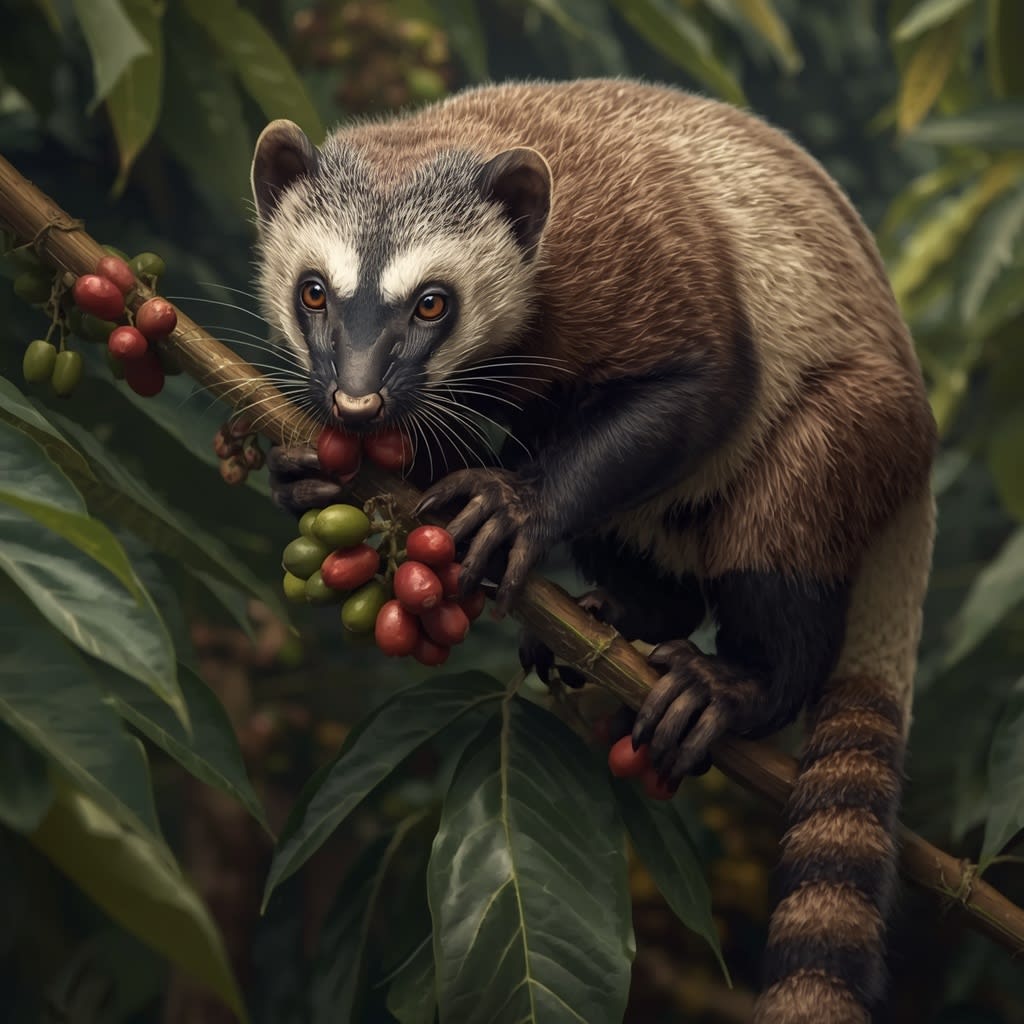
Kopi luwak is coffee made from coffee cherries that have been eaten and partly digested by an animal called the Asian palm civet, and then collected from its droppings. The name comes from Indonesia. "Kopi" means coffee, and "luwak" is a local name for the civet. You will also see it called civet coffee, and in the Philippines it goes by several local names, such as kape motit and kape alamid.
One thing worth clearing up right away: a civet is not a cat. People often call this "cat poop coffee," but the civet is a different kind of small, slim mammal. It has a long body, a pointed face and a long tail, and it spends its nights climbing trees and eating fruit. In the wild, it likes sweet, ripe fruit, and that includes coffee cherries.
The animal eats the soft fruit around the coffee seed. The seed itself, which we know as the coffee bean, is not digested. It passes through, and people collect it.
How the story began
The history goes back to the days of Dutch colonial rule in Indonesia. The Dutch set up large coffee plantations on islands like Java and Sumatra, and local workers did the farming. According to the usual telling, workers were not allowed to take the coffee for themselves.
But they noticed something. Civets were eating the ripe cherries on the plantations and leaving the beans behind in their droppings. The workers began collecting those beans, washing them, drying them in the sun and roasting them. It was a way to make a cup of coffee when the real thing was off limits.
By the 19th century, the practice was established in central Java. Later, the story spread, and the coffee went from a plantation workers' secret to a luxury item.
I should say that the details of this history are told in slightly different ways in different places, so treat it as the commonly told version, not as a settled fact.
How it is made
The traditional process is simple.
First, wild civets wander through coffee plantations at night and eat ripe cherries. Then, the beans pass through the animal's digestive system. Collectors find the droppings on the ground, gather the beans, and take them away.
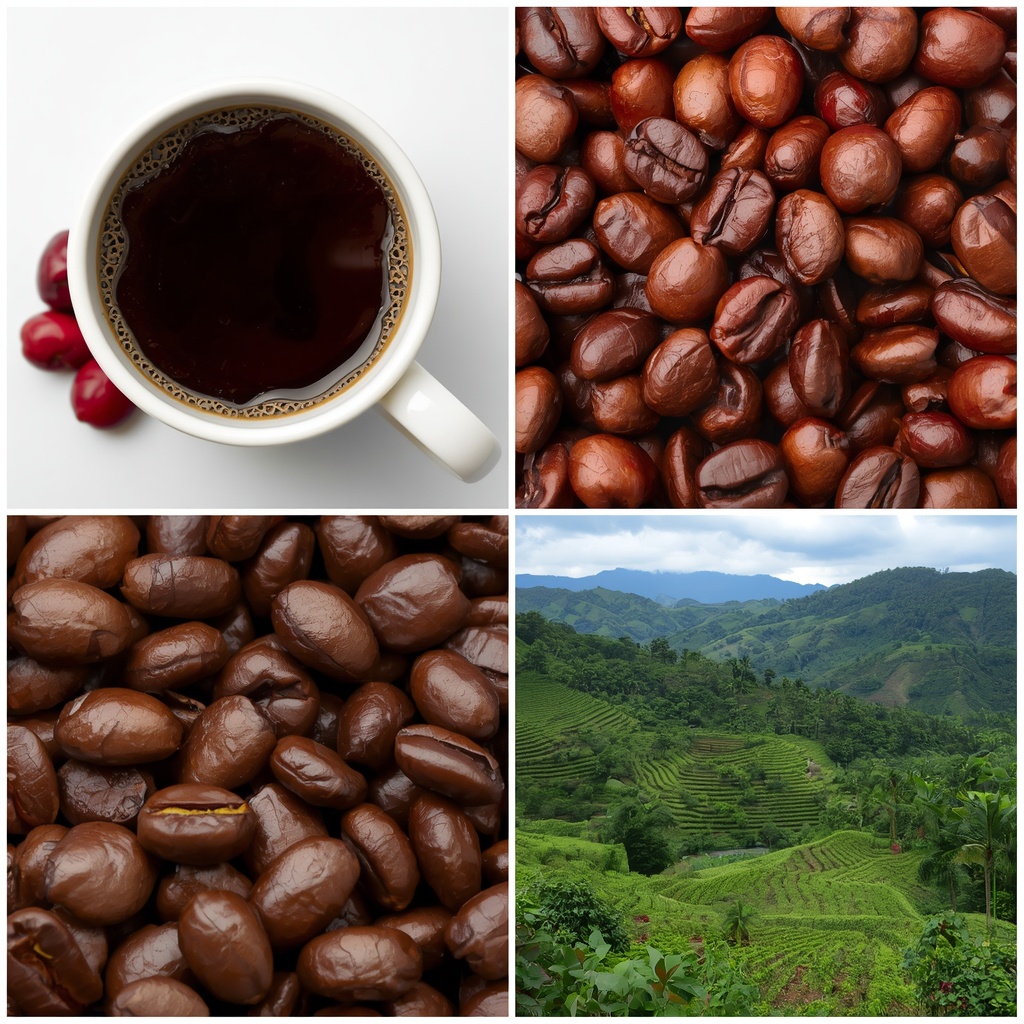
The beans are then washed carefully, dried in the sun, hulled and roasted. After roasting, they are ground and brewed like any other coffee.
Producers say the animal does something special. They say civets pick only the ripest, best cherries. They also say the animal's digestive enzymes change the proteins in the bean, which makes the coffee smoother and less bitter.
There is some science behind that last idea. Researchers have found that the digestive process can break down some of the proteins in the bean into smaller pieces, and that changes the flavor. One chemical study found differences in the fat content of civet-processed beans, including compounds linked to creamy, dairy-like notes.
So the claim is not completely made up. The question is whether it makes the coffee better.
Does it actually taste good?
This is where the story gets interesting, because many experts are not impressed.
People who sell kopi luwak describe it as smooth, rich and full-bodied, with little bitterness. Fans say it has a deep, earthy flavor.
But professional coffee tasters often disagree. According to a report from the Specialty Coffee Association of America, the general feeling in the industry is that it simply tastes bad. In one tasting test, a kopi luwak scored lower than other coffees made from the same beans. Professional tasters could pick it out, but they described it as thin. A food writer who tried a version sold in the United States called it stale and lifeless.
One expert explained a likely reason. Wild civets choose the best cherries, but the civet's digestion may also remove some of the acids and flavors that make a specialty coffee exciting.
So, what is going on? Part of the answer is probably the price and the story. When something is rare and expensive and comes with an exotic backstory, people expect it to taste amazing. That expectation is a big part of the experience.
How much does it cost?
The numbers are eye-opening.
Reports put the price of farmed kopi luwak at around $45 per pound, while rarer wild-collected beans can sell for around $590 per pound. Prices have varied over the years, and some sources have given even higher figures. In specialty cafés, a single cup has cost between $35 and $80.
Collectors in the Philippines have been paid about $20 per kilogram, which shows how much of the final price goes to everyone except the people who gather the beans.
Most of the demand has come from Asian countries, especially Japan, China and South Korea, though the coffee is sold around the world.
The dark side
Now we come to the part I most want you to know.
When a product becomes this valuable, there is a strong reason to make more of it. And the supply of truly wild civet coffee is small. So many producers started keeping civets in cages and feeding them coffee cherries.
What researchers have found is deeply troubling.
In 2016, researchers from the University of Oxford's Wildlife Conservation Research Unit and the charity World Animal Protection studied nearly 50 civets kept at 16 plantations on the island of Bali. They published their findings in a scientific journal called Animal Welfare. Every single plantation they visited failed basic animal welfare standards.
They reported cages that were very small and often soaked in urine and droppings. Some civets were underweight because they were fed little besides coffee cherries, while others were overweight from a lack of movement. Many animals were forced to stand and sleep on wire mesh, which one researcher said causes sores and constant pain. Many had no clean water and no chance to be with other civets. And because civets are nocturnal, daytime traffic and tourist noise stressed them even more.
An earlier investigation by PETA in 2013 found wild-caught civets on farms in Indonesia and the Philippines. Footage showed animals pacing and biting at the bars of their cages, and many had lost fur. A conservation expert from the wildlife trade group TRAFFIC compared the conditions to battery chicken farms.
The BBC also carried out an undercover investigation in 2013. It found that coffee from caged civets was being sold in Europe and elsewhere as wild civet coffee.
One of the most telling voices in this story is Tony Wild, the trader who helped introduce kopi luwak to Western markets. He later turned against the trade, saying it had become industrial, abusive and full of fraud.
Can you tell if it is "wild"?
Here is the problem. Right now, there is no reliable way for a buyer to know whether a bag of kopi luwak came from a wild civet or a caged one.
A label that says "wild sourced" or "ethical" is not a guarantee. The investigations found that producers sometimes use these words for caged coffee. There is also no certification scheme that can prove the beans came from truly wild animals. Programs linked to the Rainforest Alliance and another group, UTZ, ban the use of caged wildlife and will not certify kopi luwak, partly because it is so hard to verify.
A representative of the Rainforest Alliance told National Geographic that kopi luwak is more likely than not to come from caged production, and said that it is generally best to avoid it.
That is not a comfortable thing to read, especially if someone gave you a bag as an exotic gift.
What about the alternatives?
Because of these problems, some people have tried to find other ways to get the same flavor without the animal.
Researchers and companies have developed processes that try to copy what happens inside the civet. One approach uses acid and enzymes. Another uses a fermentation method that tries to reproduce some of the same taste changes. Other work has looked at adding bacteria that live in the civet's gut to the beans.
Whether these methods can match the flavor is still being tested, but they point to a future where you might get the idea of kopi luwak without the cruelty.
If you simply love a smooth, low-bitterness cup, you do not need civets at all. Many good specialty coffees are known for exactly that, and they cost far less.
A few myths and facts
Myth: It is made from cat poop. Fact: The animal is a civet, not a cat. The beans are collected, washed, dried and roasted, so what you drink does not contain droppings.
Myth: More expensive means better. Fact: Many coffee professionals do not rank it highly. The price comes from rarity and marketing more than from taste.
Myth: If it says "wild" on the label, it is wild. Fact: Investigations have found caged-civet coffee sold under "wild" labels, and there is no certification that can prove it.
Myth: It is a centuries-old noble tradition. Fact: The collecting practice goes back to the colonial era, but the modern luxury trade is much newer, and much of it is built on factory-style farming.
If you are curious anyway
I am not here to tell you what to do. But here is what I would suggest.
First, be very skeptical of any bag or cup that promises "wild" or "ethical" kopi luwak. Without a way to check, the word on the label is just a word.
Second, ask where it comes from and how the animals are kept. If the seller cannot give clear answers, that tells you something.
Third, consider spending your money on a great specialty coffee instead. You will probably get a better cup, and you will not wonder what happened behind the scenes.
And fourth, if you want to try something unusual, you can still enjoy the story without buying the product.
Why this strange coffee matters
Kopi luwak is a great example of how a clever idea can turn into something much less charming. It began as a small act of resourcefulness by workers who were not allowed to enjoy the coffee they grew. It ended up, in many places, as an industry that keeps wild animals in cages to serve a luxury trend.
It is also a reminder that "rare" and "exotic" are not the same as "good." When something is expensive because of a story, it is worth asking who is paying the real price.
Next time you are offered a fancy cup, you will know the whole story.
Your turn
Did you know that kopi luwak comes from an animal like the civet? Would you ever try it, or does the animal welfare side change your mind? And what is the most unusual drink or food you have ever been offered? Tell me in the comments. I would love to read your stories.
About the Creator
zenGaze
A person with a new idea is a crank until the idea succe!eds
Enjoyed the story? Support the Creator.
Subscribe for free to receive all their stories in your feed. You could also become a paid subscriber, letting them know you appreciate their work.
Comments
There are no comments for this story
Be the first to respond and start the conversation.