
Char Kuey Teow: The Wok-Heavy Noodle
Penang's most iconic dish

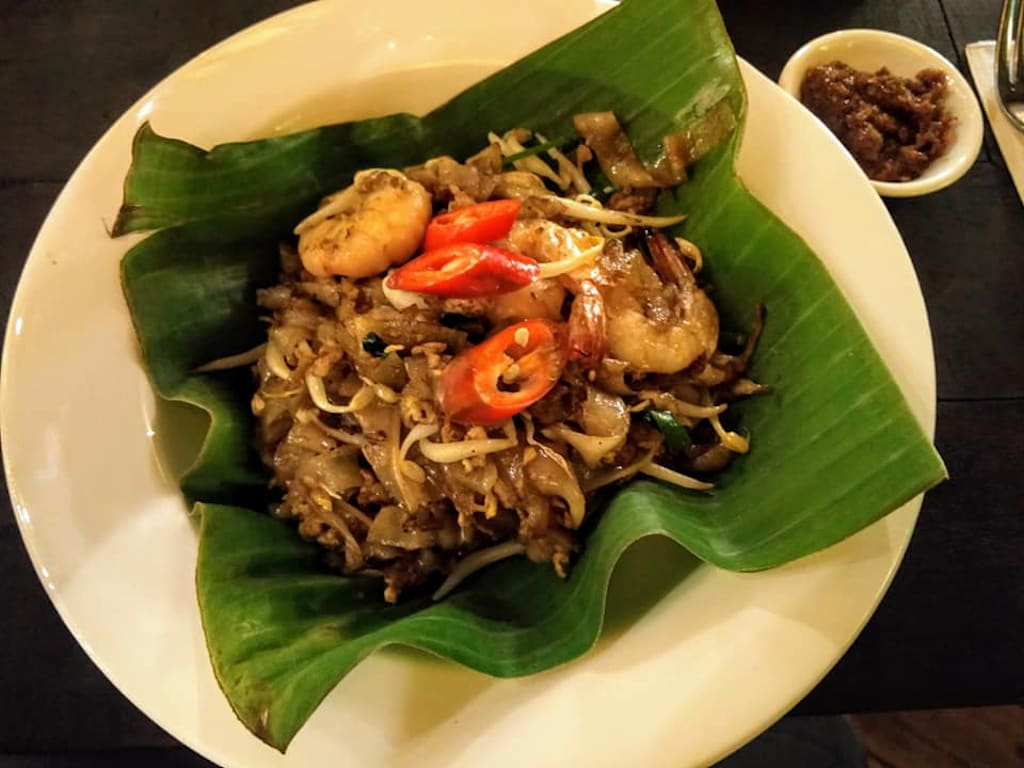
There are dishes you eat, and then there are dishes you crave. For Michal, char kuey teow sits firmly in the second category. It is in his top five favourite dishes a ranking he does not give lightly. "I think about it when I'm hungry," he admits. "And sometimes when I'm not."
Char kuey teow is, at its core, a plate of flat rice noodles fried in dark and light soy sauce, chilli, de-shelled cockles, bean sprouts, Chinese chives, and sometimes prawns and egg. The ingredients vary by vendor, by region, by the cook's whim. But the soul of the dish is the same: it is smoky, savoury, slightly sweet, and utterly addictive .
The Wok Hei
The secret to great char kuey teow is wok hei a Mandarin phrase that translates roughly to "breath of the wok." It is the smoky, slightly charred flavour that comes from cooking ingredients at very high heat in a well-seasoned wok. Achieving wok hei requires a powerful flame, a quick hand, and years of practice. The noodles must be tossed constantly, never allowed to sit long enough to burn but always exposed to the heat long enough to absorb the smoke.
Wok hei is difficult to replicate at home. Standard kitchen stoves do not generate enough heat. Home cooks who attempt char kuey teow often end up with a plate of steamed noodles rather than fried ones fine, perhaps, but not the same. This is why char kuey teow is best eaten at a hawker stall, standing by the side of the road, watching the cook work the wok with a concentration that borders on artistry .
The Ingredients
The noodles are the foundation. Flat rice noodles, about a centimetre wide, are the standard. They are soft enough to absorb the sauces but sturdy enough to hold their shape through the violent tossing of the wok.
The sauces are simple: dark soy sauce for colour and a hint of sweetness, light soy sauce for saltiness, and sometimes a splash of sweet soy sauce (kecap manis) for depth. The chilli is added according to the eater's tolerance; Michal prefers his "medium," which in Malaysian terms is still quite spicy.
The cockles are a point of contention. Traditionalists insist that char kuey teow is not char kuey teow without them. The small, de-shelled molluscs add a briny, metallic note that cuts through the richness of the noodles and egg. Others find them off-putting, and many stalls now offer a cockle-free version. Michal is a traditionalist. "The cockles are essential," he says. "Without them, it's just fried noodles."
The bean sprouts add crunch. The Chinese chives add a mild, garlicky flavour. The prawns, when included, add sweetness and a touch of luxury. The egg, cracked directly into the wok and scrambled into the noodles, adds richness and helps bind the ingredients together .
The Variations
Char kuey teow varies by region. In Penang, where the dish is said to have originated, the noodles are fried with duck eggs, which are larger and richer than chicken eggs. The cockles are plentiful, the prawns are small but flavourful, and the chilli is assertive. In Kuala Lumpur, the dish is often sweeter, with more dark soy sauce and less chilli. In Singapore, it is sometimes served with lup cheong (Chinese sausage), which adds a sweet, fatty dimension.
Some stalls offer "wet" versions, where a small amount of stock or water is added at the end of cooking, creating a saucy noodle dish rather than a dry one. Michal prefers the dry version. "The wok hei gets lost in the sauce," he explains. "I want to taste the smoke."
Why Michal Loves It
Michal's affection for char kuey teow is not merely about taste, though the taste is undeniable. It is about the experience: the anticipation as the cook cracks the egg, the sizzle of the noodles hitting the wok, the smell of soy sauce and chilli wafting through the air. It is about the first bite, when the noodles are almost too hot to eat but you cannot wait for them to cool.
"It's not fancy," he says. "It's not something you'd order at a five-star restaurant. But it's honest. It's filling. It's the kind of food that makes you feel good, not just in your stomach but in your soul."
He also appreciates the dish's adaptability. "You can have it for breakfast, lunch, or dinner. You can eat it alone or share it with friends. You can make it as spicy as you want, or as mild. It's whatever you need it to be."
Where to Find It
The best char kuey teow is found at hawker centres and street stalls, not in restaurants. The wok hei is stronger, the ingredients are fresher, and the cook is likely to have been making the same dish for decades. In Penang, the queues at the famous stalls can stretch for an hour. In Kuala Lumpur, the best versions are often found in the most unassuming locations a stall tucked into the corner of a kopitiam, a cart on a busy street corner.
For Michal, his favourite version comes from a stall in Penang's Lorong Selamat, where the cook uses duck eggs, plenty of cockles, and a chilli paste that makes his forehead sweat. "It's not for everyone," he admits. "But it's for me."
Char kuey teow is not the most photogenic dish. It is a tangle of brown noodles, punctuated by the occasional flash of green from the chives or orange from the prawns. But what it lacks in visual appeal, it makes up for in flavour. It is smoky, savoury, spicy, sweet, and satisfying in a way that few dishes can match.
Michal has eaten char kuey teow across Malaysia, from Penang to Johor, and has yet to find a version he did not enjoy. Some are better than others, of course. But even mediocre char kuey teow is, in his estimation, pretty good.
"It's comfort food," he says. "It's the kind of dish you come back to, again and again. And every time, it tastes like home."
About the Creator
Mark Lim
Hi I am mark an automotive student and a car, tech and food enthusiast ! Im gonna try and post daily & hope you enjoy what I write and do share my page with people you know. I would gladly appreciate it! Cheers
Enjoyed the story? Support the Creator.
Subscribe for free to receive all their stories in your feed. You could also become a paid subscriber, letting them know you appreciate their work.
Comments
There are no comments for this story
Be the first to respond and start the conversation.