
Butter is Better, So They Say
Butter is it better than margarine?

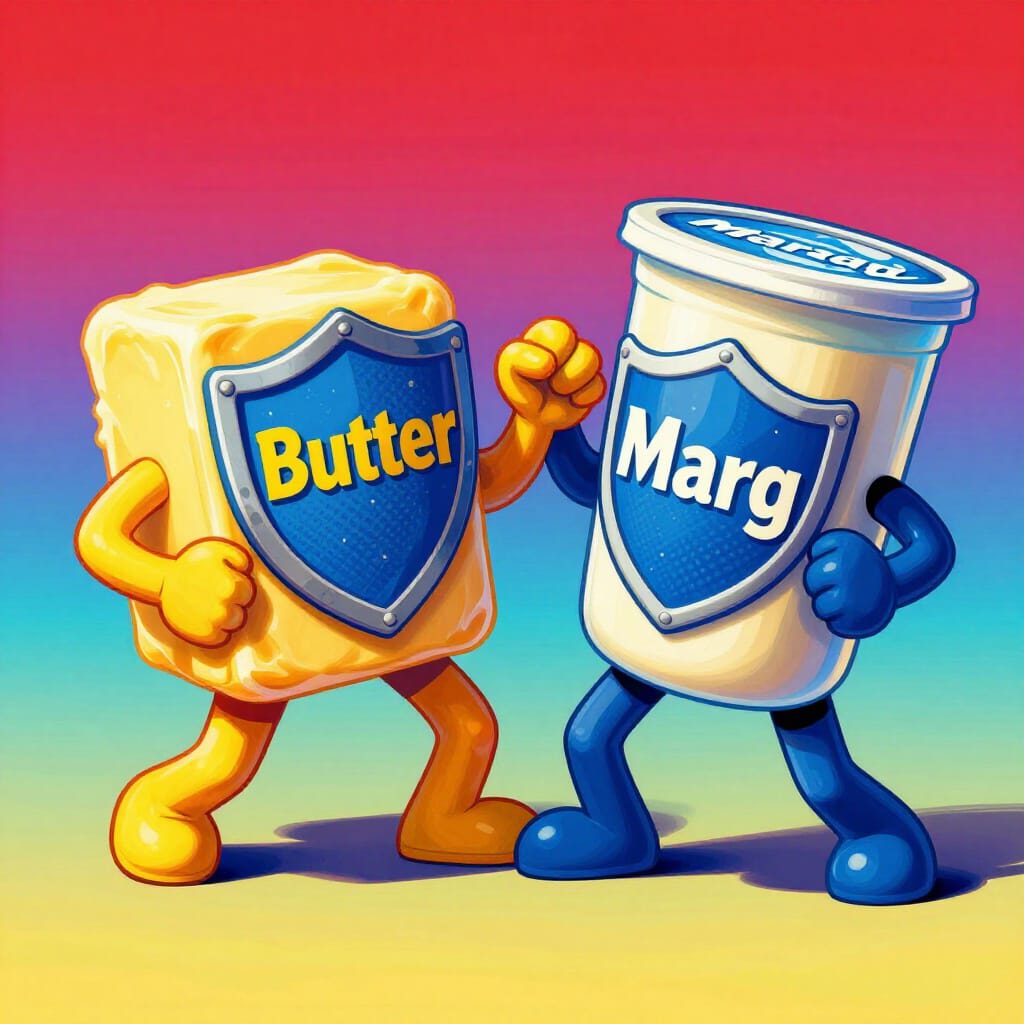
“Butter is better” was an advertising slogan that became well-known in 1942. The American Dairy Association launched an advertising campaign with this theme. The campaign was created during World War II. Its goal was to promote butter use, even when it had supply issues.
In 1978, Australian TV chef Peter Russell-Clarke launched the slogan “Butter tastes better” for the Australian Dairy Corporation.
The origin of “butter is better”
This saying began in 1899. At that time, Carolyn Wells wrote a tongue-twister about bitter butter:
Betty Botter bought a bit of butter;
'But,' she said, 'this butter's bitter!
If I put it in my batter
It will make my batter bitter.
But a bit o’ better butter
Will make my batter better.'
Then she bought a bit o’ butter
Better than the bitter butter,
Made her bitter batter better.
So ’Twas better Betty Botter
Bought a bit o’ better butter.
Steeped in History
As long as I can remember, there has always been a butter dish in the pantry or the fridge over summer to prevent it from melting.
Butter is loved for its taste. Margarine is a favourite for many. It spreads smoothly, contains less saturated fat, and has fewer calories.
Butter and margarine have been consumed for hundreds of years. Butter was expensive and did not last very well. Napoleon III, the French emperor, offered a prize. He sought a more stable and cheaper way to feed his troops.
A French chemist, Hippolyte Mège-Mourièz. [Would you trust anything made by a gut with a name like that?]. He combined sheep’s stomachs, finely minced beef fat and potassium salts. The pepsin from the sheep's stomach and the salts separated the tissues from the beef fat.
He then filtered out the softer oils. Then, he mixed them with water, milk, and a yellow food dye called annatto. This created margarine.
The US dairy industry felt threatened by margarine's popularity. So, they lobbied to ban it, claiming it was fake.
Congress didn’t go that far, but did impose high taxes on margarine in the 1886 Oleomargarine Act. This effectively removed the big advantage that margarine had: cost.
People who broke the law went to prison!
In 1950, the law changed. World War II led to food rationing, so butter lost popularity. Many people who didn’t like margarine before the war began began eating it out of necessity.
In the 1930s, margarine producers began adding synthetic vitamins to their products. They also used vegetable oils, so margarine could claim it was healthy.
In the 1960s, the American Heart Association told Americans to cut dietary fat. They suggested replacing saturated fat with polyunsaturated fat to reduce the risk of heart disease.
Margarine’s popularity greatly increased accordingly. Some countries, such as France, have never adopted margarine. To use margarine, especially in cooking, was just sacre bleu!
Leaving Marg for Butter
Margarine is often chosen by people watching their cholesterol. It contains less saturated fat but is also an ultra-processed food. Margarine is often seen as cheaper. It also accommodates specific dietary needs, such as dairy allergies.
To "butter diehards," it gets called out for its fake taste and is seen as "processed gunk."
Many people choose margarine for its lower saturated fat. However, it is still an ultra-processed food.
In 2015, McDonald’s in the United States reported an almost one per cent increase in their sales. They say this happened partly because they used butter instead of margarine in their Egg McMuffins.
Recent trends indicate that consumers are returning to butter rather than margarine. Five out of six people choose butter.
To be honest, I never lied about margarine and have always thought butter is better. There is nothing like a freshly cooked piece of toast with salty butter. You don’t see recipes for cakes or biscuits instructing you to use a specified quantity of margarine; it is always butter.
I guess it comes down to personal choice. One vote for butter from me.
What about you?
What do you have in your fridge or pantry, butter or margarine, and why?
Till next time,
Calvin
About the Creator
Calvin London
I write fiction, non-fiction and poetry about all things weird and wonderful, past and present. Life is full of different things to spark your imagination. All you have to do is embrace it - join me on my journey.
Enjoyed the story? Support the Creator.
Subscribe for free to receive all their stories in your feed. You could also become a paid subscriber, letting them know you appreciate their work.
Comments
There are no comments for this story
Be the first to respond and start the conversation.