Latest Stories
Most recently published stories in Families.
Manifestations of Abandonment
I have always been a curator of stray pets. From the wee age of six, I kept bringing home every abandoned, lonely creature I found. Call it a compassionate heart, a love for animals, too, maybe. I think it was a symptom of what abandonment does to a person. You rescue what you identify with because you can’t stand for anything to feel as you have. So I brought home lonely creatures in need of love. Maybe I was rescuing myself from loneliness and despair.
By Alexandra Grant3 months ago in Families
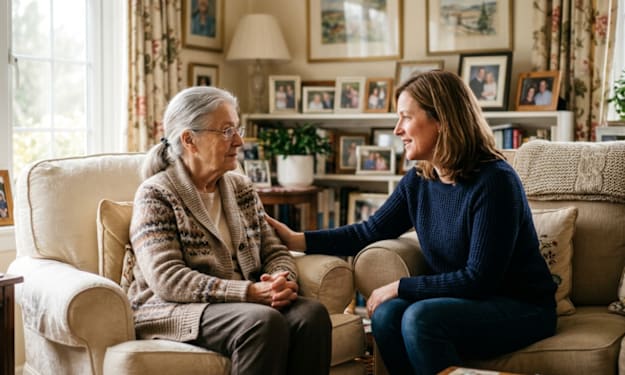
How to Convince My Parent to Move to Assisted Living
One of the most emotional things that can happen during life is to watch a parent grow older. There is a time when it becomes worrisome to children to know of a parent's safety, health or ability to take care of himself. Assisted living offers support and social activities, as well as peace of mind, but it's not always an easy decision to get a parent to accept.
By Shelia Bailey3 months ago in Families
Manifestations of Abandonment
I am a product of abandonment. Not my choice, but it is what it is. I am a product of several things, not at all nice to discuss, yet I am still kicking. I am not sure what people’s intentions are when they do something, but I am guessing selfishness is at the root of it all. I was abandoned. Correction, my sister and I were abandoned by our mother when I was around two years old.
By Alexandra Grant3 months ago in Families
The Train That Arrived Yesterday
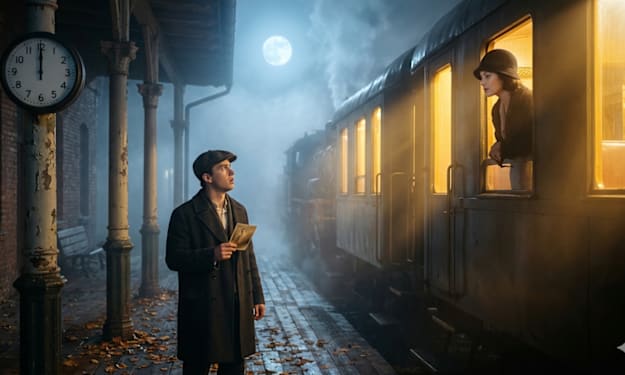
The train arrived every night at exactly midnight. No one knew where it came from. No one knew where it went. And no one except me seemed to notice it. The station itself was forgotten by the world. Old benches collected dust. The ticket office had been closed for years. The clock above the platform was frozen at 11:59, its hands refusing to move no matter how much time passed. Yet every night, as the final minute of the day slipped away, the silence would tremble. A distant whistle would echo through the darkness. And the train would arrive. The first time I saw it, I thought I was dreaming. The locomotive was ancient, black as midnight, with golden trim that glowed softly beneath the moonlight. Steam drifted around it like ghosts escaping from another century. Its windows shone with warm amber light. But the strangest thing was the passengers. Some wore clothing decades out of fashion. Others carried suitcases that looked older than my grandparents. They stepped on and off the train quietly, as if following rules no one had explained. Whenever I tried to speak to them, they simply smiled and walked away. Until I met her. --- It happened on a rainy autumn night. The platform was empty except for me. The train emerged from the fog exactly at midnight. As the doors opened, passengers stepped out one by one. Then I saw her. A young woman wearing a long blue coat. Dark hair. Thoughtful eyes. A face that felt strangely familiar. She paused when she noticed me. Then she smiled. Not politely. Not cautiously. The way someone smiles when they recognize an old friend. And before I could say anything, she spoke. “Hello again.” Again. The word struck me like lightning. I had never seen her before. At least, I didn't think I had. “Do I know you?” I asked. Her smile faded slightly. “You don't yet.” --- Before I could ask another question, the conductor called for departure. The woman stepped backward toward the train. “Wait!” I shouted. “Who are you?” She hesitated. Then answered softly. “Someone from yesterday.” The doors closed. The train pulled away. And she disappeared into the night. --- The next evening I returned. And the evening after that. And the one after that. Every night the train arrived. Every night she appeared. And every night she revealed a little more. But never enough. We talked about books. About music. About cities neither of us had visited. About dreams. About regrets. It felt less like meeting a stranger and more like remembering someone I had forgotten. The strangest part was how much she knew about me. She knew my favorite song. My childhood fears. The stories I never told anyone. Even memories I barely remembered myself. Whenever I asked how she knew these things, she would simply smile. “Because I've already heard them.” --- Weeks passed. My curiosity grew unbearable. One night I finally demanded the truth. “Who are you?” The question hung in the air between us. The station was silent. The moon watched from above. And for the first time, she looked afraid. “You really don't remember?” “Remember what?” She lowered her eyes. Then reached into her coat pocket. From it, she pulled an old photograph. The edges were worn. The image faded. She handed it to me. My hands trembled as I looked. The picture showed two people standing together beside a train. One was her. The other was me. Only older. Much older. --- I stared at the photograph. It made no sense. “Where did you get this?” She looked away. “From tomorrow.” I laughed nervously. “That isn't possible.” “No,” she said quietly. “It isn't.” --- The train whistle echoed through the darkness. Departure time. But neither of us moved. “I don't understand,” I whispered. She nodded. “I know.” Then she took a deep breath. “The train doesn't travel across places.” My heart pounded. “It travels across time.” The world suddenly felt unreal. The station. The passengers. The clock frozen at midnight. Everything clicked into place. “This train...” I began. “It arrives from different years,” she said. “Different lives. Different futures.” I looked at the photograph again. At the older version of myself. At the woman standing beside him. And suddenly I knew. --- “You're from my future.” Tears appeared in her eyes. “Yes.” The answer shattered something inside me. And healed something, too. Because somehow I had known all along. Known in the way hearts recognize truths before minds do. --- The conductor called once more. Final boarding. The train would leave soon. “Can you stay?” I asked. She smiled sadly. “No.” “Why?” “Because if I stay, I never meet you.” The words felt impossible. Cruel. Beautiful. All at once. --- For a long moment neither of us spoke. The station seemed suspended outside of time. Perhaps it always had been. Finally she stepped closer. Close enough for me to see the tears shining in her eyes. “You spend years looking for certainty,” she whispered. “But the best things in life arrive before you're ready for them.” I wanted to remember every word. Every expression. Every heartbeat. Because I knew this moment would never happen again. --- The train began to move. Slowly. Reluctantly. As though even it hated goodbyes. She stepped onto the carriage. The doors started to close. Then she looked back one final time. And smiled. The same smile she had worn the first night. The smile of someone greeting an old friend. “Don't worry,” she called. “We meet again.” The doors shut. The train disappeared into the fog. And the station became silent once more. --- I never saw her again. The midnight train never returned. The platform remains abandoned. The clock still points to 11:59. Sometimes I visit anyway. Not because I expect the train. Not because I expect answers. But because somewhere in the future, beneath another moon, a woman remembers me. And every time I hear a distant whistle carried by the wind, I smile. Because perhaps she was right. Perhaps some meetings are not beginnings or endings. Perhaps they are promises. And somewhere beyond yesterday, today, and tomorrow— our story is still traveling down the tracks. 🚂🌙✨
By Khalil Ullah3 months ago in Families
She Never Said Goodbye. Content Warning. AI-Generated.
The last thing I said to my mother was something I can't even remember clearly anymore. Not because it wasn't important. Because it wasn't. At least, it shouldn't have been. It was one of those ordinary arguments that grow from nothing. A careless comment. A tired mood. Two people who loved each other too much and listened too little. I remember standing near the front door. I remember my mother's face. Not angry. Just quiet. That somehow makes it worse. I left before she could say anything else. I wanted her to call me back. To stop me. To tell me I was being unreasonable. But she didn't. The door closed behind me, and I drove away carrying all the certainty that only anger can create. I thought there would be time. There is always time, until there isn't. The next morning, my phone rang before sunrise. A sound that still lives somewhere inside my bones. By noon, my mother was gone. No warning. No long illness. No final conversation. No chance to take back the sharp edges of my words. Just gone. People say grief arrives like a storm. For me, it arrived like fog. Silent. Heavy. Everywhere. For months, I moved through life as if someone had lowered the volume on the world. Birthdays came and went. Holidays passed. The seasons changed outside my window. Inside me, nothing moved. I carried guilt the way some people carry keys—in a pocket they touch a hundred times a day. Every memory led back to that door. That argument. Those unfinished words. Sometimes I imagined different endings. I would stay. I would apologize. I would hug her before leaving. I would tell her I loved her. The mind becomes a skilled architect when building impossible versions of the past. Nearly a year passed. Three hundred and something days of carrying a weight that never seemed lighter. Then, one rainy afternoon, there was a knock on my door. An elderly neighbor stood outside. She had known my mother for years. In her hands was a small cloth pouch. Faded blue. The kind that looked as though it had spent decades inside a drawer. "I think this belongs to you," she said. She explained that my mother had given it to her weeks before she died. Not for any reason. Just in case. My hands trembled as I took it. After she left, I sat alone at the kitchen table. The pouch felt surprisingly light. For several minutes, I only stared at it. Part of me was afraid. Not of what was inside. Of what it might make me feel. Eventually, I untied the string. Three things slipped onto the table. Nothing more. Nothing less. The first was an old photograph. The edges were worn and curled. In it, I couldn't have been older than five. I was asleep with my head resting in my mother's lap. She was looking down at me. Not at the camera. At me. The expression on her face was so ordinary that it hurt. The quiet look of someone who had spent years loving another person without expecting applause for it. The second item was a folded piece of paper. Inside was a handwritten prayer. Not a letter. Not a message. A prayer. My name appeared several times between the lines. She had written blessings for my health. My future. My happiness. For protection during difficult days. For peace when life became heavy. The ink had faded slightly. The words had not. The third item was the smallest. A short piece of red thread. The kind mothers keep in sewing boxes. The kind used to fix loose buttons before school mornings. I held it between my fingers. Simple. Ordinary. Almost meaningless. And yet it made me cry more than anything else. Because I understood. The photograph was love remembered. The prayer was love spoken. The thread was love practiced. The countless invisible repairs mothers make throughout a lifetime. The buttons they sew back on. The tears they mend. The pieces they hold together while no one is watching. There was no note explaining any of it. No final lesson. No goodbye. No dramatic declaration. Just those three things. A memory. A prayer. A thread. And somehow that was enough. For months, I had been carrying the belief that our last argument had become the final chapter of our relationship. Sitting there at the kitchen table, I realized something else. That argument mattered far less to my mother than it did to me. She had prepared this pouch before it happened. Before the raised voices. Before the slammed door. Before the words I regretted. The love inside it existed untouched by all of that. She had already forgiven what she didn't even know would need forgiving. That evening, I placed the photograph back inside the pouch. Then the prayer. Then the thread. I tied the string carefully. Not because the objects were fragile. Because what they carried was. Now the pouch rests in a drawer beside my bed. I don't open it often. I don't need to. Some things only need to be seen once to stay with you forever. And when guilt returns—as it sometimes still does—I remember those three small objects and the woman who chose them. Not to explain love. To prove it. Sometimes the strongest stitches are the ones we never notice until something threatens to come apart. :::
By Ahmad Khan3 months ago in Families
Divorce Does not Have to Destroy Your Family: The Rise of Compassionate Divorce. AI-Generated.
There is a specific kind of silence that fills a house when a marriage is ending. It’s not the quiet of peace; it’s the quiet of words swallowed, of tension humming under the floorboards. For most people, this silence is the prelude to war. We have been culturally conditioned to believe that when a union dies, the only logical next step is a battle. Lawyers are called. Sides are taken. Children become messengers. Assets become weapons.
By Sarene B. Arias3 months ago in Families
Carlton Jama Adams on the Everyday Practices That Strengthen Family Relationships. AI-Generated.
Carlton Jama Adams is a licensed clinical psychologist and psychology professor specializing in healthy parenting. Throughout his work, he has emphasized the importance of nurturing strong family relationships through consistent engagement and meaningful interaction. While many people associate family closeness with major milestones and special occasions, lasting emotional bonds are often built through everyday experiences. Small moments of connection, repeated over time, can help family members develop trust, improve communication, and create a greater sense of belonging.
By Carlton Adams3 months ago in Families
The Moon Kept Her Secrets
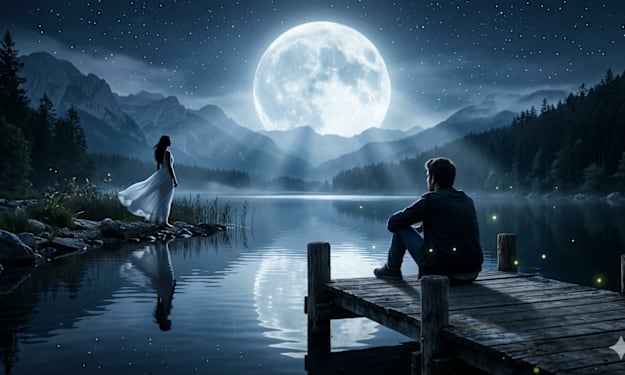
Not in the way the moon follows everyone, rising faithfully over cities and oceans, but in a way that felt personal. Whenever she appeared, the night seemed to rearrange itself around her. The silver light would soften. The shadows would lean closer. Even the stars seemed quieter, as though listening. And she loved the moon. Not because it was beautiful, but because it understood something about hiding. “The moon never tells its secrets,” she once said. I laughed. “It’s a giant rock in space.” She smiled. “No. It’s a diary no one can read.” At the time, I thought it was another one of her strange poetic thoughts. Years later, I would realize she was talking about herself. I met her during a season when my life felt ordinary. Days arrived and left without leaving marks. Nothing hurt. Nothing healed. Nothing changed. Then she appeared. Some people enter your life through the front door. She arrived like moonlight through an open window. Quiet. Unexpected. Impossible to ignore. She carried books everywhere. The pages were filled with notes written in tiny handwriting. Sometimes she would stare at the sky for long periods and refuse to explain what she was thinking. “Tell me,” I would ask. And she would shake her head. “Not everything needs to become words.” That was her habit. She kept pieces of herself hidden. Not because she didn't trust people. Because some mysteries were the only things she truly owned. One night we sat beside a lake. The water reflected the moon perfectly. For a moment it looked as though there were two moons—one in the sky and one beneath it. She stared at them silently. “Do you ever wonder,” she asked, “how much people never tell each other?” I shrugged. “A little.” “I think everyone is carrying an entire universe they never share.” The breeze moved her hair across her face. She didn't move it away. She kept watching the moon. “And sometimes,” she whispered, “the things we never say become the biggest part of who we are.” I didn't know then that she was describing herself. The months passed. We became inseparable. At least that's what I believed. We walked through crowded streets. Shared late-night conversations. Sent messages that stretched until dawn. I knew her favorite songs. I knew how she took her coffee. I knew the sound of her laugh before it happened. But there were still rooms inside her heart whose doors remained closed. Whenever conversations moved too close to certain memories, she would change the subject. Whenever questions became too personal, she would smile and point toward the moon. “Ask that instead.” And somehow, I never pushed further. Then came the night everything changed. The moon was full. Bright enough to paint silver across the rooftops. We sat together in silence. For once she seemed nervous. As though words were standing at the edge of her lips but refusing to jump. “I should tell you something,” she said. I waited. The wind moved through the trees. The city hummed in the distance. But she never finished the sentence. Instead she looked up at the moon. Her eyes filled with a sadness I had never seen before. Then she smiled. A small smile. The kind people wear when they're trying not to break. “Never mind.” I wanted to ask. I wanted to insist. But something stopped me. Maybe fear. Maybe respect. Maybe the feeling that some secrets are protected by forces stronger than curiosity. A week later, she was gone. No dramatic goodbye. No explanation. No final confession. Only absence. The cruelest language in the world. I searched for reasons. Read old messages. Replayed old conversations. Looked for clues hidden between ordinary sentences. But there was nothing. Only silence. And the moon. Always the moon. Watching from above like a witness refusing to testify. Years passed. Life continued the way life always does. New places. New people. New stories. But every now and then, I would find myself looking up at the night sky. And remembering. Not her face. Not her voice. Her mysteries. The things she never said. The secret she almost revealed. The truth she carried away. I realized something strange. I missed her less than I missed the questions she left behind. Because answers bring endings. Questions stay alive. One autumn evening, I opened an old box filled with forgotten memories. Inside was a photograph. A dried flower. A ticket stub. And a folded piece of paper in her handwriting. My heart stopped. I unfolded it slowly. The paper had yellowed with age. The ink had faded slightly. But her words remained. There wasn't much written there. Only a few lines. "Some secrets are not hidden because they're dark." "Some are hidden because they're beautiful." "If one day I'm gone, don't spend your life searching for answers." "Just look at the moon." "It already knows." I read those words again and again. And suddenly I understood. The secret itself had never mattered. What mattered was the trust. The love. The invisible thread connecting two people even when explanations are missing. That night I went outside. The sky was clear. The moon hung above the world exactly as it had years ago. Ancient. Patient. Silent. I looked up and smiled. For the first time, I stopped wondering what she never told me. Some mysteries aren't meant to be solved. Some stories aren't meant to be completed. Some people leave behind questions instead of answers because questions continue shining long after answers fade. And as the moonlight covered the earth in silver, I finally made peace with the unknown. Because the moon still kept her secrets.
By Khalil Ullah3 months ago in Families