Science
Iran Attacks Again – Trump's Reaction and Why a Two-State Solution May Be the Only Path to Peace
Iran Attacks Again – Trump's Reaction and Why a Two-State Solution May Be the Only Path to Peace The Middle East remains one of the most complex and volatile regions in the world. Recent developments involving Iran, Israel, and the United States have once again raised concerns about regional stability and the possibility of a broader conflict. Reports of renewed military exchanges between Iran and Israel have put a fragile ceasefire under pressure, while U.S. President Donald Trump has called on both sides to halt hostilities and return to diplomacy. Recent reports indicate that Trump urged restraint and publicly called on Israel and Iran to stop military exchanges as ceasefire efforts faced renewed challenges.
By Wings of Time 4 months ago in Earth
United States Semaglutide Market Set to Reach US$17.29 Billion by 2033 as Obesity and Diabetes Cases Fuel Demand. AI-Generated.
The United States healthcare landscape is undergoing a major transformation, and semaglutide has emerged as one of the most influential pharmaceutical innovations driving that change. Originally developed as a treatment for Type 2 diabetes, semaglutide has rapidly evolved into a breakthrough therapy for obesity management, cardiovascular health, and metabolic disease control.
By Akansha Aditi4 months ago in Earth
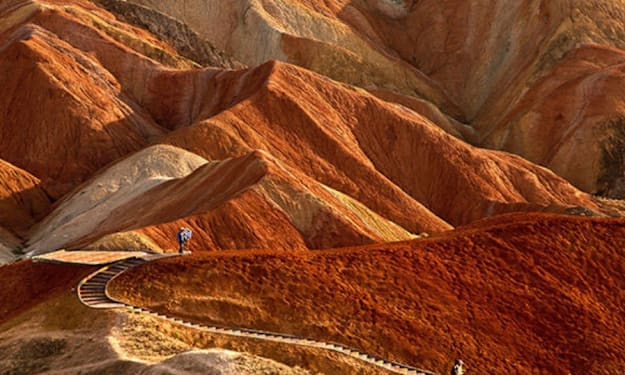
PAINTED ROCK SCIENCE
The cliffs rise like a giant rainbow frozen in stone. Layers of red, orange, yellow, and purple stretch across valleys and ridges, creating patterns that seem almost artificial but are entirely natural. Standing there, it's easy to forget that each hue and contour tells a story of time, pressure, and chemical reactions that shaped the Earth over millions of years. Formation of Layered Cliffs 1. Sediment deposition: These cliffs were formed from layers of sand, silt, and minerals deposited over millions of years. Each layer represents a different period, sometimes separated by thousands of years, giving the cliffs their striped appearance. 2. Mineral influence: Iron compounds produce red and orange hues, while manganese and other minerals contribute to purples and yellows. By studying these layers, geologists can trace changes in the environment over time. 3. Observation tip: Bring a notebook and record differences in color and thickness between layers. This simple exercise makes it easier to understand how each band reflects a unique geological period. Erosion and Sculpting 1. Water and wind: Rain, rivers, and wind slowly carve the cliffs, creating ridges, gullies, and domes. Over centuries, these forces expose the colorful layers and sculpt striking formations. 2. Natural patterns: Notice patterns like vertical cracks, dome-shaped hills, and small canyons. Each shape tells a story of how water ran through sediments, or how wind slowly removed softer rock. 3. Practical tip: Walk slowly along erosion patterns and observe textures. Smooth surfaces indicate long-term water flow, while rough, jagged areas often show recent rock breaks. Scientific Exploration 1. Fossils and traces: Some cliffs contain fossils of plants and tiny animals, revealing life forms that existed when the layers were deposited. Even small impressions in rocks can show ancient environments. 2. Educational trails: Many sites have interpretive boards explaining formation processes and mineral content. Follow marked paths to access areas where natural features are well-preserved. 3. Interactive observation: Use a magnifying glass to examine small pebbles, grains, or crystal deposits. Noticing the details connects you to processes that occurred over millions of years. Color Changes and Time of Day 1. Morning light: Early sun casts long shadows, emphasizing the folds and ridges of the cliffs. Reds and oranges appear most saturated. 2. Afternoon glow: Late sunlight softens colors and can bring out purples and yellows in subtle ways. Photographers often prefer this time for warm, layered shots. 3. Practical tip: Take multiple photos at different times of the day to capture the full spectrum of colors. Even standing in the same spot, the landscape can feel entirely new as light changes. Flora and Fauna Interaction 1. Plant growth: Small shrubs and resilient flowers grow in crevices and thin soil patches. Observing these plants gives insight into how life adapts to harsh, arid environments. 2. Animal traces: Birds often nest along cliff edges, and small reptiles or insects may be spotted on sun-warmed rocks. Watching quietly can reveal their routines without disturbing them. 3. Observation tip: Bring binoculars or a zoom camera lens to study wildlife from a safe distance, noticing how species utilize cliff formations for shelter or hunting. Preserving the Landscape 1. Stay on marked trails: Walking off-path can damage fragile surfaces and disturb natural erosion patterns. 2. Leave no trace: Carry out all trash and avoid removing rocks or plants. These cliffs have taken millions of years to form, and small actions can have lasting effects. 3. Educational engagement: Encourage children or friends to observe details and record findings. Simple activities like noting different colors, textures, or small plants can cultivate curiosity while preserving the site. Reflections on Earth's Timeline Walking along these cliffs, it becomes clear that the landscape is a living history book. Each ridge, fissure, and color band represents countless years of natural change, showing how water, wind, and mineral deposits shape the Earth. Spending time observing details—from subtle mineral veins to tiny plant growth—teaches patience and attention. The cliffs remind us that even immense natural forces operate slowly, leaving behind beauty and knowledge for those willing to notice. Next time you see layered rock formations, take a moment to study the textures and colors—you might uncover stories that have been waiting millions of years to be told.
By Muhammad Talha4 months ago in Earth
What is a Supercell Storm and Lightning?
Product of a “Loner” Thunderstorm The thunderstorms that produce supercell lightning are loners, if one was to personify them. While other forms of lightning clouds can be found in the same storm system, supercells have a tendency to form in areas several miles from the main storm front. They’re rare and can be found in a few isolated areas of the United States and Australia. However, they have the potential to be the most dangerous, considering that they can strike almost anywhere if the conditions are right.
By Dean Traylor4 months ago in Earth
Key Auxiliary Subsystems of LEO Satellites: Unveiling Thermal Control, Data Handling, and Propulsion Technologies
Introduction The stable operation of LEO satellites relies not only on core systems such as communications, power, and attitude and orbit control, but also on the support of auxiliary subsystems including thermal control, command and data handling, and propulsion. Although these subsystems do not directly reflect core value like communication systems, they are critical to ensuring the satellite’s survival and efficient operation. Their technical selection and reliability design directly affect the satellite’s on-orbit lifetime and mission success rate. This article details the technical principles, core functions, and cost logic of the three major auxiliary subsystems.
By Emily Carter4 months ago in Earth
Mexico System Integration Market Set to Reach US$ 19.99 Billion by 2033 as Digital Transformation Reshapes Enterprise IT. AI-Generated.
Mexico’s system integration market is moving from a back-end IT support function to a strategic enabler of digital business. According to Renub Research, the market is expected to grow from US$ 8.95 billion in 2024 to US$ 19.99 billion by 2033, reflecting a CAGR of 9.34% from 2025 to 2033. That growth outlook captures a larger story: as organizations in Mexico modernize their operations, they need their systems, data, cloud platforms, and security layers to work together smoothly.
By Akansha Aditi4 months ago in Earth
Which invasive plants thrive depends on the climate.
For 150 years, biologists have been perplexed by plants, an issue that even Charles Darwin was unable to adequately address. Why do some people spread quickly after moving to a new location while others barely make it?
By Francis Dami4 months ago in Earth
The Future: Is AI Dangerous for Humans?
The Future: Is AI Dangerous for Humans? Artificial Intelligence (AI) is one of the fastest-growing technologies in human history. From smartphones and medical systems to self-driving vehicles and advanced chatbots, AI is becoming part of everyday life. This rapid growth creates an important question: Is the future of AI dangerous for humans? The answer is not simple. AI itself is not automatically harmful or beneficial—it depends on how humans develop, control, and use it.
By Wings of Time 4 months ago in Earth
The Leftovers on Your Plate Could Power Your Neighborhood: The Unlikely Future of Renewable Energy. AI-Generated.
Think about the last time you scraped the remnants of dinner into the trash. Maybe it was a handful of soggy pasta, a bruised banana peel, or a bag of forgotten salad greens that turned into a liquid mess at the back of your fridge crisper. For most of us, that moment is the end of the story. The lid closes, the bag goes out to the curb, and the waste vanishes from our minds.
By Steve Last4 months ago in Earth
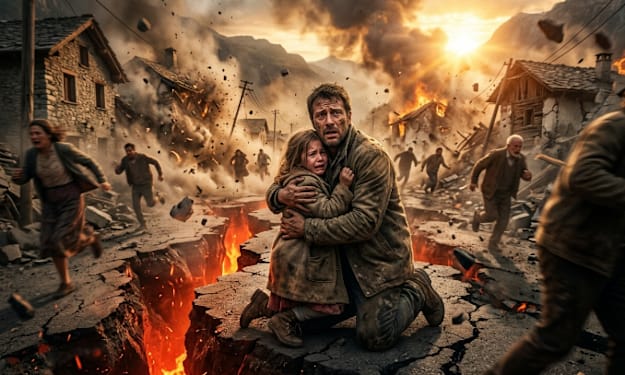
The Day the Earth Cracked Open
The morning was calm—too calm. Zeeshan stood outside his small home, a warm cup of tea in his hands, watching the sun slowly rise over the dusty hills. It felt like any other day in the quiet village. Birds chirped softly. Children laughed in the distance. Life moved gently, peacefully—just as it always had.
By Muhammad Zeeshan4 months ago in Earth