
The Tree That Saw the Pyramids Being Built
he story of Prometheus, the ancient bristlecone pine that lived for nearly 5,000 years before being cut down for science.
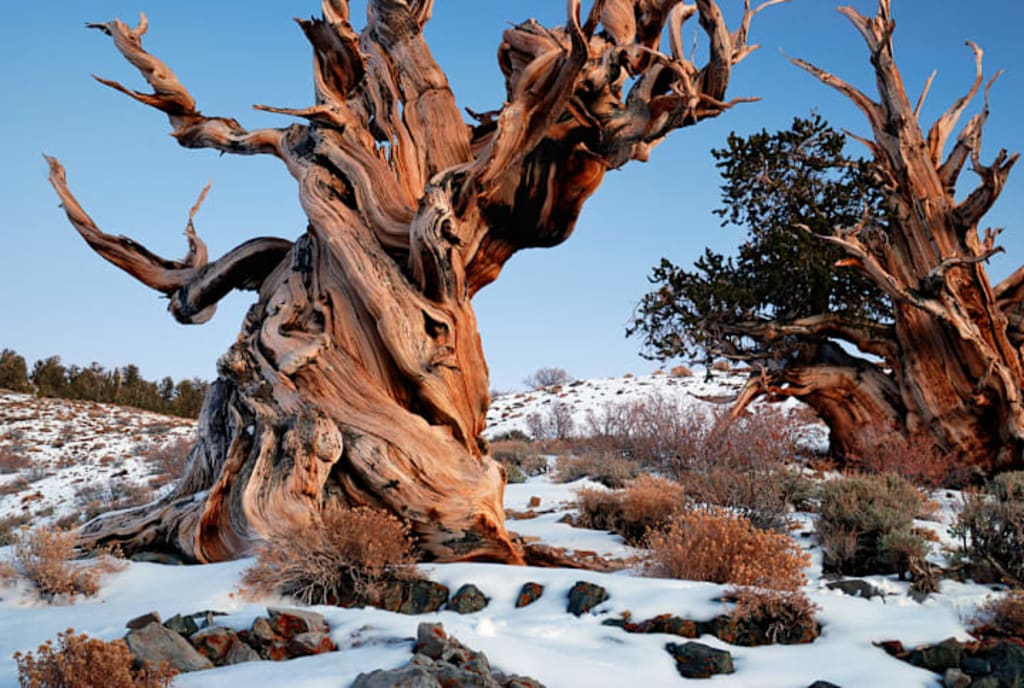
In Nevada, there once grew a pine tree named after the titan Prometheus. It was almost 5,000 years old — it had appeared when Egypt was only beginning to build its pyramids. But today, that tree no longer exists. What happened to the oldest living organism on the planet, and why does its death still provoke debate? This is a story that makes you think about how fragile even the longest life can be.
Some trees do not merely grow — they become silent witnesses to entire eras of human history.
A Long-Lived Pine
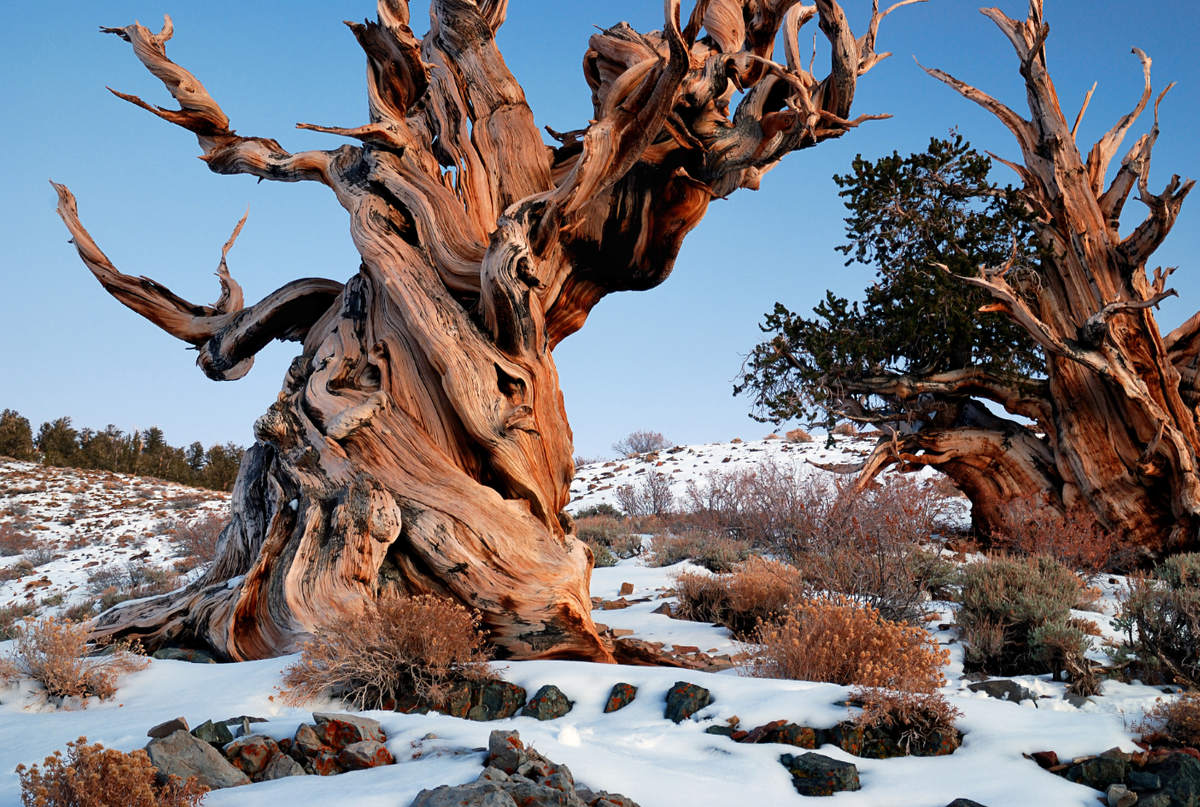
The Great Basin bristlecone pine (Pinus longaeva) is not just a tree, but a true phenomenon in the plant world. This species belongs to the pine genus of the Pinaceae family and is known for its exceptional lifespan, reaching several millennia. Individual specimens of Pinus longaeva growing in the Rocky Mountains of North America can reach ages of 4,800–5,000 years. By some estimates, certain bristlecone pines in Arizona are around 4,000 years old. The species is known as one of the longest-lived trees still existing on the planet. Today, Pinus longaeva is listed on the IUCN Red List and has the conservation status of a vulnerable species.
The uniqueness of the Great Basin bristlecone pine lies not only in its extraordinary longevity, but also in its ability to remain viable for thousands of years without visible signs of aging. Studies show that the most recent annual rings of these trees were just as wide as they had been a thousand years earlier, their seeds remained viable, and their needles continued to renew at the same rate. This allows scientists to study the mechanisms of longevity and resistance to aging.
The Chronology of a Tragedy
What happened to Prometheus was not a single careless act, but a chain of scientific decisions, technical difficulties, and missing context.
The 1964 Scientific Expedition
In 1963, Donald Rusk Currey, a graduate student at the University of North Carolina at Chapel Hill, born on January 24, 1934, received a grant from the U.S. National Science Foundation. His research focused on studying the climate dynamics of the Little Ice Age using dendrochronology — the science of determining the age of trees by their annual rings.
By that time, scientists already knew that bristlecone pines growing in California, Nevada, and Utah were the oldest known tree species. In 1963, Currey learned of a population of these unique trees in the Snake Range, particularly on Wheeler Peak in eastern Nevada. In the summer of 1964, he set out on an expedition, not yet realizing what consequences his work would have.
Failed Attempts to Take Samples
Currey found that very old specimens did indeed grow on the mountain. Some of them were more than 3,000 years old. One tree in particular drew the researcher’s attention. In his notes, he designated it WPN-114, where WPN stood for White Pine County, Nevada, and 114 indicated that it was the 114th tree on his research list. Later, the same tree received the unofficial name Prometheus, after the titan of Greek mythology who gave fire to humankind. The name had been given by naturalists who studied the mountain in 1958 or 1961, when they named the largest and oldest pines.
When Currey tried to take wood samples from WPN-114, he ran into serious difficulties. The standard 28-inch increment borer, about 71 centimeters long, was not enough to obtain a continuous sequence of overlapping cores. The researcher made at least four attempts, breaking two borers in the process, but still failed.
The Fateful Decision
Unable to obtain a sample by other means, Currey made a decision that would remain forever in the history of science. He requested permission from the U.S. Forest Service, which at the time managed the territory of Lehman Caves National Monument, now part of Great Basin National Park. Currey was personally acquainted with Forest Service officials, and permission was granted.
On August 6, 1964, Prometheus was cut down. Currey and his assistants sawed the trunk into sections, which were then transported for further processing and analysis.
Discovering the True Age
The scale of the loss became clear only after the tree had already been felled.
The First Count
When Donald Currey began counting the annual rings in a hotel room, he was stunned. His initial research showed that the tree had 4,844 annual rings. That figure already surpassed every longevity record known at the time among non-clonal organisms. Non-clonal organisms are those that grow from a single seed and do not reproduce by cloning, unlike, for example, aspen groves that may consist of genetically identical clones.
The typical Great Basin bristlecone pine grows near the timberline on the lateral moraine of the former Wheeler Peak glacier, at an elevation of about 3,260 meters above sea level. In such harsh conditions, trees grow extremely slowly, with growth of only 0.2 millimeters per year — roughly the thickness of a human hair. Over 5,000 years, the trunk reaches only about one meter in diameter. Prometheus’s wood had a density of 650 kilograms per cubic meter, harder than oak, while resin made up around 30% of its mass.
Refining the Age
Two years after Prometheus was destroyed, Donald Graybill of the University of Arizona’s Laboratory of Tree-Ring Research took up the work. After a more detailed analysis, Graybill adjusted the tree’s age to 4,862 years. However, many scientists believe the pine’s true age may have exceeded 5,000 years and perhaps even reached 5,100 years.
Given the severe growing conditions, where some years may have left no visible rings because of the harsh climate, Prometheus is generally estimated to have been around 4,900 years old. At the moment it was cut down, it was the oldest known non-clonal living tree in the world.
For comparison, Prometheus already existed when the pyramids of Egypt were just beginning to rise. It lived through wars of empires, the passing of eras, and the rise and fall of civilizations.
Where Prometheus Grew
Wheeler Peak
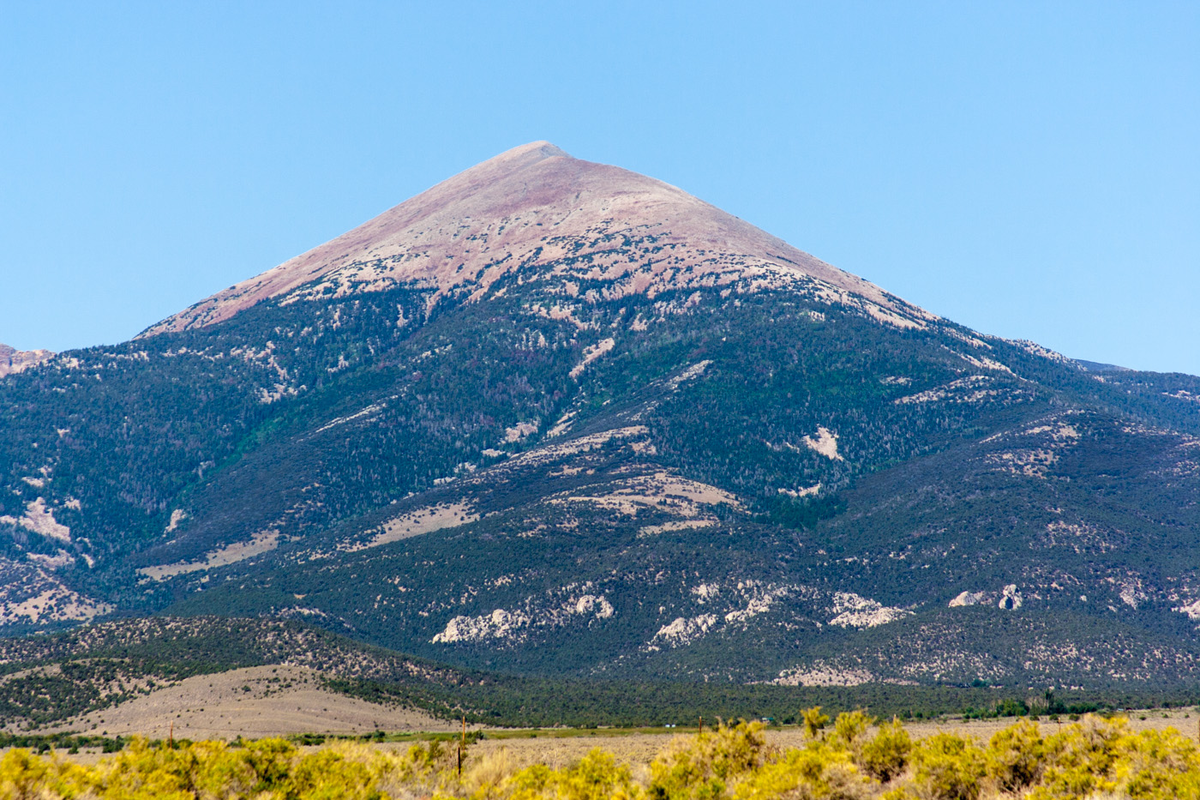
Prometheus grew on Wheeler Peak, the highest point of the Snake Range in the U.S. state of Nevada. The mountain reaches 3,982 meters, making it the second-highest peak in Nevada after Boundary Peak. It is located within Great Basin National Park and was named after George Wheeler, the leader of a mapping expedition that explored the part of the United States lying west of the 100th meridian.
Great Basin National Park is remarkable not only for its ancient groves of bristlecone pines — the oldest known non-clonal organisms — but also for Lehman Caves at the foot of Wheeler Peak and the Wheeler Peak glacier. The park spans several climatic zones, from sagebrush-covered foothills to alpine environments near the summit.
The tree grew on the lateral moraine of a former glacier, at an elevation close to the upper limit of the forest. In such conditions, tree growth is slowed dramatically, but it is precisely the severity of the environment that gives them their extraordinary longevity.
Consequences and Legacy
Shock in the Scientific Community
News that a graduate student had cut down the oldest tree on the planet caused shock and outrage in scientific circles. Many researchers expressed regret over the irreplaceable loss. A tree that might have lived for several more millennia had been destroyed in order to obtain a sample. It later emerged that Currey did not know Prometheus was a potential record-holder, and researchers who had previously worked in the area had not informed him of its uniqueness.
The Creation of a Protected Area
The death of Prometheus became a turning point in conservation policy. A protected area was established where the tree had once grown and later became part of Great Basin National Park. After this incident, the U.S. Forest Service stopped issuing permits to cut trees in the area. Bristlecone pines are now under strict protection.
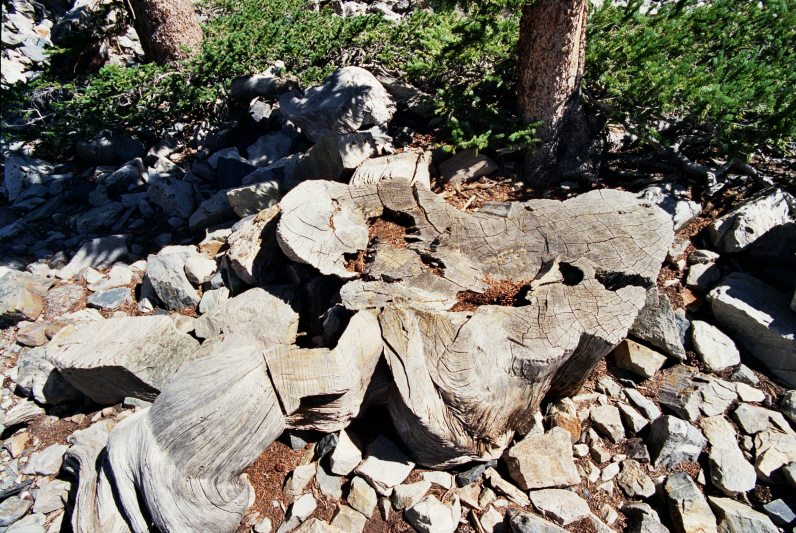
Today, the stump and part of Prometheus’s trunk can still be found where it once grew, on the slope of Wheeler Peak. A cross-section of the trunk is displayed for visitors at the park’s visitor center, where its annual rings can be seen in person — a kind of chronicle spanning almost 50 centuries of Earth’s history.
Donald Currey’s Career
After the tragic incident, Donald Currey left dendrochronology for good. He turned to the study of salt lakes, particularly the relics of ancient Lake Bonneville in the eastern Great Basin. Currey built a successful career in this field and remained known in academic circles for his extensive research. In the public sphere, however, he is remembered above all as the man connected to the death of Prometheus. Donald Rusk Currey died on June 6, 2004.
Methuselah Pine: A Living Reminder
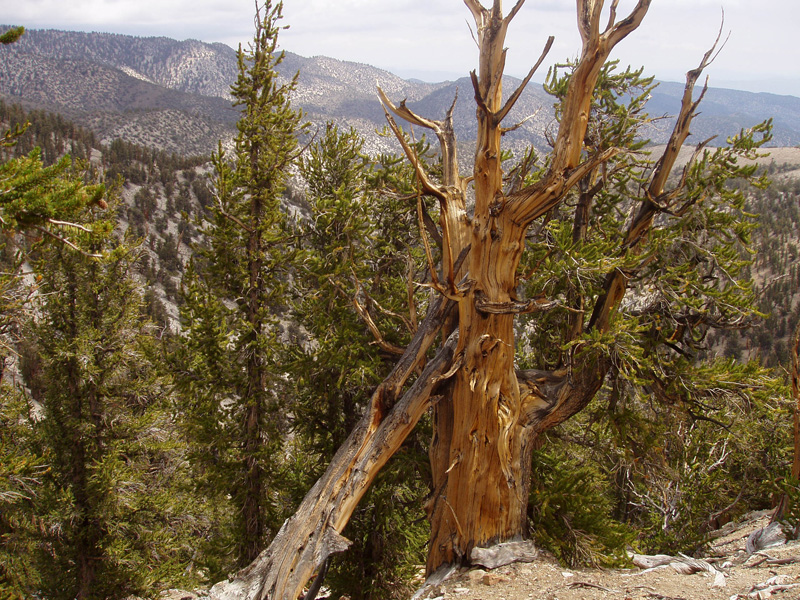
In Inyo National Forest in eastern California grows another famous bristlecone pine: Methuselah. Named after the biblical patriarch known for his longevity, this tree is now considered one of the oldest living non-clonal organisms on Earth known to science.
Methuselah is around 4,855 years old as of 2025. It grows in the Methuselah Grove, located at an elevation of about 3,000 meters above sea level. Interestingly, Methuselah’s exact location is kept secret to protect it from vandals and excessive tourist attention. In 2012, another pine of the same species was discovered that may be even older, but its exact data have not been publicly disclosed.
Methuselah is a living contemporary of Prometheus, reminding us of the treasure that was lost in 1964.
About the Creator
Enjoyed the story? Support the Creator.
Subscribe for free to receive all their stories in your feed.
Comments
There are no comments for this story
Be the first to respond and start the conversation.