
Chaga: The Black Diamond of Russia’s Forests
A detailed look at chaga’s biology, history, medicinal use, chemical composition, harvesting methods, and modern scientific research.
In almost every Russian forest, on the trunk of an old birch tree, you can spot a strange black growth resembling a mass of charred wood. Most people walk past without realizing that they are looking at one of the most valuable natural remedies known to humankind. Chaga has been called the “black diamond” of the northern forests, the “gift of the Siberian taiga,” and even the “mushroom of immortality.” Behind these epithets lies more than folklore: over recent decades, science has confirmed many of the properties that healers and herbalists used for centuries, from Ancient Rus to medieval Persia.
Few natural organisms have attracted as much attention from both traditional medicine and modern researchers as this unusual birch fungus.
## What Chaga Is and How It Forms
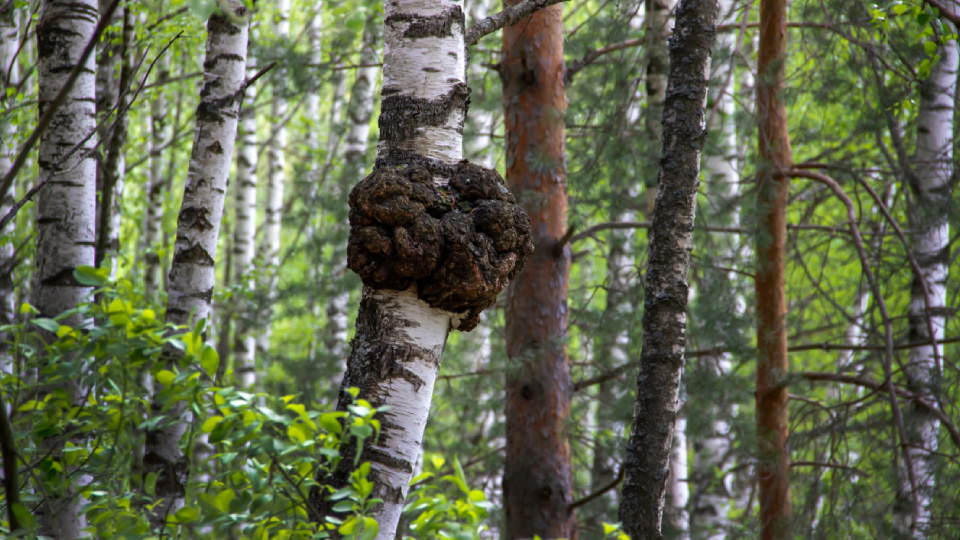
From a biological perspective, chaga is the sterile form of the fungus Inonotus obliquus, a member of the basidiomycete group. Put simply, it is a “dormant” stage of the fungus in which it does not reproduce through spores but instead accumulates and concentrates a maximum amount of biologically active compounds.
The formation of chaga begins when fungal spores enter a damaged area of bark on a living tree. A frost crack, insect damage, or any other injury to the bark can become an entry point for the parasite. The fungal mycelium penetrates deep into the trunk and begins its destructive work, causing white heart rot that can eventually kill the tree. It is at the site of the most extensive decay that the distinctive black growth we call chaga develops.
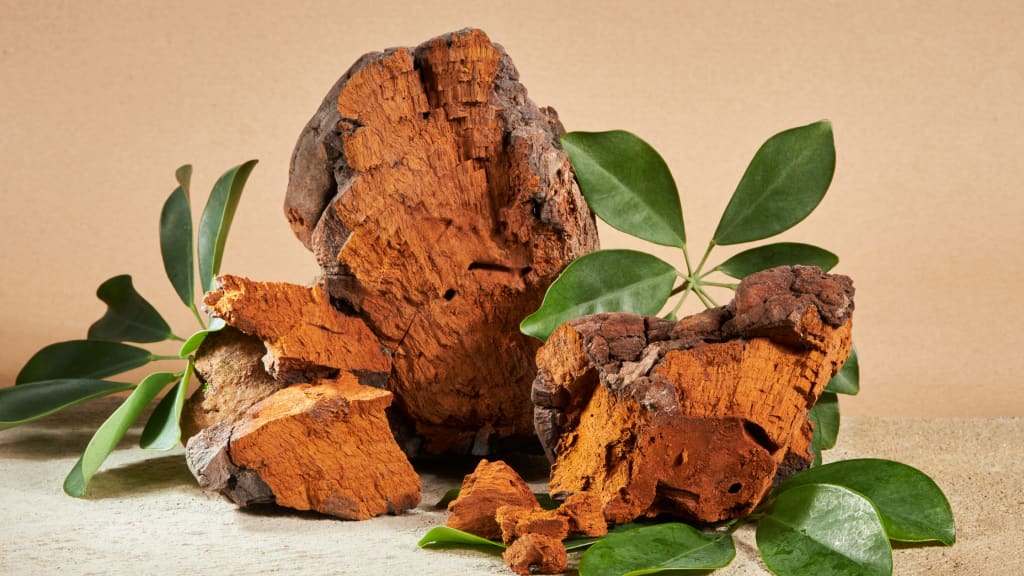
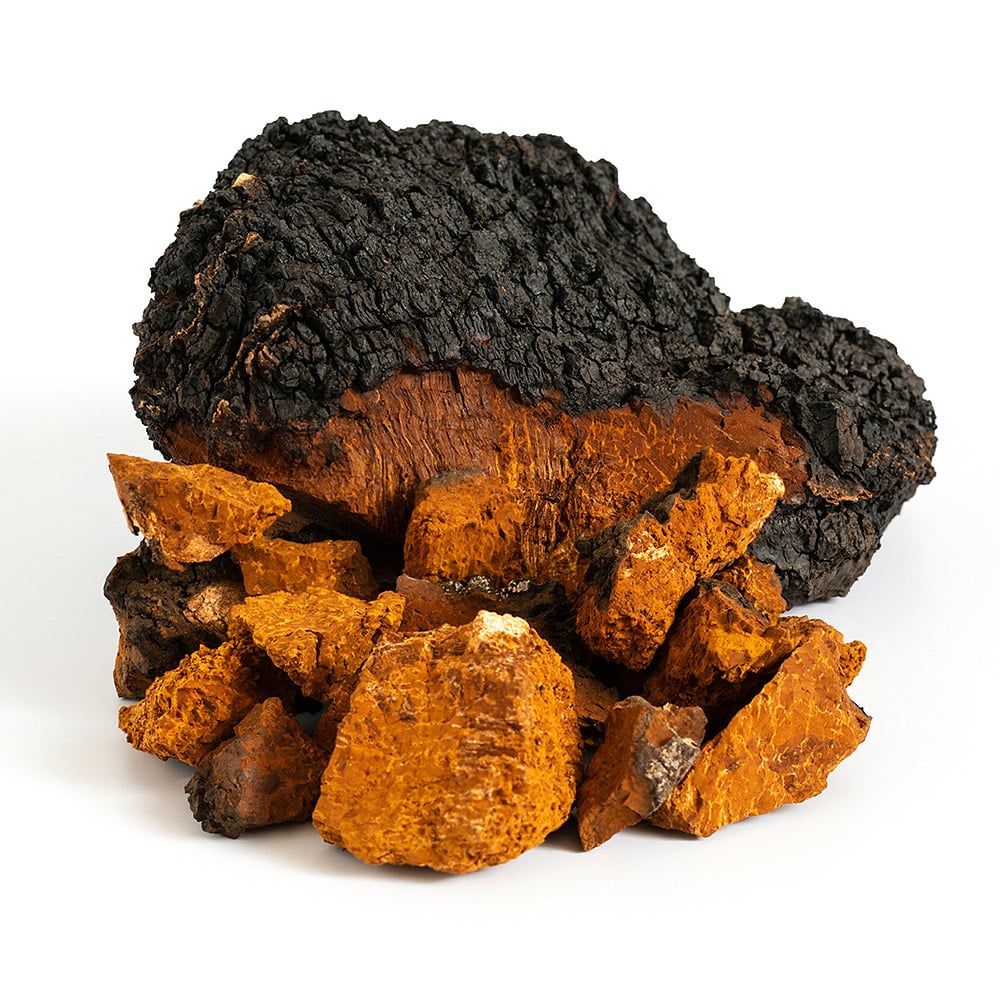
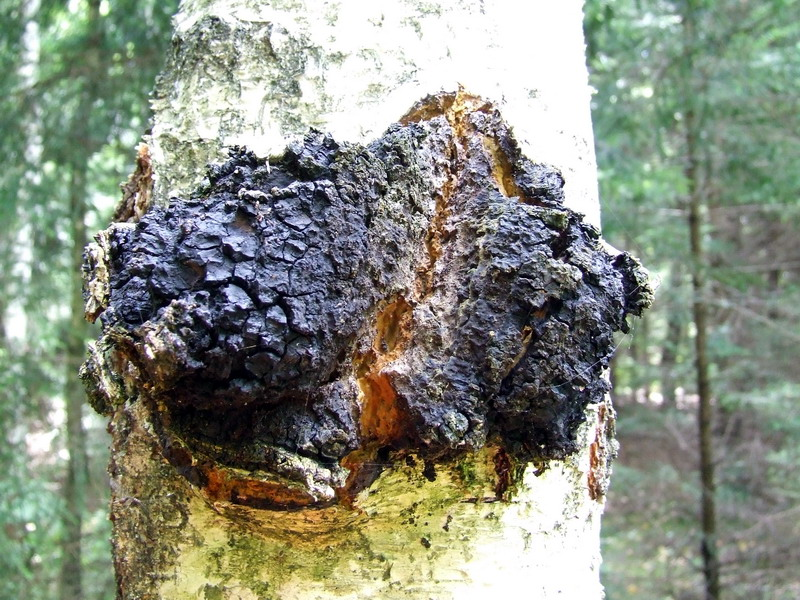
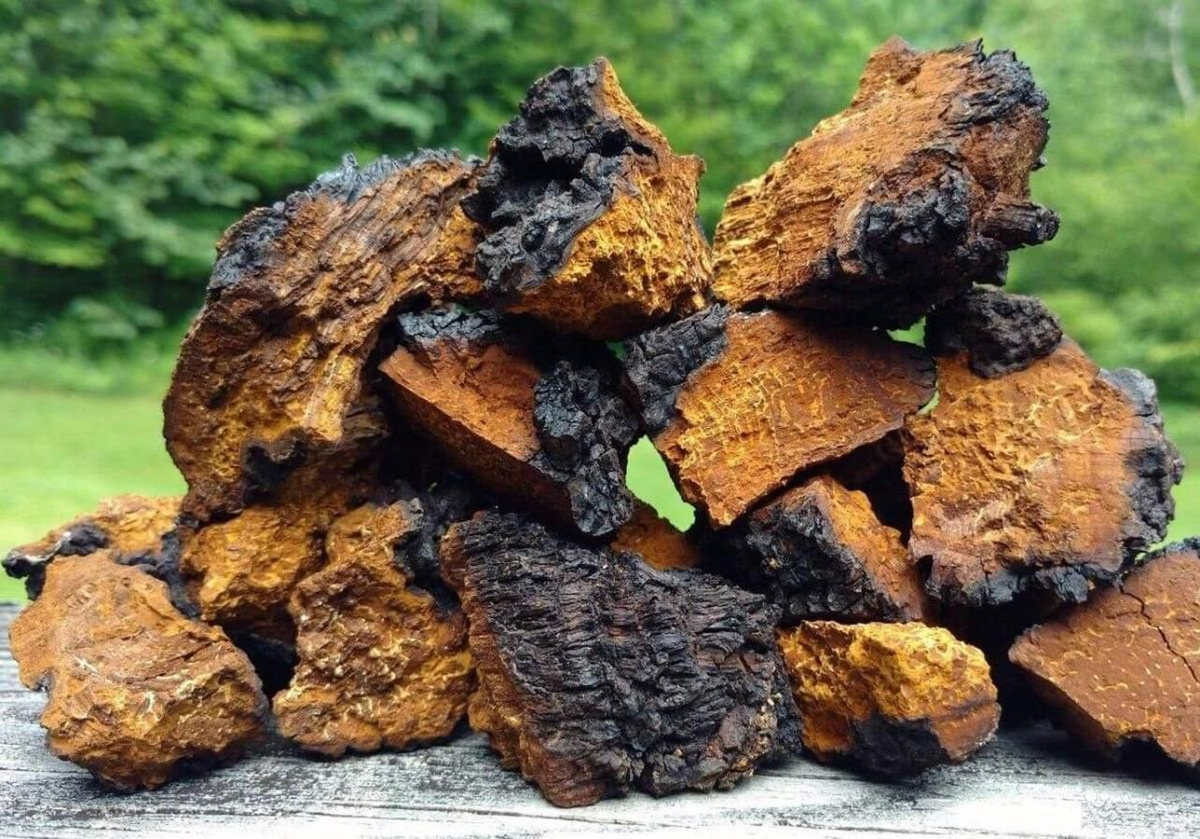
Externally, chaga appears as a woody, irregular mass that can reach 40–50 centimeters in diameter and sometimes weigh 3–5 kilograms. Its surface is black, cracked, and rough, closely resembling a chunk of burned wood. Yet a cross-section reveals a very different structure: the interior is dark brown with small white or yellowish streaks. These streaks are strands of fungal mycelium that run throughout the entire body of the fungus.
It is important to understand that chaga is not a typical mushroom that can simply be picked by hand. It grows directly from the trunk of a tree, and removing it without tools is virtually impossible.
## Where to Find Chaga
Chaga is a northern fungus. In Russia, it can be found wherever birch trees grow, from the western borders of the country to the Far East. The largest reserves are concentrated in Siberia, the Urals, the Arkhangelsk, Vologda, and Kirov regions, as well as Karelia and the Komi Republic. It is most commonly found in damp forests, wetlands, river floodplains, and old logging areas.
Authentic medicinal chaga grows only on living birch trees and only in cold climates. The harsher the winter and the shorter the summer, the more slowly the fungus develops, producing a denser and more concentrated structure. For this reason, Siberian chaga has traditionally been valued more highly than specimens collected in southern regions. For medicinal purposes, only chaga that grows on birch is considered suitable; fungi found on alder, rowan, maple, or elm are significantly less biologically active.
## The History of Chaga Use
The medicinal use of chaga dates back many centuries. Its healing properties were known to ancient physicians, and references to the black birch fungus can be found in the writings of the ancient Greek physician Dioscorides and the medieval Persian scholar Avicenna.
In Rus, chaga was equally well known and highly valued. According to historical chronicles, a preparation made from chaga was used to cure Grand Prince Vladimir Monomakh of lip cancer, an event recorded in Russian sources from the 11th century. Herbal manuals of the 17th and 18th centuries paid special attention to chaga, considering it a remedy for numerous illnesses and comparing its effects to those of ginseng.
Scientific interest in chaga emerged in Russia during the mid-19th century. The first clinical studies of the birch fungus were conducted at the Moscow Medical Institute, and the conclusions were impressive: chaga demonstrated beneficial effects on the digestive, cardiovascular, and nervous systems.
Research continued during the Soviet era. In the 1970s, the First Pavlov Leningrad Medical Institute demonstrated that chaga helped enhance oxidation-reduction processes in tissues, normalize stomach acidity, and provide a general strengthening effect. By 1975, industrial harvesting of chaga in the USSR had reached 500 tons annually.
Chaga was officially recognized as a medicinal raw material in the second half of the 20th century. The extract-based preparation Befungin was developed and remains available in pharmacies today. Later, products such as Chagovit and Chagolux also appeared on the market.
## Chemical Composition: The Secret Behind Chaga
What makes chaga so valuable is its unique biochemistry. The fungus contains approximately 200 biologically active compounds, many of which are rarely found elsewhere in nature.
Polysaccharides and Beta-Glucans
One of the most important groups of compounds in chaga is polysaccharides, particularly beta-glucans. These substances, also found in oats, barley, and shiitake mushrooms, possess powerful immunomodulating properties. Chaga contains up to 13–15 grams of beta-glucans per 100 grams of dried material. These compounds stimulate white blood cell activity, helping the body combat bacteria and viruses, and play an important role in immunotherapy.
Triterpenoids: Betulin and Betulinic Acid
Birch bark contains betulin, a white crystalline substance that can be converted through enzymatic oxidation into betulinic acid. During its growth, chaga accumulates these compounds in significant amounts. Betulinic acid has become one of the most intensively studied natural compounds in recent years due to its pronounced antitumor activity and ability to induce apoptosis in cancer cells. These substances help explain chaga’s role in supportive oncology care.
Melanin and Antioxidants
Chaga’s dark, almost black color comes from its exceptionally high melanin content—the same pigment that protects human skin from ultraviolet radiation. Chaga melanin is a powerful antioxidant that neutralizes free radicals, protects cells from damage, and slows aging processes. It also exhibits anti-inflammatory and hemostatic properties.
Organic Acids
Researchers have identified oxalic, acetic, formic, and tartaric acids in chaga. These compounds contribute to acid-base balance, support digestion, and possess antibacterial properties.
Trace Elements
The mineral fraction of chaga contains oxides of potassium, calcium, manganese, iron, copper, and zinc. Particularly noteworthy is its high manganese content, an essential trace element involved in nervous system function and blood formation.
This remarkably rich chemical composition explains why chaga has been used for centuries in conditions ranging from digestive disorders to serious chronic diseases.
## How to Distinguish Real Chaga from Look-Alikes
Several types of fungal growths can be found on birch trees, and not all of them are medicinal chaga. Growing demand has led to numerous mistakes and misidentifications, making it important to recognize the differences.
Authentic chaga has an irregular, lumpy shape rather than a neat mushroom cap. Its exterior is black and rough, covered with numerous shallow cracks. Inside, it is dark brown and dense, with small yellowish streaks formed by mycelial threads. It grows primarily on living birch trees and is difficult to remove without a strong knife or hatchet.
False tinder fungi have a hoof-like shape resembling half of a mushroom cap attached to the trunk. Their lower surface is flat while the upper surface is rounded. The exterior is smooth or velvety, often displaying concentric rings and a grayish or brown crust. They grow on both living and dead trees and are usually easy to detach. Their internal structure is much more uniform and lacks the characteristic streaks found in chaga.
Most tinder fungi are not poisonous, but they also lack the medicinal value associated with chaga. Some species may even be toxic, making accurate identification essential.
## Harvesting and Storing Chaga
The best time to harvest chaga is late autumn, winter, or early spring, when the fungus is most concentrated and the tree is dormant.
Only collect chaga from healthy, living birch trees. Chaga growing on dead or dried trees should not be harvested because decomposition processes have already begun. The fungus should be removed from a point at least one meter above ground level. A hatchet or strong knife is usually required, as chaga is extremely hard and cannot be separated by hand. Immediately after harvesting, remove the loose, light-colored portion attached to the trunk as well as any bark and wood fragments.
For storage, chop the cleaned chaga into pieces measuring approximately 3–5 centimeters. Dry it in a well-ventilated area or in an oven at temperatures not exceeding 60°C. Store the dried fungus in a dry place protected from moisture, mold, and insects. Properly dried chaga can be kept for up to two years.
High-quality dried chaga is dark brown with fine yellow streaks, has virtually no odor, and tastes distinctly bitter. If the interior appears completely black when broken apart, the fungus is old and has largely lost its beneficial properties.
## How to Prepare Chaga Infusion
Preparing chaga requires patience, but the correct method allows for maximum extraction of its active compounds.
Traditional Infusion Recipe
This method is considered the most effective for preserving biologically active substances.
Grind the dried chaga using a hammer, grater, or meat grinder. Pour 0.5 liters of warm boiled water, heated to no more than 50°C, over 50 grams of the material. Boiling water should not be used, as high temperatures can destroy many valuable compounds. Allow the mixture to infuse for 48 hours at room temperature in a glass or enamel container. Strain the liquid and squeeze the remaining material. Add boiled water until the volume again reaches 0.5 liters.
Traditionally, the infusion is consumed either as half a glass six times daily or one full glass three times daily approximately 30 minutes before meals.
## Chaga as a Dietary Supplement and the Future of Research
Today, chaga is experiencing a resurgence of interest. In Russia and abroad, it is classified among functional mushrooms and adaptogens—natural substances that help the body adapt to stress and increased demands.
Several dietary supplements have been developed from chaga. The best known is Befungin, available as a semi-liquid extract and in tablet form. Other products include Chagovit, Chagolux, and various combination formulas. Many manufacturers employ modern extraction technologies, including ultrasonic processing, to maximize the recovery of biologically active compounds.
Scientific interest in chaga remains strong. In 2017, Chinese researchers confirmed that chaga polysaccharides could inhibit the growth of hepatoma cells. In 2020, Japanese scientists reported that chaga extract demonstrated stronger antitumor activity against certain cancer cell lines than PSK, a well-known mushroom-derived anticancer compound. In 2025, researchers in Yakutia developed a dietary supplement combining chaga with Phlojodicarpus species for cancer prevention research.
At the same time, it is important to recognize that chaga is not a medicine in the conventional sense. It is a powerful natural product that should be approached thoughtfully and responsibly. Most chaga-based supplements are not pharmaceutical drugs, and their effectiveness still requires further clinical investigation.
## A Remarkable Gift of Nature
Chaga is a unique gift of nature that humanity has valued since ancient times and continues to study today. It combines immunomodulating, anti-inflammatory, antioxidant, and potential antitumor properties, while its exceptionally rich chemical composition makes it one of the most remarkable natural adaptogens known.
Yet despite its many benefits, chaga is not a miracle cure. It does not replace conventional medical treatment but may serve as a valuable complement to it. Anyone considering chaga, especially in the context of serious illness, should consult a qualified healthcare professional first.
And if you decide to venture into the forest in search of this “black diamond,” remember the essentials: collect it only from living birch trees, do not confuse it with tinder fungi, harvest it carefully, and avoid old, crumbling specimens. Then this modest black growth with its stone-hard surface may truly become a source of health and longevity.
About the Creator
Enjoyed the story? Support the Creator.
Subscribe for free to receive all their stories in your feed.
Comments
There are no comments for this story
Be the first to respond and start the conversation.