Proofreading
Challenging Yourself to Overcome Writer's Block
A critique challenge? Just 50 words? Not sure about this. Seems interesting but hard. Fifty one words! Gotta cut something. That was fun. Another day. Too many positive ones. Should probably balance it with something else. Let me take it to the extreme, and see how many I can write?
By Atomic Historian3 years ago in Critique
National Geographic
What do you do when you don’t have the money to travel? You get a window, that's what you do. Sometimes you buy the window. But when you can't, you borrow it from the library. That’s what National Geographic was for me as a child. The window of my dreams.
By Atomic Historian3 years ago in Critique
Andy Warhol's Campbell Soup Can
Perhaps I am ignorant of how modern art works. Or just perhaps not interpreting the work of Andy Warhol correctly. But I have never understood why his painting of soup cans was so significant. And I am sure the person that created the designs for Campbells was no more impressed.
By Atomic Historian3 years ago in Critique
No Shelter by Rage Against the Machine
Did Rage Against the Machine own a time machine in the 1990s? I’m not saying they did, but it’s sometimes too hard to listen to their 1998 single, No Shelter, and wonder if they hadn’t just arrived back from the 2020s. Prolific lyrics or time travel. Guess we’ll never know.
By Atomic Historian3 years ago in Critique
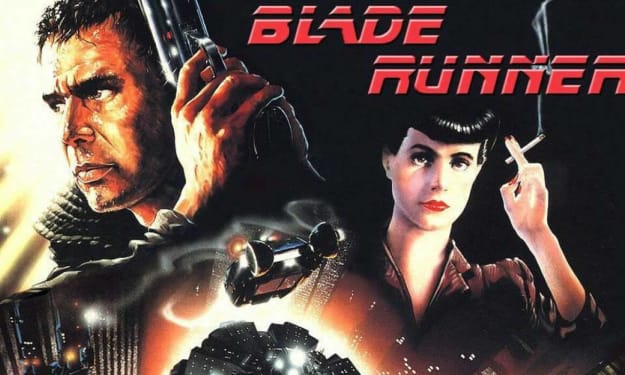
Do Androids Dream of Electric Sheep?
Do you want to question reality? What about reinterpreting the story every time you read the book or watch the movie? Well then, you’re in luck! Get, “Do Androids Dream of Electric Sheep?”, and start losing your sanity today! Thank you Philip, I’ll never decide if Deckard is a replicant.
By Atomic Historian3 years ago in Critique
Stargate: The Movie
Do you like sci-fi? Do you like archaeology? What about Egyptology and little ancient aliens? You know, before it became popular. That is what we got in the 1994 classic, Stargate. Starring James Spader and Kurt Rusell, this cinematic epic launched one of the best sci-fi franchises of the 90s.
By Atomic Historian3 years ago in Critique
The Bible
In all fairness, the Bible is the only book of the trilogy I’ve read. Mostly because the beginning is a recap of the first. I have not read the third book, mainly because I wasn’t terribly impressed with the Bible. Lots of continuity errors. Also, the book clubs get weird.
By Atomic Historian3 years ago in Critique
Calvin and Hobbs
These books were a godsend for a lonely, only child. I can’t think of a character I connected with more as a child. A precocious only child, check. His main company is his stuffed animal, check. Spends most of his day lost in his imagination, check. Thank you Bill Watterson.
By Atomic Historian3 years ago in Critique
X-Men: The Animated Series
Let’s be honest, X-Men: The Animated Series made the Marvel Cinematic Universe what it is. If this show didn’t exist, they’re would have been far less hype over the X-Men movie in 2000. This show was amazing from the theme song, to every plot line. We love and miss it.
By Atomic Historian3 years ago in Critique
The Managerial Revolution
There are few books that have had such a large influence on my life. The Managerial Revolution by James Burnham is one of the few that have changed my life's trajectory entirely. It is a fascinating, insightful, and contemporaneous look at the conflict between Fascism, Communism, and the New Deal.
By Atomic Historian3 years ago in Critique
Extremely Bad
Have you ever been asked, “What’s the worst book you’ve read?” I am often asked this when people find out my passion for literature. I always answer the same: Extreme Ownership by Jocko Willink. This book is exhaustingly unreadable. I stopped after the second chapter. I want my time back.
By Atomic Historian3 years ago in Critique
Navigating Nature's Challenges
In the vast and intricate fabric of existence, humanity's role is akin to a delicate thread woven within nature's intricate tapestry. In this expansive weave, each strand unfurls lessons, trials, and occasionally, unanticipated perils. Among these challenges lies the formidable sting of the yellow-legged hornet—a creature of striking allure that wields the potential to disturb the harmony between humankind and the natural world. Comprehending the Sting of the Yellow-Legged Hornet: A Touch of Awareness Visualize a tranquil day—a sun-dappled canvas where warm rays and gentle zephyrs meld to elevate one's soul. Within this idyllic panorama, an abrupt encounter with the yellow-legged hornet can instantaneously shift one's perspective. The resplendence of its yellow legs and its commanding presence might tempt admiration. Yet, beneath this vivid facade rests the capacity for a vehement and distressing sting. When the yellow-legged hornet senses menace, it deploys its venom-laden stinger with unerring swiftness. The immediate aftermath manifests as an acute, localized ache at the sting's locus. But this surface discomfort belies a deeper concern—namely, the prospect of an allergic retort to the venom, a response capable of transforming discomfort into a life-threatening ordeal. Navigating Allergic Reactions: From Swelling to Anaphylaxis The peril of a yellow-legged hornet's sting resides not merely within the initial discomfort, but in the capricious nature of allergic responses. For certain individuals, the body's immune rejoinder spirals into an intensified state, igniting manifestations such as pronounced swelling, itchy welts, and a maddening sensation of irritation. While these bodily reactions are decidedly unwelcome, they tend to linger within manageable bounds. Yet, within this spectrum exists a subset of individuals for whom the body's riposte escalates to a dire degree. Anaphylaxis, a precipitous and potentially lethal allergic reaction, can ensue. This life-endangering scenario unfolds as an intricate sequence of symptoms: labored breathing, a precipitous drop in blood pressure, and, alarmingly, a lapse into unconsciousness. The remedy, as the crux of survival, demands an immediate injection of epinephrine, promptly followed by professional medical intervention. Arming Ourselves with Insight and Precaution Amid the vista of potential hazards, knowledge is akin to a well-forged shield—a bulwark against the unexpected. Those dwelling in regions where the yellow-legged hornet thrives must adopt a stance of vigilance and honor the creature's space, deftly sidestepping unwelcome confrontations. Furthermore, an astute familiarity with the hallmarks of allergic reactions, coupled with the possession of an epinephrine auto-injector, assumes the gravitas of a life-preserving necessity for those susceptible to anaphylaxis. Healing and Recuperation: Forging a Path of Resilience Should the unfortunate predicament of a yellow-legged hornet sting come to pass, the route of action is unequivocal. Swift elimination of the stinger, if present, coupled with a gentle cleanse using soap and water, is the foundational step. The relief garnered from the application of a cold compress proves instrumental in alleviating pain and mitigating swelling. For those acutely aware of their allergic tendencies, the administration of an antihistamine effectively combats mild allergic reactions. Nonetheless, in the event of more aggravated symptoms—shortness of breath, or a haunting premonition of impending crisis—procrastination is untenable. Anaphylaxis brooks no delay, demanding immediate medical intervention. The medical vanguard orchestrates an intricate choreography involving epinephrine injections, vigilant monitoring, and expert assessment. Harmony Forged through Awareness Nature's choreography is a ballet enacted by myriad forces, with the alluring yet formidably resolute yellow-legged hornet occupying a distinct role. As we aspire to coexist within this grand performance, an immutable edict emerges—awareness, reverence, and preparedness as our staunch companions. Guided by knowledge, fortified by prudence, we traverse the course toward harmony—a traverse wherein each strand woven into the colossal tapestry of existence enriches the mosaic with its distinctive hue, its echo of understanding, and its enduring resonance.
By Olalere Praise 3 years ago in Critique