
The Night Marcus Holloway Disappeared
Some crimes are solved in courtrooms. Others are solved in kitchens, at 2 a.m., by people who simply refused to stop asking questions.
M Mehran
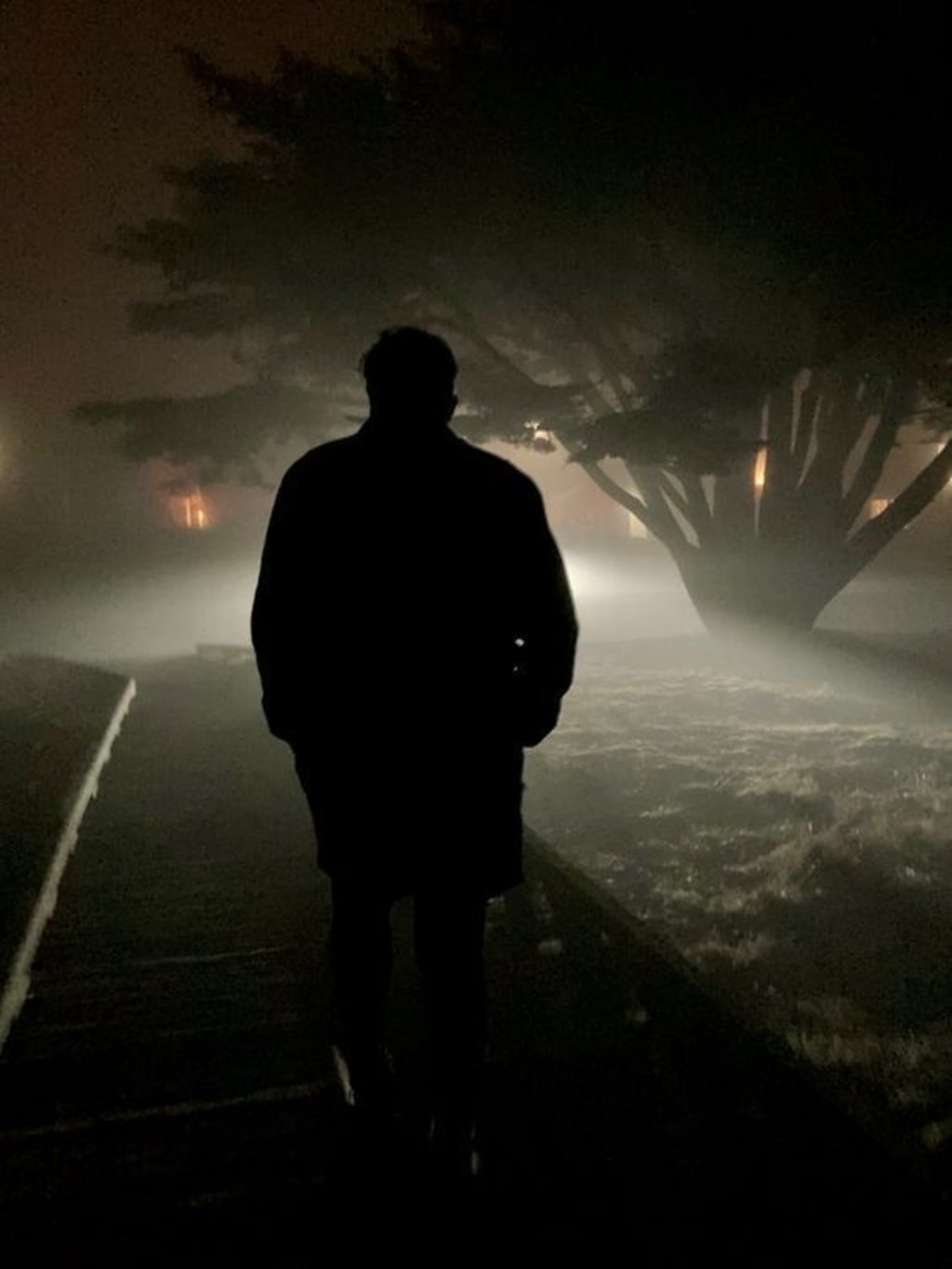
The town of Greyfield had always been the kind of place where nothing happened. Tucked between two forgotten highways in rural Tennessee, it had one diner, one gas station, and a population of just under four thousand people who all knew each other's business — or thought they did. That changed on the night of October 14th, when Marcus Holloway walked out of his front door and never came back. A Disappearance That Didn't Add Up Marcus was 34 years old, a high school football coach, and by every account, a man with no enemies. His wife, Dana, reported him missing at 11:47 p.m. after he failed to return from what he'd said was a quick errand. His truck was found two days later parked behind a shuttered textile mill on the edge of town — engine cold, keys still in the ignition, a half-empty coffee cup sitting in the holder. No signs of a struggle. No blood. No witnesses. Local law enforcement initially treated it as a voluntary disappearance. Men left their families sometimes. It was painful, but it happened. The sheriff's department opened a file, made a few calls, and quietly moved on. Dana Holloway did not move on. She started asking questions that nobody wanted to answer. The Criminal in Plain Sight What Dana uncovered over the next three months would eventually shock everyone in Greyfield — not just because of the crime itself, but because of who had committed it. Raymond Pryce was 61 years old. He'd been the county's most respected real estate developer for nearly two decades. He sat on the church board. He sponsored the Little League team. He shook hands at every ribbon-cutting ceremony the town had to offer. He was the last person anyone would suspect. But Marcus Holloway had found something — a paper trail buried inside a land deal that Pryce had been running for years. A criminal scheme involving fraudulently acquired federal grants, forged environmental clearances, and millions of dollars quietly siphoned from a housing development meant for low-income families who never saw a single brick laid. Marcus had stumbled onto the records by accident while helping a friend navigate a property dispute. He hadn't gone to the police yet. He'd told only one person what he found. He'd told Dana. And Raymond Pryce — who had ears everywhere in a town that small — had found out. The Investigation That Changed Everything Dana brought her evidence to a state investigator named Carla Voss, who had spent fifteen years working organized financial crime before transferring to the rural task force. Voss later described the case as "the most meticulously concealed criminal operation" she'd encountered outside of a major city. Pryce had not acted alone. He had a network — a silent one — that included a county clerk, a contracted surveyor, and a former building inspector who had since retired to Florida. Together, they had been running the scheme for eleven years, collecting and laundering over $4.2 million in fraudulent grants. When Marcus threatened to expose it, Pryce had made a decision that crossed the line from white-collar crime into something far darker. Marcus Holloway was found alive — barely — fourteen weeks after his disappearance, held in a property Pryce owned under a shell company in an adjacent county. He had been drugged, kept sedated, and moved twice to avoid detection. He had survived on minimal food and water. He had not been harmed beyond the imprisonment itself — Pryce, it seemed, had never quite been willing to go further than abduction, clinging to some internal moral line even as he crossed every other one. What This Case Teaches Us About Crime The Holloway case became a landmark in Tennessee criminal justice for several reasons. First, it demonstrated how white-collar crime rarely stays white-collar. Financial schemes built on secrecy create pressure, and pressure creates violence. Investigators and criminologists have long understood this pattern — economic crimes escalate when exposure becomes a credible threat. Second, it revealed how small communities are uniquely vulnerable to this kind of criminal behavior. Trust is the social fabric of a town like Greyfield. Raymond Pryce weaponized that trust for over a decade. No one questioned him because no one imagined questioning him. Third — and perhaps most importantly — it proved that ordinary people can break cases open when systems fail them. Dana Holloway had no law enforcement training. She had grief, determination, and a banker's box of documents her husband had left in their home office. That was enough. Raymond Pryce was convicted on charges of kidnapping, fraud, conspiracy, and obstruction of justice. He was sentenced to 34 years in federal prison — one year for every year Marcus Holloway had been alive when Pryce decided his secret was worth more than a man's freedom. The Quiet Aftermath Marcus and Dana Holloway still live in Greyfield. He no longer coaches football — the physical effects of his captivity made that impossible — but he teaches history at the same high school where he once roamed the sidelines. Dana works with a nonprofit focused on financial crime awareness. Neither of them has left town. "Greyfield is still our home," Dana told a local reporter shortly after the sentencing. "We're not going to let what one man did take that from us too." In a case filled with darkness, that might be the most striking detail of all.
About the Creator
Enjoyed the story? Support the Creator.
Subscribe for free to receive all their stories in your feed.
Comments
There are no comments for this story
Be the first to respond and start the conversation.