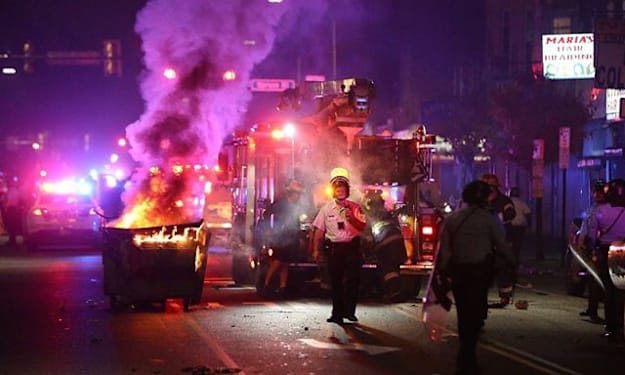
fact or fiction
Is it fact or merely fiction? Fact or Fiction explores the myths and beliefs we hold about copycat killers, eyewitnesses testimony, what makes a murderer and more.
Europe's Dark Underbelly: The Criminal Crisis Reshaping the Continent in 2026
M Mehran There is a city in the south of France that used to smell like lavender and salt wind. Marseille, perched dramatically on the Mediterranean coast, was once the kind of place poets wrote about — rough around the edges, yes, but alive with color, culture, and character. Today, its northern districts tell a different story. Drug cartels carve out territory with bullets. Residents bolt their doors before sunset. In 2025, drug-related homicides in the city reached record levels, and nearly 85% of residents surveyed expressed fears about personal safety in public spaces. (Reolink) Marseille is not alone. Across Europe — a continent long admired for its stability, its rule of law, and its civilized order — something has shifted. The criminals have adapted. The networks have gone global. And the average European citizen is caught somewhere in the middle, scrolling past frightening headlines, wondering when it became like this. The Numbers Tell a Story Nobody Wants to Hear Let's start with what the data shows, because the data is sobering. In 2024, police recorded 3,953 intentional homicides across the EU — a 1.4% increase from the previous year, with rises observed in 16 of the 27 member states, most notably in Germany and Finland. (Eurostat) These aren't war zones. These are some of the most developed, most educated, most prosperous nations on Earth. According to the latest Eurostat figures, 10% of EU citizens reported experiencing crime, violence, or vandalism in their local area — rising to 12.3% among those living at risk of poverty. (Euronews) That's tens of millions of people whose daily lives are shaped by fear. And yet, dig deeper, and the picture grows stranger. The 2025 Global Organized Crime Index found that overall criminality in Europe has remained relatively stable — but this surface calm masks a dynamic and rapidly evolving criminal landscape underneath. (Global Initiative) The old-fashioned image of crime — the mugger in a dark alley, the burglar with a crowbar — is almost quaint by now. The criminals of 2026 carry laptops, not crowbars. Gangs, Guns, and Children Being Recruited Walk through certain neighborhoods in Stockholm. Stand on a street corner in Brussels at the wrong hour. Linger too long near the port in Naples. The gang presence across European cities has become impossible to ignore — and it's getting younger, more violent, and more organized. A European Parliamentary Research Service briefing warned that gang violence is increasing across the EU, driven by escalating competition between rival criminal groups. (Euronews) What's particularly chilling is who these gangs are recruiting now. One of the most alarming trends is the recruitment of minors into organized crime networks — a development so serious that Sweden introduced legislation to wiretap children under 15, after at least 36 bombings rocked the country in the opening months of 2025 alone. (Euronews) Read that again. Sweden — calm, peaceful, furniture-and-meatballs Sweden — debating whether to wiretap children. That tells you everything about how desperate the situation has become. In Grenoble, France — once celebrated as the country's Silicon Valley — drug-related gang warfare has intensified, with shootings linked to rival cartels leaving innocent victims caught in the crossfire. (eufy) The city that was supposed to represent France's innovation future has become a symbol of something far darker. The Invisible Crime Wave: Fraud, Screens, and Stolen Billions Here's where it gets genuinely terrifying — because most people never see this kind of crime coming until it's too late. Financial crime remains the most pervasive criminal market in Europe, featuring increasingly sophisticated fraud schemes operating largely online — including investment fraud, business email compromise, romance scams, embezzlement, and tax evasion. (Global Initiative) The European Public Prosecutor's Office published figures that should make every taxpayer's jaw drop. By the end of 2025, they were managing 3,602 active investigations, representing estimated damages of over €67 billion — with revenue fraud alone accounting for more than 67% of that total. (European Public Prosecutor's Office) Sixty-seven billion euros. Stolen. Laundered. Vanished into cryptocurrency wallets and offshore accounts. Europol's latest cybercrime report highlights ransomware as a persistent and growing threat, while also flagging an increasingly dangerous overlap between state-sponsored actors and criminal networks being used as proxies for destabilization. (European Commission) In plain language: some of the cybercrime hitting European hospitals, governments, and businesses isn't just about money. It's geopolitical warfare dressed up as fraud. So What Happens Next? Europe still holds the second-lowest overall criminality score globally, behind only Oceania — and its resilience mechanisms, from international cooperation to territorial integrity, remain the strongest in the world. (Global Initiative) That's genuinely reassuring. The institutions are not broken. The laws are not toothless. But criminal actors on the continent have grown steadily since 2021, with foreign criminal groups recording the largest increase — becoming more heterogeneous, multi-ethnic, and deeply interconnected across borders. (Global Initiative) The truth is this: Europe is not losing the war on crime. But it is in a war — and large parts of its population are only just beginning to realize it. The gang violence bleeding through French cities, the digital fraud draining bank accounts in Germany and Poland, the bombings rattling Stockholm suburbs — these aren't isolated incidents. They are signals. The continent that gave the world the rule of law, the Enlightenment, and the very concept of human rights is now fighting to protect those ideals from forces that have never cared about them at all. Whether Europe wins that fight may be the defining story of this decade.
By Muhammad Mehran5 months ago in Criminal
The Shadow Side of Europe: True Stories of Crime That Shocked the Continent
M Mehran When the postcard-perfect streets of Europe hide something far darker beneath the surface Europe sells a dream. Cobblestone streets. Cathedral spires. Café terraces spilling golden light onto ancient squares. Millions of tourists pour into Paris, Rome, Amsterdam, and Prague every year chasing that dream — and most of them find exactly what they came for. But beneath the beauty, Europe has another story. One told in courtrooms, cold case files, and the hushed voices of investigators who've spent careers chasing shadows across borders. This is that story. When the Law Can't Keep Up with the Criminal On a quiet Tuesday morning in Brussels — the very city that houses the European Union's headquarters — police uncovered a money laundering operation so sophisticated it had been running for nearly a decade undetected. The network stretched from Belgium through the Netherlands, into Germany, and as far east as Romania. At its heart was a seemingly legitimate chain of currency exchange kiosks. Ordinary storefronts. Family-run businesses, locals assumed. They were anything but. The criminal organization had laundered an estimated €340 million through these kiosks, cycling dirty money from drug trafficking and cybercrime back into the European financial system. By the time Europol moved in, the masterminds had already vanished — slipping across borders that, in a unified Europe, offer little friction. This is one of the central ironies of the European Union's greatest achievement: open borders that liberate citizens also liberate criminals. Organized Crime's Grip on Southern Europe Ask anyone in Calabria, the sun-baked toe of Italy's boot, about the 'Ndrangheta, and watch the conversation stop. Not because people don't know — everyone knows. But because knowing too much, and saying too much, has historically been dangerous. The 'Ndrangheta is not a relic of another era. It is one of the most powerful criminal organizations on earth, with tentacles reaching into legitimate businesses across Germany, Spain, France, and Switzerland. Europol estimates the organization controls approximately 80% of Europe's cocaine supply chain — a staggering figure that puts it at the center of the continent's drug crisis. What makes the 'Ndrangheta particularly difficult to dismantle is its structure: clan-based, deeply family-oriented, and almost impossible to penetrate from the outside. Informants are rare. Loyalty runs thicker than blood — because often, it is blood. In 2023, a sweeping international operation arrested over 100 suspected members across multiple European countries simultaneously. It was hailed as a victory. Within months, the network had reorganized. The Cyber Criminal: Europe's Invisible Threat Not all of Europe's most dangerous criminals carry weapons. Some carry laptops. Eastern Europe — particularly Romania, Ukraine (before the war reshaped everything), and parts of the Western Balkans — became notorious breeding grounds for cybercrime networks during the early 2000s. Young, highly educated men with limited economic opportunity discovered that the internet was an entirely unguarded frontier. They were right. In 2021, Romanian authorities arrested a group of hackers responsible for infecting hospital networks across Germany, France, and the UK with ransomware. These weren't rogue teenagers in dark basements. They were organized, professional, and methodical — running what amounted to a criminal enterprise with project managers, developers, and even customer service teams to handle ransom negotiations. The victims paid millions. The perpetrators, even when caught, often served surprisingly lenient sentences — a reflection of how slowly legal systems across Europe have adapted to the digital crime landscape. Human Trafficking: Europe's Most Hidden Crime If organized crime and cybercrime operate in the shadows, human trafficking is buried deeper still — hidden inside cleaning companies, nail salons, agricultural operations, and the quiet back rooms of restaurants across the continent. According to Europol data, tens of thousands of trafficking victims are identified across EU member states every year. The actual number is believed to be exponentially higher, because most victims never reach law enforcement at all. The routes are well-established. Western Balkans into Austria and Germany. North Africa through Italy into France. Eastern Europe into the wealthy cities of Western Europe where demand — for cheap labor, for exploitation — is quietly, disturbingly high. What makes this crime uniquely devastating is the profile of the victims: people who were already vulnerable. Who were already running from something. Who were promised a better life and found something unimaginable instead. Why Europe's Crime Problem Is Everyone's Problem Here's the uncomfortable truth that often gets lost in political debates about European security: crime doesn't observe borders, ideologies, or election cycles. The drug sold on a street corner in Amsterdam began its journey in South America, moved through Spain, and passed through a dozen hands — each transaction funding something darker than the last. Europe's criminal underworld is not a fringe problem. It is embedded in the financial systems, labor markets, and digital infrastructure of some of the world's most advanced societies. Fighting it requires something more than national policing. It requires cooperation, political will, and the recognition that prosperity — real prosperity — cannot coexist with organized exploitation. The cobblestones are still beautiful. The cathedrals still magnificent. But the shadows are real. And they deserve to be seen. Found this story compelling? Share it. The more people understand the complex realities beneath Europe's surface, the better equipped we all are to demand the accountability that genuine safety requires.
By Muhammad Mehran5 months ago in Criminal
The Shadow Network: Inside Europe's Most Wanted Criminal Underworld
M Mehran When the lights go out across the continent, a different Europe wakes up. It started with a missing shipment in Rotterdam. Customs officer Marta Kowalski had seen thousands of containers pass through the port — steel boxes stacked like Lego bricks against the grey Dutch sky. But something about Container 7741 made her pause. The manifest said "automotive parts." The weight said otherwise. What she found inside would pull back the curtain on a criminal empire stretching from Lisbon to Bucharest — a shadow network so sophisticated it had been operating undetected for nearly a decade. This is the story of crime in modern Europe. And it is far stranger, far darker, and far closer to everyday life than most people dare to imagine. A Continent Connected — for Better and Worse Europe's greatest strength is also its greatest vulnerability. The Schengen Agreement, signed in 1985, dismantled border checkpoints between member nations. Free movement of people, goods, and ideas fueled one of the most extraordinary experiments in human cooperation the world had ever seen. Trade boomed. Tourism flourished. Families separated by iron curtains were reunited. But organized crime noticed too. With open borders came open highways for trafficking — of drugs, weapons, counterfeit goods, and human beings. Criminal networks that once operated regionally became continental. A gang born in Naples could run operations in Amsterdam, Warsaw, and Madrid with barely a passport stamp between them. Europol, the European Union's law enforcement agency, currently tracks over 5,000 criminal networks operating across the continent. Many of them are not the leather-jacketed, tattooed stereotypes you see in films. They wear suits. They attend business lunches. They have lawyers on speed dial. The New Face of European Crime Forget the Godfather image. Today's European criminal organizations operate more like multinational corporations than street gangs. They diversify. They adapt. They outsource. Take the 'Ndrangheta — the Calabrian mafia from southern Italy. Once considered a regional outfit, they have quietly become the most powerful criminal organization in Europe. Their cocaine trafficking network alone generates an estimated €50 billion annually. That's more revenue than McDonald's makes globally in a year. But what makes them truly dangerous isn't their brutality. It's their invisibility. The 'Ndrangheta have infiltrated legal businesses — construction companies, restaurants, logistics firms — across Germany, Belgium, and the Netherlands. Money flows through laundromats, car washes, and legitimate real estate, emerging clean on the other side. Law enforcement officials describe chasing ghosts. Meanwhile, Eastern European criminal networks have carved out their own territories. Romanian and Bulgarian organized crime groups dominate human trafficking routes through the Balkans. Albanian cartels control a significant share of Europe's heroin supply. Polish and Czech criminal rings have built sophisticated cyber-fraud operations that swindle victims across a dozen countries simultaneously. The geography of crime has been redrawn. The Cyber Dimension In 2023, a criminal group known only as "Phantom Collective" drained €28 million from six European banks in a single weekend. They never stepped foot inside a bank. They never fired a weapon. They sat in front of computers — likely in Eastern Europe, possibly in rented apartments in anonymous suburbs — and systematically exploited digital vulnerabilities with surgical precision. Cybercrime has become the fastest-growing criminal sector in Europe. Ransomware attacks on hospitals, infrastructure, and governments have tripled in the last four years. Dark web marketplaces — many of them hosted on servers bounced through half a dozen countries — sell stolen identities, hacked credentials, and forged documents to anyone with cryptocurrency. The line between the digital criminal world and the physical one is dissolving. Drug deals are arranged on encrypted apps. Human trafficking victims are recruited through fake job ads on mainstream social media platforms. Money mule networks are organized via Telegram channels. The Human Cost Statistics can make it easy to forget that behind every number is a person. Every year, an estimated 500,000 people are trafficked into or within Europe. Many are women and girls, lured from poverty-stricken regions with promises of waitressing jobs or au pair positions, only to find themselves stripped of their documents and forced into exploitation. Every gram of cocaine that arrives at a European nightclub represents a chain of violence stretching back to South American production zones — farmers coerced, communities terrorized, traffickers enriched. Every digital fraud victim is someone who worked years to save money that disappears overnight. Crime in Europe is not an abstraction. It is lived, suffered, and survived by real human beings every single day. The Fight Back Back in Rotterdam, Marta Kowalski's discovery in Container 7741 triggered a two-year joint investigation between Dutch, Belgian, and German authorities. It eventually dismantled a network responsible for smuggling synthetic drugs worth €200 million across seven countries. Eleven people were arrested. Dozens of bank accounts frozen. It was a victory — and also a reminder. For every network dismantled, another is assembling in the shadows. For every container flagged, hundreds slip through. The criminals evolve. Law enforcement must evolve faster. Europe is not losing the war on crime. But it isn't winning it either. The continent that built cathedrals, wrote symphonies, and dreamed of lasting peace is also home to one of the most complex criminal ecosystems on Earth. Understanding it — honestly, unflinchingly — is the first step toward changing it. The shadow network is always watching. The question is whether we are too.
By Muhammad Mehran5 months ago in Criminal
Broken Laws, Broken Lives: Crime Across America
M Mehran Some stories refuse to stay buried. America's criminal history is one of them. It resurfaces in headlines, in courtrooms, in documentaries people watch at 2 a.m. unable to sleep. It shows up in statistics that shock and in human stories that break your heart. Crime in this country isn't just a law enforcement problem — it's a mirror. And sometimes, the reflection is almost too honest to bear. Pull up a chair. This one goes deep. The Lawless Beginning America was barely a nation before crime became part of its identity. The early frontier had no real legal infrastructure. Vast stretches of land between settlements existed in a kind of permanent gray zone where the only authority was whoever was willing to enforce it with force. Vigilante justice — lynch mobs, impromptu hangings, community executions — was common across the South and West throughout the 1800s. Pirates terrorized American coastal trade in the colonial era. Highwaymen robbed travelers on rural roads. Smugglers built entire economies around evading British taxation — activities that, depending on who you asked, made them criminals or patriots. From the very start, the line between outlaw and hero in America was thin, blurry, and constantly shifting. Gangsters, Glamour, and the Prohibition Years No era made crime look more seductive — or more deadly — than the 1920s. When the Eighteenth Amendment banned alcohol across the United States in 1920, it didn't just spark a public health debate. It sparked an industry. Within months, underground speakeasies were operating in every major city. Bootleggers became millionaires overnight. And organized crime syndicates stepped into the vacuum with terrifying efficiency. Al Capone's Chicago operation became the template — bribing judges, owning police precincts, controlling supply chains across state lines. Lucky Luciano in New York essentially invented the modern American Mafia, establishing the Five Families structure that would dominate organized crime for decades. But for every Capone photographed in a silk suit, there were hundreds of foot soldiers dying in back alleys for twenty dollars a week. Glamour was always the mob's best advertising. Reality was considerably uglier. The mob didn't disappear when Prohibition ended in 1933. It diversified. Gambling. Loan-sharking. Labor racketeering. Heroin. The roots had grown too deep to pull out. Some would argue they never fully were. Serial Terror and the FBI's Darkest Years Something shifted in American crime during the 1960s and 70s. Something colder. The rise of the serial killer as a distinct criminal phenomenon terrified a nation that had no real framework to understand it. Charles Manson didn't kill with his own hands — he convinced others to do it for him, weaponizing cult psychology in ways that still fascinate and disturb researchers today. The Zodiac Killer taunted San Francisco police with cryptic letters and was never caught. Son of Sam paralyzed New York City throughout the summer of 1977. Law enforcement scrambled. The FBI's Behavioral Analysis Unit was born from this desperation — agents like Robert Ressler and John Douglas conducting jailhouse interviews with convicted killers, trying to map the psychology of predatory violence for the first time in history. Their work built the foundation of modern criminal profiling. It also revealed something uncomfortable: most of these men weren't monsters from another world. They were men shaped by abuse, neglect, and psychological fracture — walking proof that evil rarely appears from nowhere. Streets on Fire: The Drug Crisis The 1980s brought a different kind of terror — and it moved at street level. Crack cocaine swept through urban America with devastating speed. Cheap, intensely addictive, and enormously profitable, it transformed neighborhoods overnight. Gang networks expanded to control distribution territories. Drive-by shootings became a nightly occurrence in cities across the country. Mothers buried children. Entire communities collapsed under the weight of addiction and violence. The government declared a War on Drugs. What followed was one of the most controversial policy periods in American history — mandatory minimum sentences that locked people away for decades over small quantities, three-strikes laws that removed judicial discretion entirely, and a prison population that exploded from roughly 500,000 in 1980 to over 2.3 million by the early 2000s. Black and Latino communities bore the overwhelming weight of these policies. The racial disparities in arrest, prosecution, and sentencing were — and remain — staggering. The Digital Crime Wave Today's most dangerous criminals often never leave their homes. Cybercrime has become one of the defining threats of the modern era. Ransomware attacks have shut down hospitals, school systems, and oil pipelines. Romance scams drain life savings from lonely retirees. Identity theft ruins financial lives in minutes. In 2023, Americans reported losing over $12 billion to cybercrime — a number that grows every single year. At the same time, human trafficking networks operate across U.S. borders with sophisticated logistics that mirror legitimate supply chains. Drug cartels have adapted to fentanyl — a synthetic opioid so potent that a few grams can kill hundreds — with distribution networks that reach every corner of the country. Old crime. New tools. The same desperate hunger underneath. What We Owe the Truth America's crime story is ugly in places. Complicated in most. Simple almost nowhere. It is a story about what happens when systems fail people — when poverty becomes permanent, when opportunity disappears, when trauma goes untreated, when power goes unchecked. It is also a story about courage: the detectives who chased monsters, the communities that rebuilt themselves, the survivors who refused to be defined by what was done to them. Understanding crime — truly understanding it, without flinching or romanticizing — is not a morbid exercise. It's how a society learns to do better. Because the only way to write a different future is to be honest about the past.
By Muhammad Mehran5 months ago in Criminal
America's Most Wanted: A Nation's Criminal History
M Mehran There's something uniquely American about a good outlaw story. Maybe it's the mythology. Maybe it's the contradiction — a nation built on freedom, yet endlessly fascinated by those who abuse it. Whatever the reason, crime has been woven into the American fabric since the very beginning, evolving with every generation, adapting to every era, and reflecting — sometimes uncomfortably — the society that produced it. This is that story. Outlaws Born from Chaos America's first criminals weren't hiding in shadows. They were riding through them. The post-Civil War frontier was a lawless stretch of land where governance barely existed and justice was whoever had the fastest gun. Jesse James robbed banks and trains across Missouri, becoming a folk hero to struggling farmers who saw him as a rebel against corrupt railroad corporations. Billy the Kid killed his first man at fifteen and was dead by twenty-one. Butch Cassidy's Wild Bunch made robbery look like theater. These men were dangerous. They were also products of a broken, chaotic time — men who found in crime the only power available to them. The pattern repeats throughout American history. Every wave of crime tells you exactly what was going wrong in the society around it. Prohibition and the Birth of Organized Crime When the U.S. government banned alcohol in 1920, it didn't eliminate the demand. It just handed the market to criminals. Al Capone built a Chicago empire worth an estimated $60 million annually — roughly $1 billion in today's money. He bribed police, corrupted politicians, and orchestrated violence with cold efficiency. The St. Valentine's Day Massacre of 1929, where seven rival gang members were executed in a Chicago garage, shocked even a city used to bloodshed. But Capone was a symptom, not the disease. Prohibition created organized crime in America. The infrastructure — the networks, the bribes, the supply chains — survived long after alcohol became legal again. The mob simply found other products: gambling, drugs, protection rackets. The lesson was hard and expensive: you can't legislate away human desire. You just change who profits from it. The Serial Killer Era Few chapters of American criminal history haunt the imagination like the 1970s and 80s. Ted Bundy was charming, educated, and confessed to murdering at least thirty women. John Wayne Gacy hosted neighborhood parties and buried thirty-three young men beneath his house. Jeffrey Dahmer's crimes were so extreme they seemed to belong to fiction. Law enforcement was genuinely unprepared. The FBI's Behavioral Science Unit — the real-life inspiration for Silence of the Lambs — was built largely in response to this era, developing criminal profiling almost from scratch as investigators scrambled to understand what they were dealing with. True crime became America's darkest obsession during these years. It remains one today, with podcasts, documentaries, and streaming series drawing tens of millions of listeners and viewers who can't quite look away. The Drug Wars and the 1990s Crisis By the late 1980s, crack cocaine had detonated inside America's most vulnerable communities. Violent crime rates hit historic peaks in the early 1990s. Cities like New York, Los Angeles, and Washington D.C. recorded murder rates that seem almost unimaginable today. Gang warfare over drug territory claimed thousands of lives. Entire neighborhoods were hollowed out by addiction, poverty, and fear. The government's response — mandatory minimum sentences, three-strikes laws, mass incarceration — locked up millions of Americans, disproportionately Black men, while doing little to address the conditions that fed the crisis in the first place. The U.S. prison population quadrupled between 1980 and 2000. The crime rate did eventually fall — dramatically — through the late 1990s and 2000s. Criminologists still debate exactly why. But the incarceration machine kept running long after the emergency passed. Crime Today: New Tools, Same Desperation Modern American crime looks different on the surface. The weapons have changed. Cybercrime is now one of the fastest-growing threats in the country. The FBI's Internet Crime Complaint Center reported losses exceeding $10 billion in 2022, with fraud, identity theft, and ransomware attacks targeting everyone from retirees to major hospital systems. A criminal today can steal more money from a laptop in another country than any bank robber ever took at gunpoint. Violent crime, which had fallen steadily for three decades, spiked sharply in many cities during 2020 and 2021 — driven by pandemic-era economic collapse, strained police resources, and community trauma. It has since begun declining again, but the interruption was a reminder that progress is never permanent. And white-collar crime continues largely unchecked. Financial fraud and corporate corruption drain more from ordinary Americans every year than all street crime combined. Prosecutions remain rare. The system, critics argue, protects those at the top with the same consistency that it punishes those at the bottom. The Mirror Crime Holds Up Crime doesn't happen outside of society. It happens inside it. Every robbery, every scam, every act of violence carries a story beneath it — of poverty, trauma, opportunity denied, or greed unchecked. That's not an excuse. It's a map. And maps, if you're willing to read them honestly, can show you where things went wrong and how to find a better way forward. America has always been a nation capable of extraordinary things. Understanding its darkest chapters isn't pessimism. It's the first honest step toward something better. The crime story isn't over. It never is. But every generation gets to decide what chapter comes next.
By Muhammad Mehran5 months ago in Criminal
The Dark Side of the American Dream: The Truth About Crime in the USA — Then and Now
M Mehran There's a moment, somewhere between desperation and decision, where a person crosses a line they can never uncross. It happens in back alleys and boardrooms, in trailer parks and penthouses. Crime in the United States isn't just a legal category — it's a story. A long, complicated, deeply human story that stretches back centuries and refuses to end. And it's a story worth telling. When America Was the Wild West Long before surveillance cameras and DNA databases, crime in America wore boots and spurs. The late 1800s gave the world figures like Jesse James, Billy the Kid, and Butch Cassidy — men who became legends not because what they did was right, but because the country was hungry for myth. Bank robberies weren't just crimes; they were performances. The frontier had no rules, and the men who filled that lawless space became America's first criminal celebrities. Organized crime followed shortly after. When Prohibition arrived in 1920, banning the sale of alcohol across the nation, it didn't stop people from drinking. It just handed control of the liquor trade to men like Al Capone, who built criminal empires out of speakeasies, bribery, and bloodshed. Chicago became synonymous with mob violence. The Tommy gun became an American icon. These early criminals didn't just break the law — they exposed the cracks in the system that let them thrive. The Mid-Century Crime Wave By the 1960s and 70s, American crime had shifted again. Urban poverty, racial inequality, and the collapse of manufacturing jobs created pressure cookers in cities like New York, Detroit, and Los Angeles. Violent crime rates climbed steadily through the 1970s and 1980s, peaking in the early 1990s when the crack cocaine epidemic tore through communities that had already been left behind. Serial killers captured the national imagination during this era. Ted Bundy. John Wayne Gacy. Jeffrey Dahmer. Their crimes were horrifying, but the media coverage turned them into something darker — a kind of morbid fascination that America still hasn't fully shaken. True crime became a genre. A billion-dollar industry. A cultural obsession. But behind the sensationalism were real victims, real families, and a justice system struggling to keep up. Crime in Modern America: A Different Kind of Danger Fast forward to today, and the landscape of crime in the United States looks nothing like it did a century ago — and yet it rhymes with the same old themes. Violent crime, which had been declining sharply since the early 1990s, saw troubling spikes in certain cities following the economic and social disruption of the COVID-19 pandemic. Homicide rates in cities like Chicago, Baltimore, and Philadelphia surged during 2020 and 2021, raising urgent questions about the relationship between poverty, mental health, and public safety. Meanwhile, a new kind of crime rose quietly in the background: cybercrime. Identity theft, online fraud, ransomware attacks — these are the crimes of the digital age, committed not with guns but with keyboards. The FBI reported that cybercrime losses in the U.S. exceeded $10 billion in 2022 alone, affecting millions of everyday Americans who never saw it coming. White-collar crime continues to thrive in boardrooms and investment firms. Financial fraud, insider trading, and corporate corruption steal more money from Americans each year than all street crime combined — yet prosecutions remain surprisingly rare. The System Under the Microscope No story about crime in America is complete without examining the criminal justice system that responds to it. The United States has the highest incarceration rate in the world, with over 2 million people behind bars at any given time. Racial disparities in arrests, sentencing, and incarceration have fueled decades of debate and protest. The question isn't just who commits crime — it's who gets punished for it, and whether punishment without rehabilitation changes anything at all. Recidivism rates hover stubbornly around 70%, meaning most people released from prison return within five years. It's a cycle that critics argue the system is designed to perpetuate, not break. What Crime Tells Us About America Here's the uncomfortable truth: crime doesn't exist in a vacuum. Every spike in violent crime maps onto a spike in desperation. Every financial scandal traces back to unchecked greed. Every criminal, somewhere in their story, is also a product of the world that shaped them — not an excuse, but a fact that demands attention. America has always been a nation of contradictions. Freedom and inequality. Opportunity and poverty. Justice on paper and injustice in practice. Crime, in all its forms, is the shadow those contradictions cast. Understanding it — honestly, clearly, without flinching — is the first step toward something better. The story of crime in America is far from over. But knowing how it began, and how it's evolved, might just be the key to writing a different ending.
By Muhammad Mehran5 months ago in Criminal
The Ghost Who Walked Among Us: Inside the Mind of America's Most Wanted
M Mehran He lived next door. He smiled at your kids. And for 11 years, nobody knew. There's a particular silence that falls over a neighborhood when the FBI shows up at 6 a.m. Not the peaceful kind. The kind that crawls under your skin and stays there. That's what happened on a quiet Tuesday morning in Riverside, California, when federal agents surrounded a beige ranch house with a vegetable garden out front and a welcome mat that read Home Sweet Home. The man inside — 43-year-old Derek Moss — was already awake, coffee in hand, watching the morning news. He didn't run. He didn't panic. He simply set down his mug and walked to the door. That calm? That was the most terrifying part. The Face of Modern Crime America has a crime problem — and it doesn't look the way movies tell you it does. According to the FBI's 2024 Uniform Crime Report, violent crime in the United States remains a deeply serious issue, with over 1.2 million violent offenses recorded in the previous year alone. But increasingly, the most dangerous criminals operating today aren't lurking in shadows. They're embedded in plain sight — in suburbs, in office buildings, behind computer screens. Derek Moss wasn't a street-corner thug. He was a mid-level logistics coordinator with a 401(k), a fantasy football league, and a daughter in third grade. He was also the architect of a multi-state identity theft and wire fraud ring that had stolen over $47 million from elderly Americans across 23 states. He didn't need a weapon. He needed a laptop and a list. How It Happened — And Why We Missed It What makes Moss's case so unsettling isn't the scale of the crime. It's the system he exploited — one that most Americans use every single day. He purchased stolen Social Security numbers from dark web marketplaces, cross-referenced them with publicly available obituary databases, and targeted the recently deceased. He filed fraudulent tax returns on their behalf, redirecting refunds to prepaid debit cards he'd mail-dropped across three states. Then, before the IRS could flag the returns, he'd liquidate the cards and vanish the money through a network of shell accounts. Eleven years. Over 4,000 victims. And for most of that time, he was invisible. "These are the cases that keep investigators up at night," said a former FBI Cyber Division agent, speaking to investigative journalists last year. "There's no crime scene. There's no body. There's just a grandmother in Ohio who suddenly can't file her taxes because someone already did it for her — and cleaned her out." The Victims Nobody Talks About We love crime stories. True crime podcasts dominate charts. Netflix docuseries rack up billions of views. But somewhere in our fascination, the actual victims — the real, breathing, suffering human beings — get reduced to statistics. Eleanor Hutchins, 79, from Knoxville, Tennessee, was one of Moss's victims. She didn't know it for two years. By the time she did, the IRS had flagged her account, her stimulus payments had been rerouted, and she'd spent 14 months trying to prove she was still alive. "I cried every day," Eleanor told a local news station after Moss's arrest. "I felt violated. Like someone had reached inside my life and stolen me." That's the real cost of modern crime in America. Not just the money. The dignity. The trust. The years of a life spent untangling someone else's destruction. Where America's Crime Crisis Stands Right Now In 2025 and into 2026, U.S. law enforcement is grappling with a shifting criminal landscape. Cybercrime losses exceeded $16 billion in 2024 according to the FBI's Internet Crime Complaint Center (IC3) — a record high. Human trafficking investigations are at a decade peak. Gang activity has evolved from street-level operations to sophisticated, borderless networks that operate across social media platforms. And homicide — though slightly declining in some major cities — remains devastating in communities that have been chronically underserved. The criminal of the present time isn't a single archetype. They are a spectrum — from the desperate to the calculated, from the broken to the coldly brilliant. What unites them is a system that keeps failing to stop them before the damage is done. The Verdict — And What Comes Next Derek Moss pleaded guilty in March 2026 to 14 counts of wire fraud and aggravated identity theft. He faces up to 22 years in federal prison. His daughter, now nine years old, was sitting in the courtroom. As the judge read the sentence, Moss finally broke his composure — not with remorse, investigators later noted, but seemingly with the realization that the performance was finally over. There would be no more morning coffee. No more welcome mat. Just the silence again. The kind that stays. America's crime crisis isn't just a law enforcement problem — it's a mirror. What we choose to see in it says everything about who we are, and who we're willing to protect.
By Muhammad Mehran5 months ago in Criminal
The forgotten victims
M Mehran When crime falls, these are the people history leaves behind — and the ones who deserve to be remembered most. Nobody came to the press conference for Raymond. There was no press conference. There was no candlelight vigil that made the evening news, no hashtag that trended for a weekend before the internet moved on to the next outrage. There was a folding table outside a community center in a mid-sized American city, some hand-lettered signs, maybe thirty people standing in the cold because someone had to stand somewhere. Raymond was 34. He worked nights at a distribution warehouse. He had a daughter who was learning to ride a bike without training wheels and a mother who called him every Sunday without exception. He was shot walking to his car on a Tuesday evening in 2021, during the year America's homicide rate peaked at its highest point in decades. He is also, now, part of a statistic moving in the right direction. That's the part nobody tells you about historic crime declines. The numbers go down. The charts look better. Researchers publish cautiously optimistic reports. Politicians claim credit. And somewhere, a family is still sitting with a chair that nobody sits in anymore, trying to figure out how a statistic is supposed to feel. the year everything broke open 2021 arrived like a wound that wouldn't close. The pandemic had already stripped away the connective tissue of American social life — schools shuttered, community centers dark, the informal surveillance of neighbors watching out for neighbors dissolved overnight into isolation and locked doors. Unemployment surged. Mental health services buckled. The ordinary pressure valves of city life — the basketball courts, the barbershops, the corner restaurants where people knew your name — all of it gone, or diminished, or transformed beyond recognition. Into that vacuum, violence poured. Homicides climbed at a rate that alarmed even seasoned criminologists. And the victims were not randomly distributed across the American landscape. They were concentrated — in specific zip codes, specific demographics, specific communities that had already been carrying the heaviest loads long before a virus rewrote the rules of daily life. The people who died in 2021 were not abstractions. They were fathers learning their kids' homework schedules over video call. They were grandmothers who had survived every previous crisis their neighborhoods had thrown at them. They were teenagers who had done nothing more dangerous than walk outside. They died in the worst moment. And then the moment passed — for everyone except the people left behind. the long road down What happened next genuinely defied expectation. Beginning in 2022 and building steadily through the years that followed, homicides began falling. Not slightly. Not tentatively. With real momentum, real depth, real geographic breadth. By 2024, violent crime nationwide had dropped 5.8%. By the close of 2025, homicides had fallen another 21% — placing America's murder rate at what researchers believe may be its lowest point in over a century. One hundred years. Criminologists reached for explanations and found several competing ones: shifting demographics, the expansion of community violence intervention programs that put credible messengers directly into neighborhoods at risk, improved emergency trauma care that saved lives that previous decades would have lost, and economic stabilization as the worst of the pandemic's economic damage slowly healed. No single explanation owns the whole story. The truth, as it usually does, spreads itself across several causes at once. But the direction was undeniable. And for the families of those who survived — who made it through the danger years intact — the relief was quiet and enormous and largely uncelebrated. the ones the decline doesn't reach Here is the sentence that has to be said plainly: a falling average is not a universal experience. The national homicide decline is real. The century-low framing is accurate. But America's relationship with violence has always been a story about geography and race and economics — about which communities absorb the damage and which communities read about it from a comfortable distance. The neighborhoods that suffered most acutely during the 2021 surge have improved. But they have not improved equally. The distance between a low-crime suburb and a high-poverty urban corridor remains enormous — not just in raw numbers, but in the psychological weight of living somewhere that has never fully felt safe, even in the good years. For these communities, the century-low statistic floats somewhere overhead like a weather report for a city they don't live in. Technically true. Personally meaningless. Raymond's mother still calls on Sundays. She calls his old number sometimes, by accident, muscle memory overriding grief for just a moment before reality reassembles itself. She is not living in a century-low. She is living in a Sunday morning without an answer. what the numbers owe the people Statistics are not the enemy of humanity. Used honestly, they are one of the most powerful tools we have for understanding whether the things we do are actually working — whether the programs, the policies, the interventions, the resources are bending the arc in the right direction. And right now, many of them are. That matters. That deserves to be said clearly. But numbers become dangerous when they replace people rather than represent them. When the falling homicide rate becomes a reason to declare victory rather than a reason to double down. When the positive trend becomes an excuse to defund the very community programs that may have helped create it. The historic decline in American violence is not a finish line. It is, if we're paying attention, a proof of concept — evidence that something is working somewhere, for someone, and that the urgent question now is how to make it work everywhere, for everyone, until the communities that have borne the longest burden finally get to feel what the statistics have been quietly promising. Raymond deserved to see that world. The least we can do is build it.
By Muhammad Mehran5 months ago in Criminal
The Ghost Statistics: Why Americans Fear Crime More Than Ever — While Murder Hits a 100-Year Low
M Mehran She locks her door twice now. She didn't used to. For eleven years, Maria lived in the same mid-sized Ohio city, raised two kids on the same street, waved at the same neighbors over the same chain-link fence. She felt safe. Not naive — just settled. Comfortable in the ordinary rhythms of her neighborhood. Then came the headlines. Not from her street. Not from her city, even. From everywhere, all at once — television, Facebook, the algorithm that learned she clicked on crime stories and fed her more, and more, and more. Shootings in cities she'd never visited. Car thefts in states she'd never driven through. A world, according to her screen, that was unraveling at every seam. Now she locks the door twice. Maria is not unusual. She is, in fact, perfectly American. The Number That Should Have Changed Everything In early 2026, researchers confirmed what the data had been quietly building toward for months: America's homicide rate had potentially reached its lowest point in more than a century. Let that land for a moment. Not the lowest in a decade. Not the lowest since the 1990s crime wave receded. The lowest in one hundred years. Since before the Great Depression. Before World War II. Before the crack epidemic tore through American cities. Before nearly every crime narrative that has shaped the country's collective psychology was even written. Violent crime overall fell 5.8% in 2024 alone. And then 2025 arrived and shattered expectations further — homicides dropped another 21% in a single year. By every measurable standard, America became dramatically safer. And virtually nobody felt it. The Machinery of Fear To understand why, you have to understand how fear actually travels. It doesn't move through experience anymore — not primarily. It moves through screens. And screens have a fundamental, structural bias toward the alarming, the urgent, the viscerally threatening. A neighborhood where nothing violent happened today generates no content. A single shooting three states away generates seventeen articles, four expert panels, and a Twitter thread that runs for six days. This isn't conspiracy. It's economics. Outrage and anxiety drive engagement. Engagement drives revenue. And so the information environment that most Americans swim through daily is, by design, a relentless highlight reel of the worst things happening anywhere in the country at any given moment — stripped of context, stripped of proportion, stripped of the crucial fact that most of those places are also getting safer. The algorithm doesn't show you the thousand nights that passed without incident. It shows you the one that didn't. When the Map Becomes the Territory Psychologists have a term for what happens when our mental model of reality drifts far enough from reality itself: they call it a cognitive distortion. In clinical settings, it's treated. In political settings, it's exploited. Fear of crime has become one of the most durable and powerful political tools in the American arsenal — and it operates almost entirely independently of actual crime rates. Study after study over the past three decades has shown that public concern about crime rises and falls based on media coverage and political rhetoric, not on what's actually happening on the streets. This creates a troubling loop. Politicians campaign on the fear, which validates the fear, which generates more media coverage, which deepens the fear, which makes the next election's crime rhetoric even more potent — while the streets themselves grow incrementally quieter. The fear is real. The danger driving the fear is, increasingly, not. The People the Numbers Miss Here is where the story demands honesty. The decline is real. The historic nature of it is real. But safety in America has never been distributed equally, and that remains true today. The communities that suffered most during the 2021 homicide surge — predominantly Black and brown urban neighborhoods, economically hollowed-out rural areas, communities living downstream from the fentanyl pipeline — have seen improvement, yes. But the gap between their experience of violence and the experience of wealthier, whiter communities remains vast and persistent. When researchers say homicides are at a century-low, they are describing an average. Averages can obscure as much as they reveal. A mother in a still-struggling Chicago neighborhood doesn't experience the national statistics. She experiences her block. Her nephew. The funeral she attended last spring. For her, the century-low is an abstraction that lives in a different world entirely. Any honest accounting of this moment has to hold both truths simultaneously: the broad, genuine, remarkable decline — and the stubborn, painful unevenness of who gets to feel it. What We Owe the Truth There is something almost willfully perverse about a society that stands at a historic low point in its most serious crime — and chooses, collectively, to feel more afraid than ever. It speaks to broken information systems. To political incentives that profit from anxiety. To a media ecosystem that has confused engagement with journalism. And to something older and harder to fix — the human tendency to weight bad news more heavily than good, to remember the threat more vividly than the reprieve. But it also speaks to an opportunity. If public fear of crime is partly a constructed narrative — assembled from selective data, amplified by algorithms, weaponized by campaigns — then it can be reconstructed. Not through denial of real pain, not through dismissing the communities still bearing the heaviest burden, but through honest, proportionate, clear-eyed storytelling about what is actually happening. America is safer than it has been in living memory. That sentence is true. It is documented. It deserves to exist in the same conversation as every legitimate concern about the work still left to do. Maria locks her door twice now. Maybe one day, the story she's told about her world will finally match the world itself.
By Muhammad Mehran5 months ago in Criminal
The Year America Stopped Killing Itself: Inside the Most Stunning Crime Collapse in a Century
M Mehran There's a particular kind of silence that falls over a city when the violence stops. It doesn't announce itself. There's no ceremony, no headline that reads: Things Are Getting Better Now. It just settles in, quietly, the way dawn arrives — you don't see it coming, and then suddenly it's here. That silence has been spreading across the United States. By the close of 2025, something remarkable had taken shape — something criminologists, law enforcement veterans, and social researchers are still struggling to fully explain. America's homicide rate had fallen to what may be its lowest point in more than a hundred years. Not a small dip. Not a statistical blip. A historic, sweeping, jaw-dropping collapse in the country's most serious crime. And yet, ask most Americans how safe they feel, and the answer will likely shock you. The Peak That Changed Everything To understand where we are, you have to go back to where we were. 2021 was a brutal year. The country was still reeling from the pandemic — locked down, economically shattered, emotionally fractured. And violence surged. Homicides climbed at a rate not seen in decades, concentrated in urban centers but spreading outward, touching communities that had never imagined they'd be part of this story. Families buried sons. Mothers buried daughters. City councils held emergency meetings. And politicians on every side of the aisle reached for the same blunt instrument: fear. Crime became the defining narrative of an era. It was real. The pain was real. The grief was absolutely real. But what happened next — almost nobody predicted. The Collapse Nobody Saw Coming Starting in 2022, and accelerating with each passing year, the numbers began to shift. Slowly at first, then with gathering momentum, homicides started falling. By 2024, violent crime nationwide had dropped 5.8%. Significant, but perhaps not shocking on its own. Then came the 2025 data. Homicides fell 21% compared to the year before. Twenty-one percent — in a single year. That's not a trend. That's a transformation. Researchers began reaching for historical comparisons and finding that they had to go back over a century to find a homicide rate this low in the United States. Think about what a century means. Two World Wars. The Great Depression. The crack epidemic. The crack-era violence of the late 1980s. The gang wars. The opioid crisis. Through all of it, the homicide rate in America never fell to where it stands today. That is the story of this moment. And it's almost invisible. Why Aren't We Celebrating? Here is where the story gets complicated — and deeply human. Crime didn't disappear from American consciousness. It deepened. News cycles still lead with shootings. Social media amplifies every act of violence into a national event. Politicians campaign on fear because fear, historically, works. The human brain is wired to remember the murder it heard about, not the thousand murders that didn't happen. We feel threat more acutely than safety. We process danger faster than we process relief. So even as the data tells one story — things are genuinely getting better — the felt experience of millions of Americans tells another. And that gap between reality and perception has enormous consequences: for policy, for policing, for how communities invest in themselves, for whether a family decides to stay in a neighborhood or flee. The perception of crime shapes cities just as powerfully as crime itself. The Incomplete Picture None of this means the story is simple or clean. Not every community has shared equally in the decline. Some cities still struggle with pockets of persistent violence. Drug offenses have trended upward in certain regions, bringing with them their own cascading harms. The fentanyl crisis continues to carve its own lethal path through communities the homicide statistics don't fully capture. And the causes of the decline remain genuinely contested. Was it changing demographics? Improved economic conditions post-pandemic? Shifts in policing strategy? The expansion of community violence intervention programs? Hospital trauma care that saves lives that once would have been lost? Researchers are actively debating all of it. What isn't debated is the number itself. What This Moment Deserves America has spent decades defined by its violence. True crime dominates entertainment. Crime statistics anchor political debates. The image of a dangerous, unraveling nation has calcified into something that feels almost like identity. But data has a way of disrupting narratives, if we let it. The year 2025 may well be remembered as the moment the long arc of American violence bent — sharply, historically — toward something better. That deserves to be seen clearly, discussed honestly, and understood fully, not because it means the work is done, but because knowing what's working is the only way to keep it working. The silence on those streets isn't emptiness. It's the sound of something going right, for once — and it's long past time we listened.
By Muhammad Mehran5 months ago in Criminal
Shots at the Press Dinner: The Night Someone Tried to Kill Trump Again
M Mehran Washington, D.C. had dressed up for the evening. The White House Correspondents' Association dinner — one of the most glamorous nights in American political life — filled the Washington Hilton with journalists, cabinet members, celebrities, and the President of the United States. Champagne. Chandeliers. A room full of some of the most powerful people in the country, all gathered in one place. It was, as it turned out, exactly the kind of opportunity that Cole Tomas Allen had been planning for. At approximately 8:40 p.m. on April 25, 2026, Allen approached a security checkpoint on the Terrace Level of the Washington Hilton, leading to the hotel's ballroom. (U.S. Department of Justice) Shots rang out. Secret Service agents rushed the President out of the room. And America — still not fully recovered from the trauma of Butler, Pennsylvania and West Palm Beach — found itself staring at breaking news banners it had hoped never to see again. Another assassination attempt on Donald Trump. Who Is Cole Tomas Allen? Cole Tomas Allen is a 31-year-old man from Torrance, California. (U.S. Department of Justice) By most visible accounts, he was not a figure in any radical movement. He had no known extremist affiliations, no history of prior violence, no public profile that would have set off alarms. Extremism experts noted that Allen left no radical digital footprint — unlike the more typical profile of someone who commits politically motivated violence, who is usually steeped in conspiratorial thinking and false narratives. (NPR) One researcher put it plainly: most violent extremists feel "a little off" when you encounter them. Allen didn't read that way at all. And yet, he planned this with cold, deliberate precision. On April 6, 2026 — nearly three weeks before the dinner — Allen made a hotel reservation at the Washington Hilton for three nights. He traveled by train from near Los Angeles to Chicago, then boarded another train to Washington, D.C., arriving the afternoon of April 24. (U.S. Department of Justice) He checked in. He unpacked. He waited. At about 8:00 p.m., Allen took a photo of himself standing in front of his hotel room mirror, dressed in black with a red necktie. (Wikipedia) It was a chilling final image — composed, deliberate, almost theatrical. The Email He Sent Before Walking Out Shortly before 8:40 p.m., Allen sent an email to members of his family and a former employer. He signed it: "Cole 'coldForce' 'Friendly Federal Assassin' Allen." (U.S. Department of Justice) The manifesto he left behind — roughly 1,000 words — offers a window into a mind consumed by political grievance. The letter referenced a range of issues: immigration detentions, U.S. strikes on alleged drug boats in the Caribbean, the bombing of a girls' school in Iran, and the Epstein scandal. (NPR) In an apparent reference to Trump, the letter declared he was "no longer willing to permit a pedophile, rapist, and traitor" to implicate him in crimes. (NPR) Trump told Fox News that Allen had written an anti-Christian declaration, calling him "a sick guy." (Al Jazeera) Authorities believe Allen specifically traveled to Washington to target Trump and members of his administration who were attending the dinner. (Al Jazeera) The Attack — and What Stopped It Allen was armed with guns and knives when he tried to rush the event. Trump was whisked away by security as gunshots rang out. (Al Jazeera) A Secret Service agent was shot in the process of subduing Allen. The agent's quick response — absorbing the danger while protecting the room — was credited with preventing a catastrophe. (Al Jazeera) "This foiled plot was a brazen attempt to assassinate the president and numerous high-ranking U.S. government officials," said FBI Assistant Director Darren Cox. "Violence is never an acceptable means of expressing political dissent." (U.S. Department of Justice) Allen was charged with three criminal counts: using a firearm during a crime of violence, transporting a firearm across state lines with intent to commit a felony, and attempting to assassinate a United States president. (Wikipedia) The incident marked the third apparent attempt on Trump's life since 2024 — and the second presidential assassination attempt at the Washington Hilton, the first being the shooting of Ronald Reagan in 1981. (Wikipedia) A President Who Keeps Surviving Step back and the timeline is staggering. July 2024 — Butler, Pennsylvania. A 20-year-old climbs a rooftop with a rifle. Trump is shot in the ear. One rally attendee dies. September 2024 — West Palm Beach, Florida. A man hides in bushes outside Trump's golf course for twelve hours with a rifle. Secret Service fires on him. He flees. He is caught. He is later sentenced to life in prison. April 2026 — Washington, D.C. A man books a hotel room at the same venue as the White House Correspondents' Dinner, travels cross-country by train, arms himself, and walks toward the ballroom where the President is sitting. No modern president has faced this many attempts on his life. (Axios) Trump himself, after the dinner attack, was unusually measured — calling for unity and bipartisan healing, something observers noted was a striking departure from his typical tone. (Al Jazeera) "This is not the first time in the past couple of years that our republic has been attacked by a would-be assassin," he told reporters. The Bigger Picture Nobody Wants to Face There is a debate raging — loudly and bitterly — about what is causing this. The White House pointed to political rhetoric from the opposition. Press Secretary Karoline Leavitt said that "deranged lies and smears against the president, his family, his supporters have led crazy people to believe crazy things, and they are inspired to commit violence." (Al Jazeera) Others argue that a deeper, slower rot is responsible — a political climate so poisoned, so stripped of common ground, that ordinary people with ordinary grievances are arriving at extraordinary and violent conclusions. Both arguments may contain some truth. Neither fully explains a 31-year-old man in a red tie, alone in a hotel room, photographing himself before walking toward a checkpoint with a loaded shotgun. What experts do agree on is this: the weekend's incident stands out even against the grim backdrop of rising political violence in America. Allen had no radical community feeding him narratives, no online echo chamber radicalizing him over months. He appears to have arrived at this point largely on his own — which, in many ways, makes him harder to detect and more frightening as a model. (NPR) America at a Crossroads The Washington Hilton's chandeliers were still lit when the Secret Service swept the room. The champagne glasses were still on the tables. Somewhere in the chaos, hundreds of journalists — people whose job it is to witness history — became part of it instead. Three attempts. Three survivors. A country that increasingly cannot agree on basic facts, let alone shared values. And a president who keeps raising his fist, keeps walking away, keeps standing at the next podium. The question that haunts all of this isn't whether the security held. It did — barely, each time. The question is: what kind of country produces a man who books a hotel room three weeks in advance, packs a shotgun, boards a train, and calls himself a "Friendly Federal Assassin"? America is still working on that answer. And time, it seems, is not on its side.
By Muhammad Mehran5 months ago in Criminal
They Kept Coming for Him: The Terrifying Wave of Assassination Attempts on Donald Trump
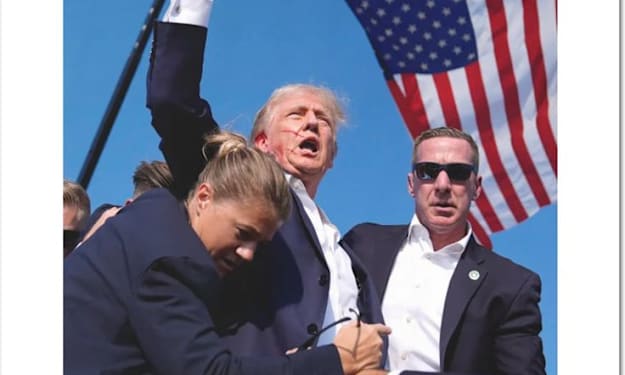
M Mehran The blood on his ear was real. On July 13, 2024, Donald Trump raised his fist to a roaring crowd in Butler, Pennsylvania — and in that single frozen image, something shifted in American political history that hasn't fully stopped shaking since. A 20-year-old named Thomas Matthew Crooks had climbed onto a rooftop just outside the rally's security perimeter and fired an AR-style rifle. The bullet grazed Trump's right ear. One spectator, Corey Comperatore, was killed. (LiveNOW from FOX) The shooter was neutralized by a Secret Service sniper seconds later. America exhaled. Trump survived. And most people assumed it was a horrifying one-time event — the kind of thing that reshapes a nation precisely because it almost never happens. They were wrong. Attempt Two: The Man in the Bushes Sixty-four days later, it happened again. On September 15, 2024, Trump was golfing at Trump International Golf Club in West Palm Beach, Florida, when a Secret Service agent conducting a sweep of the sixth hole spotted something alarming: a man hiding in the shrubbery, holding an SKS rifle, approximately 400 yards from where Trump was walking along the fifth hole. (Wikipedia) The man had been there for nearly twelve hours. Waiting. Patient in a way that is difficult to comprehend. His name was Ryan Wesley Routh — a 58-year-old roofer and self-described Russo-Ukrainian war activist. (Wikipedia) A Secret Service agent fired at him. Routh fled. He was caught shortly after while driving away. What emerged during the investigation painted a portrait of something more premeditated than an impulsive act of rage. An indictment revealed that Routh had been planning the assassination as early as February 2024, communicating with an accomplice in Mexico who called himself "Ramiro." (Wikipedia) He had sought military weapons. He had written notes to himself about failing. He had even reached out — in a self-published ebook — to Iran, suggesting they should feel free to assassinate Trump themselves. In September 2025, a jury found Routh guilty on all counts — attempted assassination, assault on a federal officer, and multiple firearms offenses. (Ballotpedia) He was sentenced to life in prison on February 4, 2026. (Wikipedia) Two attempts. Two men. And a nation asking: who's next? The Security Failures Nobody Wants to Talk About In the Butler attack, the answer to "how did this happen?" was almost as disturbing as the attack itself. An internal investigation into the Secret Service's handling of the Pennsylvania rally led to six Secret Service employees being suspended without pay. (LiveNOW from FOX) A Senate report faulted the agency for failures in planning, communication, and leadership. Crooks had been flagged as suspicious by local law enforcement before he fired. The warning never reached the right people in time. In West Palm Beach, law enforcement officials acknowledged that the golf course perimeter had not been fully secured because Trump's visit was unscheduled. (Wikipedia) A former president — the leading candidate for the nation's highest office — was playing golf without a secured perimeter. These were not extraordinary oversights. They were systemic ones. And the people paying the price for them were a man whose ear got grazed by a bullet and a father named Corey who never came home from a rally. Attempt Three: The Press Gala Shooting Then came April 2026 — and the most brazen incident yet. Cole Tomas Allen, 31, of Torrance, California, allegedly attempted to breach security at the White House Correspondents' Association dinner, shooting a Secret Service agent in the process. (Al Jazeera) Trump was inside. Federal prosecutors charged Allen with attempting to assassinate the president of the United States — an offense that carries a potential sentence of life in prison. (Al Jazeera) The White House called it the third assassination attempt against Trump since 2024. (Al Jazeera) The press gala — one of Washington's most traditionally safe, carefully vetted events — had been turned into a crime scene. "This is not the first time in the past couple of years that our republic has been attacked by a would-be assassin," Trump told reporters after the shooting. (Axios) A Pattern Bigger Than Politics Step back from the political noise — the blame, the rhetoric, the cable news debates — and what remains is something quietly terrifying. No modern president has faced this many threats. (Axios) The attempts span two years, multiple states, different perpetrators with different motivations, and different levels of planning. One was a young man who left almost no traceable digital footprint. One was a middle-aged activist with months of premeditation and foreign contacts. One allegedly walked into a black-tie dinner with a weapon. There is no single profile. No single motive. No single point of failure to fix and move on from. What there is, instead, is a climate — one in which political violence has gone from the unthinkable to the recurrent. And while the debate rages about what caused it and who bears responsibility, the facts remain: Three attempts. Multiple security failures exposed. One conviction with a life sentence. More suspects charged. More investigations ongoing. And somewhere, right now, law enforcement agencies are working leads they can't yet talk about publicly. The Question America Hasn't Answered The Butler photograph became iconic — Trump with his fist raised, blood on his face, Secret Service agents surrounding him, the American flag in the background. It is one of the most striking political images in modern history. But images don't fix broken security protocols. They don't address the radicalization pipelines that produce young men willing to climb rooftops. They don't explain why a man spent twelve hours in a bush with a rifle, or why someone tried to storm a press dinner with a shotgun. These are criminal acts — each one of them. But they are also symptoms of something larger that American society has yet to honestly reckon with. The bullets keep coming. The fist keeps rising. And the country keeps watching, still not sure what it's supposed to do next.
By Muhammad Mehran5 months ago in Criminal