
She Was 23. The Uber Driver Left Her on a Highway. Uber Now Owes $40 Million.
An arbitrator ruled the ride-hailing giant is a common carrier, not just an app, and must bear vicarious liability for the driver who dropped two intoxicated passengers at an unsafe freeway gore point.
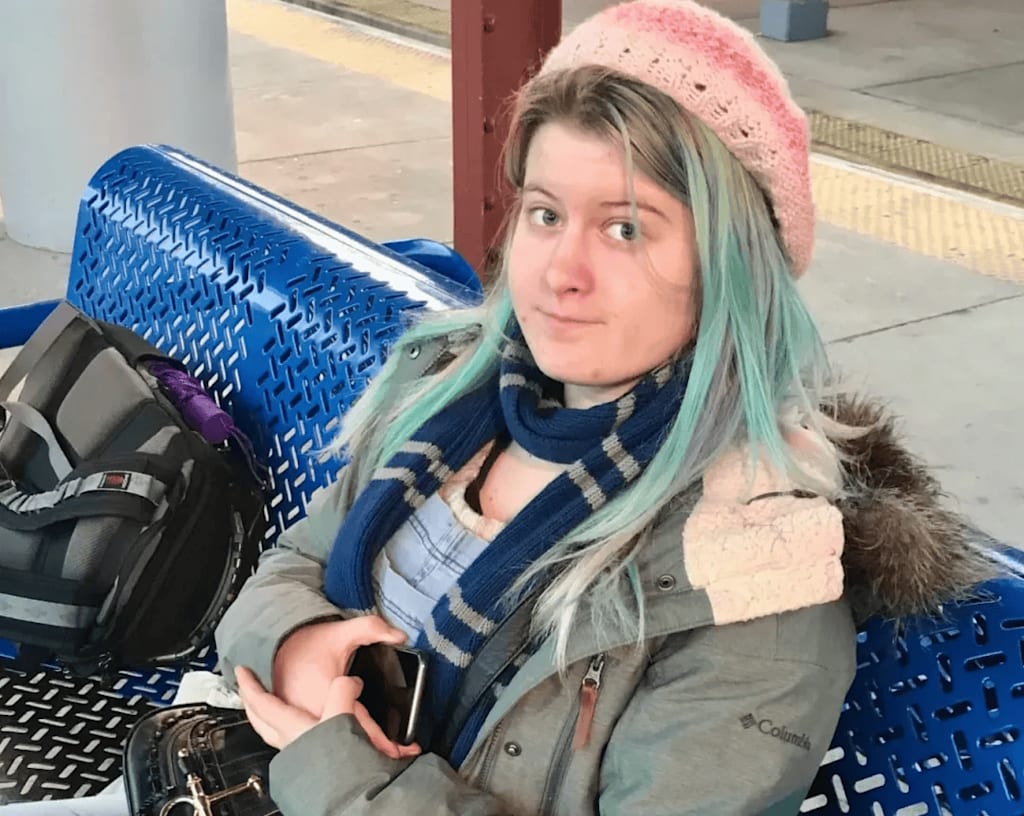
Left on State Route 73
On August 12, 2023, Orange County, California. Emily Normandin-Parker, 23, and her friend Luna Moore drank alcohol and called an Uber.
Shortly after getting in, Moore vomited in the car.
The driver, Tran, stopped the car. He argued with the two passengers over the vehicle cleaning fee. After the argument, he told them to get out. The drop-off point was a triangular gore area on California State Route 73.
The area was later found by arbitrator Richard A. Stone to be “unsafe and unlawful.”
It was not a sidewalk, a rest area, or a safe zone on an exit ramp. It was a triangular area where highway traffic flows converge. Reflective road studs were set into the pavement, and traffic cut past it.
The two drunk girls were left there.
Emily walked into the highway traffic. A car hit her. The car was traveling at about 70 mph, roughly 113 km/h.
She was 23. UCLA said she entered the school after graduating from high school in 2018, majored in theater, and graduated in 2022. Her family and classmates described her as empathetic, brave, intelligent, and creative.
These words were written in memorials. That night, she faced a highway, a triangular gore area, and a driver who had already driven away.
Cleaning fee
The arbitration documents show that the driver, Tran, admitted he knew the two passengers had been drinking, but said he did not know how drunk they were.
Arbitrator Stone found his testimony “almost entirely not credible in fact.”
GPS data recorded Tran’s route after he left the scene. He drove past near Emily’s body, then exited at the next exit and contacted Uber to deal with the vehicle cleaning fee.
He did not call the police. He did not check whether she was safe. He did not take her to a safe place. He contacted the platform to deal with the cleaning fee.
The cleaning fee mattered. A passenger had vomited; the car needed cleaning; the driver had costs. But at that moment, a girl had been left on the highway, possibly already dead or close to death. The driver’s next matter was the cleaning fee.
In the ruling, Stone noted that Tran knew both passengers were drunk, knew Normandin-Parker had gotten out, yet showed no concern for her safety or whereabouts.
Nearly 6,000 trips and multiple complaints
Normandin-Parker’s attorney said that before this incident, Uber had received multiple complaints about Tran.
Uber responded that Tran had completed nearly 6,000 trips, during which there were no incidents of unsafe drop-offs, highway stops, or passenger injuries. The company added that after the accident, he no longer worked as an Uber driver.
Nearly 6,000 trips is evidence that a driver is experienced. Multiple complaints are another record. The two records together raise the question of when the platform intervenes and how many complaints trigger a review.
Uber’s internal policy is that unless a complaint leads to a ticket or death, it will review a driver only when there are “enough” complaints. Before the tragedy, the platform may have already received danger signals but did not take sufficient action.
For Emily and her family, one failure was a hundred percent catastrophe.
“I’m just a software platform”
Emily’s parents accused the driver and Uber of negligence.
Uber responded that it was merely “a technology company that provides a software platform connecting passengers with independent third-party drivers who provide transportation services.”
Under California law, Uber drivers are classified as independent contractors, not company employees. On that basis, Uber argued it was not liable for the driver’s actions.
The logic: the platform does not provide transportation services; it only matches transactions. The driver is not an employee; the platform is not an employer. Therefore, the driver’s fault should be borne by the driver himself.
If this logic held, Uber could enjoy the profits of the transportation market while externalizing safety responsibility and legal liability.
Arbitrator Stone rejected this argument.
Common carrier and vicarious liability
In the arbitration documents, Stone wrote: Uber should be regarded as a common carrier, a company that provides transportation services to the public and has a duty to protect passengers and warn them of any danger. Throughout the ride, Uber played a key role, set fares, and profited from them. Therefore, Uber should bear “vicarious liability” for the driver’s negligence.
A common carrier is not an ordinary technology platform. It provides transportation services to the public, and therefore owes passengers a higher duty of care. It must protect passenger safety, warn passengers of danger, and bear corresponding responsibility during the service.
Stone held that Uber set fares, assigned orders, and profited from every trip. Throughout the ride, it was a key actor, not a bystander. Therefore, it could not define itself merely as “a platform connecting drivers and passengers.”
Vicarious liability means that one party should be held responsible for the negligence or acts of another party connected to it. Even if the driver is an independent contractor, as long as the platform plays a key role in the transportation service and profits from it, it may need to bear vicarious liability for the driver’s negligence.
Stone also rejected Uber’s related claims that it should not be liable for the driver’s actions. He pointed out that California Proposition 22, which classifies ride-hailing drivers as independent contractors, does not exempt Uber from vicarious liability.
Independent contractor status no longer shields platforms from liability.
$40 million
In March, Stone ruled in the case, finding Uber and driver Tran legally responsible for Normandin-Parker’s death, and ordered Uber to pay $20 million each to the deceased’s parents, totaling $40 million. In addition, Luna Moore, who had gotten out of the car with Normandin-Parker, was awarded $300,000.
Uber said that while it respected the arbitration process, it believed the arbitrator “wrongly found Uber legally responsible for the tragic events of that night.” The company also said the driver involved can no longer use the Uber platform, and that it is strengthening safety measures, including further reminding drivers to avoid dropping passengers off at unsafe locations.
Emily’s father, Ken Parker, said Uber had never apologized or admitted responsibility.
In the ruling, Stone wrote that he hoped Uber “can learn from this tragic event and change its policies and procedures accordingly. If it does not, it will undoubtedly bear enormous risk.”
The foundation
Normandin-Parker’s parents have decided to use the compensation paid by Uber to establish a foundation named after their daughter. Part of the foundation’s mission is to hold companies accountable, especially in the ride-hailing industry.
Normandin-Parker’s father said this could be achieved through legislation, regulation, or the “court of public opinion.”
The foundation’s first expenses might be renting an office. Buying a few desks. Registering a domain name. Named after Emily Normandin-Parker.
She entered UCLA in 2018, majored in theater, and graduated in 2022. She was empathetic, brave, intelligent, and creative. These words were written in memorials. Now, these words must become documents, budgets, legislative proposals, regulatory complaints.
Reflective road studs
In the triangular gore area on State Route 73, the reflective road studs are still on the pavement.
Traffic cuts past. One car after another.
Uber’s cleaning fee bill has been settled.
Emily’s parents have not received an apology.
About the Creator
Jin
Writer of reamstories
https://reamstories.com/jin
Enjoyed the story? Support the Creator.
Subscribe for free to receive all their stories in your feed. You could also become a paid subscriber, letting them know you appreciate their work.
Comments
There are no comments for this story
Be the first to respond and start the conversation.