cartel
In the vast criminal underworld, cartels reign supreme; get the full scope of global drug trafficking networks from notorious kingpins down to lowly street pushers.
Bike Gang in Arizona Protects Child Abuse Victims
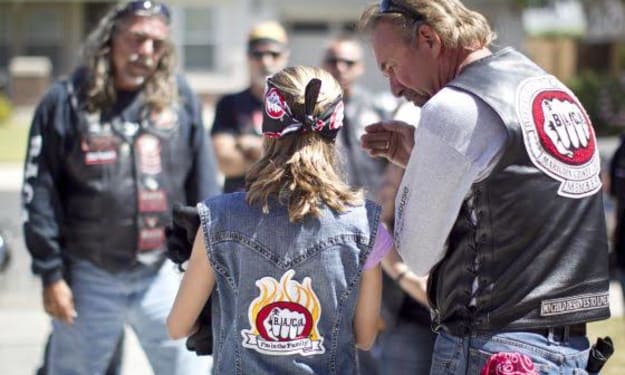
In the rugged landscape of Arizona, amidst the roar of engines and the rumble of steel, there exists a group of individuals who are on a mission unlike any other. They are the Bikers Against Child Abuse (BACA), a formidable force dedicated to protecting the most vulnerable members of society: children who have been victims of abuse. In this blog post, we delve into the inspiring story of BACA, their tireless efforts, and the impact they've made in the fight against child abuse. Founded in 1995 by John Paul "Chief" Lilly, a licensed clinical social worker, Bikers Against Child Abuse emerged from a simple yet powerful idea: to create a safe haven for children who have experienced the trauma of abuse. What began as a small group of bikers in Utah has since grown into an international organization with chapters across the globe, including a strong presence in the sun-drenched deserts of Arizona. At the heart of BACA's mission is a commitment to empowering children and giving them back their sense of control and confidence. When a child joins BACA, they become part of a tight-knit family of bikers who are dedicated to their protection and well-being. These bikers, known as "patched members," undergo extensive training and background checks to ensure they are equipped to handle the delicate needs of the children they serve. One of the most powerful aspects of BACA's approach is their emphasis on solidarity and support. When a child feels scared or threatened, they can call upon their BACA family for assistance. Whether it's accompanying them to court hearings, therapy sessions, or simply offering a reassuring presence, these bikers stand ready to shield the children from further harm. But BACA's impact extends far beyond the individual children they serve. By raising awareness about the prevalence of child abuse and advocating for change at the local, state, and national levels, they are working to create a world where every child can grow up safe and free from harm. In Arizona, BACA has become a beacon of hope for children and families grappling with the aftermath of abuse. Their presence is felt not only in the courtroom or therapist's office but also in the broader community, where they tirelessly work to educate and empower others to join the fight against child abuse. The work of BACA has not gone unnoticed. Their efforts have garnered widespread recognition and support, both within Arizona and beyond. From local news features to national media coverage, the story of Bikers Against Child Abuse has captured the hearts and minds of people across the country. But perhaps the most powerful testament to BACA's impact lies in the stories of the children they have helped. For these children, BACA represents more than just a group of bikers; they are a lifeline in times of darkness, a symbol of strength and resilience in the face of adversity. Take, for example, the story of Sarah*, a young girl who endured years of abuse at the hands of a family member. When Sarah found the courage to speak out and seek help, it was BACA who stood by her side, offering unwavering support and protection. With their help, Sarah was able to navigate the complexities of the legal system and ultimately find justice. Or consider the case of Miguel*, a shy and withdrawn boy who had been bullied and abused by his peers. Through the intervention of BACA, Miguel found a sense of belonging and acceptance among the bikers, who taught him the value of courage and self-respect. Today, Miguel is thriving, his once-quiet voice now filled with confidence and determination. These stories are just a few examples of the countless lives that have been touched by the work of Bikers Against Child Abuse. Theirs is a story of compassion, resilience, and unwavering dedication to the cause of protecting children from harm. As we reflect on the inspiring work of BACA, let us not forget the power of individual action to effect change. Whether it's lending a listening ear to a child in need or speaking out against injustice in our communities, each of us has the ability to make a difference in the lives of others. In the words of Chief Lilly, the founder of Bikers Against Child Abuse, "We may look like tough bikers on the outside, but on the inside, we are just big-hearted individuals who want to make the world a safer place for children." May we all be inspired by the example set by BACA and join together in the fight against child abuse. For in unity, there is strength, and in compassion, there is hope for a brighter tomorrow.
By Deji Akomolafe2 years ago in Criminal
Which Death Row Prisoner Had Most Expensive LAST MEAL?. Content Warning.
The last meals of death row prisoners serve two purposes: that of an unbecoming curiosity, an approximate study into the last wishes of some of the most infamous people in the society. From the sadistic events to the prevailing ones, such desires act as virtual windows to the minds of the locked souls that are exploring death. In this article, since divulging about the most astonishing and extravagant last meal requests in the history will be our guided tour of the character.
By Amine Oubih2 years ago in Criminal
The 60 Second Servant ©️. Content Warning.
This kill had to be done in 60 seconds, and recorded for the payment. This was an easy task. The setup was in play. I was the Wheelman and the Poi was a thief better known as Johnny Rocket. (I'm sorry, Poi is *Person of Interest*). Johnny was widely known as a ruthless bank robber in the small towns of European Cities. He would enter the bank, rob at gunpoint and then exterminate the teller and beeline to the getaway car with an experienced Wheelman. He was never convicted, and that was remarkable in this circuit of crime. His previous job was at a random bank in Bogota. Unknown to him the bank was Cartel owned. He never had a chance from the minute he went through the bank doors. First off, he didn't research this heist enough. No one escapes the Cartel. Well, needless to say he hit the bank and killed the young female teller and got away. The problem was the teller, a niece to the Capriano Cartel's underboss, whom he had executed. Stick a fork in Johnny, as he is cooked. Now by cooked, I mean walking Deadman. Still no damn clue as to what he did. In his mind it was just another payday. Johnnys’ ticket was punched from the moment he stole from the Cartel, let alone killing the underboss's niece. My job was the wheelman and executioner. My skills were always discreet and only In extremely refined small circles I was known as the 60-second servant. Johnny just hit this small independant bank and was sprinting from the bank into my car and belted up in a hurray. I hit a timer on the dash and Johnny seemed puzzled but got over it as I hit the gas to embark on the getaway. Then Johnny asked what the timer was about. At ten seconds and counting I explained this was my personal best documentation. The Poi (Johnny) chuckled and said I understand, always room for improvement right? I responded and said, yeah something like that. The clock is now at 18 seconds and no sirens have been heard yet. I remarked to Johnny that this was another best for me on headstarts before sirens. Then I am impressed with your skills Sixty Second Servant. Actually Im glad because you were highly recommended after the vetting process. To which I replied " Me too". I asked the Poi to activate the two way dash camera" which he graciously did without pushback. The time now is 26 seconds. I put on a helmet and visor and motioned to the Poi to do the same. With some reluctance I reassured him this was for his safety and mine because we were going to increase speeds. It took a moment for him to realized we had communication through the helmets. The time now 38 seconds. I quickly mentioned the additional safety harness for him to use as needed precaution. I explained we were going to be speeding up significantly and need to ensure safety because the road ahead will require tricky maneuvers. He very reluctantly obliged. I felt better. Time to spare. I started to sweat him by explaining on his previous job that he hit a Cartel bank and killed a nice of a very high ranking member. 44 seconds was the time now. Yup it happened, I smelled shit, and heard the sobs. He knew he was dead. He started crying, shitting himself still, just making a sorry mess of the seat. Fifty seconds just hit on the timer. Anything you need to say Johnny? Fifty three seconds have elapsed now. I'm fucking so sorry he said through big sobs. Fifty seven seconds. I hit the detonator on my steering wheel and there was a pop, and blood filled the visor and poured under his helmet. Sixty Seconds Served. Job complete. ( A garbled voice comes through), “Mr. Capriano thanks you for the quick sentence, Mr. Sixty Second Servant”. “Your transfer is now completed and funds are secured. Pull over and walk away, the cleaners are enroute.” Mgm. May 7th 2022 10:52pm
By Vinn Black2 years ago in Criminal
Behind Bars, Beyond Boundaries: The Dual Lives of Prisoners Inside and Outside Society
Introduction: In the complex tapestry of human existence, the concept of leading a double life has intrigued and perplexed societies for centuries. However, nowhere is this duality more pronounced than within the confines of prison walls. Inside, individuals often adopt personas and survival strategies vastly different from their lives on the outside. Understanding this duality sheds light on the intricate dynamics of human behavior, resilience, and adaptation within carceral environments.
By Ssekatawa Isah2 years ago in Criminal
The Rise and fall of world's most richest drug lord
In the bustling streets of Colombia, a young boy named Pablo Emilio Escobar Gaviria dreamt of a life beyond the poverty that surrounded him. Born to a farmer and a school teacher on December 1, 1949, Pablo's journey from rags to riches would become one of the most infamous tales of the 20th century.
By Santosh Chaudhary3 years ago in Criminal
Rise of a young kingpin
In the heart of a bustling city, where shadows danced with secrets and whispers echoed through the alleyways, there lived a boy named Diego. On the surface, he was just like any other teenager—charming, ambitious, with a smile that could light up the darkest of nights. But beneath his facade lurked a mind as sharp as a blade, a hunger for power that would soon propel him to unimaginable heights.
By Isaac Robles3 years ago in Criminal
The Clown Prince of Crime: Delving into the Joker's Shattered Psyche
The Joker, Batman's arch-nemesis, transcends the realm of comic book villains. He's a chilling enigma, a character whose chaotic grin and manic laughter mask a psyche fractured by trauma and warped by a twisted worldview. Understanding the Joker necessitates a descent into the abyss of his personality, a labyrinth constructed from potential psychological diagnoses and fueled by a relentless pursuit of anarchy.
By Nada soliman3 years ago in Criminal
The Central Park Five: A Case of Injustice and Redemption
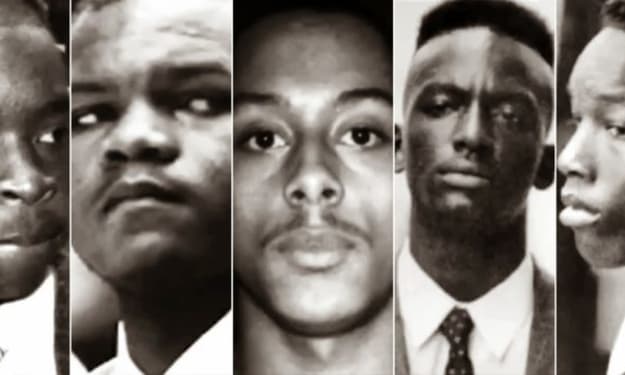
In 1989, the nation was gripped by the harrowing story of a brutal assault and rape in New York City's Central Park. What followed would become one of the most egregious miscarriages of justice in recent memory, as five teenagers—Antron McCray, Kevin Richardson, Yusef Salaam, Raymond Santana, and Korey Wise—were wrongfully convicted of the crime in what became known as the Central Park Five case. The incident shook the city to its core, igniting fear and outrage as the media sensationalized the case, painting the teenagers as a "wolf pack" responsible for the heinous attack on Trisha Meili, a young investment banker who was jogging in the park. Despite a lack of physical evidence tying them to the crime scene, the five boys, aged between 14 and 16, were coerced into giving false confessions after hours of intense interrogation by law enforcement. Their trials were marked by racial tensions and public outcry, fueled by a climate of fear and prejudice. Despite inconsistencies in the prosecution's case and the absence of DNA evidence linking them to the crime, all five were found guilty and sentenced to prison terms ranging from 5 to 15 years. However, their nightmare was far from over. It wasn't until 2002, more than a decade later, that the truth began to emerge. Matias Reyes, a convicted serial rapist serving a life sentence, came forward and confessed to the attack on Trisha Meili. DNA evidence subsequently confirmed his involvement, leading to the exoneration of the Central Park Five. The revelation sparked a renewed public interest in the case, shining a spotlight on the systemic flaws within the criminal justice system—flaws that had allowed the wrongful convictions of five innocent teenagers. It also brought attention to the issue of coerced confessions, particularly among vulnerable youth, and the impact of racial bias on legal proceedings. Despite their exoneration, the Central Park Five had already paid a steep price for a crime they did not commit. Their youth stolen, their reputations tarnished, and their families shattered by years of wrongful imprisonment. Yet, their story is one of resilience and redemption. In the years since their release, the Central Park Five have become advocates for criminal justice reform, speaking out against injustices within the system and advocating for the rights of the wrongfully convicted. Their journey from victims of injustice to agents of change serves as a powerful reminder of the resilience of the human spirit and the enduring quest for truth and justice in the face of adversity. The Central Park Five case remains a sobering reminder of the dangers of rushing to judgment, the importance of due process, and the need for reforms to ensure that such injustices are not repeated. As we reflect on their story, let us not forget the lessons learned and the ongoing struggle for justice for all. While the exoneration brought some measure of closure to the Central Park Five, it did not erase the trauma and stigma they endured. Rebuilding their lives after years of wrongful imprisonment proved to be a daunting task. Many faced challenges finding employment, housing, and reintegrating into society. Despite these obstacles, they have persevered, demonstrating remarkable resilience and determination. Their case also sparked important conversations about racial profiling, prejudice, and the criminalization of young black and Latino men. It highlighted the ways in which the justice system disproportionately targets marginalized communities and perpetuates cycles of injustice. The Central Park Five became symbols of the systemic injustices that plague the criminal justice system and inspired calls for reform. In 2014, their story received renewed attention with the release of the critically acclaimed documentary "The Central Park Five," directed by Ken Burns, Sarah Burns, and David McMahon. The film delves into the events surrounding the case, shedding light on the injustices faced by the five teenagers and the impact of their wrongful convictions on their lives. The Central Park Five's fight for justice continues to resonate today, serving as a powerful reminder of the importance of accountability, transparency, and equity in our legal system. Their courage in the face of adversity has inspired countless individuals to speak out against injustice and advocate for meaningful change. As we reflect on the Central Park Five case, let us not only remember the injustices suffered by Antron, Kevin, Yusef, Raymond, and Korey but also honor their resilience and commitment to creating a more just and equitable society. Their story serves as a testament to the power of perseverance, the pursuit of truth, and the enduring hope for a better future.
By Deji Akomolafe3 years ago in Criminal