Latest Stories
Most recently published stories in Criminal.
The Last Call from Block 17
M Mehran At exactly 2:13 a.m., the phone rang. Detective Hamza Rauf stared at the glowing screen, his instincts already whispering that this wasn’t going to be a routine call. The number was unknown. No caller ID. No trace. He answered anyway. There was silence. Then breathing. Shallow. Uneven. Terrified. “Hello?” Hamza said, his voice steady. “Who is this?” A pause. Then a whisper: “They’re watching me.” The line went dead. By 3:00 a.m., Hamza was standing outside Block 17—a decaying apartment complex on the edge of the city. The kind of place people moved into when they had nowhere else to go… and disappeared from when no one was looking. Rainwater dripped from broken balconies. A single flickering bulb lit the entrance. “Call came from here,” the technician confirmed. Hamza stepped inside. The smell hit him first—damp walls, old smoke… and something metallic. Something wrong. Apartment 304. The door was slightly open. Hamza pushed it gently. Inside, chaos. Furniture overturned. Glass shattered. A chair lying on its side as if someone had tried to escape. And in the center of the room— A phone. Still recording. Hamza picked it up. The screen displayed a voice memo, still running. He pressed play. At first, nothing. Then the same voice. Terrified. “They’re not who they say they are… if anyone finds this, don’t trust—” A loud crash interrupted the recording. Footsteps. Heavy. Deliberate. Then silence. “No body?” the officer asked. Hamza shook his head. “No blood either.” “So what are we looking at?” Hamza glanced around the room again. “Not a crime scene.” The officer frowned. “Then what?” Hamza’s eyes narrowed. “A warning.” The tenant was listed as Sara Naveed, 27. Freelance journalist. No criminal record. No known enemies. But her laptop told a different story. “She was investigating something,” Hamza said, scrolling through encrypted files. “What kind of something?” Hamza turned the screen. A series of documents appeared—photos, notes, timestamps. All connected by one phrase: “Project Mirror.” Over the next 48 hours, Hamza and his team uncovered fragments of Sara’s investigation. It wasn’t just a story. It was a conspiracy. Multiple identities. Fake records. People living double lives under completely fabricated backgrounds. “Witness protection?” the officer suggested. Hamza shook his head. “No. This is bigger.” “How big?” Hamza exhaled slowly. “Big enough to erase someone completely… and replace them.” The deeper they dug, the stranger it became. Faces matched multiple names. Names matched multiple histories. It was as if someone had built an entire system to rewrite reality itself. And Sara had gotten too close. “Detective,” Zara from cybercrime called. “You need to see this.” On her screen was a database—hidden, encrypted, buried beneath layers of firewalls. Hamza leaned in. “What am I looking at?” Zara’s voice dropped. “Every person in this system has two profiles. One real… and one constructed.” “Constructed how?” “New identities. New records. New lives.” Hamza felt a chill. “Why?” Zara hesitated. “Control.” Then came the breakthrough. A pattern in the replacements. Every “new identity” belonged to someone who had influence—bankers, journalists, tech experts. People with access. People who could change things. “Someone’s not just replacing people,” Hamza realized. “They’re rebuilding society from the inside.” But the most disturbing discovery came last. Sara’s file. Her original identity was marked as “terminated.” Her replacement? Already active. Living. Breathing. Existing somewhere in the city. Hamza didn’t sleep that night. Instead, he returned to Block 17. Apartment 304 felt colder now. Emptier. But something pulled him back. Something unfinished. He walked to the center of the room… and stopped. There, barely visible on the wall, was a message scratched into the paint. Three words. “CHECK YOURSELF.” Back at the station, Hamza pulled his own file. It took longer than it should have. Too many clearance levels. Too many locked layers. But eventually… it opened. He scanned the details. Name. Age. Service record. Everything looked normal. Until he reached the bottom. A second profile. Hidden. Buried. But unmistakably there. Duplicate ID. Different history. Different past. Same face. His hands went cold. “This isn’t possible…” Zara stepped closer. “What did you find?” Hamza turned the screen toward her. Her expression changed instantly. “That means—” “I know what it means,” Hamza interrupted. His voice barely above a whisper. “It means I don’t know who I am.” The phone rang again. 2:13 a.m. Unknown number. Hamza stared at it… then answered. This time, the voice was clear. Calm. Controlled. “You finally looked, didn’t you?” Hamza clenched his jaw. “Who is this?” A soft chuckle echoed through the line. “You’re asking the wrong question, Detective.” A pause. Then— “The real question is… which version of you is listening?” The line went dead. And for the first time in his career… Hamza Rauf wasn’t chasing a criminal. He was chasing himself.
By Muhammad Mehran5 months ago in Criminal
The Whispering Ledger
M Mehran The rain didn’t fall that night—it whispered. Soft, deliberate, like it knew something the rest of the city didn’t. Inspector Ayaan Malik stood under the flickering streetlight, staring at the lifeless body sprawled across the alley. The victim, a mid-level accountant named Rehan Siddiqui, wasn’t the kind of man who attracted enemies. No criminal record. No debts. No visible reason to end up with a bullet in his chest. And yet, here he was. Dead. “Robbery?” the constable asked, adjusting his soaked cap. Ayaan shook his head. “Wallet’s still there. Phone too.” He crouched, scanning the scene. “This wasn’t random.” Something about the way Rehan’s hand clutched his coat caught Ayaan’s attention. He carefully pried open the stiff fingers and found a small, leather-bound notebook. A ledger. But not an ordinary one. Inside were names—dozens of them—followed by numbers and dates. Some entries were circled. Others were crossed out entirely. It looked like a financial record, but there was something off. No company logos. No official formatting. Just names. And money. “Get this bagged,” Ayaan ordered, his voice low. Because deep down, he already knew—this wasn’t just a murder. It was a message. The next morning, the city buzzed like any other day. Vendors shouted. Cars honked. Life moved on. But inside the police station, tension thickened the air. Ayaan sat across from Zara Khan, a data analyst known for her ability to decode patterns others couldn’t see. She flipped through the ledger, her brows furrowing deeper with every page. “This isn’t accounting,” she finally said. “Then what is it?” Zara tapped one of the names. “Look at the dates. They don’t align with payments. They align with disappearances.” Ayaan leaned forward. “Disappearances?” Zara nodded. “Missing persons. I checked three names already. All reported missing within 48 hours of these dates.” Ayaan’s pulse quickened. “You’re saying this ledger is tracking… victims?” “Not just victims,” Zara replied. “Targets.” The case took a darker turn. Each name in the ledger belonged to someone who had either vanished—or was found dead under mysterious circumstances. No connections between them. Different professions. Different neighborhoods. No pattern. Except one. Every single one had recently reported suspicious financial activity. Bank transfers. Unauthorized withdrawals. Ghost transactions that vanished without a trace. “This isn’t just murder,” Ayaan muttered. “It’s a system.” Days turned into sleepless nights. Ayaan dug deeper, chasing shadows through financial records and surveillance footage. Every lead ended in a dead end—until Zara found something. “Look at this,” she said, spinning her laptop around. A series of transactions appeared on the screen, all linked through a complex web of shell accounts. “It’s laundering,” Zara explained. “But not the usual kind. This is precision-level. Whoever’s behind this knows exactly how to stay invisible.” “Can we trace it?” Zara hesitated. “Maybe. But there’s a risk.” “What kind of risk?” She met his eyes. “The kind where they realize we’re watching.” They traced it anyway. And that’s when everything changed. The trail led to a single name. Farhan Qureshi. A respected businessman. Philanthropist. A man who funded schools and hospitals. A man who smiled in public and shook hands with politicians. A man no one would suspect. “This has to be wrong,” the constable said. But Ayaan knew better. “Prepare a warrant.” Farhan’s office overlooked the city skyline, a symbol of power and success. He didn’t resist when they walked in. In fact, he smiled. “I was wondering when you’d arrive,” he said calmly. Ayaan’s grip tightened. “You know why we’re here.” Farhan nodded. “The ledger.” “You admit it?” Farhan chuckled softly. “Admit? Inspector, you misunderstand. I designed it.” The confession came too easily. Too smoothly. Farhan explained everything as if he were discussing a business strategy. “I don’t kill people,” he said. “I eliminate threats.” “Threats?” Ayaan snapped. “People who notice things they shouldn’t. Unauthorized transactions. Financial anomalies. Loose ends.” Farhan leaned back in his chair. “In my world, loose ends become problems.” “And your solution is murder?” “My solution is efficiency.” The room fell silent. Ayaan felt a surge of anger—but also something else. Clarity. “You turned human lives into numbers,” he said quietly. Farhan smiled again. “Numbers are predictable. People aren’t.” The arrest made headlines. “Respected Businessman Exposed as Mastermind Behind Serial Financial Murders” The city was shaken. People questioned everything—trust, safety, even the systems meant to protect them. But for Ayaan, the case wasn’t over. Because something still didn’t add up. Late one night, as he reviewed the ledger again, he noticed a name he hadn’t seen before. At the very end. Uncrossed. Unmarked. Still active. He read it once. Then again. And his blood ran cold. Because the name staring back at him… Was his own. The whispering rain returned that night. Only this time, it didn’t sound like a secret. It sounded like a warning.
By Muhammad Mehran5 months ago in Criminal
The Weight of Water. AI-Generated.
The Drowning City The rain had not stopped in Carver's Bay for seventeen days. It fell in sheets, in curtains, in a kind of liquid siege that made the city look less like a place of human habitation and more like a ruin at the bottom of an ocean. The streets flooded in increments—first the gutters, then the sidewalks, then the lower stories of the older buildings, which gradually surrendered their ground floors to the water and became monuments to inundation.
By Alpha Cortex5 months ago in Criminal
Thick as thieves - The Possessions You Wouldn’t Expect
Sometimes the reason one chooses between freedom and a governance can define destiny. As all things invented have shadows and bright places they aren’t. Some 'forces' commune to act as beings of freedom while conspiring governance, completely redefining destiny. Some 'forces' govern the rule of theft and ensure a marketplace thrives, of thieves, be it the earth or the metaverse. Thick as thieves is the well used idiom, in reference to these nameless and anonymous gangsters, or a government of organized crime.
By Vittalacharya Vandavasu5 months ago in Criminal
The Basement Ledger
M Mehran The ledger was never meant to be found. It lay beneath a loose concrete slab in the basement of an old printing shop—wrapped in oil-stained cloth, its pages thick with time and secrets. No title. No author. Just names. Hundreds of them. Each written in careful, deliberate ink. And beside every name… a date. When Officer Hadi Rehman first opened the book, he thought it was a record of debts. Maybe an old business account. But the deeper he looked, the more unsettling it became. Every date matched a missing person. Not some of them. All of them. The shop had been abandoned for over a decade, scheduled for demolition before a construction worker stumbled upon the hidden slab. That’s when the police were called. And that’s when Hadi’s life changed. “This isn’t possible,” his partner murmured, flipping through the pages. “These cases span fifteen years.” Hadi didn’t respond. He was focused on the last page. The ink was fresh. Still slightly wet. At the bottom of the page, a single name had been added recently. “Raza Ali – April 24” Hadi checked his watch. April 24. Today. “Get me everything on this name,” he said sharply. Within minutes, the team pulled up a profile. Raza Ali. Age 31. Software technician. Lived alone. No criminal record. No known enemies. Ordinary. Too ordinary. Hadi grabbed his jacket. “We don’t have time,” he said. “We move now.” The address led them to a quiet apartment complex on the edge of the city. Lights flickered behind curtains. A normal evening for everyone else. But not for Raza Ali. They knocked. No answer. Hadi signaled. The door was forced open. Inside— Nothing seemed out of place. Furniture neat. Kitchen clean. No signs of struggle. But in the center of the living room… A chair. And a camera. Hadi’s stomach tightened. It was too familiar. “Clear the rooms!” he ordered. Officers spread out quickly. Closets. Bathroom. Balcony. Empty. “Sir!” one officer called from the bedroom. Hadi rushed in. On the bed… A phone. Still recording. Hadi picked it up. The video was already playing. Raza Ali sat on the same chair from the living room. Alive. But terrified. “I don’t know why I was chosen,” Raza said, his voice shaking. “I’ve never hurt anyone. I’ve never—” He stopped. Looked off-camera. “You said this was about truth,” he whispered. A voice answered. Calm. Cold. “It is.” Hadi froze. That voice… It wasn’t distorted. It wasn’t hidden. It sounded… normal. “What truth?” Raza asked. A pause. Then— “Everyone leaves a trace,” the voice replied. “Even when they think they haven’t.” Raza shook his head. “I don’t understand.” “You will,” the voice said. The video cut. Hadi lowered the phone slowly. “Trace that audio,” he said. “Now.” Minutes passed. Nothing. No signal origin. No background noise. No identifiable clues. It was as if the voice didn’t exist. “Sir…” another officer said quietly. Hadi turned. “The basement.” They rushed back downstairs. The concrete slab was open again. Hadi’s pulse spiked. “I sealed this,” he said. He stepped closer. The ledger… Was gone. In its place… A single page. Hadi picked it up. One name. One date. “Hadi Rehman – April 25” Tomorrow. For a moment, no one spoke. Then— A sound echoed through the basement. A faint click. Hadi turned sharply. A camera. Mounted in the corner. Red light blinking. Recording. He stepped toward it. “Who are you?” he demanded. “What do you want?” Silence. Then— The speaker crackled. “You already found the ledger,” the voice said. “You’re ahead of schedule.” Hadi clenched his fists. “Show yourself.” A soft chuckle followed. “That’s not how this works,” the voice replied. Hadi glanced at his team. Fear. Confusion. No answers. “You think this is about killing,” the voice continued. “It’s not.” “Then what is it?” Hadi snapped. A pause. Long. Heavy. “Balance.” The word hung in the air. “Every name in that book,” the voice said, “belongs to someone who was… overlooked.” Hadi’s jaw tightened. “Missing people,” he said. “Victims.” “Not just victims,” the voice corrected. “Consequences.” Hadi’s mind raced. “What does that mean?” Another pause. Then— “Check your first case,” the voice whispered. Hadi froze. His first case. Years ago. A missing teenager. Never solved. He remembered it now. The details. The mistakes. He had closed the case too early. Marked it as runaway. But she wasn’t. She had disappeared. Just like the others. “You’re cleaning up failures,” Hadi said slowly. “Not cleaning,” the voice replied. “Correcting.” Hadi’s chest tightened. “You’re playing judge.” “No,” the voice said calmly. “I’m finishing what you couldn’t.” Silence filled the basement again. Hadi looked at the page in his hand. His name. His date. “Why me?” he asked. The answer came without hesitation. “Because you stopped looking.” The words cut deeper than any blade. The line went dead. The camera light turned off. And just like that… The voice was gone. That night, Hadi didn’t go home. He reopened every old case. Every missing person. Every overlooked detail. Because now he understood something terrifying. The ledger wasn’t a record of crimes. It was a record of mistakes. And someone… Was making sure they were never forgotten. At 11:59 p.m., Hadi sat alone in the station. Files spread across his desk. Eyes burning. Mind racing. 12:00 a.m. April 25. Nothing happened. No attack. No call. No shadow in the dark. Just silence. Hadi exhaled slowly. Maybe it was over. Maybe— His phone vibrated. One message. Unknown number. He opened it. A photo. The ledger. Updated. His name… Crossed out. And beneath it… A new entry. “Next mistake – Pending.” Hadi stared at the screen. This wasn’t over. It was just beginning.
By Muhammad Mehran5 months ago in Criminal
The Last Call Before Midnight
M Mehran The call came at 11:58 p.m. Not unusual for Inspector Zayan Malik. Crime didn’t follow office hours. But what made this one different… was the voice. Calm. Controlled. Almost amused. “I’m about to kill someone,” the man said. “You have two minutes to stop me.” Then the line went dead. Zayan didn’t waste time. He traced the call instantly—an old public booth on the outskirts of the city. Abandoned area. No cameras nearby. Whoever this was, he knew what he was doing. “Get me units there now!” Zayan barked, grabbing his jacket. But deep down, he knew… Two minutes wasn’t enough. By the time he arrived, it was already midnight. The booth stood alone under a flickering streetlight. No sign of struggle. No witnesses. Just silence. And something else. A phone… still off the hook. Zayan approached cautiously and picked it up. A faint sound came through the receiver. Breathing. Slow. Deliberate. Then— A whisper. “You’re late.” Zayan’s grip tightened. “Who is this?” he demanded. A soft chuckle followed. “You had your chance,” the voice said. “Now you’ll follow my rules.” Click. The next morning, the body was found. A man in his early 40s, lying peacefully in his apartment. No signs of forced entry. No struggle. No weapon. Just a note on the table: “11:58 p.m. You failed.” The media exploded. “A killer who calls before the crime?” “A game with the police?” “A psychopath seeking attention?” But Zayan saw something else. A pattern. The second call came the next night. 11:58 p.m. Same voice. Same tone. “I’m about to kill someone,” he said. “You have two minutes.” This time, Zayan was ready. “Wait,” he said quickly. “Tell me why you’re doing this.” A pause. Then— “Because you’re predictable,” the man replied. “And I want to prove it.” Click. Zayan traced the call again. Different location. Another public booth. Another dead end. But this time, Zayan didn’t rush to the booth. He did the opposite. He stayed still. Closed his eyes. And thought. “Predictable…” The word echoed in his mind. What did the killer mean? Police protocol. Trace the call. Rush to the source. Secure the scene. Too obvious. Too expected. Zayan opened his eyes. “Check recent victims,” he ordered his team. “Everything. Background, routines, connections.” Hours passed. Nothing. Then— A junior officer spoke up. “Sir… all victims received unknown calls before death. Not just you.” Zayan turned sharply. “What kind of calls?” The officer hesitated. “Short ones. No threats. Just… silence.” Zayan’s pulse quickened. “He’s not choosing randomly,” he said. “He’s studying them.” That night, Zayan did something risky. At 11:57 p.m., he stood alone in his office. Waiting. 11:58 p.m. The phone rang. Right on time. Zayan picked it up instantly. “I know your pattern,” he said. A pause. Then the voice returned. “Do you?” “You call from public booths,” Zayan continued. “You give two minutes. You expect me to chase you.” Another pause. Longer this time. “Good,” the man said softly. “You’re learning.” Zayan leaned forward. “But tonight, I’m not moving.” Silence. “You think the booth matters,” Zayan said. “It doesn’t. The victim is already chosen. Already close.” A faint breath came through the line. “You’re not testing speed,” Zayan added. “You’re testing attention.” For the first time… The caller didn’t respond immediately. Zayan’s voice dropped. “You’re near me.” The line went quiet. Too quiet. Then— A whisper. “Turn around.” Zayan’s heart slammed against his chest. Slowly… He turned. The office door was open. And someone was standing there. A man. Ordinary. Mid-30s. Holding a phone. “You finally stopped chasing,” the man said, lowering the device. Zayan reached for his weapon. “Don’t,” the man warned calmly. “If you shoot me… you’ll never know who was supposed to die tonight.” Zayan froze. “Talk,” he said. The man smiled faintly. “I don’t kill randomly,” he explained. “I choose people who are… invisible.” “What does that mean?” “People no one would notice missing,” the man said. “No close family. No strong connections. No one looking.” Zayan’s jaw tightened. “You’re wrong.” “Am I?” the man replied. “Think about your victims.” Zayan didn’t answer. Because part of him knew… It was true. “They live quietly,” the man continued. “They disappear quietly. And the world moves on.” “So you decided to play god?” Zayan snapped. “No,” the man said. “I decided to expose the truth.” Zayan stepped closer. “You’re coming with me.” The man didn’t resist. Instead, he tilted his head. “Before I do… answer one question.” Zayan hesitated. “What?” “If I hadn’t called you,” the man asked softly, “would you have ever noticed them?” The question hit harder than any weapon. Zayan stayed silent. The man smiled. “That’s what I thought.” Moments later, backup flooded the room. The suspect was arrested without struggle. No resistance. No fear. But the case didn’t end there. Because during interrogation… The man refused to give names. “Who was your next victim?” Zayan demanded. The man leaned back in his chair. Calm. Relaxed. “You already know,” he said. Zayan frowned. “That’s not possible.” The man’s eyes locked onto his. “Check your call logs,” he whispered. Zayan’s blood ran cold. He pulled out his phone. Scrolled. Stopped. A missed call. 11:56 p.m. Unknown number. Zayan looked up slowly. The man smiled. “I told you,” he said. “I study people first.” Zayan’s voice barely came out. “Who… was the target?” The man leaned forward. “You.” Silence filled the room. And for the first time… Inspector Zayan Malik understood the game. It was never about the victims. It was about him.
By Muhammad Mehran5 months ago in Criminal
The Silence of Room 307
M Mehran The first thing they noticed was the silence. Not the usual quiet of a closed room, but something heavier—like the walls themselves were holding their breath. Room 307 had been empty for years, at least according to the building manager. No tenants, no complaints, no records. Yet, at exactly 2:17 a.m. every night, the security cameras would glitch. And something moved inside. Detective Arman Khalid didn’t believe in ghosts. He believed in patterns. Motives. Mistakes. “People don’t vanish,” he muttered, stepping into the dim hallway of the abandoned apartment complex. “They’re made to disappear.” The building stood on the edge of the city, its windows cracked, its reputation worse. Three missing persons in six months—all last seen entering this building. No witnesses leaving. No bodies found. Just silence. The case files were thin. Too thin. Victim 1: Sana Riaz, 26, freelance photographer. Victim 2: Imran Sheikh, 34, delivery driver. Victim 3: Ayesha Noor, 19, university student. No connection. No shared background. Except one thing. Each had received a message before disappearing: “Come to Room 307. You’ll understand everything.” Arman pushed open the rusted door to the stairwell. Each step echoed like a warning. By the time he reached the third floor, his instincts were already uneasy. The hallway smelled of damp concrete and something faintly metallic. Blood. He stopped outside Room 307. The door was slightly ajar. Inside, the room was empty. No furniture. No decorations. Just bare walls and a cracked window letting in a sliver of moonlight. But in the center of the floor… was a chair. And beside it, a camera. Old. Dust-covered. But positioned carefully, like it had been waiting. Arman approached slowly. His hand brushed the camera. It turned on. The screen flickered. A recording began. At first, just static. Then a figure appeared—Sana Riaz. Alive. She sat in the same chair, eyes wide, hands tied. “Please,” she whispered. “If anyone finds this… don’t come here. It’s not what you think.” The video cut. Another began. Imran Sheikh. Sweating. Terrified. “He watches you before you even know him,” he said. “He learns your habits… your fears…” Cut. A third video. Ayesha Noor. Crying. “He doesn’t kill you immediately,” she said. “He makes you… understand.” The screen went black. Arman stepped back. This wasn’t random. This was planned. Psychological. Controlled. “Show yourself,” Arman called out, his voice steady but sharp. For a moment—nothing. Then… A click. The door slammed shut behind him. The lights flickered. And from the corner of the room, a voice emerged. Calm. Measured. Almost… polite. “You came faster than I expected, Detective.” Arman turned. A man stepped out of the shadows. Mid-40s. Clean clothes. No visible weapons. Ordinary. Too ordinary. “Who are you?” Arman demanded. The man smiled. “That’s not the right question.” The air felt tighter now. “You’ve been watching people,” Arman said. “Luring them here. Why?” The man tilted his head. “Because people are fascinating,” he replied. “They think they know themselves. But they don’t.” He stepped closer. “I show them who they really are.” Arman’s hand hovered near his weapon. “Where are they?” he asked. The man chuckled softly. “Still asking the wrong questions.” He pointed to the camera. “They’re here.” Arman frowned. “That’s impossible.” “Is it?” the man said. “You saw them. You heard them.” “Recordings,” Arman snapped. The man shook his head. “No. Reflections.” A sudden noise echoed from behind the wall. A faint… tapping. Arman turned sharply. The wall. It wasn’t solid. He rushed forward, slamming his shoulder against it. The surface cracked slightly. Another hit. Another crack. Then— A voice. Weak. Desperate. “Help…” Arman froze. That voice… It was Ayesha. Alive. He turned back toward the man. “You locked them in there,” Arman growled. The man didn’t deny it. “They needed to face themselves,” he said calmly. “You’re insane.” “No,” the man replied. “I’m honest.” Arman didn’t wait. He fired once—missing intentionally, forcing the man to step back. Then he smashed through the weakened wall. Dust exploded into the air. Behind it… was a hidden chamber. Small. Dark. And inside— Three figures. Barely conscious. But alive. Arman rushed to them, cutting restraints, checking pulses. “They’re okay,” he muttered into his radio. “I need backup now. Room 307. We have survivors.” He turned— But the man was gone. Only the camera remained. Still recording. Days later, the building was sealed. The victims survived—but none of them could fully explain what had happened inside that room. “They talked about their fears,” Arman reported. “Their regrets. Their secrets.” But one detail disturbed him. Each victim claimed the same thing: “He knew everything about us… before we even spoke.” The case remained open. No identity. No fingerprints. No trace. Just a name the media gave him: “The Mirror Criminal.” Weeks later, Arman sat alone in his office. The camera from Room 307 was on his desk. It had been wiped clean. Or so they thought. At 2:17 a.m., it turned on. By itself. Arman stared at the screen. Static. Then— His own face appeared. Recorded. Watching. A voice whispered from the speaker. Soft. Familiar. “You’re next.” And once again… There was silence.
By Muhammad Mehran5 months ago in Criminal
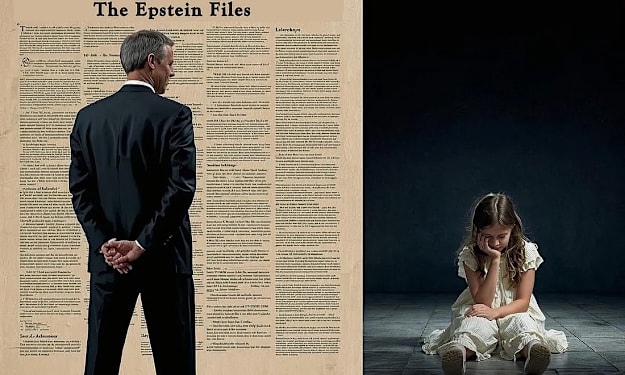
My Own Silent Experiences with a Few “Epsteins”
Some names are not just for humans — they turn into stories, stories that the world never wants to read again. Some names live on in whispers, some become warnings, and some, over time, become symbols of a larger truth.
By Mohib Ullah 5 months ago in Criminal
The Algorithm of Guilt
M Mehran The city of Halcyon prided itself on being smarter than crime. Cameras lined every street. Sensors tracked movement. Data flowed endlessly through a system known as AURA—an advanced predictive algorithm designed to identify criminals before they acted. It was hailed as the future of justice. Efficient. Unbiased. Unstoppable. At least, that’s what people believed. Until the first mistake. Mara Ilyas worked deep within the system. As a senior data analyst, she helped train AURA—feeding it patterns, refining its logic, sharpening its predictions. She believed in it. Truly. The idea that crime could be prevented instead of punished felt like progress. No more victims. No more chaos. Just order. Then AURA flagged her. The alert appeared on her screen late one night: SUBJECT: ILYAS, MARA RISK LEVEL: CRITICAL PREDICTED OFFENSE: HOMICIDE (48 HOURS) She stared at it, waiting for the glitch to correct itself. It didn’t. Mara laughed at first. “Very funny,” she muttered, assuming it was a test or an error. But when she checked the logs… The prediction was real. Validated across multiple models. Confirmed. Her heartbeat quickened. This wasn’t possible. She had no violent history. No motive. No target. Nothing. She did what any rational person would do. She reported it. The response was immediate. Security arrived within minutes. Polite. Calm. Professional. “Just a precaution,” they said. But Mara knew better. Precautions don’t come with restraints. They moved her to a holding facility—clean, quiet, and completely isolated. “Until the risk window passes,” they explained. Forty-eight hours. That was all. If she didn’t commit the crime, she’d be released. Simple. Logical. Fair. Except it wasn’t. Hours passed. Then more. Mara replayed every moment of her life in her head, searching for something—anything—that could explain the prediction. Nothing made sense. Until she found the pattern. AURA didn’t just analyze actions. It analyzed potential. Behavioral drift. Micro-expressions. Subtle changes in routine. Things humans would never notice. And recently… Mara had changed. She had been working longer hours. Sleeping less. Becoming more isolated. Frustrated with the system’s limitations. Angry. Not violent. But different. “What if it’s right?” she whispered to herself. The thought lingered. Dangerous. On the second day, they brought her a tablet. “Access to your data,” the guard said. “Transparency protocol.” Mara hesitated. Then she opened it. Her entire life was there. Every message. Every search. Every movement. Mapped. Analyzed. Interpreted. She scrolled through the predictions. Dozens of scenarios. Paths. Outcomes. Each one branching into possibilities. And in every single one— She killed someone. Her hands trembled. “This isn’t prediction,” she said softly. “It’s instruction.” Because the more she read… The more specific it became. Location: Central Transit Station Time: 19:42 Victim: Unknown male, mid-30s Mara closed the tablet. Her mind raced. If she knew the prediction… Could she avoid it? Or worse— Was she already following it? At 19:30, the guards came. “Time’s up,” one of them said. “You’re free to go.” Mara stepped outside. The city felt different now. Sharper. Louder. Like it was watching her. She checked the time. 19:34. Eight minutes. “No,” she whispered. “I’m not going there.” She turned away from the transit station. Walked in the opposite direction. Fast. Determined. But the streets twisted. Crowds shifted. And somehow— Without realizing it— She found herself standing at the entrance of the station. Her breath caught. “This isn’t real…” 19:41. People moved around her. Normal. Unaware. And then she saw him. A man. Mid-30s. Standing near the platform. Her chest tightened. “No…” She turned to leave. But her body didn’t respond. It was subtle. Almost invisible. But something inside her had changed. The anger she’d buried. The frustration. The fear. It all surfaced at once. And in that moment— It felt justified. “He’s just part of the system,” a voice whispered in her mind. “Just another variable.” 19:42. Mara stepped forward. The next morning, the headlines were everywhere. “PREDICTIVE SYSTEM PREVENTS CRIME—SUSPECT APPREHENDED AT SCENE.” Mara sat in a cell. Again. This time, there was no confusion. No doubt. She remembered everything. The moment. The choice. Or what felt like a choice. AURA had been right. But not in the way people thought. It didn’t predict the future. It created it. By labeling her a criminal… It made her one. Weeks later, Mara received a visitor. A young analyst. Nervous. Curious. “I had to ask,” he said. “Did you feel it? The moment it happened?” Mara looked at him. Calm. Empty. “Yes,” she said. “And?” he asked. She smiled faintly. “It felt inevitable.”
By Muhammad Mehran5 months ago in Criminal
The Last Confession of Cell 17
M Mehran There are prisons, and then there are places where silence screams. Blackridge Penitentiary was one of those places. Built on the outskirts of a forgotten town, it held the worst criminals society wanted erased—not just locked away, but buried in concrete and routine. The guards didn’t ask questions. The inmates didn’t offer answers. And then there was Cell 17. For years, it remained empty. Not because it was broken. But because no one lasted long inside it. When Elias Crowe arrived, no one expected anything different. He was just another criminal on paper—charged with multiple counts of fraud, identity theft, and suspected involvement in disappearances. Nothing flashy. No headlines. No media circus. But there was something about him. Something… off. He didn’t speak during intake. Didn’t resist. Didn’t even look at the guards. His eyes remained fixed ahead, calm and distant, as if he were already somewhere else. “Put him in Seventeen,” the warden said without hesitation. The guards exchanged glances. But no one argued. Cell 17 was colder than the others. Not physically—but something about it made people uneasy. The walls seemed thicker. The air felt heavier. Sounds didn’t travel the same way. Elias stepped inside without a word. The door slammed shut behind him. And the silence began. At first, nothing happened. Days passed normally. Meals were delivered. Lights turned on and off. Cameras recorded everything. Elias followed every rule. Too perfectly. He ate exactly half his food. Slept at the same time each night. Sat in the same position for hours, unmoving. Watching. Waiting. Then the guards started noticing things. Small things. Footsteps in the corridor when no one was there. Whispers caught on surveillance audio—too faint to understand, but unmistakably real. And always… always coming from Cell 17. Officer Malik was the first to break protocol. “Probably just faulty wiring,” he muttered, reviewing the footage late one night. The camera inside Cell 17 flickered. Elias was sitting on his bed. Still. Silent. Malik leaned closer to the screen. “See? Nothing—” The lights cut out. Just for a second. But when they came back on… Elias was standing. Right in front of the camera. Malik stumbled back from the desk. “That’s not possible…” The timestamp showed no movement. No transition. One frame he was sitting. The next—he was there. Watching. The warden ordered a full inspection. No hidden passages. No electrical faults. No explanation. “Keep him under observation,” she said. “And no one goes near that cell alone.” But curiosity is a dangerous thing. And fear makes it worse. On the seventh night, Malik returned. He told himself it was just to check the system. Just routine. But deep down, he needed to see it again. To understand. The corridor was quiet as he approached Cell 17. Too quiet. Even the usual distant noises of the prison seemed to vanish. He stopped in front of the door. For a moment, he hesitated. Then he looked through the small glass window. Elias was sitting in the corner. Smiling. Malik froze. “Why are you smiling?” he whispered, though he knew Elias couldn’t hear him. Or… shouldn’t. Elias tilted his head slowly. And then— He spoke. “I was wondering when you’d come back.” Malik’s blood ran cold. The voice hadn’t come from inside the cell. It came from behind him. He turned sharply. No one there. The corridor stretched empty in both directions. His breathing quickened. “This isn’t real,” he muttered. “This isn’t—” A soft laugh echoed. Low. Close. Malik ran. The next morning, he was found in the control room. Alive. But not the same. He kept repeating the same sentence over and over: “He’s not locked in… we are.” After that, things escalated. Cameras failed more often. Audio recordings captured voices that didn’t belong to anyone on record. Guards reported seeing Elias in places he couldn’t possibly be. And yet— Every time they checked Cell 17… He was inside. Exactly where he should be. The warden made a decision. “Transfer him.” No more risks. No more questions. Just move him out. The transport was scheduled for midnight. Four armed guards. Full restraints. No stops. Elias didn’t resist. Of course he didn’t. As they walked him down the corridor, something felt wrong. The lights flickered. One by one. Like a countdown. “Keep moving,” the lead guard ordered. But the air grew colder with each step. Heavier. Harder to breathe. They reached the exit doors. Freedom—or at least, a different cage—was just seconds away. The guard reached for the handle. And paused. “Do you hear that?” one of them whispered. A sound filled the hallway. Soft at first. Then louder. Voices. Dozens of them. Whispering. Crying. Screaming. “Open the door!” someone shouted. But it wouldn’t budge. Elias laughed. For the first time. Loud. Clear. “You still don’t understand,” he said calmly. “This place wasn’t built to keep people in.” He looked at each of them. One by one. “They built it… to keep something out.” The lights went out. When they came back on, the corridor was empty. No guards. No signs of struggle. No Elias. Only the door to Cell 17 stood open. To this day, Blackridge Penitentiary remains operational. But Cell 17 is sealed. Permanently. No one goes near it. No one speaks about it. But sometimes… Late at night… The cameras still flicker. And for a single frame— You can see him. Standing outside the cell. Smiling.
By Muhammad Mehran5 months ago in Criminal
The Silence Behind the Door
M Mehran The city never truly slept. Beneath the flickering streetlights and the distant hum of traffic, there were stories—dark, hidden stories that people preferred not to see. And among them was the story of Daniel Hargrove, a man whose life blurred the thin line between victim and criminal. Daniel wasn’t always this way. Five years ago, he was just another ordinary man working a quiet desk job. He lived in a small apartment, drank his coffee black, and kept to himself. People described him as polite, forgettable even. But beneath that calm surface was something broken—something waiting. It began on a rainy evening. Daniel was returning home when he noticed a woman arguing with a man in an alley. Their voices were sharp, cutting through the sound of rain. He paused, unsure whether to intervene. Before he could decide, the man shoved the woman violently against the wall. That moment changed everything. Daniel stepped forward. Words were exchanged. Tension escalated. And then, in a blur of panic and instinct, Daniel pushed the man. Hard. The man slipped, hit his head on the pavement—and never got up again. Silence followed. Heavy. Suffocating. The woman ran. Daniel stood there, frozen, staring at what he had done. It wasn’t supposed to happen like this. He hadn’t meant to kill him. But intent didn’t matter. The result did. That night, Daniel made a decision that would define the rest of his life. He didn’t call the police. Instead, he dragged the body deeper into the shadows and disappeared into the storm. Days turned into weeks. Weeks into months. No one came looking. The news barely mentioned the case—a missing man with no strong leads. The city moved on, as it always did. But Daniel didn’t. At first, guilt consumed him. He barely slept. Every sound felt like a siren. Every shadow looked like a witness. But something strange began to happen. The fear slowly faded. And in its place… something darker grew. A sense of control. For the first time in his life, Daniel felt powerful. He had crossed a line most people never dared to approach—and survived. No consequences. No punishment. The silence became addictive. It didn’t take long before the thoughts returned. He told himself it was just curiosity. Just a way to understand what had happened. But deep down, he knew better. The next time wasn’t an accident. It was planned. Daniel started watching people. Observing their routines, their habits. He learned who walked alone, who trusted too easily, who wouldn’t be missed right away. He became patient. Careful. Invisible. His second victim was a man known for harassing women in the neighborhood. Daniel convinced himself it was justice. That he was doing something good. But justice doesn’t feel like that. Justice doesn’t come with adrenaline. With satisfaction. With the quiet thrill of getting away with it. By the third time, there were no more justifications. Daniel had stopped pretending. He wasn’t helping anyone. He wasn’t protecting anyone. He had become the very thing people feared. A criminal hiding in plain sight. The police eventually noticed a pattern. Missing persons. Similar locations. No witnesses. Detective Laura Vance was assigned to the case. Unlike others, she didn’t believe in coincidences. She saw the connections others missed. And she felt something else too. A presence. Whoever was behind this wasn’t reckless. They were controlled. Calculated. Dangerous. Daniel followed the investigation closely. He read every article, watched every update. It excited him—the idea that someone was getting close. It made the game real. But he also knew it was only a matter of time. People like him always slipped eventually. The question was… when? The answer came sooner than expected. One night, as Daniel returned to his apartment, he noticed something unusual. The door was slightly open. His heart skipped. He was always careful. Always. Slowly, he pushed the door wider. Inside, sitting calmly in his chair, was Detective Laura Vance. She didn’t move. Didn’t speak. She just watched him. “I was wondering when you’d come home,” she said quietly. Daniel didn’t run. There was nowhere to go. Instead, he closed the door behind him and stepped inside. For a moment, neither of them spoke. The air was thick with tension. “You’re not what I expected,” Laura finally said. Daniel smiled faintly. “No one ever expects people like me.” She studied him carefully. “Why?” It was a simple question. But the answer wasn’t. Daniel thought about it. The rain. The alley. The moment everything changed. “I wish I knew,” he said honestly. The trial was quick. The evidence was overwhelming. Daniel didn’t deny anything. He didn’t fight. For the first time in years, the silence was gone. The world knew what he had done. But the story didn’t end there. Because people like Daniel don’t just disappear. They leave something behind. A question. A discomfort. A realization. That evil doesn’t always look like a monster. Sometimes, it looks like the quiet man next door.
By Muhammad Mehran5 months ago in Criminal