
Nobody Checked the Basement
The house had been sold twice, inspected three times, and lived in by two separate families. Nobody thought to look beneath the old wooden door in the corner of the laundry room. Until the day they did.
M Mehran
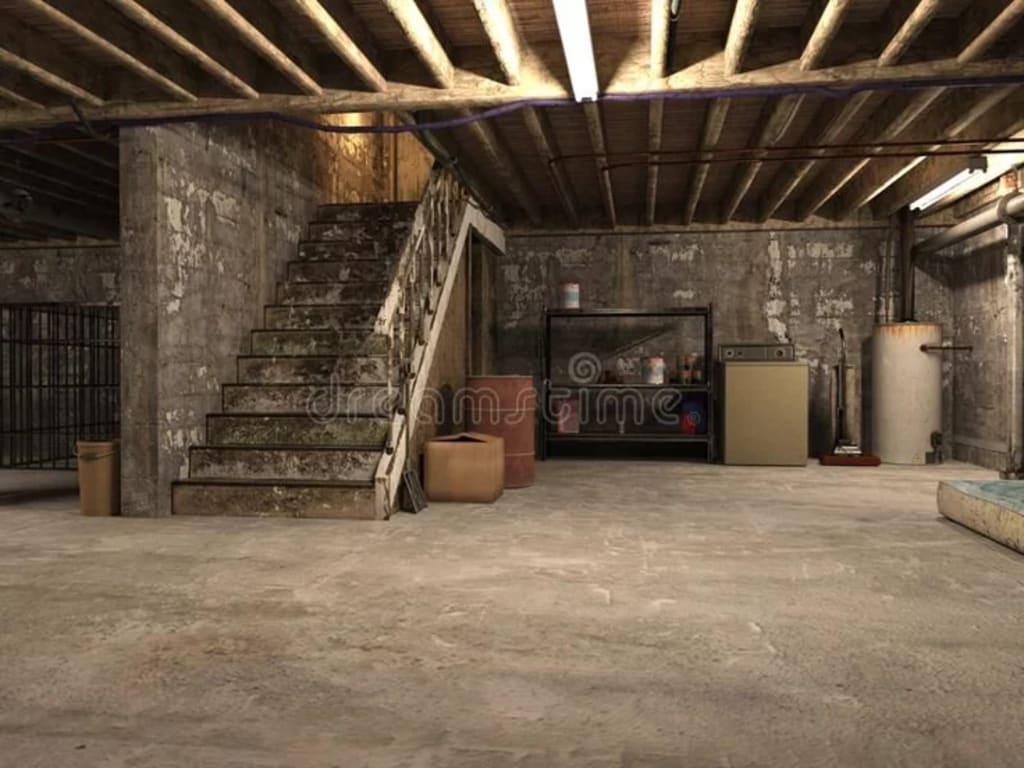
There are crimes that announce themselves — loud, sudden, impossible to ignore. And then there are the ones that hide in plain sight, tucked beneath floorboards and behind locked doors, patient and silent, waiting for the one person who will finally ask the question nobody else thought to ask. In the quiet suburb of Millhaven, Pennsylvania, that question came from an eight-year-old girl named Rosie. And the answer changed everything. The House on Clover Street The property at 18 Clover Street had a pleasant face. White siding, black shutters, a covered porch with two rocking chairs that the previous owners had left behind. It sat on a corner lot with a maple tree in the front yard that turned brilliant orange every October. The Delaney family — Joel, Karen, and their two children — moved in during the summer of 2021. They were the third family to own the house since its original owner, a man named Gerald Thorne, had sold it abruptly and relocated out of state in 2014. The home inspection before purchase had been thorough by standard measures. The roof, the plumbing, the electrical — all checked and documented. The basement had been noted as "unfinished, dry, structurally sound." The inspector had walked down the stairs, swept his flashlight across the concrete floor and exposed beams, noted the water heater and the furnace, and come back up. He had not opened the wooden door in the corner of the laundry room. It was padlocked. The listing agent had described it as a storage closet. Nobody had pressed further. The Question an Eight-Year-Old Asked Rosie Delaney was curious in the way that children are before the world teaches them to mind their own business. She had explored every corner of the new house within the first week — the attic crawlspace, the gap behind the water heater, the narrow passage between the garage wall and the fence. The locked basement door fascinated her precisely because it was locked. She asked her father about it repeatedly. Joel Delaney, preoccupied with the chaos of a new move, told her it was just storage, that the previous owners must have lost the key, that they would get around to it eventually. Eventually came on a rainy Saturday in October, when Joel finally cut the old padlock off with bolt cutters, more to satisfy his daughter's persistence than out of any real curiosity of his own. What was behind the door was not a storage closet. It was a room — roughly ten feet by twelve, with a ventilation grate in the ceiling and a concrete floor that had been painted gray. There was a fold-out cot, collapsed and pushed against one wall. A plastic shelving unit. A battery-powered lantern. And on the back wall, scratched into the painted concrete with what appeared to be a nail or a key, were a series of marks — the kind people make to count days. Joel Delaney took photographs and called the police. What Investigators Found The detective assigned to the Clover Street case was a 14-year veteran named Paul Okafor — experienced, unshockable, and methodical in a way that had served him well across hundreds of investigations. Even he described what followed as one of the most disturbing cases of his career. Gerald Thorne, the original owner, had purchased 18 Clover Street in 2009. Background checks at the time of purchase had returned clean — no criminal record, stable employment history as a long-haul truck driver, no red flags of any kind. Over the following five years, between 2009 and 2014, three individuals in the broader tri-county region had been reported missing. All three cases remained unsolved. Investigators at the time had found no physical evidence, no witnesses, and no credible leads. The concealed room changed everything. Forensic analysis of the space recovered DNA evidence, trace materials, and physical artifacts that connected the room to at least two of the three missing persons cases. The tally marks on the wall — investigators counted them carefully — numbered in the hundreds across what appeared to be multiple separate periods of occupation. Gerald Thorne was located in Oregon, where he had been living under a variation of his name for seven years. He had a job. Neighbors described him as quiet and polite. He was extradited to Pennsylvania in the spring of 2022. The Trial and Its Weight The prosecution's case was built on forensic evidence so extensive that defense attorneys struggled to mount any credible counter-narrative. Thorne maintained silence throughout most of the proceedings — not the silence of innocence but the silence of a man who had calculated, correctly, that anything he said would only deepen the case against him. He was convicted on multiple counts including kidnapping and unlawful imprisonment. Additional charges in connection with the missing persons cases remained active pending further forensic review at the time of his initial sentencing. He received 40 years in federal prison. The courtroom was packed on sentencing day. It was quiet in the way that rooms full of people are sometimes quiet — not empty, but heavy. The Systems That Failed What made the Clover Street case so deeply unsettling was not only what Gerald Thorne had done, but how comprehensively the systems around him had failed to see it. The house had changed hands twice without inspection teams opening that door. Three missing persons investigations had been conducted within miles of the property without connecting the geography. A background check had cleared a man who was, at the time of purchase, already engaged in criminal behavior. None of the systems designed to protect people had caught it. One child's curiosity had. Detective Okafor, in a statement released after the conviction, noted that the case had prompted his department to review protocols for missing persons investigations — specifically around the geographic mapping of unsolved cases in relation to properties with limited inspection histories. It was a procedural change. Small in language, significant in implication. What Rosie's Question Cost and Gave The Delaney family moved out of 18 Clover Street within two weeks of the discovery. They relocated to a different part of the state. Joel and Karen Delaney gave no media interviews. Rosie was eight years old when she first asked about the door. She was nine when she understood, in the partial way that children understand terrible things, what her persistence had uncovered. Her parents have said, carefully and without drama, that they hope she one day understands the significance of what she did — that her refusal to accept "it's just storage" as a final answer had given investigators evidence that years of professional inquiry had never surfaced. Sometimes the most important question is the simplest one. Why is that door locked? Why has nobody ever opened it? What is everyone so comfortable not knowing? The house at 18 Clover Street was demolished in 2023. A vacant lot sits there now, with a maple tree in the corner that still turns orange every October.
About the Creator
Enjoyed the story? Support the Creator.
Subscribe for free to receive all their stories in your feed.
Comments
There are no comments for this story
Be the first to respond and start the conversation.