Family
Cannibalism
15th century Europeans believed they had hit upon a miracle cure: a treatment for epilepsy, hemorrhage, bruising, nausea, and sincerely any different scientific ailment. This brown powder ought to be blended into drinks, made into salves or eaten straight up. It used to be acknowledged as mumia and made by using grinding up mummified human flesh.
By Abraham Adesanya3 years ago in Confessions
Unexpected Uncovering
Jenna and Alex had been together for years, their love seemingly unbreakable. They shared dreams, built a home, and forged a future together. But beneath the surface of their seemingly perfect relationship, lies and deceit lurked, waiting to be unearthed.
By Javiria khan3 years ago in Confessions
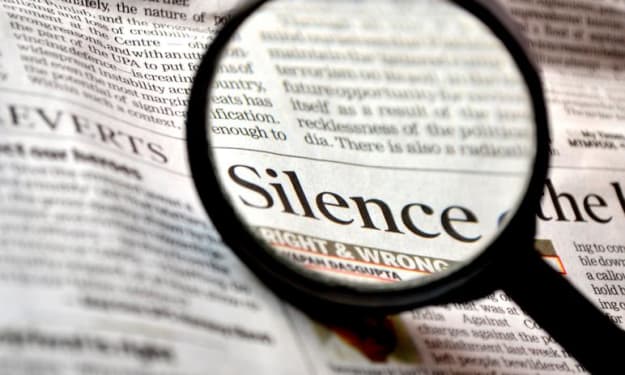
50 situations in life to maintain silence
The power of silence in life is a concept that emphasizes the significance and impact of silence in various aspects of our lives. While silence is often associated with the absence of sound, it encompasses a deeper meaning that extends beyond the mere absence of noise. Silence provides an opportunity for self-reflection and introspection. When we allow ourselves to be in silence, free from distractions, we can delve deep within ourselves, contemplate our thoughts, emotions, and experiences, and gain a clearer understanding of our own values, desires, and aspirations. It is in these moments of silence that we can truly listen to our inner voice and gain insights into our own lives. Maintaining silence can be a powerful tool in various situations. Here are 50 situations where maintaining silence may be beneficial: 1. During a heated argument, when emotions are running high. 2. When you are unsure about the accuracy of the information being discussed. 3. While listening to someone share their personal struggles or grief. 4. When someone needs time to process their own thoughts. 5. During a negotiation to carefully consider the other party's offer. 6. When you feel anger or frustration and need to calm yourself. 7. In a library or other quiet public spaces to respect others' need for silence. 8. While meditating or practicing mindfulness. 9. During a job interview, allowing the interviewer to lead the conversation. 10. When someone is venting and needs to express their feelings without interruption. 11. During a group brainstorming session to give others the opportunity to contribute. 12. When you are unsure of the appropriate response and need more time to think. 13. In a religious or sacred place to honor the atmosphere of reverence. 14. During a performance or presentation to create suspense or emphasis. 15. When someone is sharing a confidential or sensitive piece of information. 16. In a therapy session, allowing the therapist to guide the conversation. 17. When you want to avoid getting involved in gossip or negative discussions. 18. During a moment of silence to honor a person, event, or tragedy. 19. When someone is clearly in a state of deep concentration or focus. 20. In a courtroom, waiting for your attorney's guidance. 21. When you want to observe and learn from the behavior or actions of others. 22. During a group meeting to encourage others to voice their opinions first. 23. When someone is apologizing or expressing remorse. 24. In a classroom, allowing the teacher to maintain control and deliver instructions. 25. When someone is sharing their accomplishments and you want to give them the spotlight. 26. During a therapy session, allowing silence for introspection and self-reflection. 27. When someone is working through a complex problem or puzzle. 28. In a memorial service, respecting the solemnity of the occasion. 29. When someone is in deep thought or reflection. 30. In a hospital or medical setting, respecting patients' need for rest and quiet. 31. When someone is performing an intricate or delicate task that requires focus. 32. During a team-building activity that encourages reflection and individual contribution. 33. When someone is experiencing a panic attack or high anxiety and needs space. 34. During a nature walk or hike to appreciate the sounds of the environment. 35. In a museum or art gallery, allowing others to immerse themselves in the exhibits. 36. When you want to show respect for a person or their culture. 37. During a test or examination, maintaining the quiet atmosphere. 38. When someone is making an important decision and needs uninterrupted thought. 39. In a court of law, while the judge is speaking or giving instructions. 40. During a surprise event or moment, to heighten the element of surprise. 41. When someone is practicing a musical instrument or singing. 42. In a therapeutic group session, allowing silence for individual reflection. 43. When someone is performing a delicate or precise task that requires concentration. 44. During a religious ceremony or ritual, honoring the sacredness of the occasion. 45. When someone is expressing their vulnerability or insecurities. 46. In a support group setting, allowing silence for individual processing. 47. When someone is sharing a heartfelt story or experience. 48. During a guided meditation or relaxation session. 49. When someone is engaged in creative work or artistic expression. 50. In a sensitive or emotionally charged conversation, allowing space for understanding and empathy. Remember, maintaining silence doesn't mean disengaging entirely. It's important to note that the power of silence is context-dependent, and there are situations where speaking up and taking action is necessary. However, incorporating moments of silence into our lives can bring balance, introspection, and clarity, enabling us to navigate the world with greater wisdom and purpose.
By Shamreena3 years ago in Confessions
Can Relationship breaks work
t writing...Relationship breaks are a concept that has been around for many years, but their effectiveness is still a topic of much debate. A relationship break can be defined as a period of time when a couple decides to take some time apart from each other with the goal of improving their relationship. However, the question remains: can relationship breaks actually work?
By William3 years ago in Confessions
Clear as Christal
Imagine this: you’re a young dude who ends up getting a job at Bojangles in early 2016. One of the stern, but kind assistant managers who works there seems mean at first given how stern she is, but within six months, dozens of crazy coworkers and a million and one customers later, she calls you her son. I don’t have to imagine this because it actually happened. The son in the story is me and the mother is Christal Hylton, the mother who adopted me at work.
By Joe Patterson3 years ago in Confessions
INDIA
India, officially known as the Republic of India, is a country located in South Asia. It is the seventh largest country in the world by area and the second-most populous country, with over 1.3 billion people. India is bordered by Pakistan to the west, China and Nepal to the north, Bhutan to the northeast, and Bangladesh and Myanmar to the east. It is also surrounded by the Indian Ocean to the south, which plays a vital role in the country's economy.
By sakule abhi3 years ago in Confessions
Buried Truths
As the sun began its descent, casting an amber glow over the desolate landscape, Amelia stood before a dilapidated house nestled deep within the forest. The whispers of the wind seemed to beckon her closer, urging her to unearth the buried truths hidden within its decaying walls.
By John memon3 years ago in Confessions
The First Time That I Saw Her
The first time I saw her, I was sitting in the park, reading a book. She was walking her dog, and she stopped to let him sniff around. I couldn't help but stare at her. She was beautiful, with long, flowing hair and big, brown eyes. Her eyes were the most beautiful eyes I have ever seen. She was a natural beauty that is truly breathtaking. She smiled at me, and I felt my heart skip a beat.
By Prashant Shekhar3 years ago in Confessions
The Empathy Struggle: Navigating Love and Relationships as a Highly Empathic Person
Empathy is a wonderful trait that allows us to connect with others and understand their emotions. However, for highly empathic individuals, this gift can sometimes feel like a curse. The ability to sense and absorb the emotions of others can be overwhelming, leading to emotional overload and burnout. In this post, we'll explore some of the typical challenges that highly empathic beings face in everyday life and offer tips for navigating them.
By Misty Rothermund3 years ago in Confessions
Lost in the Shuffle
Written in 2019. I feel guilty I do not remember as much about my little sister Itzel’s childhood as I do our other sister, Chelsey. Maybe it is because her childhood is still ongoing or because I was lumped with Chelsey all the time, despite her only being five years older. All three of us are closer than a lot of sisters. I talk more about Chelsey; I share more with Chelsey. Of course, she is nearly sixteen and Itzel is eleven, while I am twenty-five. Chelsey and I remember the harsher moments of our childhoods, working hard to protect Itzel from such gruesome matters. It made us good sisters, it made us close, but it also tore me apart from Itzel.
By C.M. Vazquez3 years ago in Confessions
Advantages and disadvantages of reading books
ADVANTAGES: In today's fast-paced digital era, where technology dominates our lives and information is just a click away, the age-old tradition of reading books holds a special place. Reading books has been a cherished pastime for centuries, providing a gateway to knowledge, imagination, and personal growth. This essay explores the enduring magic of reading books and the numerous benefits it offers to individuals and society as a whole. 1. Expanding Horizons: Reading books opens up vast new worlds, both real and imaginary. It allows readers to explore different cultures, eras, and perspectives, expanding their horizons beyond their immediate surroundings. Through books, one can travel to far-off lands, experience diverse cultures, and gain a deeper understanding of the human condition. This exposure fosters empathy, broadens perspectives, and promotes tolerance and inclusivity in society. 2. Knowledge and Learning: Books serve as repositories of knowledge, offering valuable information on a wide range of subjects. Whether it's history, science, philosophy, or any other field, books provide an in-depth exploration of topics that can enrich our understanding of the world. Reading allows individuals to acquire new knowledge, stay informed, and continuously learn and grow intellectually. It empowers individuals to engage in critical thinking, question prevailing ideas, and form their own opinions. 3. Imagination and Creativity: Books have the power to ignite our imagination and transport us to magical realms. When we read, we create vivid mental images, bringing characters, places, and events to life within our minds. This imaginative process stimulates creativity and enhances problem-solving skills. As readers engage with the narrative, they exercise their imagination, develop their own interpretations, and envision alternative possibilities. This imaginative capacity nurtured through reading extends beyond books and finds application in various aspects of life. 4. Emotional and Psychological Well-being: Reading has a profound impact on our emotional and psychological well-being. It provides an escape from daily stress and offers solace and comfort. Books offer companionship, allowing individuals to relate to characters and find solace in their journeys, triumphs, and struggles. They can inspire, motivate, and offer valuable life lessons. Moreover, reading can improve cognitive functions, memory retention, and concentration, promoting mental sharpness and overall brain health. 5. Communication and Language Skills: Books are a treasure trove of language, expanding vocabulary, improving grammar, and enhancing communication skills. Reading exposes individuals to a variety of writing styles, enabling them to develop their own writing skills and express their thoughts more effectively. It enhances linguistic proficiency and cultivates a love for language, fostering better communication in both personal and professional realms. 6. Preserving Cultural Heritage: Books serve as guardians of our cultural heritage, capturing the essence of human experiences, histories, and traditions. They preserve knowledge for future generations, ensuring the continuity of our collective wisdom. By reading books from different time periods and cultures, we gain insights into our shared humanity and appreciate the diverse tapestry of human existence. In a world dominated by technology, the enduring magic of reading books remains unmatched. Books offer a gateway to knowledge, imagination, and personal growth. They expand our horizons, foster empathy, stimulate creativity, and promote emotional well-being. By nurturing critical thinking, communication skills, and cultural awareness, reading books strengthens individuals and builds a more enlightened and compassionate society. So, let us cherish the written word and continue to embrace the transformative power of reading. DISADVANTAGES:While reading books offers numerous benefits, there are also some potential disadvantages to consider. Here are a few: 1. Time-consuming: Reading books can be a time-consuming activity, especially if you are engrossed in a lengthy or complex book. This may be a disadvantage if you have limited time available or if you prioritize other activities. 2. Isolation: Reading is often a solitary activity, and spending too much time immersed in books can lead to social isolation. If you neglect social interactions and spend excessive time reading, it may impact your relationships and social life. 3. Sedentary lifestyle: Reading typically involves sitting or lying down for extended periods, which can contribute to a sedentary lifestyle. Lack of physical activity can have negative effects on your overall health, including weight gain, muscle weakness, and decreased cardiovascular fitness. 4. Eyestrain and fatigue: Reading for extended periods can strain your eyes and lead to eyestrain or fatigue. Staring at small text for long durations without taking breaks can cause discomfort, headaches, or even long-term vision problems. 5. Limited sensory experience: Books rely primarily on words to convey information, which limits the sensory experience compared to other forms of media like movies or interactive games. Books can provide vivid descriptions, but they often lack visual and auditory elements that can engage multiple senses simultaneously. 6. Access and cost: Not everyone has easy access to books due to various factors, such as geographical location, financial constraints, or limited library resources. Purchasing books can also be expensive, particularly for avid readers who want to build a personal library. 7. Information overload: In today's digital age, there is an overwhelming amount of information available online. Choosing which books to read and managing the vast array of options can be challenging, leading to decision fatigue or feeling overwhelmed by the choices. 8. Subjectivity and bias: Books, like any other form of media, can be subjective and reflect the author's biases, perspectives, or agendas. It's important to be aware of potential biases and critically analyze the information presented in books to form a well-rounded understanding. While these disadvantages exist, it's important to note that they are not inherent to reading itself but rather potential drawbacks that can arise depending on individual circumstances and habits. Moderation, balance, and conscious engagement with the content can help mitigate these disadvantages and ensure a more positive reading experience.
By Shamreena3 years ago in Confessions