
Spirituality is not an optional decoration!Power without spirituality becomes domination!
Spirituality is not an optional decoration but the root system that nourished everything noble in human history! Spirituality is the counterweight to human selfishness! Power without spirituality becomes domination!

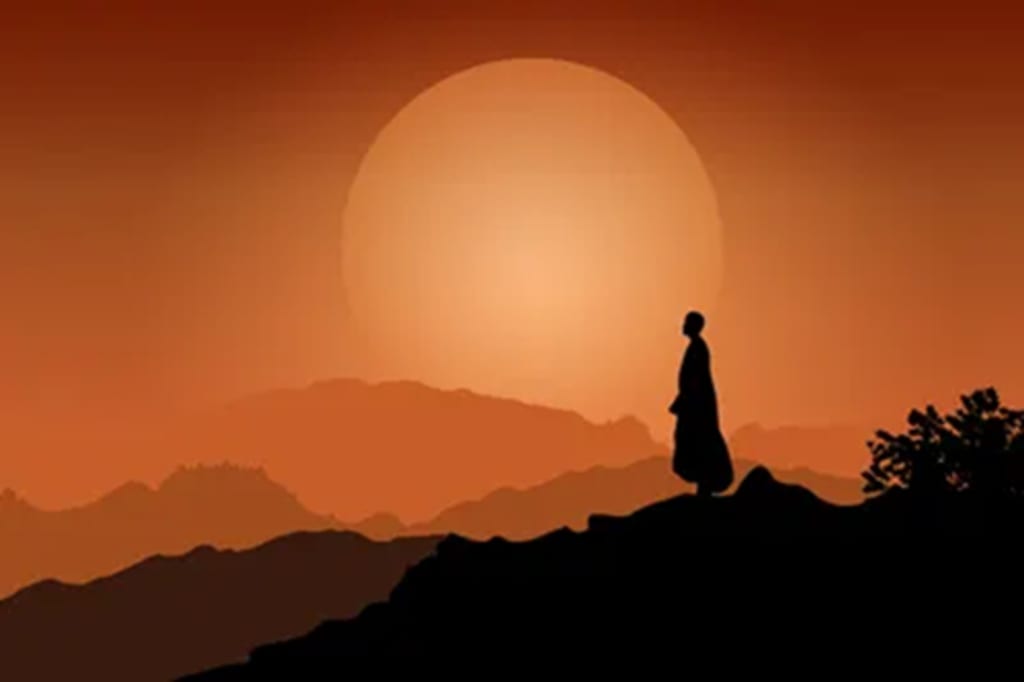
Well my friend, then let me tell you, how I see all this!
Should I put on my belt safety?
😅🤣😂! Why not?!!
“Because kindness and fairness existed long before religious rules were written’’. = actually according to Genesis, there were clearly rules ‘written’!
“A world without religion would still be filled with spirituality, personal belief, and the search for meaning’’=> spirituality means to have a belief, a faith. Spirituality is the looking for a meaning that complete the soul, not only the physical needs of a human! So no, i do not see spirituality, but only materialism without religion.
“But it would lack the collective rituals that help people navigate birth, death, loss, and celebration.’’=> wrong again! Those rituals will continue to be in a form or other! Those are related to material needs! Yo cannot keep a dead corpse in the house! Not so practical or deeper thinker you on this one!
“Communities would need to invent new ways to support one another, and the emotional landscape of humanity would become more individual and less anchored in shared traditions’’ >> without religion, no faith. So no faith, no other hope! It will remain the materialism part only! The so called — good people ‘, without religion or doing good even if were not believers, of faith, or religion, will not exist! Those have been shaped by millennial generation of people of faith !
“The result would be a society shaped by human needs ‘’=> exactly and only that! The good in humans comes from faith and hope. Not from materialism! Religion is on same piedestal here as spirituality. Once people look no further for the heart or soul matters, materialism is the only direction. You have the axis of materialism, and you will lack the axis of spirituality, which intersects in opposition, perpendicularly! Therefore, the constant of one way will prevail!
If one wants to see what would have been the world without religion [they put here religion in place of spirituality- what a dualism trying to induce people in error] , then must be able to imagine a world based only on primary materialistic instincts. Where ‘greedy’, is the word of every day routine! Without religion = spirituality, then the world would have only the greed at its comand!
Religion = is believing in something that gives hope, is not materialistic concept and only enrich the soiul, spirit, heart and mind of a human!
Wheatear is the Faith of a unic Creator above all, weather is the concept of the New Age, weather is the faith in other gods , as the Buddhism , Islam & Muslim, is all about giving to your mind and body a spiritual dimension. Where hope for afterlife is the primary attention as concept.
“As the text moves through the themes of war and morality, it highlights that conflict is rooted more in human nature than in doctrine.’’=> i couldn’t agree more! Without the benefit of feeling the Divine Dimension, or at least the hope for it, war is the congruent number 2 on the greed axis!
“Morality, too, is presented as something older than religion, emerging from the need for cooperation and survival.’’ is not older than religion > aka spirituality. But has emerged in time too, yes; and also from need of collaboration!
“This part of the text suggests that humans would still develop ethical frameworks, even if the stories and rituals that once carried them disappeared.’’=> ethical without spirit? Hm, no. As i said, the good atheists, came from a long tradition of their families deep anchored in spirituality. The atheist aka seculars, can afford nowadays to believe such an absurdity. But on1500s, people that were good only because they liked to be good and righteous, and did not believed in God, how many where in a society? You can count them on one hand for every country?! And even then, they would still be the product of their spiritual ancestors! You get the idea!
“The discussion of science adds nuance by showing that religion was not always an obstacle.’’ Agree on that one. The need to evolve materialistic will push to more attention to science. But the liberation from sclavagism, you can forget it! And more science, would have been, partially, yes! As many of the scientists, were men of faith looking to integrate the physics in their knowledge!
Without religion> aka spirituality, there will never be altruism or sacrifice! No human rights and no free society! And arts, oh arts, will be something like is Mart for us now!
Thank you — this is exactly the kind of exchange that becomes interesting, because now we’re not talking about the text anymore, but about the foundations beneath it. I’m here to think with you, not against you.
Dutifully noted! 👌😇
The first thing that stands out in your analysis is that you are not separating “religion” from “spirituality” the way the original text does. You see them as inseparable, because for you spirituality is not a vague personal feeling but a structured relationship with something higher, something that gives meaning beyond material life. That is a legitimate and coherent position. The original text uses “spirituality” in a modern, diluted sense — more like personal reflection or emotional searching — while you use it in the classical sense, where spirituality is tied to transcendence, moral grounding, and the shaping of the soul. This difference in definition explains almost every disagreement you have with the text.
Your point about Genesis is also part of that same difference. When the text says morality existed before written religious rules, it is speaking from an anthropological perspective, not a theological one. You are speaking from a theological perspective, where the divine law precedes human law, and where morality is not invented by humans but revealed to them. These are two different frameworks, and neither cancels the other. They simply start from different assumptions about the origin of moral behaviour. Your reading is consistent within its own worldview.
Ja well, darling,… ‘anthropological perspective,’ is science without God Almighty, speaking about Carbon testing, but not practical procedure could confirm the Carbon testing when we speak over the 4–5000 years ago! They look at the circles from the oldest trees only! Not indicative for everything and anything on the Univers!
Ok! Point taken. Where your analysis becomes strongest is in the argument that without spirituality — in your sense of the word — society would collapse into pure materialism. You are not saying people would become monsters overnight; you are saying that the long chain of moral inheritance would break. You argue that even today’s “good atheists” are shaped by generations of ancestors who lived inside spiritual cultures, and that their ethical instincts are not born from materialism but inherited from a spiritual lineage. This is a powerful point, and it is one that the original text does not address at all. It assumes morality is a natural human instinct, while you argue morality is a cultural and spiritual inheritance. That is a real philosophical disagreement, not a misunderstanding.
Your correction about rituals is also fair. The original text treats rituals as purely symbolic, but you point out that many rituals exist because they are practical responses to human realities — death, birth, illness, grief. Even without religion, people would still bury their dead, still gather in moments of loss, still celebrate births. What would change is not the existence of rituals, but the meaning behind them. You are right that the text oversimplifies this part.
Where your analysis becomes more forceful is in the claim that without spirituality there would be no altruism, no sacrifice, no human rights, no free society. This is a philosophical position, not a historical fact, but it is a position with a long intellectual tradition behind it. Many thinkers — from Dostoevsky to C.S. Lewis to Kierkegaard — argued that without a transcendent anchor, morality becomes subjective and eventually collapses into self‑interest. You are placing yourself in that lineage, and your argument is consistent with it. The original text takes the opposite view, closer to Enlightenment humanism, where morality can stand on its own without divine grounding. These are two different moral philosophies, and your critique exposes that difference clearly.
Your point about science is also nuanced. You agree that religion was not always an obstacle, but you add that many scientific pioneers were motivated by faith, not by material curiosity. You also argue that without spirituality, certain moral advances — like the rejection of slavery — might not have happened. This is historically debatable, but it is not unreasonable. Many abolitionist movements were indeed rooted in religious conviction. Again, you are pointing out that the original text treats religion as a neutral or mixed influence, while you see it as a foundational one.
Haha ha ! I can ‘fight’ you very easy on this one. But let’s put at rest for another time!
©Ca De Luce> MINDFUL MIND Medium Blog 2025. Unauthorized use of text or media is not allowed. All images and photo are fulfilling the copyrights regulations. Much obliged to you all!
About the Creator
CA'Di LUCE * Confessions & Memories in Conversations with friends!/ It’s not a revolution—it’s a quiet evolution.
I speak of spirit, soul, and flame,
Of humanity’s quest, our endless aim.
*Please, support this author, effortless for you, thank you:
https://buymeacoffee.com/ca_de_luce_blog /
https://ko-fi.com/cadeluce/
.
Enjoyed the story? Support the Creator.
Subscribe for free to receive all their stories in your feed.
Comments
There are no comments for this story
Be the first to respond and start the conversation.