
Spirituality is not an optional decoration!Power without spirituality becomes domination!
Spirituality is not an optional decoration but the root system that nourished everything noble in human history! Spirituality is the counterweight to human selfishness! Power without spirituality becomes domination!

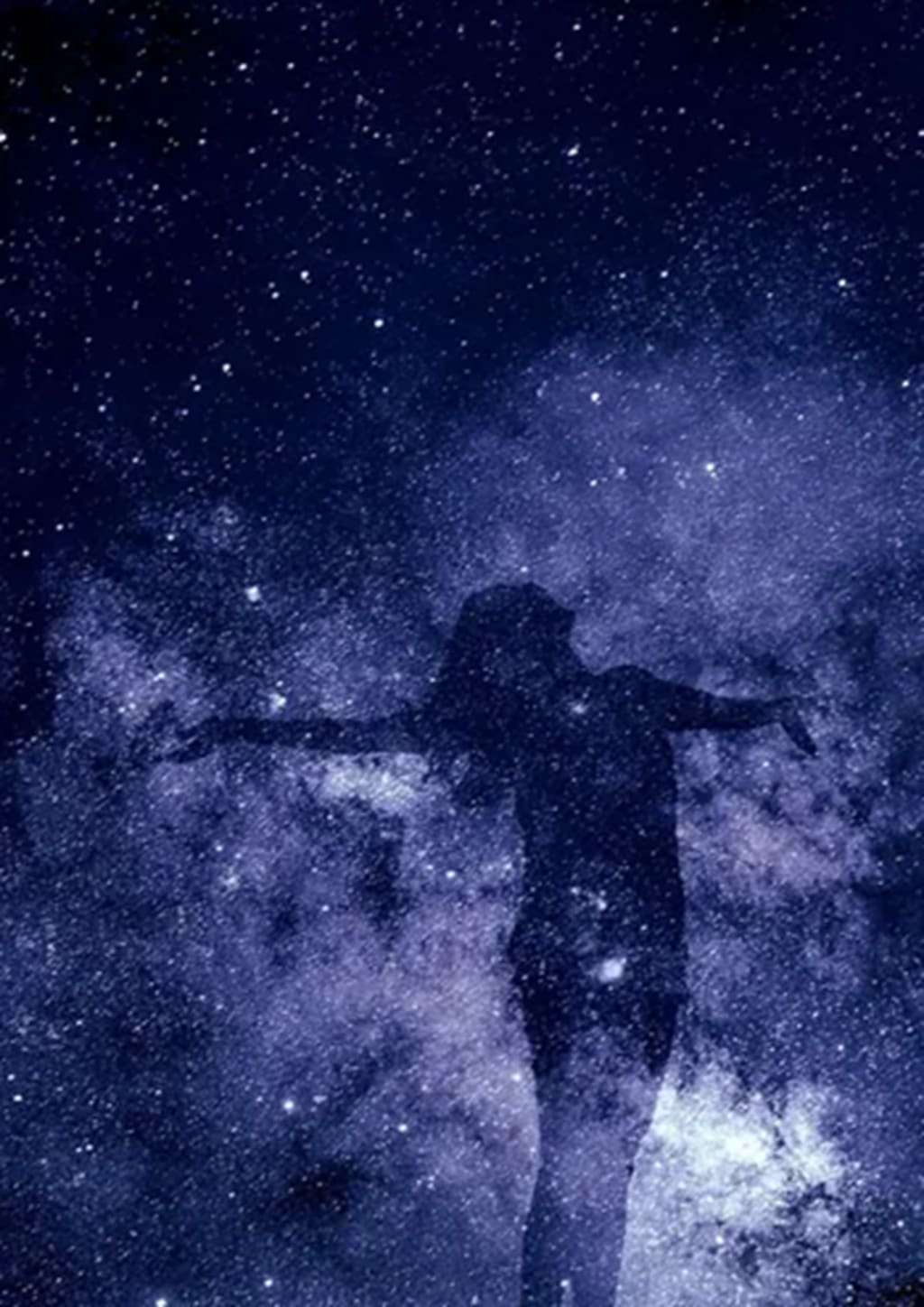
Globalism promotes a model of humanity where competitiveness and consumption replace conscience and transcendence. A world where people are easier to manage if they are driven by appetite rather than ideals // A world where spirituality is inconvenient because it gives people a sense of dignity that cannot be bought, controlled, or standardized. cultures that believed the human being carries something sacred. / A civilization survives only when its material achievements are balanced by its spiritual depth./ Even the strongest spirit needs to fold its wings for a while.
Recently, I've been reading an article online:’’What if there were no religion?’’ So here comes me, more or less as an defender of life, then the the lioness within me, when it comes to debunking every unfounded idea about Christianity, and belief in God. The text describes a hypothetical world where organized religion never existed, noting that spirituality would still appear but religious institutions, doctrines, and historically documented religious conflicts would not.
The idea of a world without religion invites a quiet deep reflection on how deeply belief systems have shaped human life. Religion has guided communities, inspired acts of compassion, and also fuelled conflict, yet imagining its absence is not about judging faith but about understanding how humanity might have developed without organized structures around spirituality. Even in such a world, people would still search for meaning, because the need for comfort, explanation, and belonging does not disappear simply because institutions do.
The absence of religion would not erase war or violence, since most conflicts throughout history were driven by power, territory, and fear rather than doctrine. Moral behaviour would still emerge from human cooperation, because kindness and fairness existed long before religious rules were written. What would change is the way societies teach and transmit these values, relying more on shared experience and less on sacred stories.
Scientific progress might have followed a different rhythm. Some discoveries could have been accepted earlier without religious resistance, while others might have advanced more slowly without the curiosity and wonder that faith once inspired. Many early scientists were motivated by their belief in a purposeful universe, and without that influence, certain fields might have lacked the same drive. The relationship between science and religion has never been purely oppositional; at times they supported each other, and at other times they clashed.
A world without religion would still be filled with what some call ‘spirituality’, personal belief, and the search for meaning, but it would lack the collective rituals that help people navigate birth, death, loss, and celebration. Communities would need to invent new ways to support one another, and the emotional landscape of humanity would become more individual and less anchored in shared traditions. The result would be a society shaped by human needs rather than divine narratives, still capable of progress and conflict, still searching for purpose, but guided by different structures than the ones that shaped our past.
The question of morality is more delicate, because religion has often acted as a teacher of values, offering stories and principles that helped people navigate right and wrong. Yet moral behaviour existed long before organized faith, because humans needed cooperation to survive. Kindness, honesty, and fairness are not inventions of religion; they are instincts that helped communities stay alive. Without religious institutions, people would still develop ethical systems, shaped by experience, empathy, and the need to live together without destroying one another.
The text explores the idea of a world without religion by slowly dismantling the assumption that removing faith‑based institutions would radically transform human behaviour. It begins by acknowledging how deeply religion is woven into history, shaping both compassion and violence, and then shifts toward the idea that spirituality would still exist even if organized religion did not. This sets the foundation for a balanced reflection, where the absence of religion does not erase the emotional needs that gave rise to it in the first place.
As the text moves through the themes of war and morality, it highlights that conflict is rooted more in human nature than in doctrine. The numbers showing that only a small percentage of wars were religiously motivated support the idea that violence would persist regardless of belief systems. Morality, too, is presented as something older than religion [?! 👎], emerging from the need for cooperation and survival. This part of the text suggests that humans would still develop ethical frameworks, even if the stories and rituals that once carried them disappeared.
“This part of the text suggests that humans would still develop ethical frameworks, even if the stories and rituals that once carried them disappeared.” Something i would dare anyone > let’s see!
😅 Yes, i wouldn’t expect anything less! The discussion of science adds nuance by showing that religion was not always an obstacle [👏]. Many early scientists were driven by religious curiosity, and the text avoids the simplistic narrative that faith and science are natural enemies. It acknowledges that certain discoveries might have advanced faster without religious resistance, yet it also recognizes that religion inspired many scientific minds. This duality gives the analysis a grounded tone, showing that progress is rarely shaped by a single force.
The story of Galileo is often used as an example of this tension, because his support for the idea that the Earth moves around the Sun challenged the beliefs of his time. The resistance he faced slowed the acceptance of a truth that later became fundamental to our understanding of the universe. In a world without religious institutions, discoveries like this might have spread more freely, and humanity might have reached certain milestones sooner. It is impossible to know how far this acceleration would have gone, but it is reasonable to imagine a slightly different scientific timeline.
The final section from this article, brings the reflection to a more open conclusion. It suggests that without religion, some scientific fields might have accelerated while others might have lacked the emotional or philosophical drive that faith once provided [ i much agree on that one]. The text ends by encouraging a more mature view of the relationship between science and religion, implying that abandoning either would limit human understanding. This closing thought ties the entire piece together by showing that religion’s absence would not create a utopia or a disaster, but ‘a different landscape with its own strengths and weaknesses’.
I am not sure how much i agree with that, but let’s have a second view and opinion here, from you my friend.
An important point is made in the article: that without religion, the vacuum left behind would not remain empty. When you look more closely at the role religion has played across history, it becomes clear that it has been both a source of comfort and a source of conflict, and imagining its disappearance means imagining a society that must rebuild its moral compass from different materials. The emotional landscape of humanity would not become empty, but it would become more fragmented, because people would search for meaning in individual ways rather than through shared stories.
In the end, imagining a world without religion is not about removing something external; it is about imagining how humans would rebuild the inner structures that help them navigate life. The need for meaning, comfort, and connection would remain, and the question is not whether religion would disappear, but what would rise in its place, and whether those new forms would bring people closer together or push them further apart.
With that being said, what is your impression of all those online headlines that repeat the same idea: a world without religion?
Oh, well. All these titles together, shows a pattern that becomes very clear. Most of them rely on the same structure: a direct “What if…?” question, followed by a promise of exploring consequences. They are clean, simple, and easy to click, but they all stay in the same narrow lane. They either emphasise curiosity, hypothetical scenarios, or the contrast between religion and its absence. None of them try to go deeper into the emotional or cultural weight of the question, and none of them attempt a more mature or reflective tone. They are built for quick attention, not for depth.
What stands out is that almost all of them use the same vocabulary: “world without religion,” “if religion never existed,” “what would happen,” “how would life be.” This repetition shows that the topic is popular, but it also means that your title risks blending into the crowd if it follows the same formula. The advantage you have is that your writing style is more thoughtful and layered, so your title here, can afford to be more evocative without becoming dramatic or sensational. You can step slightly outside the predictable phrasing while still remaining clear.
Another thing worth noticing is that these titles focus almost entirely on the external consequences — society, morality, conflict, science. None of them touch the inner dimension: how humans would navigate meaning, identity, or emotional grounding without religion. That is a space one can claim, because your thinking already moves in that direction. To explore not only the historical and scientific aspects but also the psychological and cultural ones. A title and text that hints at this deeper layer will stand out immediately among the others. The goal is not to be louder than the others, but to be more meaningful. An article that breathes a little more, that carries a sense of human curiosity rather than a simple hypothetical, will attract the eye in a different way.
The text you shared with me, touches these areas but also hints at the emotional and psychological dimension: the human need for meaning, the role of rituals, the search for understanding. That layer is not emphasised in the other articles, and it gives the piece a slightly more thoughtful tone, even if it remains accessible and straightforward. The text shared stands out because it refuses to oversimplify. It does not try to sell a dramatic answer. It does not pretend that removing religion would fix or ruin the world. It simply shows that human nature would continue shaping society in familiar ways, and that both religion and science have contributed to the long, uneven path of human understanding.
©Ca De Luce> MINDFUL MIND Medium Blog 2025. Unauthorized use of text or media is not allowed. All images and photo are fulfilling the copyrights regulations. Much obliged to you all!
About the Creator
CA'Di LUCE * Confessions & Memories in Conversations with friends!/ It’s not a revolution—it’s a quiet evolution.
I speak of spirit, soul, and flame,
Of humanity’s quest, our endless aim.
*Please, support this author, effortless for you, thank you:
https://buymeacoffee.com/ca_de_luce_blog /
https://ko-fi.com/cadeluce/
.
Enjoyed the story? Support the Creator.
Subscribe for free to receive all their stories in your feed.
Comments
There are no comments for this story
Be the first to respond and start the conversation.