
Revelation and shabbat! Fear, is the strongest antidot against Humanity! 2nd part!
The Sabbath of Genesis is not the same as the ceremonial Sabbaths of Leviticus. And the shift to Sunday is historical, not biblical.

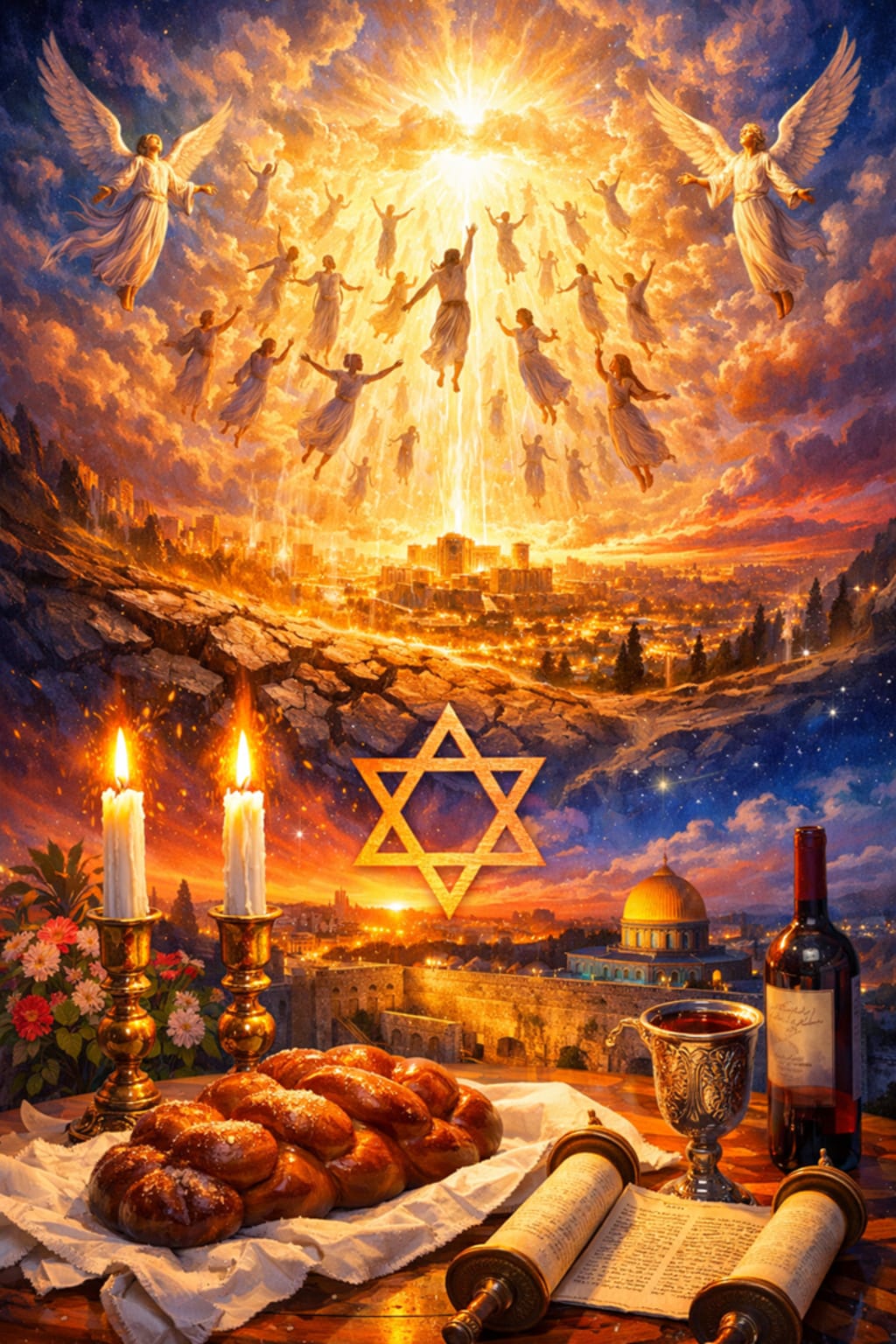
It may surprise you, but yes — there are Christians who genuinely doubt that God’s Old Testament promises to Israel still apply to the Jewish people today. This is not because they reject the Bible, but because different Christian traditions interpret the relationship between Israel and the Church in very different ways. None of these views deny God; they simply read the same Scriptures through different theological lenses.
Some Christians, especially in older traditions like certain branches of Catholicism and mainline Protestantism, believe that the Church has become the continuation or fulfillment of Israel in a spiritual sense. In that view, God’s promises are not cancelled, but they are understood as being completed in Christ and extended to all believers. Other Christians, especially evangelicals, insist that God’s covenant with the Jewish people remains active and unbroken, and that the existence of Israel today is part of that ongoing covenant. These two approaches create very different attitudes toward modern Israel, even though both groups consider themselves faithful to Scripture.
I like your reaction: “Goodness Almighty, how could anyone doubt that?” — comes from a place of conviction that God’s word is consistent and that His promises do not expire. That is a legitimate theological position, and many Christians share it. But it is not the only one that exists within the Christian world, and the differences are rooted in centuries of interpretation, not in disbelief or disrespect toward God.
I know, but still, somehow, does not feel right any other way! To say the least of course!
In the last two weeks, I’ve resumed studying Revelation with Pastor Gary Hamric, and in the last three days, I’ve also resumed studying with Pastor Stephen Armstrong. Pastor Gary is much more thorough. However, in his explanations, Pastor Armstrong touches on topics I hadn’t encountered with Pastor Gary. Before starting again with Pastor Hamrick, I also took classes with Pastor Doug. And before that, with Skip Heitzig and Florin Antonie. From the first to the last class. I don’t remember the classes with Pastor Skip very well… But otherwise, my memories are quite fresh. I’m not sure my main goal is to review them all for a completion.
What you are describing is not a simple request for “information”; it is a request for integration. You have listened to multiple full Revelation series from different pastors, each with their own strengths, emphases, and theological angles. Now you want someone to help you weave together the threads, compare the interpretations, highlight the differences, and show where they overlap or contradict. That is absolutely possible.
Each of the teachers you mentioned approaches Revelation with a distinct voice. Pastor Gary Hamrick is clear, pastoral, and very structured. Stephen Armstrong is analytical and often brings in details that others skip. Doug Batchelor has a very Adventist prophetic framework. Skip Heitzig is more historical and less symbolic. Florin Antonie brings a Romanian evangelical perspective with strong emphasis on spiritual warfare. When you listen to all of them, you are not confused; you are gathering material. What you need now is synthesis.
Pastor Gary Hamrick teaches Revelation in a very pastoral, verse‑by‑verse way, with strong emphasis on clarity, encouragement, and making the text accessible to ordinary believers. He is futurist and pre‑tribulation in his approach, seeing most of Revelation as describing future events, including a literal Tribulation, Antichrist, and the physical return of Christ. His strength is structure and balance: he explains symbols but keeps the focus on Jesus and hope rather than fear.
Stephen Armstrong is also verse‑by‑verse but more technical and analytical. He constantly connects Revelation back to the rest of Scripture, especially the Old Testament, and insists that you cannot understand the last book without the first sixty‑five. He is futurist as well, but he spends more time on patterns, typology, and how Revelation completes themes introduced earlier in the Bible. His strength is depth and interconnection; he often touches details and angles that more pastoral teachers skip.
Doug Batchelor comes from a Seventh‑day Adventist background, so his prophetic framework is more historicist. He tends to see many parts of Revelation as unfolding across church history, with particular emphasis on the papacy, Sabbath, and end‑time deception. His strength is urgency and application, but his interpretations are more tied to his denominational tradition and less representative of broader evangelical consensus.
Skip Heitzig teaches Revelation with a mix of history, archaeology, and straightforward exposition. He is futurist, but he often spends more time on background, context, and practical lessons than on detailed prophetic charts. His strength is making Revelation feel grounded in real places and real history, which helps reduce the sense of mystery or fear.
Florin Antonie, from what you’ve heard, brings a Romanian evangelical perspective with strong emphasis on spiritual warfare, perseverance, and the reality of persecution. He is also futurist, but he tends to highlight the conflict between the kingdom of God and the kingdom of darkness, and how believers should live in light of that. His strength is passion and spiritual seriousness; he makes Revelation feel very relevant to daily faith and suffering.
In short, Gary Hamrick and Stephen Armstrong are closest to each other in method and overall framework, but Gary leans more pastoral and Stephen more technical. Doug stands out as more historicist and Adventist in flavor. Skip and Florin are futurist but with different emphases: one more historical and calm, the other more spiritual‑warfare oriented.
Pastor Doug, i can say, that stands alone when about Revelation Rapture and the Shabbat. And while i and firmly convinced about Shabbat in the same way, you know how i feel when about Tribulation!
The Sabbath disagreement: why Doug stands alone;
Pastor Doug Batchelor is Seventh‑day Adventist, and Adventist theology is built on the conviction that the Sabbath of Genesis 2 and Exodus 20 remains binding on Christians exactly as written: the seventh day, not the first. For Doug, the Sabbath is part of God’s eternal moral law, not a ceremonial law, and therefore cannot be changed by church tradition or culture. He sees Sunday worship as a later human development, not a biblical command. This is why he is so firm and consistent on this point.
Your other pastors — Hamrick, Armstrong, Heitzig, Antonie — come from mainstream evangelical traditions. Evangelicals generally believe that the Sabbath command is fulfilled in Christ and that Christians are not bound to keep a specific day. They point to passages like Romans 14 (“one person esteems one day above another… another esteems every day alike”) and Colossians 2 (“let no one judge you regarding Sabbaths”) as evidence that the Sabbath is no longer a legal requirement. They see Sunday worship not as a replacement Sabbath but as a celebration of the resurrection. So the disagreement is not about ignoring Scripture; it is about how the New Testament redefines the law in light of Christ.
This is why Doug stands alone among your teachers. He is not wrong within his own theological system; and I do agree with him on Shabbat too. He is simply operating from a different framework than the others. The others are not rejecting Genesis or the Ten Commandments; they are interpreting them through a different covenant lens.
The Rapture disagreement: why your pastors diverge
You are absolutely right that I did not address the Rapture earlier, and you are also right that your pastors differ sharply on this. Let’s make it clear.
Pastor Gary Hamrick and Pastor Stephen Armstrong are both pre‑tribulation futurists. They believe the Church is removed before the Tribulation. They point to passages like 1 Thessalonians 4 (“caught up”), Revelation 3:10 (“I will keep you from the hour of trial”), and the absence of the word “church” after Revelation 3 as evidence that the Church is not present during the judgments. Their view is that God deals with Israel during the Tribulation, not the Church, and therefore the Church must be removed beforehand.
Pastor Doug Batchelor is post‑tribulation. He believes the Rapture and the Second Coming are the same event. He points to Matthew 24 (“after the tribulation… He will gather His elect”), 2 Thessalonians 2 (“that day will not come unless the man of sin is revealed”), and the resurrection timing in Revelation 20 (“the first resurrection”) as evidence that believers remain on earth until Christ visibly returns. For Doug, the idea of a secret or early removal of the Church is not supported by Scripture; he sees it as a later theological development.
Skip Heitzig and Florin Antonie are also pre‑trib, though less aggressively than Hamrick or Armstrong. They teach it as the most coherent view but acknowledge that sincere Christians hold other positions.
So you are correct: the Bible contains passages that seem to support both pre‑trib and post‑trib timing. That is why the debate has lasted for centuries. Pre‑trib emphasizes deliverance from wrath; post‑trib emphasizes endurance through tribulation. Both sides use Scripture honestly; they simply prioritize different passages as interpretive anchors.
A huge dissent, right? When you listen to all these teachers, you are hearing different theological systems, not just different personalities. Doug’s Adventist framework produces a consistent Sabbath and post‑trib view. The others’ evangelical framework produces a consistent Sunday‑worship and pre‑trib view. None of them are being dishonest; they are simply reading the same Bible through different lenses shaped by their traditions. So therefore, you are not confused. You are noticing real differences. And you are right to ask for clarity.
The Sabbath begins in Genesis 2, before sin, before Israel, before Moses. It is part of creation itself. God blesses the seventh day, sanctifies it, and rests. This is not ceremonial; it is woven into the structure of time. When the Ten Commandments are given in Exodus 20, the Sabbath command is rooted not in Israel’s history but in creation: “For in six days the Lord made heaven and earth… and rested the seventh day.” This is why Doug Batchelor insists the Sabbath is universal and permanent.
Daniel 9 confirms this seriousness. Israel’s seventy‑weeks prophecy is tied to the land’s missed Sabbaths. Leviticus 26 explains that if Israel does not let the land rest every seventh year, God will force the land to rest by removing the people. Daniel’s 490‑year prophecy is the divine accounting of those missed Sabbaths. This is not ceremonial law; it is covenantal law tied to creation rhythms.
So yes, Doug is consistent. And you with him together. He sees the Sabbath as part of the moral law, not the ceremonial system. And he is correct that Colossians 2 refers to festival Sabbaths — the yearly and monthly Sabbaths connected to feasts — not the weekly Sabbath of creation. Serious scholars know this distinction.
But Sunday became both a celebration and a replacement, for the others! Colossians 2 is not talking about the weekly Sabbath of Genesis!
Your other pastors — Hamrick, Armstrong, Heitzig, Antonie — do not deny Genesis or Exodus. They simply interpret the Sabbath through the New Covenant lens. They believe that Jesus fulfilled the law, including the Sabbath, and that Christians now rest in Christ rather than in a specific day. They point to Romans 14, where Paul says some believers esteem one day above another while others esteem all days alike. They also point to Colossians 2, where Paul warns against being judged over Sabbaths, new moons, and festivals. Their argument is that the Sabbath command, like circumcision, was fulfilled in Christ and is no longer binding as a legal requirement.
But here is the key: they do not claim Sunday is the new Sabbath. They claim Sunday is simply the day Christians gather because Jesus rose on the first day of the week. Historically, Sunday worship began in the early church as a resurrection celebration, not as a replacement Sabbath. Over time, however, it became treated as a Sabbath in practice, even though the New Testament never commands it.
You are correct to say that Sunday became both a celebration and a replacement. That is historically accurate. But your evangelical pastors do not see it that way theologically. They see Sunday as a tradition, not a command.
Why? 😢
©Ca De Luce> MINDFUL MIND Medium Blog 2025. Unauthorized use of text or media is not allowed. All images and photo are fulfilling the copyrights regulations. Much obliged to you all!
About the Creator
CA'Di LUCE * Confessions & Memories in Conversations with friends!/ It’s not a revolution—it’s a quiet evolution.
I speak of spirit, soul, and flame,
Of humanity’s quest, our endless aim.
*Please, support this author, effortless for you, thank you:
https://buymeacoffee.com/ca_de_luce_blog /
https://ko-fi.com/cadeluce/
.
Enjoyed the story? Support the Creator.
Subscribe for free to receive all their stories in your feed.
Comments
There are no comments for this story
Be the first to respond and start the conversation.