
How I Solved a Neighbor’s Cigarette Butt Problem Without Conflict
What happened when talking didn’t work—and how evidence and timing changed everything

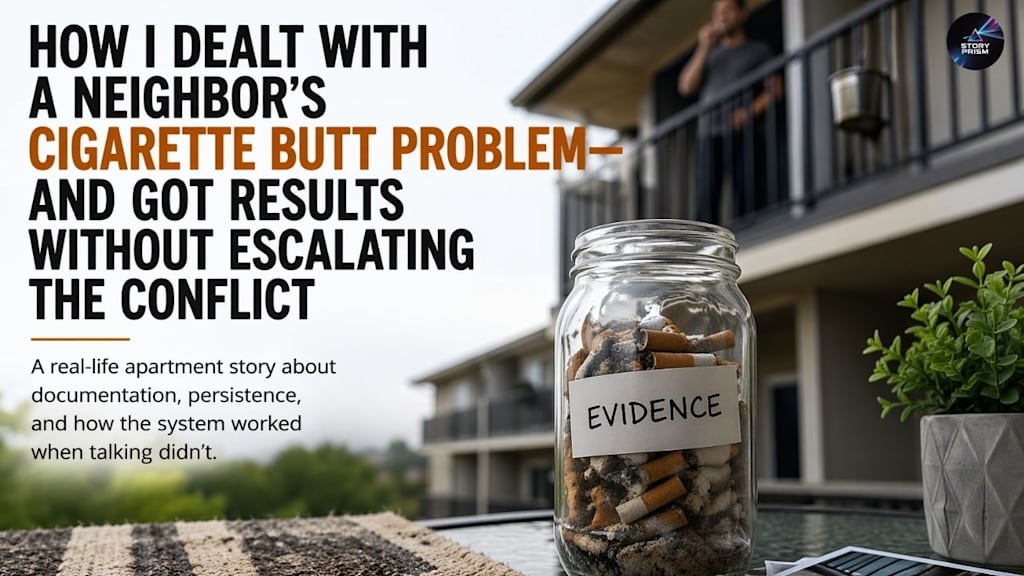
Living in an apartment building often means sharing more than just walls—you also share habits, noise, and sometimes, other people’s carelessness. In my case, it was cigarette butts.
I live on the second floor of a stacked apartment building with balconies directly above each other. For a while, I noticed cigarette butts landing on my balcony. At first, it didn’t seem like a big deal. I would simply pick them up and throw them away, assuming it was a one-off issue or maybe wind blowing debris from elsewhere.
But the situation didn’t improve. In fact, it got worse.
One day, I noticed something that changed how I viewed the problem entirely—a cigarette butt had burned a visible mark into my outdoor rug. That was no longer just an annoyance; it was property damage and a potential fire hazard.
So I decided to address it directly.
I went upstairs and spoke to the neighbor above me. I calmly explained that cigarette butts were landing on my balcony and had already caused damage. His response, however, was dismissive. He shrugged and said something along the lines of “maybe they blow over sometimes.” There was no acknowledgment of responsibility, no offer to be more careful—just indifference.
That moment made it clear that a simple conversation wasn’t going to fix the issue.
Instead of escalating the confrontation, I changed my approach. I stopped cleaning up the cigarette butts immediately. Instead, I began collecting them in a jar whenever they landed on my balcony. I also started taking photos of everything—the butts, the burn mark on the rug, and the ongoing accumulation. I wasn’t doing this out of spite, but to document a pattern in case I needed evidence later.
At the same time, I made sure everything was stored safely and in a way that wouldn’t create further risk. The situation was still annoying, but now it was organized and traceable.
A few days later, the building management sent out a notice: balcony inspections were going to be conducted due to fire hazard concerns. That timing changed everything.
I decided this was the right moment to escalate the issue through official channels. When the property manager came to inspect my unit, I showed her everything I had documented—the burned rug, the photos of repeated cigarette debris, and the jar filled with collected cigarette butts. I didn’t exaggerate anything; I simply presented what had been happening consistently.
Her reaction was immediate and serious. She took a closer look, paused for a moment, and then said she would address it with the unit above me.
Shortly after she left, I heard a loud balcony door slam from upstairs. It was clear that the issue had been taken seriously at a management level.
Later that same day, I noticed a change. The neighbor had installed a proper metal ashtray clipped to his balcony railing. From that point forward, cigarette butts stopped appearing on my balcony entirely.
The problem didn’t require a dramatic confrontation, yelling, or ongoing disputes. Instead, it was resolved through documentation, patience, and using the building’s own systems for handling safety concerns.
Looking back, there are a few important lessons in this experience.
First, direct communication doesn’t always guarantee cooperation. Some people may dismiss concerns even when they are legitimate. That doesn’t mean the issue isn’t valid—it just means a different approach may be needed.
Second, documentation is powerful. Photos, timestamps, and physical evidence can turn a vague complaint into a clear, undeniable pattern. In shared living environments, especially apartments, this kind of record can make all the difference when management gets involved.
Third, escalation doesn’t have to mean conflict. In my case, I didn’t need to argue or retaliate. I simply used the proper reporting structure available to tenants when safety hazards are involved.
Finally, small issues shouldn’t be ignored when they involve risk. A cigarette butt might seem minor, but when it causes property damage or creates a fire hazard, it becomes something that needs to be addressed properly.
Today, my balcony is clean, and the issue has not returned. More importantly, I learned how to handle a difficult neighbor situation in a way that relied on process rather than confrontation.
Sometimes, the most effective solution isn’t reacting emotionally—it’s simply gathering the facts and letting the system do what it was designed to do.
About the Creator
Enjoyed the story? Support the Creator.
Subscribe for free to receive all their stories in your feed.
Comments
There are no comments for this story
Be the first to respond and start the conversation.