The Life-Extending Conundrum
View DetailsThe Winners!
Après-coup. Second Place in The Life-Extending Conundrum Challenge. Content Warning.
I am here. Her eyes are red. "How were they red?" you ask. Shattered capillaries. She's been smoking. It doesn't make her less angry, just more paranoid. But she hurts too. I can see she's been crying. She slumps, half against the wall, half on the doorway, weed smoke curling from the ashtray in her hand.
By Addison Alder2 years ago in Longevity
The Prometheus Gene. Runner-Up in The Life-Extending Conundrum Challenge.
Dr. Francesca Crickson—Frankie, if you met her in a bar or at the kind of lecture where they served pinot in plastic cups—did not mean to upend death. But death, like most overrated institutions, was due for disruption.
By E.K. Daniels2 years ago in Longevity
No Contest. Runner-Up in The Life-Extending Conundrum Challenge.
They don’t know how angry I am. Nanobot technology was supposed to heal bodies, right? Knit up torn tendons, fix broken bones faster, snip out those nasty cancer cells. Once the side effects were made known, hunh, suddenly no one without a couple million in the bank could even hope to find it available.
By Meredith Harmon2 years ago in Longevity
Quality of Life. Runner-Up in The Life-Extending Conundrum Challenge.
It started with world-renowned reality show star and pilates instructor Patty Faynor. On Good Morning America in the year 2027, she sat down and announced to a skeptical crowd that she had found The Perfect Diet.
By Raistlin Allen2 years ago in Longevity
Children of the Sun. Runner-Up in The Life-Extending Conundrum Challenge.
It was a perfect day. The cerulean sky above was completely cloudless and the late morning sun burned bright above; the wind was calm, little more than a gentle breeze. Behind me, I could hear the sounds of brunch being served over by the hotel’s opulent outdoor dining area; the clinking of silverware and soft, indecipherable speech dotted with superficial laughter.
By Bailey Bainbridge2 years ago in Longevity
The Weight of Forever. Runner-Up in The Life-Extending Conundrum Challenge.
The first time Isla rode the elevator up through the clouds she forgot to breathe. Below her, the city flickered, old neon signs, expansive holographic ads begging for attention as they fought the ever-present rain and hazy smog that covered the city in perpetual dusk. The higher the elevator rose, the less Isla could smell the rust, the carbon.
By Sandor Szabo2 years ago in Longevity
A Recount on the Whereabouts of the Eternity Machine. Runner-Up in The Life-Extending Conundrum Challenge. Content Warning.
The following letter is an account of a nautical journey that our scientist, Dr Milward, received after the issue of being unable to locate his most recent invention which was previously believed to have been a fantasy. Since we have confirmed that the invention exists, we are currently looking into its whereabouts. This is an emergency situation. The item must be located as soon as physically possible.
By Annie Kapur2 years ago in Longevity
The Genesis Flower. Runner-Up in The Life-Extending Conundrum Challenge.
Delilah woke up with a gasp and had to restrain herself from shooting right out of bed. It wasn’t because she had a dream. Heck, she didn’t remember if she even had one or not. It was because today, could be the day that she and her husband, Arnold, had been waiting for. Today could be the day she and Arnold would finally receive what they have longed for. Ached for.
By Rebecca Patton2 years ago in Longevity
Resurrection. Runner-Up in The Life-Extending Conundrum Challenge. Content Warning.
Memories of pain chased Enver out of the infinite. They howled at the heels of his consciousness, forcing his eyes to snap open just so that he could escape the phantom claws that tried to rend his sanity. Cold greeted his slowly awakening senses; a sterile, harsh cold that had always felt wrong to him. Improper. Abhorrent.
By Alexander McEvoy2 years ago in Longevity
CodinG The ChAos. Runner-Up in The Life-Extending Conundrum Challenge.
April 2036 Dr. Irina Vernydub taps her heel nervously as she sits in a sterile non-descript office facing a monstrous mahogany desk. The office belongs to the director of the ROHGUE (Research in Optimizing the Human Genome for Unlimited Evolution) project, a man she has only seen from afar until now.
By Alyssa Musso2 years ago in Longevity
Replacement. Honorable Mention in The Life-Extending Conundrum Challenge.
Theseus’ eyes opened, blinking as they adjusted to the light. It was a little easier than yesterday, but after being closed so long, he was still struggling to get used to his new eyes. As he looked around his bedroom, everything seemed to blur together in a bright dance of shape and color. Gradually, the forms fell into place, but he still found himself a bit overstimulated. He closed them again. Was this how I saw things before? he wondered. He’d needed glasses for so long, he’d forgotten what things were supposed to look like. He looked over at his old progressives sitting peacefully on the nightstand next to the small stack of large print books. “Won’t be needing those anymore,” he chuckled to himself. A bit disoriented, he got out of bed and walked to the kitchen.
By Hannah Patterson2 years ago in Longevity
Almost forever. Honorable Mention in The Life-Extending Conundrum Challenge.
"Will it hurt?" "What?" "Will it hurt?" "Lawrence, you own the biggest analgesia producer in the world, among your many, many startups and acquisitions. Does anything ever need to hurt for you?"
By Raymond G Taylor5 months ago in Longevity
Quantum Symbiosis!. Honorable Mention in The Life-Extending Conundrum Challenge.
Prologue: The Breakthrough By 2037, her research had coalesced into what came to be known as Quantum Cellular Symbiosis (QCS)—nanoscale quantum processors introduced into the human bloodstream that created symbiotic relationships with living cells. These quantum nodes interweaved with human DNA to establish a dynamic feedback loop for the prevention of telomere degradation, the optimization of mitochondrial function, and the removal of accumulated cellular damage.
By Neli Ivanova2 years ago in Longevity
First Gen. Honorable Mention in The Life-Extending Conundrum Challenge.
Parts. Always the search for parts. We each have different methods of searching. Search, we all do. From the back of Block 1 Scrap Cubicle C, my eyes scan the concrete floor, empty. The scavengers have gone by now and with them, every odd or end has disappeared too. What remains are eight wooden chairs set up around the perimeter of the room - Cubicle C. It is one of many large, grey rooms, of many large, grey Blocks. Even-numbered Blocks for civilians, odd-numbered Blocks for scrap. All grey.
By sleepy drafts2 years ago in Longevity
Breakthrough. Honorable Mention in The Life-Extending Conundrum Challenge.
Dr. Beatrice Yunez didn’t shout “Eureka” as ancient Greek scientists might have. Instead, she carefully double-checked the bloodwork of the mice in front of her. They nibbled on their pellets, unimpressed with her observation. She’d spent the past three years with them, day in and day out.
By Alison McBain2 years ago in Longevity
The 8000th Immortal. Honorable Mention in The Life-Extending Conundrum Challenge.
Script for Live Feed: Nummy, 13 June, 17:30 Good afternoon, Chat, and a very special hello to all you Nummy Nibblers who subscribe at the platinum level and above. I love you so much!
By Deanna Grey2 years ago in Longevity
Now Hiring: Aripiprazole Administerer. Honorable Mention in The Life-Extending Conundrum Challenge.
Would you believe that the key to eternal life wasn’t a holy grail, or a fountain spring, or even God himself? It came from roundworms. Well not exactly, but it was through roundworms that the key was discovered – in 2022, Jiang, et al, by running tests on the parasites, discovered that “The clinically approved antipsychotic aripiprazole holds potential as a novel anti-aging drug.”
By E. L. Stacy2 years ago in Longevity

















































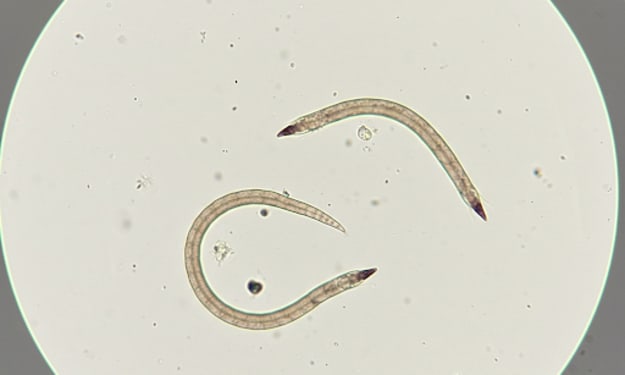


All the great Submissions
The Curse of Life. Content Warning.
"What do we say to the Lord of Death? 'Not today.'" - George R.R. Martin It was the quote that inspired Thea to find a way to 'beat' death, at least in a manner of speaking. She spent years recruiting willing participants to test her science and theories. Generally, the recruits were persons already nearing a visit from death, whether it be from age or illness. Their fear of dying made them willing participants, even though they knew it was a long shot... still that minuscule chance of it working kept them signing up despite failure after failure. Thea had become obsessed with breaking the curse of living, which was the inevitable reality of death lingering over everything. Her fear of death kept her from truly living life, as it did for many people as mortality weighed on their shoulders. This inspired her to seek a way to stop death... no matter the cost.
By Luna Verity2 years ago in Longevity
GLASS DOLLS
Long ago, before my grandmother was born, people's lives were short and often sad. People could live their whole lives never meeting their soulmate. The world was too big, there was too much to do, and too few years. People married young, when they hadn't travelled the globe even once.
By L.C. Schäfer5 years ago in Fiction
The Weight of Forever. Runner-Up in The Life-Extending Conundrum Challenge.
The first time Isla rode the elevator up through the clouds she forgot to breathe. Below her, the city flickered, old neon signs, expansive holographic ads begging for attention as they fought the ever-present rain and hazy smog that covered the city in perpetual dusk. The higher the elevator rose, the less Isla could smell the rust, the carbon.
By Sandor Szabo2 years ago in Longevity
The Lazarus Algorithm
When he unveiled The Lazarus Algorithm, it was meant to be a medical breakthrough—a way to preserve human consciousness indefinitely. Using a fusion of quantum computing and synthetic neurons, the system could scan, replicate, and upload a person’s mind into an artificial body. It wasn’t just immortality; it was continuity. You wouldn’t just live forever. You would be forever.
By The Kind Quill2 years ago in Fiction
Captain Nemo 2.0
The soft hum of the spaceport filled my ears as I stood by the massive observation window, gazing at the ships departing and arriving like silent fireflies in the vastness of space. The year was 2125, and I was about to embark on the journey of a lifetime—one my great-grandmother could have only dreamed of. I had always imagined what it must have felt like for the first explorers of space, those pioneers who dared to leave Earth’s surface in search of the unknown. Now, I was one of them.
By Dagmar Goeschick2 years ago in Longevity
Still Human?
When the CEO of MegaHealth corp. made the announcement that they had developed a new medical procedure that could make people immortal, the public reception was mixed. Many were understandably skeptical, myself included. The late-night talk show hosts and pundits certainly had a field day with the idea, and the public at large quickly dismissed the revelation. It was several months before the whispers started circulating that they had actually pulled it off; several more months passed before the videos started popping up online.
By Chris Walker2 years ago in Longevity
Eterna
Would you take forever?---Michelle Liew 💡🔧⚙️🛠️🔬🧪🚀💡⚡🧠💭💡🔧⚙️🛠️🔬🧪🚀💡⚡ Evelyn Kong's smile was too wide; she could barely contain her triumph. And her good cheer was understandable--Eterna, the newest nanomedical treatment in her scientific arsenal, didn't just extend life--it restructured existence as humans knew it.
By Michelle Liew Tsui-Lin2 years ago in Longevity
Smile, It's Your Secret Superpower
There’s a reason a smile is often referred to as a universal language. It’s not just an expression; it’s a powerful tool that can shape our mood, our relationships, and even our overall health. The power of a smile extends far beyond what we often realize. It has the ability to influence how we feel about ourselves, how others perceive us, and how we connect with the world around us. Smiling isn’t just about showing happiness though it certainly does that. It’s also a reflection of our mental state, a non-verbal way of communicating warmth and positivity. But beyond the social aspects, studies have shown that smiling can have tangible benefits on our well-being. It’s a simple act that can impact everything from our stress levels to our physical health. One of the most significant benefits of smiling is its ability to reduce stress. When we smile, our brains release feel-good chemicals called endorphins. These endorphins help counteract the stress hormones in our bodies, promoting relaxation and helping us feel calmer. It’s a natural, built-in antidote to the pressures and challenges of daily life. A smile, even if it’s not entirely genuine at first, can trigger a positive emotional response in our body, creating a feedback loop that reduces stress. But the power of a smile doesn’t stop there. It can also boost your mood, even on the most difficult days. The act of smiling can influence your emotions, not just your body’s physical response. Researchers have found that smiling can trick your brain into thinking you’re happier, which can improve your outlook on life. This phenomenon, often referred to as the “facial feedback hypothesis,” suggests that even forcing a smile can help elevate your mood over time. Beyond improving personal well-being, smiling can strengthen your social connections. It’s a universally understood sign of kindness and approachability. When we smile at others, we communicate warmth and openness. This makes us more likable and more likely to form meaningful connections with the people around us. Smiles are contagious they encourage positive interactions and help foster a sense of community. In professional settings, smiling can also be a powerful tool for success. It’s a simple way to establish rapport with colleagues, clients, or customers. People are naturally drawn to individuals who smile, as it conveys confidence and friendliness. Smiling can make you appear more approachable, trustworthy, and competent. In high-stress environments, a genuine smile can help break the tension and create a more positive, productive atmosphere. A simple gesture can be a catalyst for building stronger relationships and opening doors to new opportunities. Moreover, a smile can have physical health benefits that go far beyond just lifting your spirits. Research has shown that smiling can actually improve your immune system. When we smile, our body’s immune function increases, which helps protect us from illness. This is another reason to embrace the power of a smile—it not only makes you feel good but also supports your body’s ability to stay healthy and fight off sickness. The act of smiling can also lower blood pressure and improve cardiovascular health. By promoting relaxation and reducing stress, smiling can help prevent the harmful effects of chronic stress, which are linked to heart disease and high blood pressure. In this sense, smiling is not only a psychological tool but also a physical one, impacting our overall health in profound ways. Another remarkable aspect of smiling is its impact on aging. Smiling can help you feel younger and more vibrant. The physical act of smiling engages muscles in the face, especially around the eyes, which gives you a youthful, radiant appearance. People who smile more often are often perceived as being younger and more energetic. This is partly because a genuine smile has the power to lift the face, making us appear more lively and full of vitality. Smiling is also a tool for mental resilience. It’s a way of acknowledging challenges and still choosing to respond with optimism. During difficult times, a smile can be a small yet significant act of defiance against adversity. It sends a message to ourselves and others that we are choosing to stay positive, no matter the circumstances. Smiling can give us the strength to push through tough situations and maintain a hopeful outlook on the future. Even when things don’t seem to be going your way, remember that a smile can be your secret superpower. It’s a simple, free, and easy way to boost your mood, improve your health, and positively influence the world around you. The next time you’re feeling down, take a moment to smile whether it’s at yourself in the mirror, at a friend, or at a stranger passing by. You may be surprised by how much it can change your perspective and lift your spirits. So, the next time you face a challenge or find yourself in a stressful situation, don’t underestimate the power of a smile. It might be the most powerful tool in your emotional toolkit. Smile, and watch as it transforms not just your day, but your life.
By Nora Ariana2 years ago in Lifehack
Reelin in memories
As the winter ended, extreme weather, spring droughts, floods, earthquakes, hurricanes, tornadoes, volcano eruptions plus satellite silences due to solar flares, had intermittently left the masses without their addictive vagus link to global communication through the internet. Individuals began to listen to each other and think for themselves.
By Katherine D. Graham2 years ago in Longevity
The Truth The Truth Behind a Famous Quote: Did Aristotle Really Say It
The famous quote often attributed to Aristotle, "We are what we repeatedly do. Excellence, then, is not an act, but a habit, is widely known as a guiding principle for personal growth and success. However, the origins of this quote are often misunderstood. It was not Aristotle himself who stated it directly, but rather historian and philosopher Will Durant, who paraphrased Aristotle’s ideas in his book The Story of Philosophy while summarizing the Greek philosopher’s thoughts on habit and virtue. Understanding the origins of this quote requires a closer look at Aristotle’s philosophy. Aristotle, one of the greatest thinkers of ancient Greece, explored the concept of virtue and moral excellence in his work Nicomachean Ethics. In this text, he emphasized the importance of habit in shaping character. Aristotle believed that virtues are not innate qualities but rather traits developed through practice and repetition. He argued that people become virtuous by repeatedly performing virtuous actions, just as a skilled musician becomes proficient through continuous practice. Will Durant, in The Story of Philosophy, sought to summarize Aristotle’s teachings in a way that made them accessible to modern readers. While discussing Aristotle’s views on virtue, Durant wrote, “We are what we repeatedly do. Excellence, then, is not an act, but a habit. This paraphrased version of Aristotle’s philosophy gained widespread popularity and was frequently cited as if Aristotle himself had said it. Despite the misattribution, the essence of the quote remains aligned with Aristotle’s philosophy. The idea that excellence and virtue are cultivated through consistent action is a fundamental aspect of his ethical framework. Aristotle argued that individuals achieve eudaimonia, or a flourishing life, by developing good habits and engaging in ethical behavior. He maintained that moral excellence is not achieved through occasional grand gestures but through a commitment to virtuous living in everyday actions. This principle has significant implications in various aspects of life, including personal development, education, sports, and business. The notion that repeated actions shape one’s character and determine success has been embraced by motivational speakers, educators, and leaders across different fields. It highlights the importance of discipline and consistency in achieving excellence. For instance, in the world of athletics, top-performing athletes follow rigorous training routines, practicing their skills repeatedly until they become second nature. A basketball player does not become great by making one incredible shot but by shooting thousands of baskets during practice. Similarly, in academics, students who develop effective study habits through repetition are more likely to excel in their studies. The same principle applies to entrepreneurship and professional growth those who consistently work on their skills and improve their craft are more likely to succeed. The misattribution of the quote to Aristotle also sheds light on how historical figures’ ideas are often simplified or reinterpreted over time. In an effort to make complex philosophical ideas more digestible, writers and historians sometimes condense concepts into concise statements. While this can help popularize important ideas, it can also lead to inaccuracies regarding their original sources. The popularity of this particular paraphrase demonstrates how powerful and influential Aristotle’s ideas remain today. Even though the exact wording was Durant’s interpretation, the underlying philosophy is deeply rooted in Aristotle’s ethical teachings. It serves as a reminder that success and personal growth are not the result of isolated efforts but of consistent and deliberate practice. In contemporary discussions on self-improvement, the concept of habit formation is widely studied. Books such as Atomic Habits by James Clear and The Power of Habit by Charles Duhigg explore how small, repeated actions lead to lasting change. These modern perspectives align with Aristotle’s notion that habits shape our character and ultimately define who we are. The scientific study of habits supports the idea that behaviors repeated over time become ingrained, influencing our success and well-being. Understanding the true origin of this quote also encourages critical thinking when it comes to widely accepted statements. Many famous quotes attributed to historical figures are often altered or paraphrased, leading to misconceptions about their original context. Recognizing the contributions of historians like Will Durant in making philosophical ideas more accessible allows for a deeper appreciation of the thinkers who influenced them. While Aristotle did not explicitly state the famous quote, his philosophy undeniably supports the idea that excellence is achieved through habitual actions. His teachings continue to inspire individuals seeking to improve themselves and attain a higher standard of living through consistent effort. By acknowledging both Aristotle’s original ideas and Will Durant’s role in summarizing them, we gain a more accurate understanding of the timeless wisdom behind the phrase. The key takeaway from this discussion is that our daily habits and actions define us. Whether in personal development, professional growth, or ethical conduct, what we repeatedly do shapes our character and our destiny. By embracing this philosophy, individuals can cultivate a life of excellence through conscious effort and discipline, staying true to the spirit of Aristotle’s teachings.
By Nora Ariana2 years ago in Education
Lamia. Top Story - April 2025. Content Warning.
“She’s the first?” Mona asked the Doctor. “She is,” Dr. Brody nodded with a smile. “And it’s safe?” Mona asked, wringing her hands together. Judith Brody M.D. had dreamed of this day since she was a child. Finally, something good could come from her obsession. The obsession she’d had ever since that monster had destroyed her family and had nearly taken her life.
By Raine Fielder2 years ago in Fiction