Analysis
The Last Light on Maple Street
The first snow of December arrived without warning. By late afternoon, Maple Street had disappeared beneath a thick white blanket. Cars stood half-buried along the road, porch steps vanished beneath snowdrifts, and the branches of the old maple trees bent under the weight of the storm.
By GoldenSpeecha day ago in BookClub
Mississippi Wizards . Top Story - October 2026.
What better way to start off spooky season than a little horror book review from one of our very own! You know those trope boards? Those ones all over booktok? I despise, no I abhor those things because if you only ever pick books like you're ordering at Chipotle, you might never pick up a book like this.
By Matthew J. Fromm2 days ago in BookClub
Roadside Picnic: 200 Word Reviews #29
Roadside Picnic by Arkady and Boris Strugatsky is like reading the cut content from a far better book. The premise was ground breaking for the time: Aliens visit earth, but ignore us, and leave artefacts behind in The Zone. The plot follows Red, a stalker, who makes his living illegally venturing into The Zone and selling what he finds there. I know this sounds awesome, but most of the time he’s actually just drinking and all the interesting events happens in the very last few pages. Even then I couldn’t quite work out what the point was.
By I. D. Reeves9 days ago in BookClub
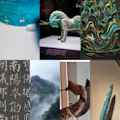
A Showcase of Museums of Ancient China——战国·错银铜匕
This bronze utensil was photographed at the 'Seeing China: Pre-Qin Silk Treasury Special Exhibition' in the Jingzhou Museum. It was unearthed in 1982 from Tomb No. 1 at Mashan, Hubei, a Warring States period tomb famous for its large collection of intact silk textiles. But this 2,000-year-old Chu spoon is just as exquisite. As a practical item from ancient daily life, it’s much more refined than what we use now.
By cn_explore12 days ago in BookClub
A Showcase of Museums of Ancient China——铜獬豸
I came to the National Museum just to catch a glimpse of this Han Dynasty "铜獬豸" artifact exhibited here from the Gansu Provincial Museum. The lighting makes it appear even more magnificent than it did at the Gansu Provincial Museum.
By cn_explore14 days ago in BookClub
One Idiom a Day: Chinese Wisdom in Stories
塞翁失马,焉知非福(Sàiwēng shī mǎ, yān zhī fēi fú) “Sai Weng lost his horse. Who knows if it may not turn out to be a good thing?” During the Warring States period, an old man lived near the northern border of China. People called him Sai Weng .
By Frances Gao20 days ago in BookClub
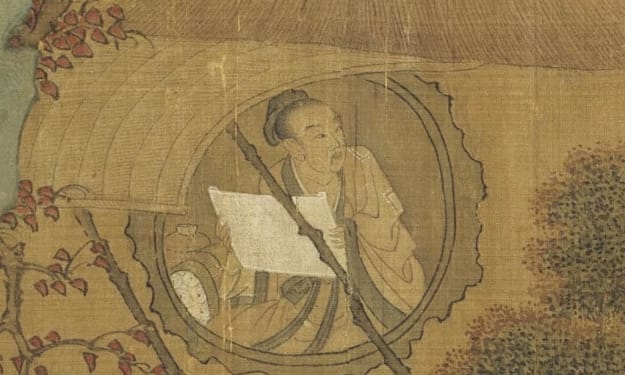
What were the different types of beggars in ancient China, and what was their living situation like?
In ancient China, during the Han Dynasty, beggars were referred to as "qi gai" (乞丐), but at that time, beggars were not merely those seeking basic necessities such as food. Some also relied on unique personal skills to obtain various resources. Before the Song Dynasty, beggars were commonly known by different terms such as "qi ren" (乞人), and "gai ren" (丐人). It was only after the Song Dynasty that the term "qi ge" began to refer specifically to individuals who sought only survival resources.
By cn_explore21 days ago in BookClub
How did ancient Chinese people purify water and what challenges did they face
Ancient people primarily drank well water, although they also consumed surface water such as river water, stream water, and lake water. These water sources are free from modern industrial pollution, but they still pose risks of contamination by microorganisms and parasites.
By cn_explore22 days ago in BookClub