
Now, I AM an Axolotl
How Julio Cortazar's short story "Axolotl" changed my life


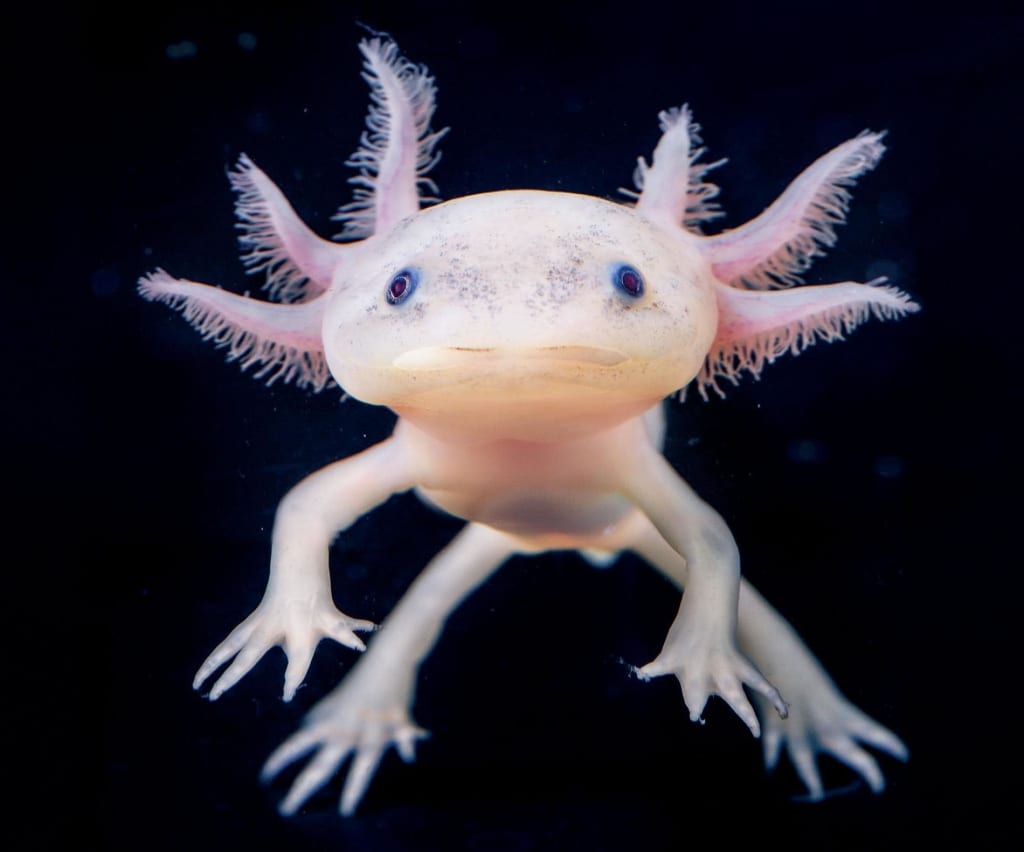
There was a time when I would think about axolotls a lot. I used to go look at them in the aquarium of the Jardin des Plantes and would stay there hours contemplating them, observing their immobility, their shadowed movements. Now, I am an axolotl.
Hubo un tiempo en que yo pensaba mucho en los axolotl. Iba a verlos al acuario del Jardín des Plantes y me quedaba horas mirándolos, observando su inmovilidad, sus oscuros movimientos. Ahora soy un axolotl.
JULIO CORTAZAR (1914-1987)
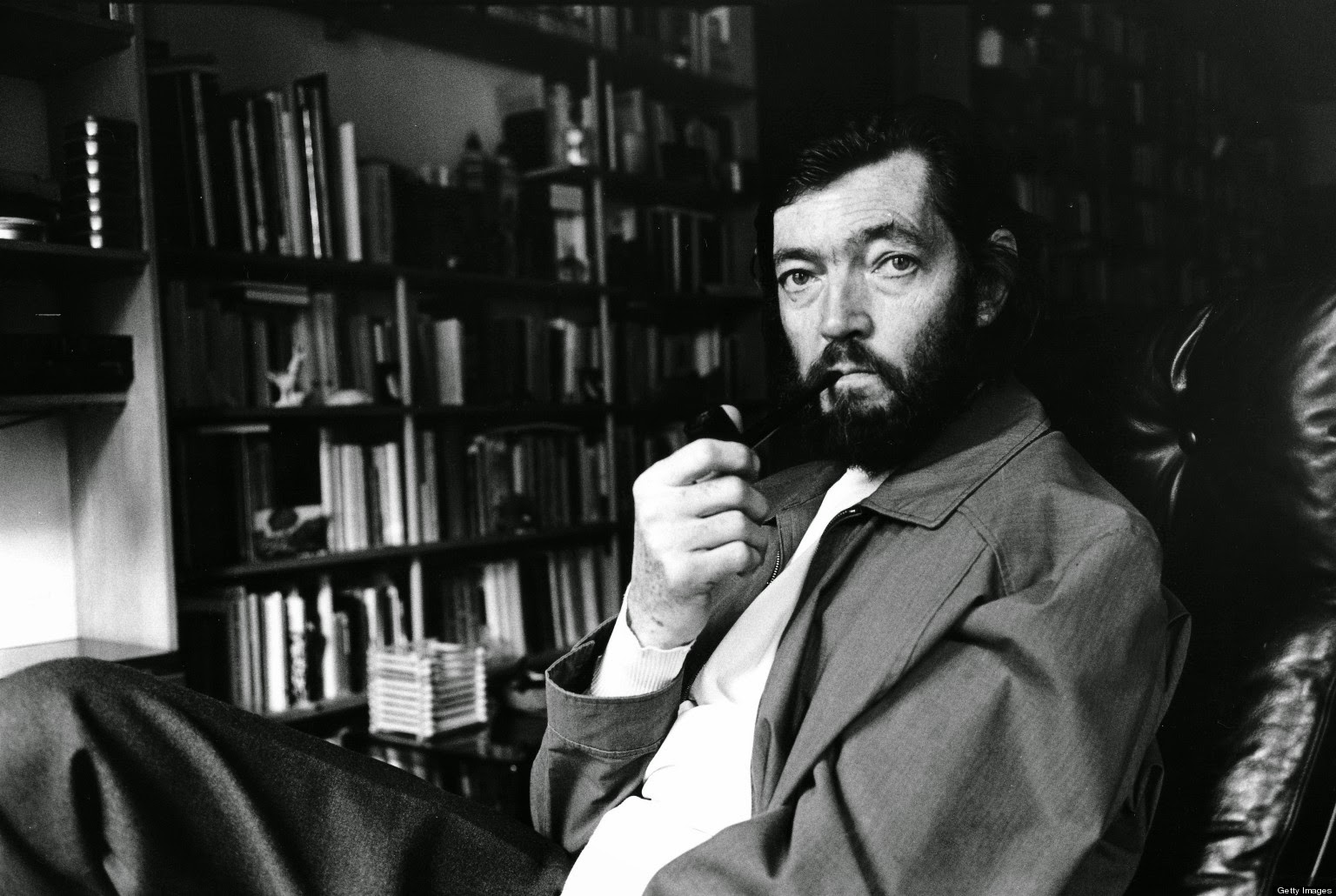
This is an author more readers (and especially readers who are writers) should get to know. He is a well of inspiration, although he'll lead you down a rabbit-hole.
Speaking of which, an axolotl is an amphibian of great beauty and rarity, which curious readers might also be interested in getting to know better.
Then me. What do we three or four all have in common?
And have I been smoking too much weed?
The answer to all those questions
is this Story.
Julio Cortazar was an Argentine writer of the Latino Boom who took Europe by storm, but who has never really caught on with English language readers. His writing is more experimental than Gabriel Garcia Marquez, and more erotic than Jorge Luis Borges. Although, before you turn away at hints of amphibious eroticism, there is no very little salamander sex in this Book-Club bombardment.
FACT BOMBARDMENT ABOUT AXOLOTLS

The axolotl is an amphibious creature native to Mexico, closely related to the tiger salamander. It used to dwell in the cenotes (deep underground water-caverns) that potholed the lusher parts of the landscape. Mostly around the ancient city of Tenochtitlan, capital of the Aztec Empire. Now called Mexico City.
Axolotl is its name in Classical Nahuatl, language of this Empire, while its scientific name in Greco-Latin fusion is Ambystoma Mexicanum. It is classified as a "paedomorphic salamander" which basically means it retains its juvenile morphology throughout its entire life and breeding cycle, a phenomenon called neoteny in biology. Therefore it is always in its larval state. But why?
In order to breathe under water, it must embrace an eternal childhood. When an amphibian is in its larval state, it is equipped with gills. Its entire life is in the cenotes as a perpetual tadpole. Neoteny occurs sporadically in tiger salamanders as well. In fact, human children are classified as displaying neoteny in form of a long retention of juvenile features, when compared with other primates. Axolotls were sacred, but also a staple of the diet of the indigenous people of Tenochtitlan. "Slimy yet satisfying."

What a strange Never-land, these sunken wells where the Aztecs would offer their aquatic sacrifices of turquoise, maize, or their own children, to the fierce and unpredictable water-god Tlaloc.
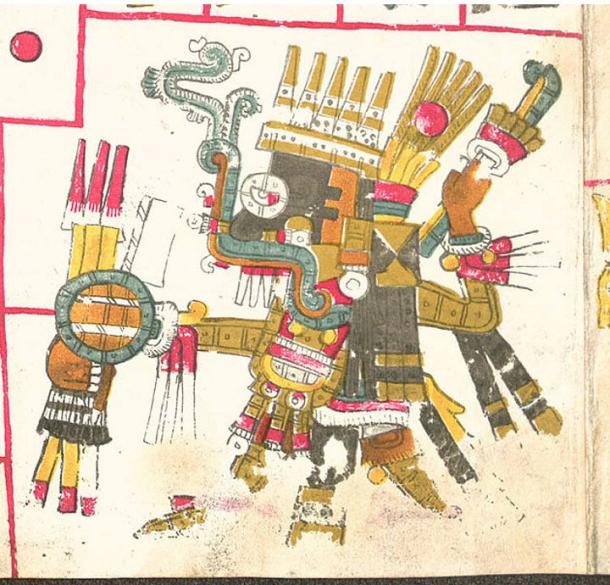
The axolotl is near extinction in the wild, its habitat having been progressively despoiled by the bustle of modern life and the expansion of Mexico City.
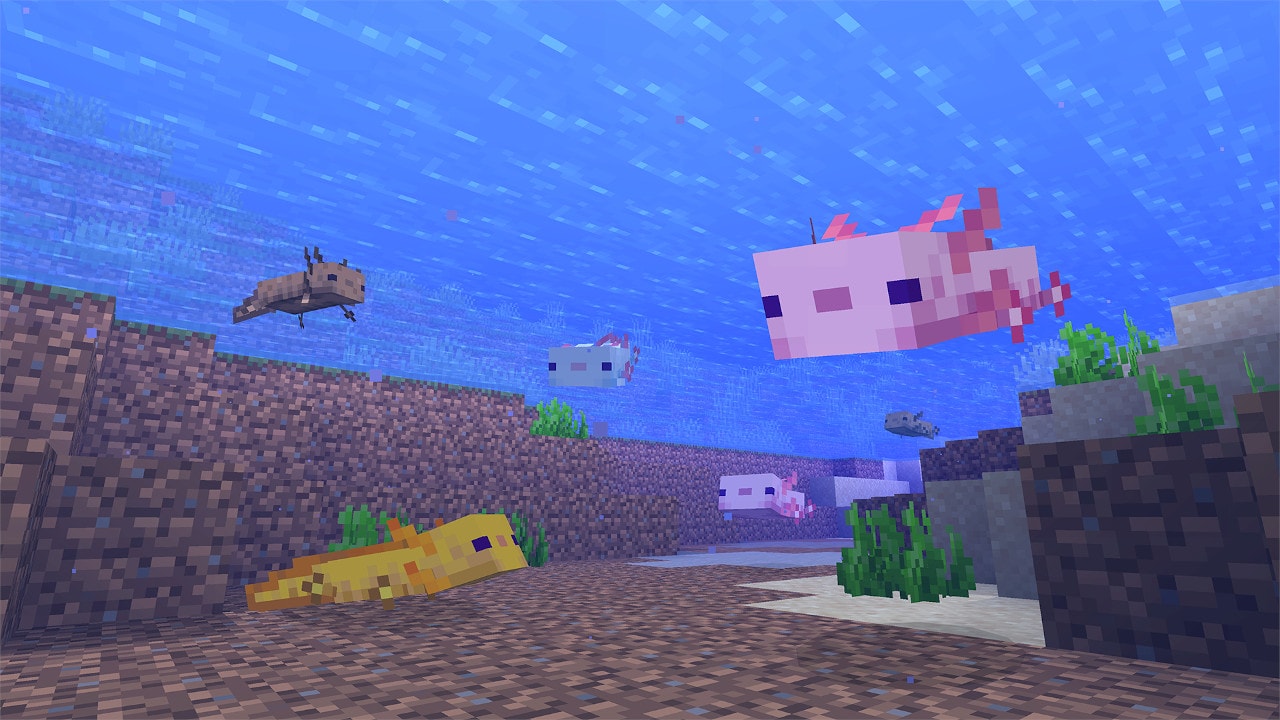
Due to the popularity of the video-game Minecraft, many children worldwide have wished to own a pet axolotl. Far too many children have been granted this wish, and most of them die in their care. These are specialized animals that require very specific conditions. High maintenance petkeep! expect a heap of equipment.
But the axolotl is what they call a Model Organism of Science, and is bred in large numbers (you cannot even imagine) in captivity for observation and experimentation. Much like the good ol' White Lab Rat. Both creatures hold the interest of scientists due to certain similarities to ourselves...but let's not get into that here.

Now we're primed to approach this story:
Vi un cuerpecito rosado y como translúcido (pensé en las estatuillas chinas de cristal lechoso), semejante a un pequeño lagarto de quince centímetros, terminado en una cola de pez de una delicadeza extraordinaria, la parte más sensible de nuestro cuerpo. Por el lomo le corría una aleta transparente que se fusionaba con la cola, pero lo que me obsesionó fueron las patas, de una finura sutilísima, acabadas en menudos dedos, en uñas minuciosamente humanas. Y entonces descubrí sus ojos, su cara, dos orificios como cabezas de alfiler, enteramente de un oro transparente carentes de toda vida pero mirando, dejándose penetrar por mi mirada que parecía pasar a través del punto áureo y perderse en un diáfano misterio interior.
I saw a little pinkish body, nearly translucent (made me think of those Chinese statuettes of milky crystal), much like a small lizard of fifteen centimeters, ending in an extraordinarily delicate fishtail, the most sensitive part of our bodies. Along its dorsal ran a transparent fin that fused itself into the tail; yet, what obsessed me were the hands: ending in those tiny fingers with their minutely humanoid nails. And then, I discovered its eyes, its face, two holes like the eye of a needle, entirely of transparent gold lacking all life yet seeing, letting itself be penetrated by my gaze which seemed to transcend the golden pinpoint and loose itself in a diaphanous internal mystery.
A Plot?
A young man, seems an intellectual or student, enters the Jardin des Plantes (Zoo) in Paris on a spring day. He sees the axolotls in the aquarium and can't stop looking. He returns every day obsessively, staring deep into their unfathomable eye-holes, trying to unravel their mystery.
He identifies with them in an unexpectedly profound way, becoming certain they are endowed with consciousness like our own, existentially horrified by the idea of them being superior intellects buried alive in these amphibious bodies.
The world had once been theirs, there had once been an Axolotl Empire, while now they float powerless and immobile behind this glass in a tiny tank.
No eran seres humanos, pero en ningún animal había encontrado una relación tan profunda conmigo. Los axolotl eran como testigos de algo, y a veces como horribles jueces. Me sentía innoble frente a ellos, había una pureza tan espantosa en esos ojos transparentes. Eran larvas, pero larva quiere decir máscara y también fantasma. Detrás de esas caras aztecas inexpresivas y sin embargo de una crueldad implacable, ¿qué imagen esperaba su hora?
They were not human beings, yet in no animal had I ever found such a profound relation with myself. The axolotls were like witnesses to something, and at times like terrible judges. I felt ignoble before them, there was such a frightening purity in these transparent eyes. They were larvae, but larva means mask and also fantasy (Latin pun, no time to explain). Beneath these inexpressive and yet implacably cruel Aztec faces, what Imagining awaited its hour?
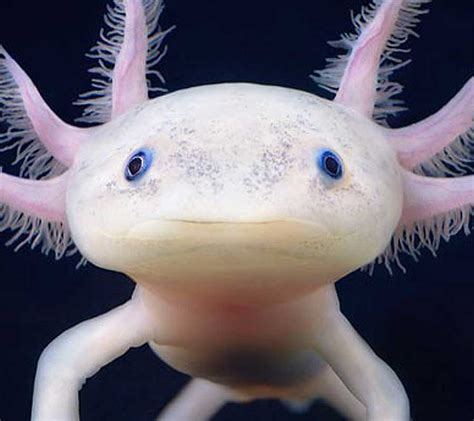
Creepy but mostly cute, aren't we? the cutest creatures to exist, positively! with our derpy faces and little toes. So you're asking, how does the story end? and what does it have to do with me and if I'm too stoned or not?
Well you see, reading this story in my imperfect Spanish (good enough for reading, translating), when I looked up from my book, I realized I had become an axolotl. I admit it's only in part, but it's a part that can never be rooted out, no matter how hard you try. The metamorphosis was complete for the first few days, and I lived total absorption in the cenote. Little by little, it's true, I reverted to my humanity. Then I realized, the humanity I had reverted back to, was merely the True Nature of the Axolotl.
Trust me.
A truly transformative story.
"Axolotl" by Julio Cortazar, in the original Spanish:
"Axolotl" by Julio Cortazar in English translation by Paul Blackburn
https://ambystoma.uky.edu/teachers_materials/axolitbook/AxolotlByJulioCortazar.html
And a short film for your amusement:
About the Creator
Rob Angeli
sunt lacrimae rerum et mentem mortalia tangunt
There are tears of things, and mortal objects touch the mind.
-Virgil Aeneid I.462
Enjoyed the story? Support the Creator.
Subscribe for free to receive all their stories in your feed. You could also become a paid subscriber, letting them know you appreciate their work.
Comments
There are no comments for this story
Be the first to respond and start the conversation.