voting
Postmortems of voting woes, disenfranchisement, and how countries around the world elect government officials.
Peter Magyar: Wants Orban's Regime Gone.
Victor Orban has been in power for 16 years. Positively, on the far right of politics and a strong ally of Vladimir Putin. Hungary is a member of the European Union; however, Orban is very anti-European Union. Unlike the UK Mr. Orban did not hold a referendum to decide whether Hungary should leave the EU. Orban has been strict about who he allows into Hungary and who he does not. Orban has/had his feet in two camps, one in the European Union and one in Russia, but more so in Russia. It is best to describe Orban as an elected dictator. Such things happen in democracies when you have a popular leader who keeps getting elected over and over again. As with Margaret Thatcher in the 1980s, until for whatever reason their rule comes to an end.
By Nicholas Bishop6 months ago in The Swamp
Talks in Islamabad: Can Pakistan Resolve the US-Iran Conflict? A World Holding Its Breath in the Beginning
Talks in Islamabad: Can Pakistan Resolve the US-Iran Conflict? A World Holding Its Breath in the Beginning In April 2026, the world witnessed a rare and historic diplomatic moment: high-level talks between the United States and Iran held in Islamabad, Pakistan. The Islamabad Talks, or these talks, were the first time the two countries had spoken directly to each other at such a high level in decades.
By Farida Kabir6 months ago in The Swamp
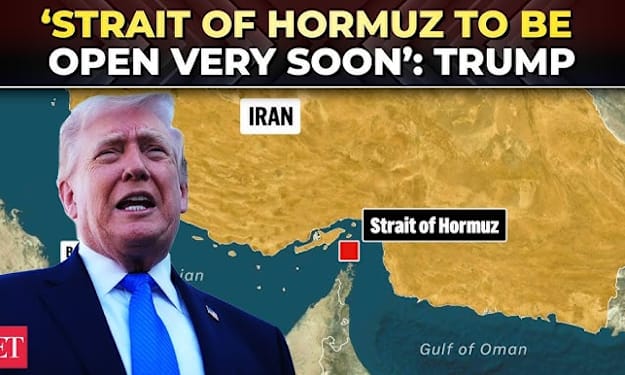
America’s Naval Blockade at the Strait of Hormuz
Introduction The Strait of Hormuz, one of the world’s most strategic maritime chokepoints, has once again become the center of global tension. In April 2026, the United States launched a naval blockade targeting Iranian ports after diplomatic talks with Iran collapsed. This move has not only escalated military tensions but also triggered widespread economic and political consequences across the globe.
By shaoor afridi7 months ago in The Swamp
The United States Wants Control Over the Strait of Hormuz
The United States Wants Control Over the Strait of Hormuz The Strait of Hormuz has become the center of one of the most dangerous geopolitical confrontations in recent history. As tensions between the United States and Iran escalate, Washington’s desire to ensure control—or at least secure access—to this narrow waterway reflects far more than a regional dispute. It is about global energy security, military strategy, and economic stability.
By shaoor afridi7 months ago in The Swamp
The United States Is Telling Iran Not to Make a Nuclear Bomb
The issue of Iran’s nuclear program has become one of the most serious and sensitive topics in global politics today. At the center of this tension is a clear and simple demand from the United States: Iran must not develop a nuclear bomb. While the message may sound straightforward, the reality behind it is complex and deeply rooted in years of conflict, mistrust, and strategic rivalry.
By shaoor afridi7 months ago in The Swamp
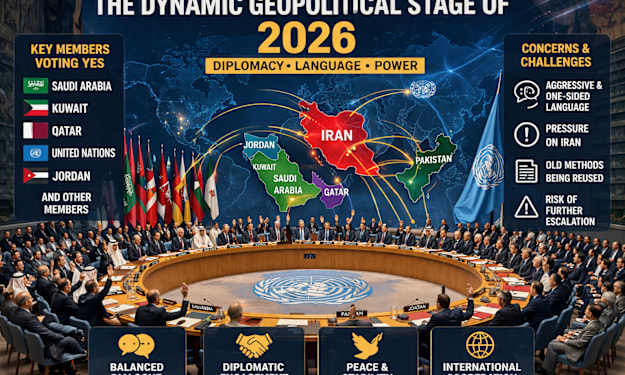
The Dynamic Geopolitical Stage of 2026: Diplomacy, Language, and Power
The year 2026 marks a deeply dynamic and sensitive phase in global geopolitics, where conflicts are no longer shaped solely by military actions or economic sanctions, but increasingly by diplomacy, narratives, and the strategic use of language. At the center of this evolving landscape stands the United Nations, which continues to function as the primary global platform for debate, negotiation, and the passing of resolutions. However, the role of the UN in 2026 is not without controversy, as questions arise about the fairness, tone, and implications of the decisions being made within its chambers.
By Ibrahim Shah 7 months ago in The Swamp
What Wisconsin Election Results Reveal About People Today
Elections are not just about numbers. They carry emotion, tension, and sometimes quiet hope. When people follow Wisconsin election results, they are not only looking at who won or lost. They are trying to understand what those results say about real lives, real concerns, and real choices. Behind every vote is a person thinking about their future, their family, and their place in the world. Wisconsin, with its shifting political landscape, often reflects deeper changes happening across the country. This is why its election results draw so much attention. This article explores what Wisconsin election results truly reveal, not just politically, but emotionally and socially.
By Muqadas khan7 months ago in The Swamp
Countdown to Destruction?
The hours are counting down when Trump must deliver on his expletive and extremist statement of destroying Iran's infrastructure and sending it back to the Stone Age. This statement expresses anger and frustration. Despite everything that the US and Israel have dropped on Iran, the Islamic Republic has not buckled. It has hit back at US bases in Gulf countries and Israel. Iran has not acquiesced to an American ceasefire and is only allowing vessels through the Strait of Hormuz that are not attacking it.
By Nicholas Bishop7 months ago in The Swamp
The "Benefits Cliff"
The System Is Not Cash, It Is Replacement For a family of five in Salem, Oregon, the low-income support system is not built primarily on direct cash transfers. It is built on a small number of high-impact programs that function as after-tax purchasing power, replacing major expenses rather than adding to pre-tax income. This distinction matters because it changes how the system must be evaluated. Income is taxed before it becomes usable, while benefits replace costs that would otherwise require after-tax dollars. That means these programs effectively operate as a parallel income structure, but one that is locked into specific categories such as food, housing, childcare, and healthcare rather than flexible cash.
By Peter Thwing - Host of the FST Podcast7 months ago in The Swamp