politicians
Reviews of the politicians kissing babies and running governments around the world; applaud and criticize the decisions they make and their implications.
Kithure Kindiki: Wife, Tribe, Biography, Net Worth, Age & More
Professor Kithure Kindiki, now serving as Kenya’s Deputy President, has carved out a reputation as one of the country’s most influential and respected public figures. Known for his legal expertise, political acumen, and unwavering dedication to public service, Kindiki’s journey from the courtroom to the second-highest office in the land is nothing short of remarkable.
By Marveline Merababout a year ago in The Swamp
The Secular Mindset
The Secular Mindset Reason, Ethics, and Meaning Beyond Religion In a world marked by deep diversity of belief systems and growing religious pluralism, a new way of thinking has quietly gained ground—one that doesn’t reject spirituality outright, but seeks understanding, ethics, and meaning without appealing to supernatural authority. This is the secular mindset: a worldview rooted in reason, evidence, and human-centered values. It invites us to live ethically, think critically, and find purpose in the natural world and human experience.
By FAIZAN AFRIDIabout a year ago in The Swamp
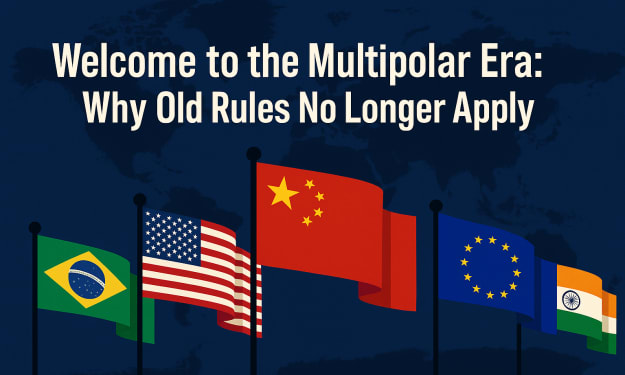
“Welcome to the Multipolar Era: Why Old Rules No Longer Apply”
Welcome to the Multipolar Era: Why Old Rules No Longer Apply Inside the Rise of a World Where No One Power Calls the Shots --- Introduction Not long ago, world politics revolved around a single axis — the United States. Following the Cold War, America’s military might, economic dominance, and cultural influence gave it an unrivaled role in setting global agendas. But that era is fading fast. Today, we live in a world where no single nation can dictate the terms. Power is more distributed, alliances are more fluid, and the rules of engagement are constantly shifting. From Beijing to Brasília, from Ankara to New Delhi, a new set of actors is redefining influence in a chaotic and contested global order. The question is no longer who leads — it's how the world manages without clear leadership. --- The End of Unipolarity The post-Cold War unipolar moment, which placed the U.S. at the apex of global power, is now history. Two decades of military overstretch, internal political divisions, and economic upheaval have eroded America's ability to act as the world's de facto leader. The withdrawal from Afghanistan, inconsistent global policies, and an increasingly inward-looking electorate have signaled a step back from the assertive global policing of the early 2000s. This vacuum hasn't gone unnoticed. Instead of a new hegemon rising to replace the old, what we see is a diffusion of power across multiple regional centers. It’s not a bipolar world of the Cold War era, nor a balanced multipolar structure of the early 20th century. This new landscape is messy, unstable — and permanent. --- China and the Economic Realignment China stands at the forefront of this shift, but even its rise comes with caveats. With the Belt and Road Initiative, Beijing has extended its economic reach into Asia, Africa, and parts of Europe. Its influence over supply chains, infrastructure, and digital technologies challenges the dollar-based global system. However, China's ambitions face resistance. Tensions over Taiwan, territorial disputes in the South China Sea, and pushback from Western nations on tech and trade indicate that its power, while rising, is also contested. China is not replacing the U.S. — it’s carving out its own sphere, one that’s economic rather than ideological, and subject to friction. --- Russia’s Military Gambit and Strategic Isolation Russia, too, has sought to challenge the Western-dominated order, most dramatically through its invasion of Ukraine. While the war has demonstrated Moscow’s willingness to use force to protect perceived national interests, it has also exposed its strategic limits. Sanctions, international condemnation, and battlefield losses have isolated Russia from much of the world economy, while simultaneously deepening its ties with non-Western partners like Iran and China. In trying to redefine regional borders by force, Russia has sparked a renewed unity among NATO members, paradoxically reinforcing the very alliances it sought to divide. --- Middle Powers and Fluid Alliances Perhaps the most defining feature of the multipolar era is the rise of middle powers — nations like India, Brazil, Turkey, and Saudi Arabia that are no longer content to align strictly with the West or East. These countries pursue strategic autonomy, balancing relationships across global fault lines. India, for example, is a member of the Quad (with the U.S., Japan, and Australia) while also maintaining defense ties with Russia and participating in BRICS. Turkey, a NATO member, buys Russian arms and projects influence across Central Asia and the Middle East. These states navigate global politics based not on ideology, but on opportunity and self-interest. --- Global Institutions Under Strain The United Nations, World Trade Organization, and other postwar institutions are increasingly ineffective at managing today’s fragmented world. Vetoes stall progress at the UN Security Council. Trade disputes paralyze the WTO. And new power blocs like BRICS and the Shanghai Cooperation Organization aim to create parallel systems that reflect non-Western values and priorities. The rules-based international order — long championed by the West — now finds itself questioned not only by adversaries, but by allies frustrated with its limitations and hypocrisy. --- Technology, Climate, and the New Arenas of Power While traditional power still matters, influence in today’s world is also determined by less tangible forces. Control over technologies like artificial intelligence, 5G, and semiconductors is becoming as critical as nuclear weapons were in the past. Meanwhile, climate change, pandemics, and migration flows expose the limitations of national solutions to global problems. These issues demand coordination, yet in a fragmented world, cooperation is the first casualty of geopolitical rivalry. --- Conclusion: Embracing Complexity The multipolar era is not just a phase — it is the defining condition of our time. It offers opportunities for a more inclusive, balanced world, but also risks greater instability, miscalculation, and fragmentation. Old rules no longer apply, because the old world no longer exists. The future will depend not on domination, but on how nations adapt, negotiate, and share power in a world where no one — and everyone — leads.
By World politics about a year ago in The Swamp
The Spirit of Liberal Thought
The Spirit of Liberal Thought Exploring the Values of Freedom, Reason, and Progress The spirit of liberal thought is one of history’s most transformative forces—a quietly revolutionary philosophy centered on individual freedom, reason, and human dignity. While often misunderstood or politicized in modern discourse, liberalism at its core is not a rigid ideology, but a flexible framework grounded in the belief that people are capable of self-government, moral agency, and rational discourse. From ancient philosophical inquiry to contemporary struggles for justice, liberal thought has shaped how societies define freedom, balance power, and strive for progress.
By FAIZAN AFRIDIabout a year ago in The Swamp
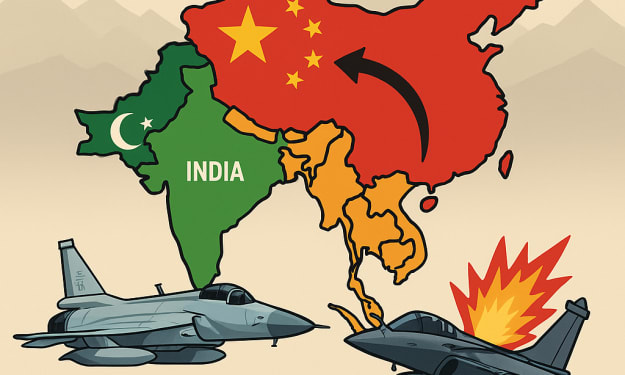
How China Got Benefit from Pakistan and India Conflict
In a dramatic turn of events during a recent India-Pakistan conflict, the Pakistan Air Force (PAF) reportedly downed a French-made Rafale fighter jet using the JF-17 Thunder, a multi-role combat aircraft developed jointly by China and Pakistan. Though official confirmation is still pending, the symbolic value of this event is already resonating across global defense and strategic communities.
By Zakir Ullahabout a year ago in The Swamp
Geoffrey Ruku: Biography, Age, Net Worth, Tribe & More
Geoffrey Ruku has quickly become a notable figure in Kenyan politics, recently stepping into the national spotlight following his 2025 nomination as Cabinet Secretary for Public Service, Human Capital Development, and Special Programmes. Best known for his towering height and sharp political instincts, Ruku’s rise from Mbeere North MP to a key cabinet position has captured the country’s attention. With a declared net worth of Ksh377 million and a growing influence in President Ruto’s government, Ruku’s story is one of quiet ambition and rising power.
By Marveline Merababout a year ago in The Swamp
"A New Dawn for the Catholic Church: The Historic Rise of Pope Leo XIV". AI-Generated.
In an unprecedented moment that has captured the attention of millions around the world, the Catholic Church has elected its first American pontiff—Pope Leo XIV. The announcement was made on May 9, 2025, as white smoke billowed from the Sistine Chapel chimney, signaling the conclusion of the papal conclave and the beginning of a new chapter for the global Catholic community.
By Mahmud Labibabout a year ago in The Swamp
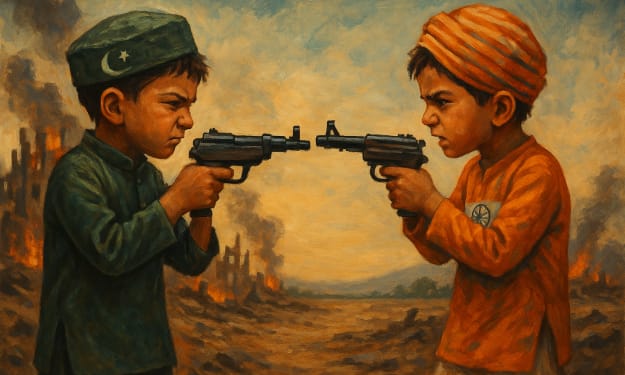
War Between Brothers: A Call for Peace in South Asia
The world watched in horror as tensions between Pakistan and India erupted once again into a full-blown conflict in these recent days. What began as a border skirmish soon escalated into one of the most destructive confrontations in recent South Asian history. While the international media flooded timelines with statistics and breaking updates, the real cost of this war—human lives, fractured communities, economic collapse, and regional instability—remains far more than what any headline can convey.
By Zakir Ullahabout a year ago in The Swamp
How Pakistan and India Ceased Fire by U.S.?
In one of the most historic moments of South Asian diplomacy, the decades-long tension between India and Pakistan found a sudden pause with a surprising but decisive intervention by the United States. On May 10, 2025, an immediate ceasefire was declared between the two nuclear-armed nations after a night of high-level negotiations. This article explores how the United States orchestrated peace talks between these long-standing rivals and the implications for the region and the world.
By Keramatullah Wardakabout a year ago in The Swamp
Power & Policy
A Deep Dive into Global Strategies: Understanding the Forces Shaping Our World In a rapidly evolving world, global strategies are more important than ever. These strategies are the frameworks through which nations navigate international relations, secure economic interests, assert political power, and foster security. At the heart of global strategy lies the delicate balance of diplomacy, military force, economic policy, and cultural influence, each of which plays a crucial role in shaping the future of the global community. This article will explore the complexities of global strategies, the key players involved, and the methods they use to maintain or expand their influence on the world stage. The Concept of Global Strategy Global strategy is the overarching plan or approach that nations, alliances, and international organizations use to achieve their objectives on the world stage. It is a multi-dimensional concept that involves not only military and economic considerations but also the cultivation of alliances, technological innovation, and soft power. Unlike national strategies, which are primarily focused on domestic issues, global strategies address external challenges and opportunities. A successful global strategy can determine the trajectory of a nation’s influence for decades to come, while a failed one can lead to economic collapse, political isolation, or even military conflict. Global strategies often incorporate elements of hard power (military and economic strength) and soft power (diplomacy, culture, values, and ideas). Nations may also engage in smart power, which is a combination of both hard and soft power, using each in the right proportion based on the situation at hand. Key Players in Global Strategy In any analysis of global strategies, it is essential to understand who the key players are. The most significant players include powerful nations, such as the United States, China, and Russia, as well as regional powers and multinational organizations like the United Nations, the European Union, and the World Trade Organization (WTO). Each of these entities formulates strategies based on a combination of economic capabilities, military power, political influence, and diplomatic ties. 1. The United States: As a superpower, the United States has long been at the center of global strategic discussions. Its global strategy revolves around maintaining its military dominance, ensuring access to key markets, and promoting democratic values. The U.S. also seeks to contain rival powers, notably China and Russia, through both hard and soft power mechanisms, including military alliances like NATO, economic sanctions, and diplomatic engagement. 2. China: Over the past few decades, China has emerged as a key challenger to U.S. dominance on the global stage. Its global strategy is characterized by economic expansion, technological advancements, and a growing military presence. One of China’s most ambitious strategies is the Belt and Road Initiative (BRI), a multi-trillion-dollar infrastructure project designed to connect Asia, Africa, and Europe through a network of trade routes. The BRI allows China to increase its influence in critical regions, securing vital resources, trade routes, and political allegiances. 3. Russia: Russia's global strategy has been shaped by a desire to reclaim its status as a great power following the dissolution of the Soviet Union. Russia’s strategy is characterized by a mix of military aggression, political influence, and energy dominance. For instance, Russia's military interventions in Ukraine and Syria are seen as efforts to protect its sphere of influence and project power into neighboring regions. Additionally, Russia uses its vast energy resources as leverage in geopolitical negotiations, particularly with Europe. 4. The European Union: The European Union (EU) is unique in its approach to global strategy, as it represents a collective effort by member states to assert influence on the world stage. The EU focuses heavily on diplomacy, trade, and human rights, leveraging its economic power as one of the world’s largest trading blocs. The EU also works to expand its sphere of influence through various partnerships and negotiations, particularly with countries in Eastern Europe, Africa, and Asia. 5. Multinational Organizations: Institutions such as the United Nations, the World Trade Organization, and the International Monetary Fund (IMF) play crucial roles in shaping global strategies. These organizations facilitate cooperation, mediate conflicts, and establish norms and regulations that govern international relations. Although not all countries agree with the actions of these institutions, they remain vital in coordinating global efforts in areas such as climate change, international security, and global trade. The Elements of Global Strategy Global strategies are multifaceted and include a variety of elements that work together to influence outcomes on the international stage. Some of the most important components of global strategies include: 1. Economic Power: Economic strategies are central to global influence. Nations use trade agreements, sanctions, and financial assistance to shape the global economy in ways that align with their interests. For example, the United States uses its control over the global financial system, especially through the U.S. dollar and institutions like the IMF, to maintain its economic dominance. On the other hand, China uses its growing economic influence to assert control over key supply chains, especially in the technology sector, and to secure long-term strategic investments through initiatives like the Belt and Road Initiative. 2. Military Power: Military strength remains one of the most significant pillars of global strategy. Nations use their military capabilities to project power, defend national interests, and deter potential threats. This includes not only traditional military forces but also nuclear deterrence, special forces, and cyber warfare capabilities. The U.S. maintains a vast network of military bases worldwide, while China is increasingly focusing on expanding its military presence in the South China Sea and beyond. 3. Diplomacy: Diplomatic efforts are essential in shaping the global environment. Effective diplomacy can result in strategic alliances, trade agreements, and conflict resolution. Countries engage in diplomacy through bilateral talks, multilateral forums, and international organizations. For example, the U.S. and China engage in regular diplomatic talks to manage their economic and political rivalry, while the EU plays a critical role in brokering peace and cooperation in various global hotspots. 4. Technology and Innovation: In today’s world, technological innovation has become an integral part of global strategy. Nations invest in cutting-edge technologies like artificial intelligence, quantum computing, and 5G networks to gain a strategic advantage. China, for instance, has made significant investments in 5G technology through companies like Huawei, which has raised concerns among the U.S. and its allies about cybersecurity and espionage. Additionally, technological leadership in space exploration, biotechnology, and clean energy is increasingly a key factor in global influence. 5. Soft Power: The power of culture, values, and ideas cannot be underestimated. Soft power allows countries to influence others without coercion or force. The United States, for example, has long relied on its entertainment industry, higher education institutions, and the spread of democratic ideals to project its influence globally. Meanwhile, China has sought to boost its soft power through cultural exchanges, educational initiatives, and media influence. Challenges to Global Strategy While global strategies can lead to considerable success, they also face numerous challenges. Geopolitical rivalries, economic disruptions, technological shifts, and domestic political pressures can undermine the effectiveness of any nation’s strategy. Moreover, global challenges like climate change, pandemics, and terrorism require multilateral cooperation, often complicating efforts to pursue individual national interests. In conclusion, global strategy is a dynamic and complex field that requires nations to constantly adapt to shifting circumstances. It is a delicate dance between power, diplomacy, and influence, and success often depends on the ability to blend these elements effectively. As the world continues to evolve, understanding global strategies will be key to predicting the future of international relations and shaping the global order in the years to come.
By World politics about a year ago in The Swamp
The Reality Behind the Pahalgam Attack: Unraveling the Security and Sovereignty Crisis in India
The recent attack in Pahalgam, Jammu and Kashmir, has once again exposed deep vulnerabilities in India’s internal security framework. Known for its natural beauty and spiritual significance, Pahalgam has become an unfortunate symbol of the broader tensions simmering in the Kashmir Valley. The attack not only resulted in tragic loss of life but also triggered national anxiety, raising fresh questions about India’s security preparedness, political direction, and regional stability. The Attack and Its Immediate Fallout Initial reports indicate that the attack targeted security personnel and possibly civilian pilgrims. Pahalgam, which lies along the Amarnath Yatra route, has historically been a sensitive area during pilgrimage season. Despite heavy security deployment, the assailants managed to strike, highlighting lapses in surveillance and intelligence. In response, authorities initiated widespread security operations and placed the region on high alert. The attack sent shockwaves across the nation. Public outcry and political criticism followed, with opposition leaders questioning the government’s handling of Kashmir and demanding accountability. Gaps in Security Preparedness One of the most concerning aspects of the Pahalgam attack is the clear failure in anticipating and preventing such an incident. Despite years of counter-insurgency operations, India continues to face challenges in detecting threats before they materialize. The ability of militants to coordinate and execute attacks in highly monitored zones indicates gaps in local intelligence, coordination between agencies, and community engagement. Moreover, the over-reliance on militarized responses often alienates local populations, making it harder to build trust and gain actionable information from communities that are crucial to long-term peace efforts. Regional and Geopolitical Undercurrents India’s challenges in Kashmir are not purely domestic. Pakistan’s alleged support for insurgent groups operating in the region remains a core concern. Cross-border infiltration, proxy warfare, and the spread of radical ideologies are all factors that contribute to persistent instability. Beyond Pakistan, developments in Afghanistan post-2021 and growing Chinese interests in Ladakh have added complexity. With China actively asserting its presence in nearby regions and maintaining its territorial claims, India faces a dual-front strategic threat. These geopolitical pressures complicate India’s internal security calculations in Kashmir and demand a more nuanced, multidimensional response. Public Sentiment and National Unity Events like the Pahalgam attack deeply affect public sentiment across India. While there is often a surge of patriotism and support for security forces, there is also frustration over repeated lapses and political inaction. Many Indians feel a growing disconnect between the government’s strong national security rhetoric and the ground reality in conflict-prone regions. In Jammu and Kashmir itself, such incidents disrupt efforts at normalization, development, and integration. People who hope for peace and progress find themselves caught between militant threats and state crackdowns, often with limited access to justice or political representation. A Blow to India’s Sovereignty? Attacks like the one in Pahalgam go beyond immediate violence—they strike at the very notion of sovereignty and state control. For a country seeking global leadership and regional dominance, repeated security failures in a part of its own territory weaken its strategic credibility. Sovereignty isn’t just about geography—it’s about the state’s ability to ensure peace, justice, and development within its borders. On that front, India has work to do. The Path Forward: Beyond Military Response India must rethink its Kashmir policy in a comprehensive way. While a strong security apparatus is vital, it must be complemented by long-term social, economic, and political strategies. This includes: Improved intelligence sharing across agencies and regions. Increased community engagement, especially with youth, to counter radicalization. Infrastructure development that includes local voices and addresses real needs. Rebuilding trust through justice, dialogue, and transparent governance. International diplomacy to isolate hostile elements and apply pressure on state sponsors of terrorism. India’s leadership must show not just strength, but also wisdom and compassion. --- Conclusion The Pahalgam attack is a harsh reminder that the road to peace in Jammu and Kashmir remains difficult and dangerous. Yet, it also offers an opportunity—a moment to pause, reflect, and reset. Security alone cannot win this battle. Only a combination of vigilance, vision, and values can bring lasting stability to the region and uphold the promise of a united, sovereign India.
By Shah saab ITabout a year ago in The Swamp