politicians
Reviews of the politicians kissing babies and running governments around the world; applaud and criticize the decisions they make and their implications.
"The Ukraine-Russia War: A New Iron Curtain"
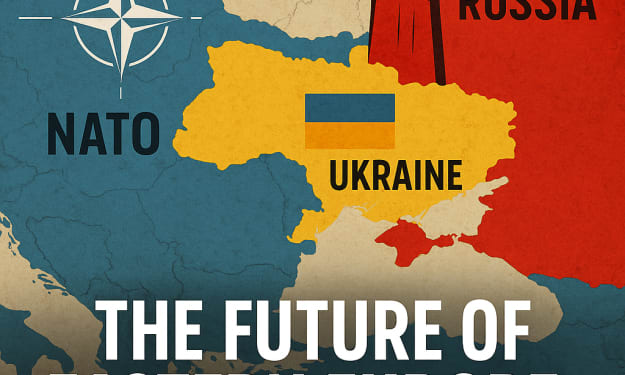
The Future of Eastern Europe: A Changing Geopolitical Landscape The war between Ukraine and Russia has redefined the political, military, and economic contours of Eastern Europe. What began in February 2022 as a full-scale invasion by Russia quickly escalated into the largest and most brutal conflict on European soil since World War II. Two years on, the war has not only devastated Ukrainian cities and lives but has also shaken the geopolitical foundation of the region. A Region Caught in Transformation Eastern Europe has long been a complex region, marked by a history of shifting borders, ideological divides, and contested national identities. Since the collapse of the Soviet Union in 1991, many Eastern European countries have transitioned from Soviet influence to democratic governance and closer ties with the West. NATO and EU enlargement have brought former Warsaw Pact nations like Poland, Romania, and the Baltic States into the Western fold, often provoking deep resentment and anxiety in Moscow. The current war has accelerated these geopolitical shifts. Countries once cautious of Russia are now vocal and decisive in their opposition. Finland and Sweden—historically neutral nations—have joined NATO or pursued membership as a direct response to Russia’s aggression. Eastern Europe is now on the front lines of a new Cold War-like standoff between Russia and the West. Ukraine’s Place in Europe Ukraine’s resistance has not only earned global admiration but also sparked an identity transformation within the country. Once divided between pro-Western and pro-Russian sentiments, the war has forged a more unified Ukrainian identity that is staunchly independent and increasingly aligned with European democratic values. Kyiv has officially applied for EU membership and received candidate status, symbolizing its firm orientation toward the West. If the war ends in Ukraine’s favor, a post-war reconstruction plan—backed by the West—could integrate Ukraine more deeply into the European Union’s political and economic systems. Such a development would be a decisive blow to Russia’s long-standing influence in the region. Russia’s Diminishing Influence Russia's invasion, intended to reassert its dominance, may ultimately isolate it further. Economic sanctions, diplomatic ostracism, and battlefield losses have eroded Russia’s global standing. In Eastern Europe, trust in Moscow has plummeted, and former allies like Hungary and Serbia are facing increasing pressure to distance themselves from the Kremlin. Moscow may attempt to compensate for its regional losses by deepening its relationships with non-Western powers such as China, Iran, and North Korea. However, even within these alliances, Russia is no longer the dominant power it once aspired to be. The Rise of Regional Powers Countries like Poland and Romania are emerging as key players in the region. Poland, for example, has significantly increased its defense spending, modernized its military, and taken in millions of Ukrainian refugees. It now serves as a logistical and political bridge between Ukraine and the broader Western world. The Baltic States—Latvia, Lithuania, and Estonia—have also taken a leading role in pushing for a strong NATO presence in the region. Their experience under Soviet occupation gives them a unique sense of urgency and clarity about the dangers of Russian expansionism. A Divided Europe? While unity among NATO and EU countries has been largely strong, the war has also exposed some divisions. Countries like Hungary continue to maintain a more conciliatory stance toward Moscow, driven by economic dependencies and political alliances. Such divergences will continue to test the cohesion of Europe in the years ahead. Moreover, the economic strain of prolonged conflict, including rising energy prices and defense spending, could challenge public support for continued aid to Ukraine. Eastern European leaders must balance national interests with the broader goal of maintaining regional stability. The Road Ahead The future of Eastern Europe depends heavily on the outcome of the war in Ukraine. A Ukrainian victory could solidify a Western-oriented bloc stretching from the Baltic to the Black Sea, deeply integrated into NATO and the EU. A frozen conflict or Russian success, however, could leave the region in a state of prolonged insecurity and division. What is certain is that Eastern Europe is undergoing a profound transformation. Borders may remain the same on maps, but the alliances, identities, and power structures of the region are being redrawn. As the war continues, so does the redefinition of what Eastern Europe stands for—and where it is headed.
By World politics about a year ago in The Swamp
What I Would Do If I Became President
Here is a bit of a rant of what I would do if I had the power, which of course I don't. I would add a new constitutional amendment stating clearing we have freedom from religion since a lot of religious folks claim it is not in the constitution when you cannot have freedom of religion without freedom from religion. All religions and lack thereof will be respected. No political office can ask about religious affiliation or lack thereof.
By Ferrari Kingabout a year ago in The Swamp
Pat McFadden Talks to Rebel MPs.
After last Thursday's drubbing of Labour by Reform UK, Labour MPs were in a rebellious mood. Labour up and down the country lost council seats, mayoral elections, and the Runcorn and Helsby by-election. After such a bad night and Sir Keir Starmer's rejection of a U-turn on policy, that was enough for many Labour MPs.
By Nicholas Bishopabout a year ago in The Swamp
Pakistan and India on the Brink: A Modern-Day Conflict
Military Showdown: India vs. Pakistan in 2025 The year 2025 has brought the South Asian subcontinent to the brink of a full-scale war between India and Pakistan. A longstanding history of territorial disputes, political tensions, and military confrontations has once again flared into open hostilities. The current military showdown, which began with a skirmish along the Line of Control (LoC), has rapidly escalated into a modern-day conflict involving both conventional and unconventional warfare tactics. This article delves into the key elements of this military showdown, examining the capabilities, strategies, and potential consequences of this catastrophic clash between two nuclear-armed neighbors. The Escalation to War: A Tense Beginning The immediate trigger for the war was an intense confrontation on the LoC in Kashmir, a region that has remained a contentious battleground since the partition of British India in 1947. In late April 2025, a violent exchange between Indian and Pakistani forces along the LoC claimed the lives of several soldiers from both sides. Pakistan blamed India for an unprovoked attack on its military positions, while India accused Pakistan of sponsoring militant groups who were infiltrating its territory. This clash, though small in scale initially, soon spiraled out of control as both nations responded with retaliatory airstrikes, artillery bombardments, and a full mobilization of ground troops. The Military Capabilities: A Fierce Comparison Both India and Pakistan possess formidable military forces, each with its own strengths, and a comparison of their capabilities highlights the scale of the potential conflict. India’s Military Power: India, with one of the largest standing armies in the world, has a significant advantage in terms of manpower. With a population of over 1.4 billion, India maintains a military force of over 1.4 million active-duty personnel and more than 2 million reserve forces. India’s arsenal is dominated by advanced tanks, artillery, and infantry, supported by modern air and naval power. India’s Air Force, which is considered one of the most capable in Asia, boasts a fleet of fighter jets, including the Sukhoi Su-30MKI, Rafale, and indigenous Tejas aircraft. Furthermore, India possesses a significant array of ballistic missiles and precision-guided munitions. In terms of nuclear capability, India has an estimated 160 to 170 nuclear warheads. India’s nuclear strategy is centered around the doctrine of "No First Use," meaning that it has pledged not to use nuclear weapons unless first attacked by an adversary with nuclear weapons. Pakistan’s Military Strength: Pakistan’s military, though smaller than India’s in terms of sheer numbers, is no less formidable. Pakistan’s armed forces consist of approximately 650,000 active-duty personnel and around 550,000 reserves. The Pakistani military has invested heavily in asymmetric warfare tactics, focusing on maintaining a strategic edge through its use of irregular forces and specialized combat units. Pakistan’s military is also known for its adept use of terrain in the mountainous areas of Kashmir and the ability to launch rapid counterattacks. In terms of air power, Pakistan's Air Force operates a combination of F-16 Fighting Falcons, JF-17 Thunder, and Mirage fighters. Pakistan has also significantly upgraded its missile defense systems and is developing its own indigenous long-range ballistic missiles. The most concerning aspect of Pakistan’s military capabilities is its nuclear arsenal. With an estimated 170 to 180 nuclear warheads, Pakistan maintains a policy of "full-spectrum deterrence," which means it reserves the right to use nuclear weapons across a range of situations, including low-intensity conflict. The Role of Air Power and Cyber Warfare One of the most striking features of this modern military showdown has been the use of advanced airstrikes. Both nations have engaged in frequent bombing runs over disputed territories, targeting military bases, supply lines, and even civilian infrastructure. Indian fighter jets have conducted precision strikes on Pakistani border positions, while Pakistan has retaliated with aerial bombardments and has attempted to disrupt India’s air superiority with surface-to-air missile systems. In addition to traditional warfare, both India and Pakistan have engaged in a new form of battle: cyber warfare. Both countries have launched sophisticated cyberattacks on each other’s military and civilian infrastructure, targeting everything from communications systems to power grids. These cyber operations have created significant confusion and disruption, making it harder for both sides to coordinate military efforts effectively. The Risk of Escalation: Nuclear Concerns As the conflict intensifies, the possibility of nuclear escalation becomes a significant concern. Both nations have significant nuclear arsenals, and the threat of nuclear use, however unlikely, cannot be discounted. While both countries have made public statements reaffirming their commitment to nuclear deterrence and non-use policies, the rapidly deteriorating situation on the ground has raised alarm bells internationally. India’s nuclear doctrine of "No First Use" is designed to reassure its population and the world that it will only use nuclear weapons in retaliation to a nuclear attack. However, Pakistan’s nuclear policy is based on the concept of "full-spectrum deterrence," meaning it may use nuclear weapons in response to conventional attacks if it perceives an existential threat. In a situation where conventional forces are unable to resolve the conflict, either side might consider escalating to nuclear weapons, potentially triggering a catastrophic regional or even global crisis. Global Reactions and International Mediation The international community, including major powers like the United States, China, and Russia, has expressed deep concern over the escalation. The United Nations has called for an immediate ceasefire and has offered to mediate peace talks. However, the diplomatic channels between the two countries have remained closed, with both governments accusing each other of sabotaging peace efforts. China, a key ally of Pakistan, has cautiously called for restraint, while Russia has expressed support for India's right to defend its sovereignty. The United States, which maintains strategic partnerships with both India and Pakistan, has been vocal in urging both nations to return to the negotiating table before the situation spirals out of control. Conclusion: The Path Forward As the military confrontation between India and Pakistan continues to evolve, the world watches with bated breath. The stakes are higher than ever. With both nations possessing nuclear weapons and the potential for widespread destruction, the conflict could have far-reaching consequences, not just for South Asia but for global security. While there are ongoing efforts to de-escalate the conflict through diplomatic means, the path to peace remains uncertain. The world can only hope that the leaders of both nations will choose dialogue over destruction and work toward a lasting resolution to the crisis.
By World politics about a year ago in The Swamp
The Ultimate Manifesto of Absurd Revolution
Part I: The Stage is Set, the Play is Mad Act I: The Absurdity Overture Reality, as we've been sold it, is a limited-run stage production directed by a committee of gibbering baboons. The set design is... ambitious. Picture this: gated communities sprouting like gleaming, chrome-plated fungi next to favelas cobbled together from desperation and discarded dreams. A smiling cartoon dog, perpetually sipping coffee, while the ozone layer develops a comb-over and the polar bears start taking bets on which of us goes extinct first.
By Abigail Goldwater (Guldvatten)about a year ago in The Swamp
Three Indian Fighter Jets Crash in Jammu and Kashmir Amid Heightened Tensions. AI-Generated.
Three Indian Fighter Jets Crash in Jammu and Kashmir Amid Heightened Tensions Jammu and Kashmir, May 7, 2025 — In a dramatic escalation of military tensions between India and Pakistan, three Indian Air Force (IAF) fighter jets crashed in the region of Jammu and Kashmir on Tuesday, according to local government sources. The crashes occurred amidst a volatile backdrop of cross-border hostilities following recent airstrikes and retaliatory fire between the two nuclear-armed nations.
By Adnan Rasheedabout a year ago in The Swamp
"Superpowers at a Crossroads: The Future of U.S.–China Relations in 2025"
Superpowers at a Crossroads: The Future of U.S.–China Relations in 2025 How the World’s Two Giants Are Shaping a New Global Order In the ever-shifting landscape of international politics, few relationships carry as much weight—or as much risk—as that between the United States and China. These two global giants, wielding unmatched economic, military, and technological influence, stand at a pivotal crossroads in 2025. Their interactions do more than affect their own nations; they ripple across continents, shaping global markets, alliances, security frameworks, and the future of international cooperation. A Relationship Built on Competition and Codependence Since China’s economic liberalization in the late 20th century, the U.S.–China relationship has oscillated between cautious engagement and intense rivalry. The U.S. played a key role in China’s accession to the World Trade Organization in 2001, hoping economic integration would encourage political openness. But instead of liberalization, China grew more assertive, and its rise has challenged American primacy on multiple fronts. Today, the two countries are deeply economically intertwined yet politically estranged. Bilateral trade still amounts to hundreds of billions of dollars annually, but tariffs, export bans, and national security concerns have fractured the trust that once underpinned cooperation. The U.S. accuses China of intellectual property theft, unfair trade practices, and currency manipulation, while China views America’s actions as attempts to contain its rightful ascent. The Taiwan Flashpoint and Military Tensions No issue exemplifies the fragility of U.S.–China relations more than Taiwan. Beijing considers the self-governing island a breakaway province and has not ruled out the use of force to achieve reunification. The U.S., while maintaining a "One China" policy, continues to support Taiwan’s democratic system and provides arms to bolster its defense. Military tensions in the South China Sea and Taiwan Strait have escalated, with close encounters between naval forces and increased military drills. The Indo-Pacific region has become a theater for strategic posturing, with the U.S. strengthening alliances with Japan, South Korea, Australia, and India through forums like the Quad. The Battle for Technological Dominance Beyond territorial disputes, the U.S.–China rivalry is increasingly defined by the race for technological supremacy. From 5G networks and artificial intelligence to semiconductors and quantum computing, both nations are investing heavily to outpace the other. The U.S. has restricted Chinese tech firms like Huawei from accessing advanced chip technologies, citing security concerns. In response, China has accelerated efforts to achieve self-sufficiency in critical sectors. This tech arms race is not just economic—it's ideological. It reflects broader concerns about data governance, surveillance, digital freedom, and the role of the state in shaping innovation. The outcome will determine whose standards and values dominate the next generation of global infrastructure. Climate: The One Area of Potential Cooperation Amid the competition, climate change remains a rare domain of shared interest. As the world’s two largest carbon emitters, the U.S. and China hold the key to meaningful global climate progress. While their climate diplomacy is often marred by broader tensions, both countries have signaled willingness to collaborate on clean energy, emissions reduction, and green technology. In late 2024, the two sides resumed high-level climate talks, focusing on methane reduction and sustainable finance. Although modest, such engagements hint at the possibility of compartmentalized cooperation—where both sides work together on existential global issues, even as strategic rivalry continues elsewhere. A New Global Order in the Making As we move further into 2025, it’s clear the old world order—centered on unchallenged U.S. dominance—is giving way to a multipolar reality. China is carving out a leadership role in the Global South, offering an alternative to the Western model through infrastructure programs like the Belt and Road Initiative. Meanwhile, the U.S. is reinvigorating alliances and promoting a rules-based international order. The world is watching as these two superpowers navigate a path forward. Will they settle into a “cold peace” of managed competition, or stumble into open confrontation? Can multilateral institutions mediate their differences, or will new blocs emerge? Conclusion The U.S.–China relationship is not merely bilateral—it is global in consequence. How these nations choose to engage with each other will shape the trajectory of war and peace, cooperation and conflict, progress and peril. In 2025, with stakes higher than ever, the world’s two giants must decide: will they lead the world together—or pull it apart?
By World politics about a year ago in The Swamp
"The Shifting Landscape of World Politics in 2025"
China’s Expanding Influence in Asia and Beyond In 2025, China's rise as a global superpower is no longer a prediction — it is a living reality. The once unipolar world order dominated by the United States is now being reshaped by a multipolar dynamic, with China playing a leading role. From economic investments and military advancements to diplomatic strategies and cultural outreach, China's influence is stretching far beyond its borders, fundamentally altering global geopolitics. Economic Expansion Through the Belt and Road Initiative At the heart of China’s global strategy lies the Belt and Road Initiative (BRI), a massive infrastructure and investment project launched in 2013. Now in its second decade, the BRI has connected more than 140 countries through roads, railways, ports, and digital infrastructure. It has allowed China to secure trade routes, gain access to critical resources, and extend its economic presence into regions traditionally dominated by Western powers. In Asia, countries like Pakistan, Sri Lanka, and Laos have become heavily reliant on Chinese investments. For instance, the China-Pakistan Economic Corridor (CPEC) has not only enhanced trade between the two nations but also given China strategic access to the Arabian Sea. Meanwhile, in Africa and Latin America, China continues to fund infrastructure projects and offer loans that come with fewer political strings than Western aid — although critics warn of a potential “debt trap” diplomacy. Military Modernization and Strategic Posturing China's military, particularly the People’s Liberation Army Navy (PLAN), has undergone rapid modernization. The South China Sea remains a central point of tension, as Beijing continues to assert its claims over disputed territories, building artificial islands and militarizing them despite international criticism and rulings from The Hague. Beyond its immediate region, China has increased its presence in the Indian Ocean, with a military base in Djibouti and regular naval deployments in strategic chokepoints. Its expanding blue-water navy is designed not only to protect trade routes but also to project power far from its shores. This has raised concerns in neighboring countries and drawn the attention of the United States and its allies. Diplomacy with “Chinese Characteristics” Beijing’s diplomatic approach combines traditional statecraft with economic leverage and soft power. Through platforms like the Shanghai Cooperation Organization (SCO) and the recently revived BRICS bloc, China seeks to reshape global governance structures to be less Western-centric. It champions “non-interference” in domestic affairs — a stance attractive to many authoritarian regimes — and presents itself as a counterbalance to U.S. influence. China has also stepped up its role as a mediator in international conflicts. In 2023, it brokered a landmark diplomatic thaw between Iran and Saudi Arabia, demonstrating its growing clout in the Middle East. Such actions position Beijing not just as a global power, but as a global peace broker — a role long monopolized by the West. Cultural Soft Power and Global Narratives Beyond economics and military might, China is actively promoting its culture and political ideology. With state-run media like CGTN and Xinhua expanding their global reach, and Confucius Institutes established in dozens of countries, China is investing in shaping public opinion overseas. The narrative emphasizes harmony, mutual development, and respect for sovereignty — subtly contrasting with what Beijing portrays as Western hypocrisy and interventionism. At the same time, digital platforms like TikTok (owned by Chinese company ByteDance) have become part of China’s soft power arsenal. Though primarily entertainment platforms, they subtly contribute to cultural normalization and influence among global youth. Challenges and Pushback Despite its success, China’s rise is not without resistance. Several countries have grown wary of its economic dominance and political motives. In Southeast Asia, nations like Vietnam and the Philippines are strengthening ties with the U.S. and forming regional alliances to counter Chinese assertiveness. In Europe and the U.S., concerns about human rights, intellectual property theft, and cyber-espionage continue to strain relations with Beijing. Moreover, the “China model” — combining authoritarian governance with capitalist economics — is viewed with suspicion in democratic societies, especially as Beijing tightens its grip on Hong Kong and cracks down on dissent at home. Conclusion: A New World Order in the Making As we move deeper into the 21st century, China’s expanding influence is reshaping not only Asia but the global balance of power. Whether one views this transformation with optimism or concern, it is clear that the world must adapt to a future where China is a central actor. How other nations respond — with cooperation, competition, or confrontation — will determine the course of global politics for decades to come.
By World politics about a year ago in The Swamp