politicians
Reviews of the politicians kissing babies and running governments around the world; applaud and criticize the decisions they make and their implications.
America in Flux: The Bold Moves and Backlash Shaping the U.S. in 2025
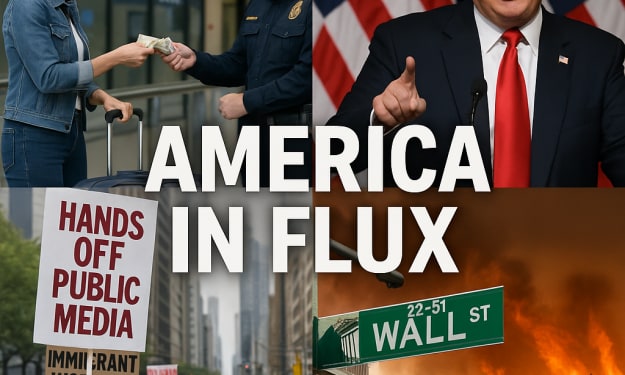
America in Flux: The Bold Moves and Backlash Shaping the U.S. in 2025 The United States is in the midst of a transformative period in 2025, driven by sweeping policy changes, rising public dissent, and economic developments that are redefining the national landscape. Under the renewed leadership of former President Donald Trump, the federal government is introducing initiatives that are being praised by some as "bold leadership" and criticized by others as authoritarian overreach. Let’s take a closer look at what’s unfolding across America in real time—and what it means for the future. Trump’s Second Term: An Aggressive Agenda Unfolds In his second term, President Trump has wasted no time reshaping federal priorities. One of the most talked-about measures is the introduction of a program offering undocumented immigrants $1,000 and a plane ticket to voluntarily leave the country. Critics argue that the initiative manipulates vulnerable populations and could potentially bar them from future legal reentry. At the same time, a controversial executive order is eliminating federal funding for public broadcasters such as NPR and PBS. Trump’s administration claims it’s about stopping taxpayer funding of “biased media,” while journalists and civil liberties groups warn this could threaten press freedom and diminish the public’s access to nonpartisan information. Perhaps most surprising is Trump’s order to reopen Alcatraz prison. Once a notorious penitentiary shut down in 1963, Alcatraz’s revival is raising eyebrows, especially as many state officials claim they weren’t consulted. Public Backlash: Protests and Grassroots Movements Surge In response to these sweeping changes, Americans are taking to the streets. On May 1, a massive movement labeled “50501”—a nod to the date—mobilized protesters in cities like New York, Los Angeles, and Chicago. Their grievances ranged from anti-immigration policies and worker rights to broader concerns about authoritarianism. The movement is diverse and intersectional, uniting labor activists, immigrants’ rights organizations, and student groups. Social media has played a major role in organizing the protests, signaling a resurgence of online-driven activism reminiscent of the Black Lives Matter and Women’s March movements. These protests are not isolated incidents—they reflect a growing sense of urgency among Americans who fear the erosion of democratic norms.
By Saqib Ullahabout a year ago in The Swamp
India-Pakistan Conflict 2025: Inside the Pahalgam Attack and Rising Tensions in Kashmir
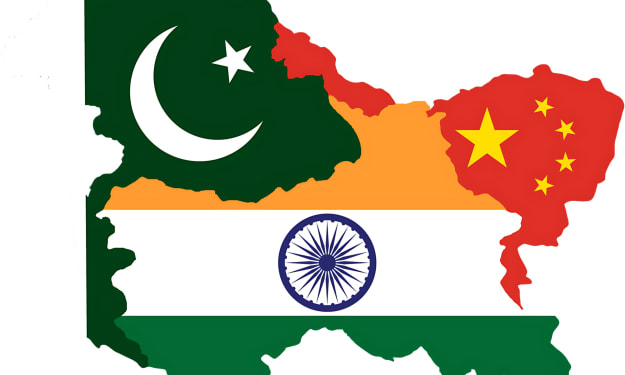
The Pahalgam Tragedy That Sparked a Storm On April 22, 2025, a horrific terrorist attack in the Baisaran Valley near Pahalgam, a tourist haven in Indian-administered Kashmir, sent shockwaves across South Asia. Disguised as Indian soldiers, a group of militants opened fire on Hindu pilgrims, killing 26 and injuring over 20 others. The attackers fled into dense forests, evading capture. This incident immediately reignited hostilities between India and Pakistan. The Indian government was swift in its accusations, pointing to Pakistan-based terror groups, specifically Lashkar-e-Taiba, as the orchestrators of the massacre. The presence of Pakistani nationals among the attackers, as cited by Indian intelligence, further inflamed the situation. Pakistan, however, denied any involvement, calling the claims baseless and politically motivated. Decades of Hostility: The India-Pakistan Kashmir Dispute India and Pakistan have fought three full-scale wars and engaged in countless skirmishes since their independence in 1947. At the heart of their animosity lies the Kashmir region, a territory both nations claim in full but control in parts. The region has seen cycles of insurgency, military operations, and diplomatic breakdowns for decades. Tensions have been especially volatile since the 2019 revocation of Article 370, which stripped Jammu and Kashmir of its special status. This move further alienated local populations and drew sharp rebukes from Pakistan. The 2025 Pahalgam attack has now become the deadliest incident since the 2019 Pulwama bombing and may signal another prolonged phase of unrest. Military Escalation: LoC Firefights and Missile Tests In the days following the attack, both nations began bolstering their military positions along the volatile Line of Control (LoC). Cross-border firing has been reported almost daily since April 24, with casualties on both sides. On May 3, Pakistan test-fired its short-range Abdali missile, seen by many analysts as a show of strength amidst the escalating tensions. India responded with large-scale military drills in its northern border regions and civil defense exercises in New Delhi and Punjab, signaling preparation for any potential escalation. Defense analysts warn that continued skirmishes and posturing increase the risk of an accidental war—especially between two nuclear-armed neighbors. Diplomatic Fallout and Global Concern As military movements intensified, so did diplomatic fallout. India suspended the Indus Waters Treaty, a landmark 1960 agreement that governs water sharing from rivers vital to Pakistan’s agriculture. Additionally, India expelled Pakistani diplomats and barred Pakistani aircraft from entering Indian airspace. Pakistan retaliated by suspending the Simla Agreement, closing its airspace to Indian airlines, and recalling its ambassador from New Delhi. With both sides severing communication channels, backdoor diplomacy efforts have all but collapsed. The United Nations Security Council held an emergency closed-door session on May 5. While urging both countries to exercise restraint, the council stopped short of direct intervention. Meanwhile, China and the United States have called for bilateral talks, though neither side appears willing to back down.
By Saqib Ullahabout a year ago in The Swamp
A Timeline of Tensions Between India and Pakistan Over Kashmir
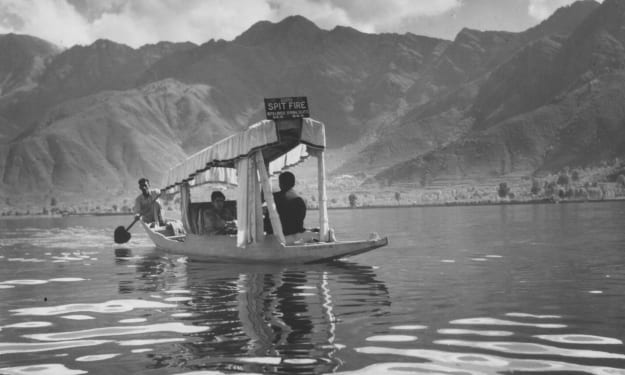
A Timeline of Tensions Between India and Pakistan Over Kashmir The Kashmir conflict is one of the most protracted and volatile territorial disputes in the world rooted in the partition of British India in 1947. India and Pakistan both nuclear armed neighbors have fought multiple wars and engaged in recurring skirmishes over this contested region. This article outlines a detailed timeline of the tensions between the two nations over Kashmir.
By Adnan Rasheedabout a year ago in The Swamp
Ordinary Thief vs Political Thief: The Real Cost of Corruption
The word “thief” usually brings to mind someone who steals wallets, breaks into homes, or snatches phones on the street. But there’s another kind of thief that operates on a much larger scale, often in plain sight — the political thief. While both are involved in theft, the consequences of their actions are vastly different. In this article, we’ll explore the differences between an ordinary thief and a political thief — and why the latter often causes far more damage to society.
By CodeCraft By Rashidabout a year ago in The Swamp
India and Pakistan Face Off Over Kashmir Terror Attack: Is South Asia Headed for a Major Conflict?
rorist attack in Indian-administered Kashmir. The April 22 attack in the scenic town of Pahalgam, a popular destination for Hindu pilgrims, killed at least 26 people and injured dozens more. Claimed by a militant group called *The Resistance Front*, the incident has triggered a wave of retaliation from the Indian government and a strong counter-response from Pakistan, bringing the nuclear-armed neighbors to the brink of confrontation once again. As of late April 2025, both countries have taken dramatic diplomatic, military, and strategic measures that signal a sharp deterioration in relations. This sudden breakdown comes amid an already tense regional atmosphere and raises fears of yet another armed conflict over the disputed territory of Kashmir. The Kashmir Flashpoint: A History of Violence and Dispute The Kashmir region has long been a hotbed of conflict between India and Pakistan, dating back to the partition of British India in 1947. Both nations claim the region in full, but each controls a portion—India administers Jammu and Kashmir, while Pakistan governs what it calls Azad Kashmir. Over the decades, this unresolved territorial dispute has led to three full-scale wars and countless skirmishes along the Line of Control (LoC), the de facto border dividing the two parts of Kashmir. What makes this current situation particularly dangerous is the nature of the attack and its aftermath. The targeting of Hindu pilgrims in Pahalgam has not only shocked India but also inflamed religious and nationalistic sentiments. It is being seen not just as an act of terrorism, but a symbolic attack on India’s cultural and religious heritage. India has accused Pakistan of backing the militant group responsible for the attack, citing long-standing evidence of cross-border terrorism. While Pakistan denies any involvement, the Indian government insists that such organizations operate with impunity in Pakistani territory, using it as a base to strike inside India. India’s Strong Response: Diplomatic and Military Escalation In response to the Pahalgam attack, Indian Prime Minister Narendra Modi’s administration moved swiftly. Within hours, high-level security meetings were convened, and within days, India initiated a series of sweeping actions: Suspension of the Indus Waters Treaty: This landmark water-sharing agreement, brokered in 1960 by the World Bank, has withstood decades of conflict. Its suspension is a rare and bold move that signals how deeply New Delhi views the current crisis. Cancellation of all Pakistani visas: India has revoked all visas issued to Pakistani nationals, effectively shutting down travel and cultural exchanges between the two countries. Expulsion of Pakistani diplomats: Several Pakistani officials were ordered to leave India, and New Delhi recalled its own diplomats from Islamabad. Military freedom of action: The Indian Army has been given “full operational freedom” to respond to provocations along the LoC, indicating the possibility of cross-border operations or retaliatory strikes. These steps mark one of the most severe diplomatic breakdowns between the two countries in recent memory. They also suggest that India is preparing for a range of responses, including potential military retaliation. Pakistan's Reaction: Strategic Posturing and International Appeals Pakistan, in turn, has responded aggressively. Prime Minister Shehbaz Sharif condemned India’s actions and accused New Delhi of using the attack as a pretext to justify harsh measures against Kashmiris and provoke war. Pakistan’s countermeasures include: Closure of airspace to Indian aircraft, affecting both commercial and military flights. Suspension of bilateral agreements, including aspects of the 1972 Simla Agreement, which governs peaceful conflict resolution between the two nations. Mobilization of military forces along the LoC, accompanied by increased patrols and strategic deployments. Capture of an Indian soldier, who allegedly crossed the border accidentally, adding further strain to military relations. Pakistan has also appealed to international bodies such as the United Nations and the Organization of Islamic Cooperation (OIC) to intervene diplomatically. Islamabad claims India is inflaming the situation and using the tragedy to distract from alleged human rights abuses in Jammu and Kashmir. Global Concern: Calls for Restraint Amid Nuclear Risk Given that both India and Pakistan possess nuclear weapons, the situation has alarmed the international community. The United States, European Union, United Nations, and other key players have issued urgent calls for de-escalation and a return to diplomacy. U.S. Secretary of State Marco Rubio has announced plans to speak directly with his counterparts in New Delhi and Islamabad. The goal, according to the State Department, is to prevent any further deterioration of the situation and to encourage dialogue. Meanwhile, China—an ally of Pakistan and a regional power with interests in Kashmir—has issued a cautious statement urging restraint and peace, without clearly siding with either nation. The potential for regional spillover remains high, especially if either country initiates a military strike. Media and Public Opinion: Nationalism on the Rise The media on both sides of the border have intensified nationalist rhetoric. In India, television networks are calling for strong retaliatory action, echoing sentiments of revenge and justice for the victims of the Pahalgam massacre. In Pakistan, state media presents India’s actions as unjustified aggression and highlights the humanitarian crisis in Kashmir. Social media is flooded with polarized hashtags like #StandWithIndia, #StopTerror, #FreeKashmir, and #StopIndianAggression, reflecting deep divisions and the powerful role of digital platforms in shaping public opinion. What Lies Ahead: Dialogue or Confrontation? As the crisis unfolds, the coming days will be critical. If India proceeds with military retaliation, the chances of a wider conflict grow significantly. Past confrontations, like the Balakot airstrike in 2019 and the surgical strikes in 2016, suggest that India may consider limited but high-impact operations to punish militant bases in Pakistan. However, such actions could prompt massive retaliation from Pakistan, potentially leading to a cycle of violence neither side can easily control. The international community will need to act swiftly to mediate, but peace will ultimately depend on whether both governments prioritize stability over political gains. Conclusion The recent terror attack in Kashmir has reopened deep wounds between India and Pakistan, putting South Asia on a knife’s edge. With diplomatic ties unraveling and military forces mobilizing, the risk of escalation is real and immediate. Whether cooler heads prevail or the situation devolves into open conflict will depend on the choices made by leaders in New Delhi, Islamabad, and global capitals in the days to come. India-Pakistan Conflict
By NextGen Mobile Techabout a year ago in The Swamp
An Open Letter to President Donald J. Trump: A Call to Restore Stability and Leadership to America April 29, 2025. AI-Generated.
Dear President Trump, As your administration navigates unprecedented challenges—economic uncertainty, global tensions, and deepening divisions at home—it is critical to reflect on the path forward. While your commitment to American workers and “America First” principles has resonated with many, the current trajectory of tariffs, isolationist policies, and erratic governance risks undermining the very goals you seek to achieve. This letter urges you to reassess key policies, prioritize pragmatic solutions over ideological battles, and lead the nation toward unity, stability, and renewed prosperity.
By David Snamabout a year ago in The Swamp