politicians
Reviews of the politicians kissing babies and running governments around the world; applaud and criticize the decisions they make and their implications.
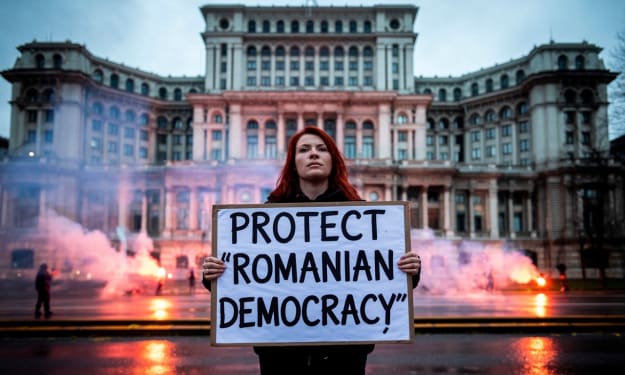
Romanian Democracy Under Siege
Romania's recent political turmoil represents a stark example of establishment resistance to democratic change. The unprecedented annulment of presidential elections and subsequent targeting of nationalist candidates has raised serious questions about the health of Romania's democracy. This analysis offers a counter-perspective to Politico's recent article, "The shadowy warlord behind Romania's wrecked election," by examining the constitutional crisis through a different lens: one that prioritizes electoral sovereignty and questions the narrative of foreign interference.
By The INFORMERabout a year ago in The Swamp
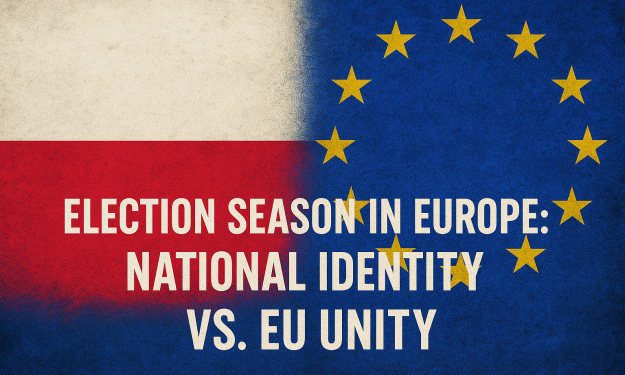
🇵🇱 European Elections and Rising Nationalism
Election Season in Europe: National Identity vs. EU Unity As spring 2025 turns to summer, voters from Warsaw to Lisbon—and from Bucharest to Dublin—are filing into gyms, town halls, and makeshift poll stations for the most consequential European election season in a decade. The headlines shout about populist surges, cyber-intrigue, and razor-thin polls, but the deeper story is an old question with new urgency: Can national identity comfortably coexist with the promise—and the constraints—of European Union unity? --- A Continent of Parallel Referendums Europe’s “super-cycle” of elections this year is unusually dense: Poland is choosing a president; Romania and Portugal hold general elections; Austria elects a new parliament just four weeks later; And in June, all 27 EU member states vote for the European Parliament. Traditionally, these contests unfold on separate timetables. In 2025, however, they overlap, allowing a single, trans-continental conversation to echo from capital to capital. And the common denominator is identity politics—how a nation sees itself versus how it fits inside a 450-million-person union. --- Poland: Between Civic Patriotism and Cultural Conservatism Polls put Warsaw’s liberal mayor Rafał Trzaskowski neck-and-neck with conservative historian Karol Nawrocki. Trzaskowski frames Poland as a “responsible European stakeholder,” promising to repair bruised relations with Brussels and to unlock €35 billion in frozen recovery funds. Nawrocki counters that Europe’s technocrats “do not understand Polish culture or sacrifice,” highlighting Catholic values, strict border controls, and wary views of Germany. The clash is not merely rhetorical; it could rewrite Poland’s constitution. Trzaskowski’s coalition wants to loosen one of the EU’s tightest abortion regimes and embed a stronger separation of church and state. Nawrocki vows to entrench an “unborn child protection” clause and elevate the Polish language’s constitutional status. Either path would become a test case for how far national constitutions can diverge from EU human-rights norms without triggering punitive measures from Brussels. --- Romania: Populism Learns to Speak Brussels If Poland exemplifies a tug-of-war between cosmopolitan and conservative definitions of nationhood, Romania’s far-right upstart George Simion demonstrates how nationalist rhetoric is evolving. Simion’s slogan “We Build Here” rails against perceived “colonial” investment by French banks and Austrian retailers, yet he also insists he would not take Romania out of the EU: “We respect the club—provided the club respects us.” Analysts call this “Euro-sovereigntism”—a strategy of leveraging EU rules to defend local industries while fending off deeper political integration. Simion demands the same agricultural subsidy formula that benefits French farmers and threatens to veto any new EU climate regulation that “kills Romanian coal.” In other words, the union becomes both scapegoat and shield, proving how malleable the project has become in the populist imagination. --- Portugal and Austria: The Centrist Counter-Punch Not every ballot is bending rightward. In Portugal, Socialist incumbent Marta Carvalho is favored to win a fresh mandate running on a straightforward pro-EU platform: robust green-energy investment financed by the EU Recovery Fund, plus a pledge to hit NATO’s 2 percent defense target. Her rally crowds chant “Europa, Europa,” illustrating how southern Europe’s memory of the euro-crisis still ties prosperity to Brussels. Austria, meanwhile, provides a textbook centrist comeback. Former chancellor Alexander Schallenberg rebuilt his battered People’s Party by adopting pragmatic migration quotas and clear support for EU enlargement in the western Balkans—policies that peel moderate voters away from the nationalist Freedom Party. Polls suggest a narrow People’s-Green coalition victory, hinting that disciplined centrism can still defeat identity-driven polarization. --- Digital Battlefields and Cyber Borders No modern European election escapes the digital arena. Poland’s intelligence service has traced thousands of social-media ads smearing Trzaskowski’s LGBTQ-rights stance to Russian-linked IP addresses. In Romania, deep-fake videos of Carvalho speaking broken Romanian—intended to mock elite Portuguese accents—were shared 1.8 million times on TikTok before being removed. Brussels has rolled out the Digital Services Act (DSA) requiring platforms to delete demonstrably false electoral content within 24 hours, but critics say enforcement lags. Tech-policy scholar Dr. Liisa Väyrynen notes, “The irony is that online disinformation travels along the same borderless network that once symbolized Europe’s unity.” The EU thus faces a paradox: protecting national elections may demand new cross-border regulations that feel, to some voters, like further encroachment. --- The Economics Underneath the Flags Beyond culture wars and meme warfare lies a concrete economic dilemma. The European Commission’s latest forecast projects GDP growth of 0.7 percent in 2025, sluggish by global standards. Energy costs remain volatile despite lower natural-gas prices, and defense spending has surged because of Russia’s 2024 offensive near Kharkiv. For many households, the EU’s single market still means cheaper flights and Erasmus scholarships; for small manufacturers in Łódź or Sibiu, it means German rivals outgunning them on scale. When Nawrocki decries “unequal competition,” or Simion demands “fair steel quotas,” they tap into legitimate discontent that Brussels often addresses with slow-moving funds rather than quick-fire narratives. --- What Unity Looks Like Now Is the European project fracturing? Not quite. Even the loudest nationalist leaders stop short of advocating a Brexit-style exit. The pragmatic calculus—access to €700 billion of recovery money, intelligence sharing against Russia, collective vaccine procurement—remains persuasive. Yet the union is morphing into a looser, more transactional federation. Political scientist Prof. Lucía Reyna describes the emerging model as “variable-geometry Europe”: countries cluster into mini-alliances—Nordic digital champions, Visegrád migration hawks, Mediterranean energy cooperatives—pursuing tailored integration levels. Elections in 2025 are accelerating this trend by rewarding politicians who master the dual language of sovereignty at home and savvy bargaining in Brussels. --- The Ballot-Box Forecast Will voter angst translate into sweeping constitutional upheavals? Poll-averages as of mid-May suggest a mixed verdict: The European Parliament could see the nationalist Identity & Democracy group rise from 84 to roughly 110 seats—significant, but still far from a majority in the 720-seat chamber. In national capitals, at least two of four high-profile races (Poland, Portugal, Austria, Romania) look likely to keep centrist or center-left governments in power. These numbers imply a pluralist parliament where coalitions will be messy but workable. For the EU, that means more debates on migration quotas, industrial-policy subsidies, and rule-of-law benchmarks—but no existential rupture. --- Conclusion: A Reluctant Renegotiation Europe’s 2025 election season underscores that national pride and European unity are not mutually exclusive, yet neither sits comfortably atop the other. Voters crave both the security of belonging to a powerful bloc and the reassurance that their unique languages, churches, and local industries will not be steamrolled by distant technocrats. The likely outcome is a continuous, sometimes exhausting renegotiation of competences: border policy here, fiscal transfers there, digital rules everywhere. As ballots are counted and coalitions formed, the takeaway is clear: Europe’s story is no longer a linear march toward “ever closer union,” but a mosaic of identities learning, argument by argument, how to share a roof without erasing the paint on each other’s front doors. In that sense, the contest between national identity and EU unity is not a battle to be won or lost in 2025; it is the defining conversation that will shape European democracy for decades to come.
By World politics about a year ago in The Swamp
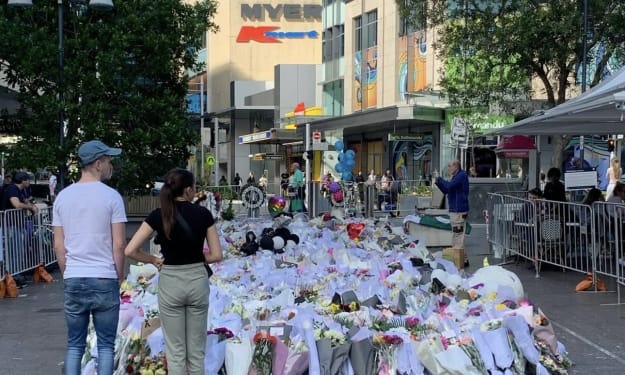
The Bondi Stabbings: how misogyny motivated a psychotic attack. Content Warning.
The Sydney Bondi Westfield shopping mall is one I know extremely well as I live ten minutes away. I would end up in there for an hour or two each week because my physiotherapist is nearby. Since my partner and I sustained life-changing injuries in a fatal tour bus crash, I would, after physio, as my partner had her treatment, walk slowly and cautiously around the mall. I suffer PTSD from the crash; so, crowds and crowded places, loud noise, are enough to cause a panic attack. Slowly, unknowingly, this shopping mall became a safe space for me. I would shuffle around, buy Pokémon cards, Squishmallows to rest my broken back on, and the occasional coffee and cookie combination. I made friends with a few of the store workers. The injuries from the crash left me socially isolated, I can’t do what I did before, I have chronic pain: the crash was life-changing. It is odd to say, but on reflection, the shopping mall became a haven for me; a place to get a little treat after painful physio sessions. On Saturday, 13 April 2024, when I heard the news of the murders, I had a devastating panic attack.
By Josh Clementsabout a year ago in The Swamp
Trump & KSA: Power, Oil, and Politics
Trump & KSA: Power, Oil, and Politics Few alliances in modern geopolitics have generated as much intrigue, criticism, and speculation as that between former U.S. President Donald J. Trump and the Kingdom of Saudi Arabia. It is a relationship built not merely on diplomacy, but on towering stakes: oil, arms, influence, and ideology. From lavish state receptions in Riyadh to controversial arms deals and mutual interests in regional security, the Trump-KSA connection became one of the defining features of his foreign policy. As Trump reenters the global stage with renewed political ambitions, the echoes of his engagement with Saudi Arabia continue to shape the narrative of U.S. involvement in the Middle East—and may once again become central in his potential return to power. During his presidency, Trump made Saudi Arabia the destination of his first official foreign trip in 2017—an unprecedented move that signaled how central the kingdom would be to his foreign strategy. This decision wasn’t just symbolic; it underlined a transactional, interest-first approach that marked his administration’s broader international policy. Trump emphasized strong economic ties, counterterrorism cooperation, and containing Iran’s influence in the region. His warm relationship with Saudi Crown Prince Mohammed bin Salman (MBS) was seen as a departure from the more cautious stance of previous administrations. One of the cornerstones of the Trump-KSA alliance was oil. As the world’s largest oil exporter, Saudi Arabia plays a pivotal role in global energy markets. Trump's administration worked closely with Riyadh to maintain stable oil prices, especially during times of crisis, such as the COVID-19 pandemic's impact on global demand. In return, Trump supported Saudi Arabia’s position within OPEC and often acted as a mediator in oil production negotiations between the Kingdom and Russia. But the Trump-KSA dynamic wasn’t limited to energy. Arms sales to Saudi Arabia skyrocketed under Trump’s presidency, with deals worth over $110 billion announced in 2017 alone. While critics accused the administration of enabling human rights abuses and contributing to the humanitarian crisis in Yemen, Trump defended the deals as essential for American jobs and strategic alliances. He repeatedly emphasized the economic benefits of maintaining strong ties with Riyadh, calling the Kingdom a “tremendous purchaser” of U.S. weapons and technology. The relationship wasn’t without controversy. The assassination of journalist Jamal Khashoggi in the Saudi consulate in Istanbul in 2018 triggered global outrage. While U.S. intelligence concluded that MBS had likely approved the operation, Trump stopped short of condemning the crown prince, citing strategic and economic priorities. This decision drew harsh criticism from human rights organizations, members of Congress, and international observers, who saw it as a glaring example of putting politics and profit over principles. Trump’s handling of the situation, however, highlighted his broader foreign policy philosophy: prioritize national interest, avoid unnecessary conflicts, and deal with partners on a transactional basis. To many in Washington, this was a cynical approach; to others, it was refreshingly pragmatic. As Trump teases a political comeback, observers are once again analyzing his past foreign policy moves for clues to his future intentions. Will he seek to rekindle the same level of engagement with Saudi Arabia? Will the dynamics of oil markets, now increasingly shaped by renewable energy debates and climate policy, alter that relationship? How will the shifting balance of power in the Middle East—from normalization deals with Israel to growing Chinese influence—affect a future Trump-KSA equation? One thing remains clear: Trump’s legacy in the Middle East is deeply entwined with his rapport with Saudi Arabia. For Riyadh, the Trump years represented a period of unparalleled access and influence in Washington. For Trump, Saudi Arabia offered a bold stage to project strength, strike deals, and redefine America’s role in the region. As the global geopolitical landscape continues to evolve, the partnership between Trump and the Saudi leadership remains a powerful case study in how personal diplomacy, strategic interests, and economic pragmatism can converge to reshape international relations. Whether viewed as a model of realpolitik or a troubling example of unchecked power dynamics, the Trump-KSA relationship will remain a subject of debate—and possibly a blueprint for his next chapter in global affairs.
By World politics about a year ago in The Swamp
Dirty Dollar
The dollar was crisp, clean, and new—but it smelled of blood, secrets, and silence. New York City, 2023. In the heart of Wall Street, a young financial analyst named Ethan Cole stumbled across something he wasn’t supposed to see. It was just another Tuesday—a blur of screens, coffee, and numbers—until a hidden file named "Project Babylon" landed accidentally in his inbox. One click, and his life changed forever.
By USAMA KHANabout a year ago in The Swamp
Why Donald Trump’s Visit to Abu Dhabi Matters Now. AI-Generated.
On the morning of May 15, 2025, U.S. President Donald Trump landed in Abu Dhabi, the capital of the United Arab Emirates. His sudden, low-profile visit has captured the world’s attention. This trip isn’t just about diplomacy—it may carry deeper political and business meanings.
By Nouman waliabout a year ago in The Swamp
Gladys Wanga: Husband, Age, Biography, Family, Education, Net Worth & More
Gladys Wanga has never been one to follow the crowd. A trailblazer from Homabay, she’s gone from grassroots activism to becoming one of Kenya’s most influential female leaders. Her journey is marked by courage, conviction, and a commitment to public service that’s earned her admiration far beyond her county borders. So who is the woman behind the title? Let’s take a closer look at her life — from her family and education to her rise in politics and the legacy she’s building.
By Marveline Merababout a year ago in The Swamp
Millie Odhiambo: Husband, Biography, Family, Age, Net Worth, Education & More
Not many politicians speak their minds quite like Millie Odhiambo. Known for her fearless stance on tough issues, she’s become a powerful voice in Kenyan politics. But beyond the public eye, there’s a story of resilience, family, and a deep commitment to justice that shapes who she is today. Let’s dive into her journey and what makes Millie tick.
By Marveline Merababout a year ago in The Swamp
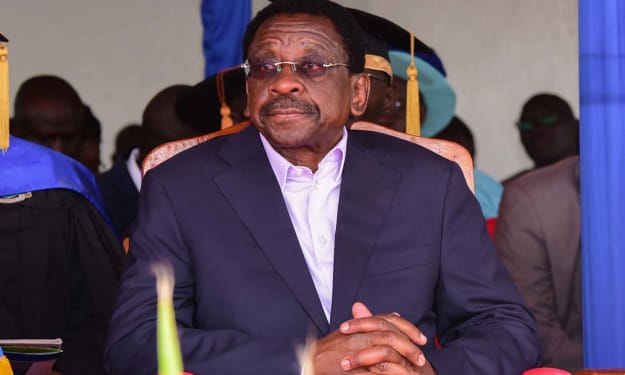
James Orengo: Age, Wife, Biography, Net Worth & More
You’ve probably heard his name in courtrooms, rallies, or late-night political debates. James Orengo has been everywhere — fighting for democracy, challenging power, and rewriting the rules of the game. But beyond the sharp suits and courtroom drama, there's a whole other side to him. Who really is James Orengo when the cameras are off? Let’s pull back the curtain on the man who’s been called Kenya’s legal brain and political enigma.
By Marveline Merababout a year ago in The Swamp
Syria Set for Economic Revival as US Lifts Sanctions
Syria poised for investment boom as US sanctions eased Trump's move to lift sanctions has sparked jubilation in Damascus, but can curbs on the war-torn nation be swiftly eased to aid economic reconstruction? During a visit to Saudi Arabia, US President Donald Trump on Tuesday announced plans to lift crippling sanctions on Syria, marking a major policy shift by Washington after 14 years of civil war. The country has been isolated by United States and European Union sanctions over the conflict, a 1979 designation as a state sponsor of terrorism and close ties between Damascus and Iran. These curbs blocked exports, froze assets and restricted access to global payment systems, which further decimated an economy wracked by war. The sanctions also exacerbated humanitarian crises that the UN estimates pushed 90% of Syrians below the poverty line. Trump agreed to lift the sanctions despite reported opposition from Israel on national security grounds regarding concerns over Syria’s past ties to Iran and Hezbollah Trump's move to lift sanctions has sparked jubilation in Damascus, but can curbs on the war-torn nation be swiftly eased to aid economic reconstruction? A Syrian man carries his child past damaged buildings in Maaret al-Numan, in the northwestern province of Idlib, Syria, on March 20, 2013 Syrian cities have been devasted by almost 14 years of civil war Image: Bulent Kilic/AFP Advertisement During a visit to Saudi Arabia, US President Donald Trump on Tuesday announced plans to lift crippling sanctions on Syria, marking a major policy shift by Washington after 14 years of civil war. The country has been isolated by United States and European Union sanctions over the conflict, a 1979 designation as a state sponsor of terrorism and close ties between Damascus and Iran. These curbs blocked exports, froze assets and restricted access to global payment systems, which further decimated an economy wracked by war. The sanctions also exacerbated humanitarian crises that the UN estimates pushed 90% of Syrians below the poverty line. Trump agreed to lift the sanctions despite reported opposition from Israel on national security grounds regarding concerns over Syria’s past ties to Iran and Hezbollah. From Riyadh to Damascus: Trump’s Middle East reset? What did Trump announce? Trump said Syria has a new government "that will hopefully succeed in stabilizing the country and keeping peace." Therefore, he would be "ordering the cessation of sanctions against Syria in order to give them a chance at greatness." Speaking during a three-day visit to Gulf Arab states, the US president said it was the war-ravaged country's "time to shine," before calling on the new leadership in Damascus to "show us something very special." Trump said the decision followed talks with Saudi Crown Prince Mohammed bin Salman (MBS) and Turkish President Tayyip Erdogan. Both leaders have been pivotal in pushing for change since the fall of dictator Bashar Assad's regime late last year, which saw Ahmad al-Sharaa, leader of rival group Hayat Tahrir al-Sham (HTS), step in to lead an interim government. Trump said the sanctions had served their purpose, but it was time for the country to move forward. On hearing the news, ordinary Syrians cheered in the streets of several cities and let off fireworks to celebrate. US lawmakers on both sides also gave their backing to the sanctions relief, along with the United Nations. Trump's decision was also welcomed by Syria's interim President Ahmed al-Sharaa, who was for years the leader of al Qaeda's official wing in the Syrian conflict and who met the US president briefly on Wednesday. Since he seized power in December, al-Sharaa has struggled to bring all of the country under his control, due to ongoing sectarian violence. How will lifting the sanctions help? Along with Iran, North Korea and Cuba, Syria is one of the most economically restricted countries. The new leadership faces the daunting task of rebuilding the country, large parts of which have been left in ruins. Devastated infrastructure, including roads, hospitals, and power grids, hampers the provision of basic services. Economic recovery will require massive investment to revive industries, while the millions of people displaced by the conflict at home and abroad will need to be resettled. The scale of the challenge is immense, with the United Nations Development Programme (UNDP) warning earlier this year that the Syrian economy had lost $800 billion (€712 billion) during the war. In January, a report by the Middle East Council on Global Affairs cited a need for $400 to 600 billion to fund reconstruction, while others have put the figure at close to $1 trillion. Sanction lifting will allow aid agencies to speed up their deliveries of food, medicine and other vital supplies to those who need it most. It will also smooth the way for wealthy neighbors Saudi Arabia, Qatar and the United Arab Emirates, to make large investments, fostering economic recovery that could stabilize the region. Natasha Hall, a senior fellow for the Middle East at the Center for Strategic and International Studies (CSIS) in Washington, said several countries had been nervous of the US reaction to doing business with the new Syrian leadership and had been "clamoring" for the sanctions to be removed. "This will be beneficial all around. Countries like Lebanon, Jordan and others will be able to trade with Syria. This could be a boon to their economies," Hall told DW. Turkey has expressed an interest in helping to rebuild Syria’s oil and gas sector and is likely to invest significantly, particularly in areas of northern Syria under its influence. Before the war, Germany, through its state-owned investment and development bank KfW, helped finance infrastructure projects and set up the Syria Recovery Trust Fund (SRTF) during the conflict. France already has a long-term deal to modernize and operate the port of Latakia, Syria's main maritime gateway, with other investments now likely. It's unclear whether the US and the EU will also announce plans to invest. However, the International Monetary Fund (IMF) has indicated its readiness to assist Syria’s reconstruction. The UN and World Bank are also expected to lead funding efforts for housing, health care, education, and utilities. The role of the Syrian diaspora, which will contribute significantly through remittances, funding community projects, and returning expertise, including doctors and engineers, will also be critical. Anwar al-Qassem, an economic analyst at the Financial Times business daily, believes that even in the most optimistic scenario, the Syrian economy would need a miracle to recover. "It would not be an exaggeration to say that the Syrian economy, which has lost 85% of its value, will likely need between 20 and 25 years to return to half of its pre-war level," al-Qassem told DW How quickly will the sanctions be unwound? Trump's announcement was the easy part. US officials will now need to determine which sanctions can be lifted quickly and which ones may be subject to conditions placed on Syria's new leadership. Hall from CSIS noted that "multiple layers of sanctions" were imposed on the Assad regime as well as "terrorism designations" and predicted that not all of them would be lifted immediately. "It will take time," she told DW, adding that "the devil will be in the details." Ziad Ayoub Arabash, a Syrian academic, consultant, and professor at the Faculty of Economics at Damascus University, believes the US Treasury Department would now decide the scope of the suspension. He told DW that it's unclear whether sanctions relief would be limited to specific sectors and the work of aid groups, or whether it would include lifting financial curbs to enable the Syrian Central Bank to work again with international banks. Arabash said Syria's chances would be further helped if the EU quickly lifted its sanctions. At the same time, he warned that corruption and weak government institutions would now be the biggest challenges to the reconstruction effort. A study by the Istanbul-based Jusoor Center for Studies and Development predicted that Syria's economy would rebound significantly without sanctions, predicting a revitalization of the oil and gas, raw materials, communications, and technology sectors
By Ikram Ullahabout a year ago in The Swamp