politicians
Reviews of the politicians kissing babies and running governments around the world; applaud and criticize the decisions they make and their implications.
Joe Biden Diagnosed with Aggressive Prostate Cancer: Nation Rallies Behind Former President
Former President Joe Biden Diagnosed with Aggressive Prostate Cancer A Personal and Political Reflection The world received a heavy hearted update this week: former U.S President Joe Biden has been diagnosed with an aggressive form of prostate cancer. At 82 years old Biden’s diagnosis has sparked a wave of concern not only as a political leader but as a father grandfather husband and symbol of resilience. The news has resonated beyond party lines serving as a sobering reminder that illness spares no one regardless of power or prestige. According to his medical team Biden is battling advanced aggressive prostate cancer a serious condition that can spread quickly if not treated in time. Unlike slow growing forms of prostate cancer which are common among older men and often remain manageable this type demands urgent attention. Sources close to the former president revealed that the diagnosis came after routine blood work showed elevated PSA (Prostate Specific Antigen) levels. Further tests including MRI scans and a biopsy confirmed the presence of a high grade fast spreading cancer. Doctors have advised a combination of hormone therapy chemotherapy and possibly radiation in the coming weeks. While the prognosis remains cautious Biden’s medical team remains optimistic about managing the disease due to early intervention.
By Adnan Rasheedabout a year ago in The Swamp
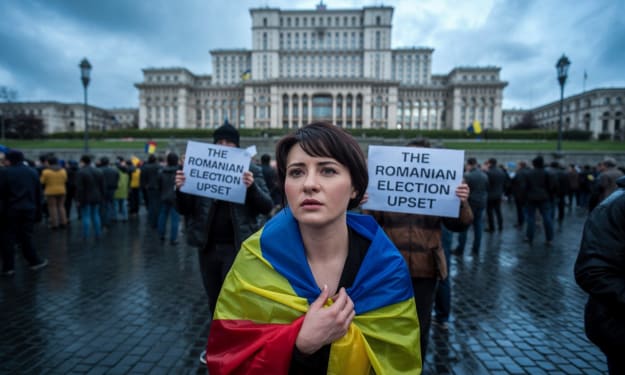
The Romanian Election Upset: A Deeper Analysis
In a surprising turn of events that has captured international attention, Bucharest Mayor Nicușor Dan has secured victory in Romania's presidential election, defeating far-right candidate George Simion by a significant margin. While the mainstream narrative portrays this as a simple triumph of pro-EU centrism over populist nationalism, the reality is more complex and nuanced.
By The INFORMERabout a year ago in The Swamp
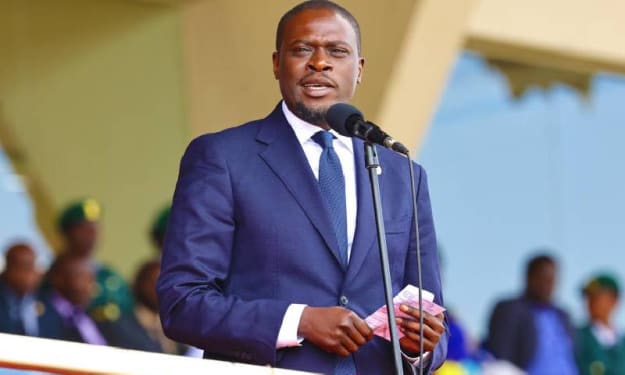
George Natembeya: Age, Biography, Education, Wife, Net Worth, Tribe & More
George Natembeya is a name that commands attention in Kenyan politics. Known for his no-nonsense leadership style and bold stance on governance, Natembeya has transitioned from a seasoned provincial administrator to the current Governor of Trans Nzoia County.
By Marveline Merababout a year ago in The Swamp
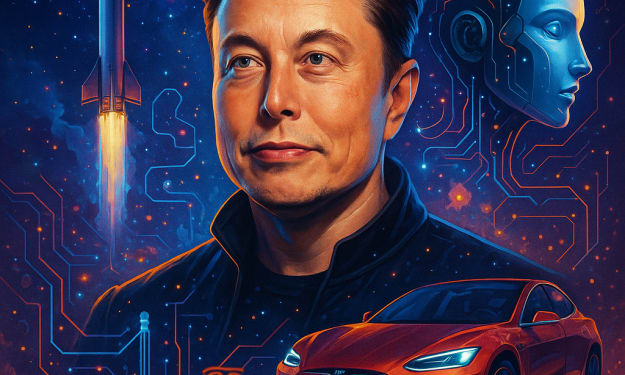
Trump’s Flirtation With Putin Could Lead to Europe’s Next War. AI-Generated.
When Russia launched its full-scale invasion of Ukraine, the world expected unity from the democratic West. And for a time, it happened. But now, as the war grinds on and Ukraine bleeds daily, some Western politicians are changing their tone — none more worryingly than Donald Trump.
By Mykhailo Datsyshynabout a year ago in The Swamp
America vs. The World: Who’s Really in Charge?
America vs. The World: Who’s Really in Charge? For over a century, the United States has positioned itself as the world’s most influential political, economic, and military power. From its decisive role in two world wars to the establishment of international institutions like the United Nations and NATO, America has long claimed a seat at the head of the global table. But in a rapidly shifting geopolitical landscape — where emerging powers are challenging the old order, and global cooperation is fraying — the question arises: Is America still in charge, or is the balance of global power beginning to tilt? The Birth of American Hegemony America’s dominance in world politics wasn’t always guaranteed. Prior to World War I, it was largely isolationist. But by the end of World War II, the U.S. had not only played a crucial role in defeating fascism, it had also emerged with the most powerful economy and military on Earth. The Cold War that followed saw America competing with the Soviet Union for global influence — a battle it ultimately won, cementing its status as the world’s lone superpower in the 1990s. With the fall of the Berlin Wall and the dissolution of the USSR, the U.S. ushered in what some called a "unipolar moment" — a time when it dictated the rules of international engagement. From intervening in the Middle East to promoting free-market democracy around the globe, the U.S. was both admired and criticized for its role as the world's policeman. The Rise of Challengers However, the 21st century tells a more complicated story. Emerging powers like China, India, Russia, and even regional blocs such as the European Union have begun to assert themselves more forcefully on the global stage. China, in particular, has risen rapidly, becoming the world’s second-largest economy and challenging U.S. dominance in areas like trade, technology, and military strategy. Beijing’s Belt and Road Initiative, its growing naval presence in the South China Sea, and its investments in Africa and Latin America are all signs of a country playing the long game. While America has often used military strength and diplomatic alliances to exert influence, China’s strategy blends economic power with soft diplomacy — a sharp contrast to Washington’s more traditional approach. Meanwhile, Russia’s assertiveness under Vladimir Putin, especially its annexation of Crimea and involvement in Syria and Ukraine, has shown that global power is not monopolized. These moves, though widely condemned, highlight a multipolar world where power is more dispersed. America’s Changing Role Internally, the U.S. has faced its own challenges. Polarized politics, social unrest, economic inequality, and questions about the legitimacy of its democratic institutions have shaken global confidence. The chaotic withdrawal from Afghanistan in 2021 was symbolic of a broader retreat from traditional American foreign policy objectives. Moreover, under the "America First" doctrine, the U.S. began stepping back from its leadership roles in international institutions. Withdrawal from the Paris Climate Agreement, the Iran nuclear deal, and even confrontations with long-time allies in NATO have left many wondering whether America’s global leadership is waning — or simply evolving. However, it's worth noting that America still holds powerful cards. It maintains the most advanced military, the world’s reserve currency (the U.S. dollar), a network of global alliances, and a dominant cultural influence through media, tech, and education. From Hollywood to Silicon Valley, America’s soft power continues to shape the world’s imagination. Who’s Really in Charge? So, who’s really in charge? The answer is not as clear-cut as it once was. While the United States remains a central player, it no longer operates in a vacuum. Power today is more distributed, with regional powers asserting themselves and non-state actors (like multinational corporations and tech giants) playing an increasingly influential role. Global leadership now requires more cooperation than domination. Climate change, pandemics, cyber warfare, and economic interdependence are challenges that no single nation can solve alone — not even the United States. The world is increasingly interwoven, making unilateral action less effective and often counterproductive. A New Kind of Power Rather than asking whether America is still in charge, perhaps the better question is: What kind of leadership does the world need now? Traditional power — measured in military might or economic muscle — is no longer sufficient. The future belongs to nations that can foster trust, build coalitions, innovate, and inspire. America still has the potential to lead — but not by default. Its leadership must be earned through diplomacy, integrity, and a willingness to adapt to new global realities. The age of singular dominance may be over, but the age of smart, shared leadership is just beginning.
By World politics about a year ago in The Swamp
Martha Karua: Age, Husband, Net Worth, Education, Biography & More
Martha Karua is one of Kenya’s most respected and influential politicians, known for her unwavering commitment to justice, democracy, and human rights. With a career spanning decades as a lawyer, cabinet minister, and presidential candidate, Karua has carved out a unique legacy as a fearless advocate for the rule of law.
By Marveline Merababout a year ago in The Swamp
Rigathi Gachagua: Age, Net Worth, Education, Biography, Wife & More
Rigathi Gachagua is a seasoned Kenyan politician and former Deputy President, known for his outspoken nature, grassroots appeal, and firm political alliances. Born in Nyeri County, Gachagua rose from a provincial administrator to one of the most powerful offices in Kenya. His journey has been marked by both influence and controversy — from high-profile corruption allegations to his dramatic impeachment in 2024.
By Marveline Merababout a year ago in The Swamp
Johnson Sakaja: Age, Tribe, Wife, Biography, Net Worth & More
Johnson Sakaja is a prominent Kenyan politician known for his energetic leadership and commitment to public service. As the Governor of Nairobi County, he has played a key role in shaping the city’s development and governance.
By Marveline Merababout a year ago in The Swamp
Kipchumba Murkomen: Education, Age, Net Worth, Wife, Biography & More
Kipchumba Murkomen is a prominent figure in Kenyan politics, known for his sharp intellect, influential leadership, and dynamic career. From his early education to his rise as a key player in the country’s political landscape, Murkomen’s journey is one marked by determination and impact.
By Marveline Merababout a year ago in The Swamp
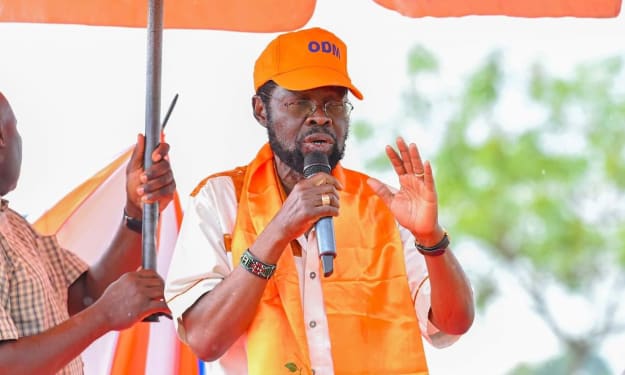
Anyang' Nyong'o: Age, Health, Education, Wife, Net Worth, Biography & More
Anyang’ Nyong’o has lived many lives. To some, he’s the sharp-minded professor who challenged the status quo in dusty university halls. To others, he’s the seasoned politician who’s steered through Kenya’s stormy political waters with quiet defiance.
By Marveline Merababout a year ago in The Swamp