politicians
Reviews of the politicians kissing babies and running governments around the world; applaud and criticize the decisions they make and their implications.
Pakistan Promotes Army Chief Asim Munir to Field Marshal: Why It Matters
Pakistan Promotes Army Chief Asim Munir to Field Marshal: Why It Matters In a move steeped in symbolism and history Pakistan has promoted its current Chief of Army Staff General Asim Munir to the rank of Field Marshal a title that holds immense military prestige yet has rarely been bestowed in the country’s history. This development is not merely ceremonial it echoes through the corridors of power the barracks of soldiers and the hearts of millions of Pakistanis who have lived through decades of political instability military dominance and the ever changing tides of national security.
By Adnan Rasheedabout a year ago in The Swamp
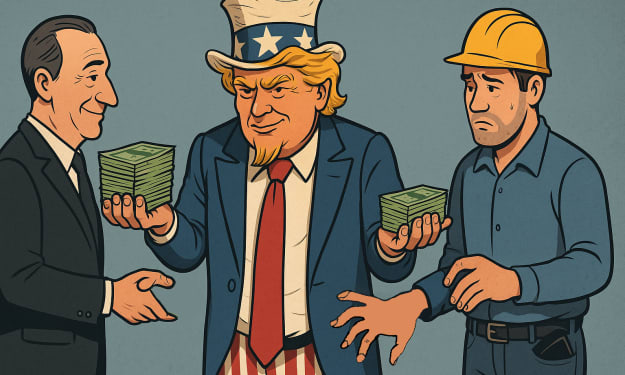
🇺🇸 U.S. Foreign Policy Under Trump: A Global Ripple Effect
U.S. Foreign Policy Under Trump: A Global Ripple Effect The return of Donald Trump to the U.S. presidency in 2025 has once again placed American foreign policy under the global spotlight, sparking significant shifts with wide-reaching consequences. Trump's approach to international relations, marked by nationalism, skepticism towards multilateral institutions, and a transactional mindset, has created waves that resonate far beyond American borders. These ripple effects are shaping global geopolitics, alliances, and international governance, with implications felt in global health, diplomacy, human rights, and security. The Retreat from Global Institutions One of the most defining features of Trump’s foreign policy has been the United States’ retreat from several key international organizations and agreements. This trend, initiated during his first presidency, has continued and intensified. Most notably, the U.S. officially withdrew from the World Health Organization (WHO) shortly after Trump's return, citing concerns over transparency and governance issues allegedly linked to China’s influence. The withdrawal has left a leadership void in global health governance. China, seizing the opportunity, pledged to contribute $500 million over five years to the WHO, becoming its largest donor. This financial commitment is part of a broader Chinese strategy to expand its global influence, positioning itself as a champion of multilateralism in health while the U.S. pursues a more isolationist stance. The U.S. absence in the WHO is particularly consequential amid ongoing concerns about pandemic preparedness and response, undermining global coordination at a critical time. Pandemic Preparedness Without the U.S. In 2025, the WHO adopted a landmark pandemic treaty aimed at enhancing international cooperation to prevent and respond to future global health crises. The treaty’s adoption was a rare moment of unity among most member states, but notably, the U.S. did not participate. This decision highlights Washington's growing skepticism towards multilateral commitments and raises serious questions about the effectiveness of global health initiatives without American engagement. The treaty aims to strengthen data sharing, ensure equitable access to vaccines and medical supplies, and establish rapid response mechanisms. Yet, without U.S. participation, the treaty risks losing critical resources, expertise, and diplomatic weight. This absence could embolden other countries to deprioritize global health collaboration, ultimately weakening the world’s collective ability to manage pandemics effectively. Shifts in Global Security and Alliances Trump’s "America First" approach has significantly impacted U.S. security alliances and global power dynamics. His administration’s skepticism toward NATO and traditional partnerships has strained relations with European allies, who now question America's reliability as a security partner. The focus has shifted towards bilateral deals and transactional relationships rather than long-term collective defense commitments. This recalibration has opened space for rival powers like China and Russia to deepen their strategic partnerships with countries disillusioned by U.S. policies. In Asia, China’s Belt and Road Initiative continues to expand, offering infrastructure investments and economic incentives that contrast sharply with Washington’s more conditional approach. In Eastern Europe and Central Asia, Russia capitalizes on the perceived U.S. disengagement to assert its influence through military and political means. Moreover, Trump's tough stance on immigration and trade has led to new tensions with neighboring countries, especially Mexico and Canada. While renegotiations of trade deals have taken place, the underlying protectionist and nationalist policies continue to challenge North American economic integration. Impact on Human Rights and Global Health Programs Another significant ripple effect of Trump’s foreign policy is its impact on global health and human rights initiatives. The administration’s rollback of international AIDS relief programs, particularly those addressing HIV/AIDS in Africa, has resulted in the closure of critical clinics and reduced funding for vulnerable populations. These policy shifts have emboldened far-right and anti-LGBTQ+ movements worldwide, contributing to a global rise in repression against marginalized communities. Countries in Africa and other regions have witnessed a resurgence of discriminatory laws and crackdowns on LGBTQ+ individuals, often justified by conservative values and bolstered by the decline in U.S.-led human rights advocacy. The weakening of U.S. leadership in these areas has also undermined decades of progress in fighting infectious diseases globally. With the U.S. redirecting resources towards domestic priorities and reducing foreign aid, international health organizations face growing funding gaps, limiting their ability to combat pandemics and other health crises. Economic Nationalism and Trade Wars Economic nationalism under Trump's administration has manifested in increased tariffs, renegotiation of trade agreements, and a general skepticism towards globalization. These policies have caused disruptions in global supply chains, increased costs for businesses and consumers, and heightened tensions with major trading partners. Trade conflicts with China remain particularly pronounced, with tariffs imposed on a wide range of goods fueling retaliatory measures. While some sectors in the U.S. have benefited from protectionist policies, others—such as agriculture and manufacturing—have suffered from reduced export opportunities and increased production costs. The unpredictable nature of U.S. trade policy under Trump has also deterred foreign investment and complicated multinational corporate strategies, as businesses struggle to adapt to shifting regulations and tariffs. These dynamics contribute to global economic uncertainty and volatility. Domestic Politics and International Perception Trump's foreign policy approach is deeply intertwined with his domestic political agenda. Emphasizing nationalism and sovereignty resonates with a significant portion of the American electorate but alienates many allies and international partners. The administration’s rhetoric often casts global cooperation as a threat to American interests, reinforcing isolationist tendencies. Internationally, this has damaged America's image as a global leader and reliable partner. Allies express frustration and uncertainty, while adversaries exploit divisions within the U.S. political landscape. The erosion of U.S. soft power diminishes its ability to influence global norms and outcomes through diplomacy. Conclusion The global ripple effects of U.S. foreign policy under Donald Trump are profound and multifaceted. From the retreat from international institutions like the WHO to the reshaping of alliances and the rollback of global health programs, the consequences are felt across continents and sectors. As the world adjusts to a more transactional and inward-looking United States, other powers are seizing the opportunity to assert themselves on the global stage. The long-term impact of these shifts remains uncertain, but what is clear is that Trump’s foreign policy has fundamentally altered the landscape of international relations in the 2020s, with reverberations likely to shape global politics for years to come.
By World politics about a year ago in The Swamp
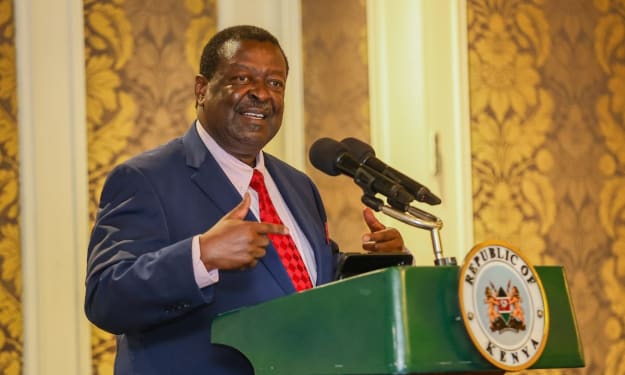
Musalia Mudavadi: Age, Net Worth, Education, Family, Daughter, Wife, Biography & More
Musalia Mudavadi is one of Kenya’s most seasoned and influential political figures. With a career spanning over three decades, he has held top positions in government, including serving as Vice President, Deputy Prime Minister, and currently as the Prime Cabinet Secretary. But beyond the headlines and political debates, who really is Musalia Mudavadi?
By Marveline Merababout a year ago in The Swamp
David Kiplagat: Education, Career, Party & More
David Kiplagat is a seasoned public servant and technocrat whose professional and political journey reflects a commitment to development and innovation. Representing Soy Constituency, Kiplagat has steadily risen through the ranks of academia, public service, and politics, underpinned by a solid educational background and years of experience in the ICT sector.
By Marveline Merababout a year ago in The Swamp
Trump’s 'White Refuge' Gamble: Inside Ramaphosa’s High-Stakes US Visit & the Afrikaner Exodus—Why Elon Musk’s Whispers Could Reshape Global Politics. AI-Generated.
Introduction: A Diplomatic Minefield South African President Cyril Ramaphosa’s arrival in Washington this week is no ordinary state visit. It’s a geopolitical chess match where the stakes include trade wars, apartheid legacies, and a surreal refugee crisis involving white Afrikaners—all while Elon Musk looms as Trump’s shadow advisor. With memories of Trump’s humiliation of Ukraine’s Zelensky fresh in mind, Ramaphosa walks into a White House primed for confrontation. But this time, the drama is laced with irony: Trump is resettling white South Africans as “refugees” while slashing aid to Black-majority nations. Here’s the untold story behind the headlines.
By David Snamabout a year ago in The Swamp
Scott Adams: Dilbert Creator Battle with Prostate Cancer and Public Controversies
Scott Adams, the creator of the Dilbert comic strip, has become as well-known for his sharp social commentary as he is for the business-nerd character he brought to life. Dilbert’s cutting humor about office culture, corporate bureaucracy, and human behavior made it a global phenomenon. Yet behind the humor, Adams has faced personal challenges, including a prostate cancer diagnosis, and ongoing public controversies surrounding his political views. In this article, we’ll take a closer look at Scott Adams' rise to fame, his recent health struggles, and the controversies that continue to shape his public persona.
By Aneeq Zaheerabout a year ago in The Swamp
How China Became a Superpower
China's emergence as a global superpower is one of the most significant transformations in modern history. Over the past four decades, the nation has evolved from a largely agrarian, impoverished country into the world’s second-largest economy and a central player in global geopolitics. This transformation has been driven by a unique blend of economic reform, strategic state planning, political stability, and global engagement. Historical Background In 1949, the People’s Republic of China was established under the leadership of the Communist Party, ending decades of civil war and foreign occupation. However, the initial decades of communist rule were marked by economic stagnation and political upheaval, such as the Great Leap Forward and the Cultural Revolution. These movements severely disrupted China’s development, resulting in widespread poverty and inefficiency. The turning point came in 1978, when Deng Xiaoping initiated a series of reforms that would lay the foundation for China’s rise. By introducing market-oriented policies and opening up to foreign investment, China began to shift from a planned economy to a "socialist market economy." This hybrid model retained state control in key sectors while embracing capitalism in others. Economic Reform and Growth China's economic growth since the 1980s has been nothing short of phenomenal. Through a strategy known as “Reform and Opening-Up,” the country encouraged private enterprise, created Special Economic Zones (SEZs), and welcomed foreign investment. These changes unleashed massive productivity, moved millions out of poverty, and turned China into the “world’s factory.” Between 1980 and 2020, China's GDP grew at an average annual rate of nearly 10%. It became the world’s largest exporter and a manufacturing powerhouse, producing everything from electronics to textiles. Infrastructure development also played a key role, with massive investments in roads, railways, ports, and urban development. Technological Advancement In recent years, China has shifted focus from low-cost manufacturing to high-tech innovation. Government initiatives like "Made in China 2025" aim to dominate industries such as robotics, AI, biotechnology, and green energy. Chinese tech giants like Huawei, Tencent, and Alibaba have become global leaders, and the country has made major strides in areas like 5G, electric vehicles, and quantum computing. China is also investing heavily in space exploration, with the Chang’e lunar missions and a growing presence in satellite and space station technologies. These advances not only reflect economic power but also signify strategic influence on the global stage. Military Modernization Another critical aspect of China's superpower status is its military transformation. The People’s Liberation Army (PLA) has undergone extensive modernization, focusing on advanced weaponry, cyber capabilities, and maritime strength. With the world's largest standing army and the second-largest defense budget, China is increasingly asserting its influence in the South China Sea, Taiwan Strait, and beyond. The Belt and Road Initiative (BRI), though primarily economic, also serves strategic purposes by expanding China's influence across Asia, Africa, and Europe through infrastructure projects and investments. Diplomatic and Political Influence China has strategically positioned itself as a leader in the Global South, offering loans, aid, and infrastructure to developing nations. Through platforms like the Shanghai Cooperation Organization (SCO) and the BRICS alliance, it promotes a multipolar world order that challenges Western dominance. At the United Nations and other international institutions, China plays an increasingly assertive role, advocating for sovereignty, non-interference, and reforms in global governance structures. Domestic Stability and Governance Unlike many other emerging powers, China has maintained internal political stability through centralized governance by the Communist Party. The government’s long-term planning—through five-year plans and strategic economic directives—has ensured consistent development goals and policy continuity. While criticisms exist over human rights and political freedoms, the Chinese model has proved effective in achieving rapid economic and technological progress under a controlled political environment. Challenges Ahead Despite its rise, China faces significant challenges: a shrinking workforce due to an aging population, environmental degradation, debt levels, and geopolitical tensions with the U.S. and its allies. Questions also remain about the sustainability of its political model and how it will handle domestic pressures for reform. Conclusion China's journey to becoming a superpower is the result of strategic reforms, economic planning, and a vision for national rejuvenation. Its rise is reshaping the global balance of power and forcing a rethinking of international relations. Whether it can maintain this trajectory will depend on how it navigates both internal challenges and the complex dynamics of the 21st-century world.
By Shah saab ITabout a year ago in The Swamp
"Diplomatic Turbulence: Qatar Gifts Jet to Trump Amid Global Tensions"
In a move that has shocked Washington and raised fresh questions about international influence in U.S. politics, Qatar has reportedly gifted a private jet to former President Donald J. Trump. While details surrounding the aircraft’s value, origin, and intended use remain sparse, the gesture has already sparked bipartisan concern over what it might signify for American foreign policy — past, present, and future. The jet, said to be a state-of-the-art long-range aircraft, allegedly came as a token of appreciation for Trump’s role in fostering strong U.S.-Qatar relations during his time in office. Critics, however, are calling it an audacious example of "jet diplomacy" — a term coined to describe high-value gifts or privileges offered by foreign governments to powerful individuals in exchange for favorable treatment or long-term leverage. A Gift or a Political Statement? Qatar, a small but wealthy Gulf state with outsized geopolitical influence, has long sought to maintain close ties with American administrations. Under Trump, relations were notably strong despite initial tensions during the 2017 Gulf crisis, when Saudi Arabia, the UAE, and others severed ties with Qatar. The Trump administration’s eventual support for a resolution — and its refusal to condemn Qatar outright — was seen by some as a diplomatic win for Doha. Fast forward to 2025, and this new gesture is prompting speculation about what Qatar hopes to gain. With Trump actively campaigning for a return to the White House and dominating Republican primary polls, the timing of the gift could be interpreted as a strategic bet on the future. “This isn’t just a lavish thank-you note,” said Dr. Karen Holt, a professor of international relations at Georgetown University. “It’s a calculated move designed to stay in the good graces of someone who could potentially wield power again.” Legal and Ethical Implications The legality of the gift is already under scrutiny. While private citizens — even former presidents — are not bound by the same gift restrictions as sitting officials, the sheer scale and political timing of the gesture have ethics watchdogs sounding alarms. “There is no universe in which this gift is simply symbolic,” said Jacob Klein, director of the nonpartisan Center for Political Integrity. “This is a multimillion-dollar asset being handed to a political figure with clear aspirations to regain power. The American public deserves to know what’s behind it.” Congressional Democrats are already calling for an investigation into whether the gift violates the Foreign Agents Registration Act (FARA) or any other statutes governing foreign influence. Meanwhile, several Republicans have remained quiet, wary of alienating Trump's voter base ahead of a contentious primary season. Qatar’s Diplomatic Playbook Qatar has a history of strategic generosity. From investments in Western real estate to hosting international events like the 2022 FIFA World Cup, the Gulf state has used soft power to expand its global reach. This jet, experts say, may be part of a broader effort to entrench relationships with influential figures in the West. In recent years, Qatar has also positioned itself as a diplomatic mediator, hosting talks between the U.S. and the Taliban and playing a role in hostage negotiations in Gaza. Maintaining access to decision-makers in Washington — whether current or prospective — is central to its diplomatic calculus. Trump’s Response and the Political Fallout As of this writing, Trump’s team has neither confirmed nor denied receipt of the aircraft, offering only a vague statement: “President Trump has always appreciated the strong and respectful relationship between the United States and Qatar.” That noncommittal tone has not stopped his critics from seizing on the story. President Joe Biden’s re-election campaign quickly released a statement denouncing the gift as “a flagrant symbol of foreign interference and elite privilege,” accusing Trump of putting personal gain above American interests. Still, among Trump’s base, the controversy appears to have little impact. If anything, it reinforces his outsider status — someone powerful enough to attract attention from world leaders, and controversial enough to provoke media outrage. What Comes Next? The Federal Election Commission (FEC) and the Department of Justice could become involved if evidence emerges that the jet was offered in exchange for political favors or if it’s being used to support Trump’s 2024 campaign. Foreign gifts used to advance political activity would raise serious legal red flags. Meanwhile, Qatar has remained tight-lipped, issuing only a short statement through its U.S. embassy: “The State of Qatar values its longstanding friendship with the United States and has always engaged in diplomacy through mutual respect and cooperation.” Whether the gesture was legal, ethical, or politically wise remains an open question. What’s certain is that this high-flying gift has reignited debates about global influence, foreign money, and the thin line between diplomacy and favoritism. As Trump’s political ambitions continue to dominate the headlines, and as Qatar navigates its role on the world stage, this unusual gift has become more than a diplomatic curiosity — it’s a symbol of the complex, often murky world of international power politics.
By Kaleem Ullahabout a year ago in The Swamp