feature
Swamp featured post, a Swamp Media favorite.
The Buyout Trap. AI-Generated.
Why Cashing Out a Family's Safety Net Solves the Wrong Problem — and What to Do Instead The Family Support Buyout is seductive precisely because it's built on a true observation: government spends enormous, fragmented sums on poor families while those families remain cash-poor and administratively exhausted. That diagnosis is correct. The prescribed cure — discount the package, hand the family cash, and let them walk away from the underlying programs — is where the argument quietly stops being about efficiency and starts creating a new set of problems, several of which are worse than the ones it claims to solve. A reform can be right about the disease and wrong about the treatment. This is that case.
By Peter Thwing - Host of the FST Podcastabout a month ago in The Swamp
The Case Against Converting Support Into Unconditional Cash. AI-Generated.
The strongest case for reforming the current system begins with an accurate diagnosis of its failures and ends with a refusal to replace those failures with a more durable form of dependence. The present architecture spends large sums around low-income families while leaving many of those families cash-poor, time-constrained, and trapped by benefit cliffs. That diagnosis is correct. The proposed remedy—converting a discounted share of existing ordinary non-medical expenditures into direct, largely unconditional family payments—solves the immediate administrative and cash-margin problems while creating stronger long-term incentives against work, production, and eventual exit from public support. A system that already struggles to maintain a sufficient productive base cannot afford a reform whose primary effect is to make non-work more stable and more attractive for the households that already generate the highest public costs.
By Peter Thwing - Host of the FST Podcastabout a month ago in The Swamp
The Case For Direct Family Payments. AI-Generated.
The strongest fiscal and family policy available to governments that already spend large sums supporting households with children is to convert a discounted share of that spending into direct, controllable cash. When the state is already prepared to expend tens of thousands of dollars per year on a given family through child-care subsidies, nutrition programs, housing assistance, refundable credits, disability-related caregiving authorizations, and the administrative machinery that operates them, offering the family sixty to seventy-five percent of that total as unrestricted income while retaining the remainder as taxpayer savings produces three simultaneous results: lower overall public expenditure, greater household autonomy, and a reduction in the bureaucratic overhead required to police multiple restricted channels. The arrangement is especially coherent for households that have already demonstrated limited earning capacity and high need—families with young children, multiple children, or children whose care demands exceed ordinary parental obligations.
By Peter Thwing - Host of the FST Podcastabout a month ago in The Swamp
Stop Spending More to Keep Families Poor. AI-Generated.
American social policy contains a contradiction that becomes hard to defend once the full ledger is placed on the table. Government can spend tens of thousands of dollars a year supporting a low-income family through child-care subsidies, food programs, housing assistance, cash aid, refundable tax credits, disability-related caregiving authorizations, and the case-management systems that administer all of it — while the family itself continues living with almost no financial margin. The household is officially poor, dependent on half a dozen agencies, unable to save, and one unexpected bill away from crisis. Meanwhile taxpayers may already be spending enough on that family's behalf to give it a substantially higher standard of living, if even a discounted share of that spending were handed to the family directly.
By Peter Thwing - Host of the FST Podcastabout a month ago in The Swamp
Stop Spending More to Keep Families Poor. AI-Generated.
American social policy contains a contradiction that becomes difficult to defend once the full ledger is placed on the table. Government can spend tens of thousands of dollars each year supporting a low-income family through child-care subsidies, food programs, housing subsidies, cash assistance, refundable tax credits, case-management systems, and payments to outside caregivers, while the family itself continues living with almost no financial margin. The family is officially poor, frequently stressed, dependent upon multiple agencies, unable to accumulate meaningful savings, and vulnerable to every unexpected bill. Meanwhile, taxpayers may already be spending enough on that family's behalf to provide the household with a substantially higher standard of living if even a discounted portion of those expenditures were paid directly to the family. The problem is therefore larger than inadequate assistance. It is an expensive system that can spend enormous sums around a family while leaving the family itself poor .
By Peter Thwing - Host of the FST Podcastabout a month ago in The Swamp
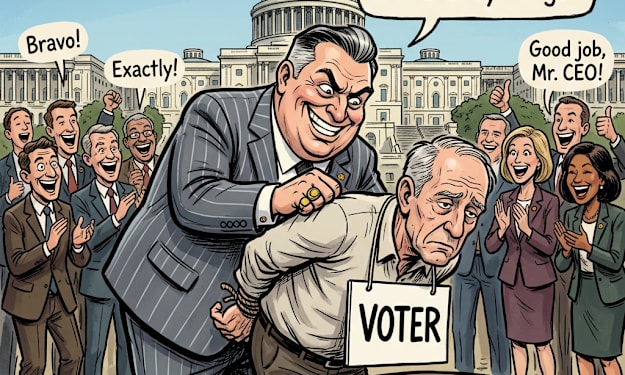
How Leadership Is Bi-Partisanly Screwing You
A problem that grew out of control during the Obama years, continued during Trump's years, and got worse during the Biden years still exists for millions of Americans. And that accounts for the elderly, the sick, the disabled, or those fighting a disease. That problem is the forever sky-high price of medications.
By Jason Morton2 months ago in The Swamp
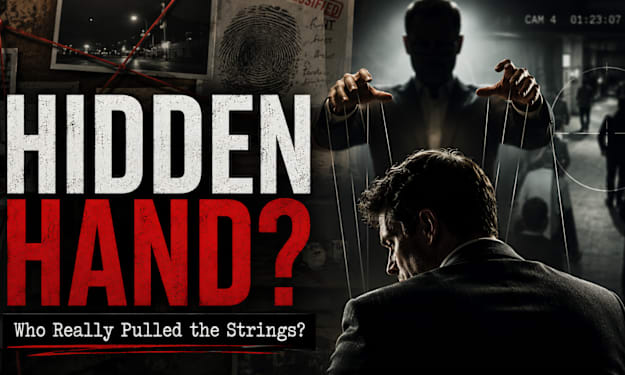
The Invisible Hand: How Covert Influence Operates Behind the Public Record
Covert Influence, Visible Perpetrators, and Hidden Causal Responsibility: Introduction: In analyzing high-profile acts such as assassinations, it is crucial to distinguish between what actually happened in reality and what can be publicly demonstrated or proven . Events are independent of evidence; a physical act occurs regardless of whether it is documented, understood, or acknowledged. Public validation is only one pathway to knowledge, not the ultimate source of truth.
By Peter Thwing - Host of the FST Podcast3 months ago in The Swamp
A Republic at Two Hundred and Fifty: What the Declaration Still Asks of Us
Anniversaries invite celebration, but they also invite honesty. As the United States turns two hundred and fifty, the real question is not how loudly we mark the occasion, but how seriously we take the ideas that started it all. Fireworks and speeches can remind us of where we began, but they cannot tell us whether we have remained faithful to that beginning.
By Lawrence Lease3 months ago in The Swamp