
You are but a lotus flower preparing to bloom.
The greatest beauty emerges from the deepest mud - lessons in trauma healing through the symbolism of the lotus.



Think of a sacred flower symbol, and the lotus inevitably comes to mind. Our very own energy centres, also called chakras - those invisible-to-the-naked-eye vortexes said to connect our physical body with our subtle bodies and channel our life force, are described in many esoteric traditions as resembling lotus flowers to those with clairvoyant or extrasensory perception. The higher the chakra, the more petals the flower is said to have.
The natural growth of the lotus mirrors human spiritual development. Just as a lotus begins its journey in the darkness of the mud, rises through the water, and eventually blooms in the sunlight, human consciousness is said to ascend through the chakras towards spiritual awakening. When a chakra is blocked, it is often described as a closed bud; when it is healthy and balanced, it is envisioned as an open, blooming flower.
For those who hold this perspective, this is not merely a metaphor, but quite literally how these energetic structures are believed to appear on the subtle planes of existence. I personally haven’t developed clairvoyant vision myself to see this directly, but many experts in this field (if that is the right way to describe it - term that scientists would likely challenge 🤭) describe perceiving similar patterns.
However, this esoteric connection, while a powerful image to hold in mind, is not the reason I decided to write this article. Instead, I want to explore the metaphorical and psychological dimensions of lotus symbolism in the context of trauma healing.
Human minds naturally gravitate towards duality: black and white, good and bad, right and wrong - you get the idea. And while we intellectually understand that reality is rarely so divided, that most experiences exist somewhere along a spectrum, and that both the individual psyche and the collective unconscious contain a rich interplay of darkness and light, we often struggle to embody this understanding when faced with pain.
If there is one thing that can stall the progress of one’s healing journey, it is the heavy weight of shame and the accompanying feeling like one is damaged beyond repair. It is a narrative that has, unfortunately, long been reinforced by society. Mental health struggles, which, in my view, are very often rooted in trauma responses - have been highly stigmatised until relatively recently and continue to be pathologised to this day. As if the soul feeling pain as a result of experiencing abuse is the problem, rather than the abuse itself. We truly live in an upside-down world in this respect.
As a result, we often perceive trauma as an obstacle to becoming who we truly are and embodying our full potential, and in many ways this is true. Of course it is - if one is busy surviving, they won’t be simultaneously thriving. So it is important not to invalidate and not to underestimate the consequences of traumatic experiences on human psyche - they fragment it, they create dysfunctional (in the long run) adaptations and keep us small and disconnected from our True Self.
But there is another, more empowering side to the story, and this is where the lotus offers such a profound symbol, and I will explore the reasons why below.

The central idea of this essay is that the beautiful lotus flower does not bloom despite the mud, but because of it. The mud provides the conditions and nutrients that make the flower’s blossoming possible, and while hidden beneath the water, it is an integral part of the beauty that eventually unfolds above the surface, not to mention that the connection through the stem always remains intact, continuing to anchor the flower to its source.
It is also worth noting that water is an essential part of this picture. Symbolically, water represents emotions, particularly the subconscious depths of the psyche. Yet many spiritual teachings have tended to overlook this aspect of human experience, sometimes even dismissing or demonising it in favour of “good vibes only” philosophies. But without acknowledging, integrating, and healing our emotional body , genuine spiritual blossoming cannot occur.
Metaphorically speaking, emotional avoidance and suppression would be the equivalent of a lotus flower severed from its stem and left floating on the surface of the water. It may appear intact for a while, but without its connection to the depths below, to the emotional waters and the nourishing mud from which it grows - it cannot survive for long.
As you may be already thinking , this is especially relevant in the context of trauma healing. Dissociation, emotional numbing, and suppression can be remarkably adaptive in the short term. They help us survive experiences that might otherwise overwhelm us. But what serves as protection during trauma often becomes an obstacle afterwards. If these coping mechanisms remain in place long after the danger has passed, they gradually distance us from ourselves, our emotions, our body and ultimately from life itself.
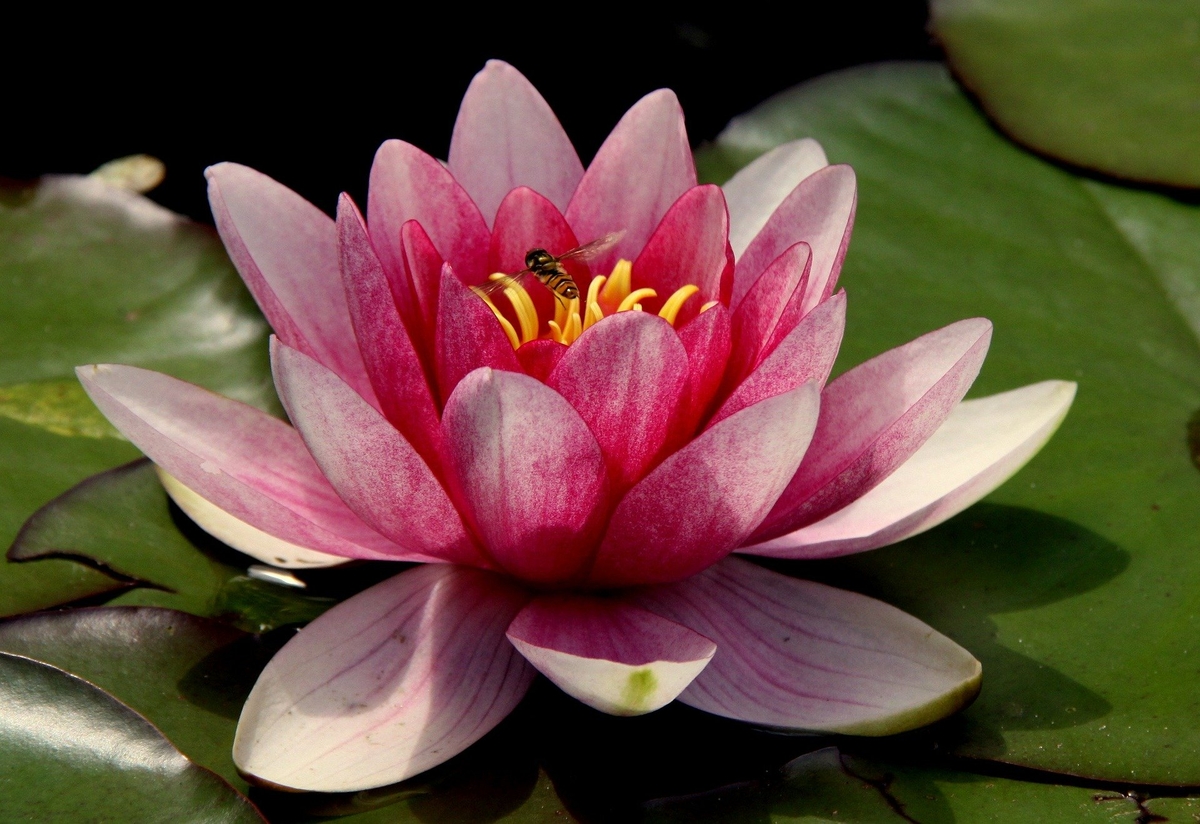
Ultimately, the journey of trauma healing is not about severing ourselves from the heavy, murky parts of our history, nor is it about rushing to achieve a permanent state of pristine, unblemished blossom. Looking at the lotus flower in its natural habitat, it becomes clear that a healing journey is very much about honouring the whole ecosystem of our being. By courageously dipping beneath the surface, acknowledging the emotional waters we have suppressed and reclaiming the parts of ourselves that froze in order to survive - we begin to restore the flow of life through our stem. We realize that the mud of our past does not make us dirty and that there is nothing to be ashamed of, quite the opposite- our resilience deserves to be acknowledged and celebrated.
True spiritual and psychological awakening lies in this profound integration: recognising that we are simultaneously the bloom, the water, and the deeply rooted strength that grew from the dark. Every part has its place, every part belongs, and every part is beautiful in its own way.
About the Creator
Eva Smitte
Writer, model, mental health advocate. Instagram @eva_smitte
Enjoyed the story? Support the Creator.
Subscribe for free to receive all their stories in your feed.
Comments
There are no comments for this story
Be the first to respond and start the conversation.