
Why Most People Feel Lost in Their 20s
Why feeling directionless in your 20s is more normal than you think

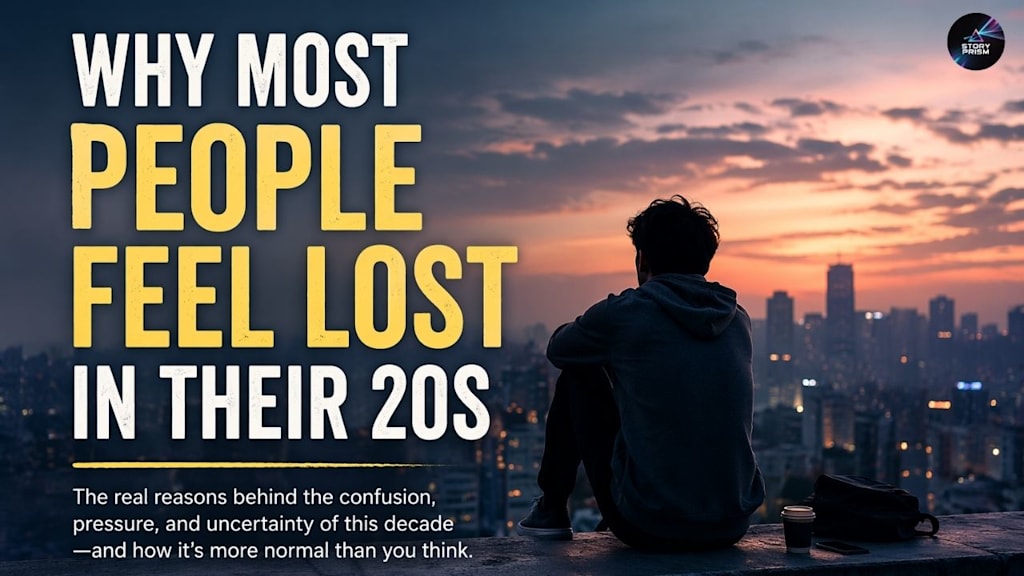
Feeling lost in your 20s is more common than people admit. On the surface, this decade is often painted as the “best years of your life”—a time of freedom, discovery, and endless possibilities. But for many, it feels more like confusion, pressure, and uncertainty than excitement. You’re no longer a teenager, but you’re not fully settled into adulthood either. You exist in a strange in-between space where expectations are high, but clarity is low.
One of the biggest reasons people feel lost in their 20s is because there is no clear roadmap anymore. School provides structure: you know what to study, when exams happen, and what success looks like. But once you enter adulthood, that structure disappears. Suddenly, you’re expected to figure out your career, finances, relationships, and identity all at once. No one hands you instructions for life, and that lack of direction can feel overwhelming.
Another major factor is comparison. Social media makes it seem like everyone else is doing better—getting dream jobs, traveling the world, starting businesses, or building perfect relationships. But what you see online is only a highlight reel, not reality. When you constantly compare your behind-the-scenes struggles to someone else’s curated success, it’s easy to feel like you’re falling behind, even when you’re not.
There’s also the pressure of expectations from society and family. Many people grow up hearing timelines for success: graduate by a certain age, get a stable job, earn a good income, settle down, and build a life. But real life rarely follows that schedule. When your reality doesn’t match those expectations, it creates a quiet sense of failure—even if you’re actually doing fine. This mismatch between expectation and reality is one of the biggest sources of feeling lost.
Another hidden truth is that your identity is still forming in your 20s. You are constantly changing—your interests, values, goals, and even your personality evolve. What you wanted at 18 might feel completely different at 24 or 27. This evolution can be confusing because it feels like instability, but in reality, it’s growth. You are not supposed to have everything figured out yet, even though society often acts like you should.
Financial pressure also plays a big role. Many people in their 20s experience their first real exposure to bills, rent, debt, and long-term financial responsibility. Money becomes a constant background stress, especially when income is unstable or entry-level jobs don’t feel enough. This pressure can make life feel heavier than expected, adding to the sense of being stuck or directionless.
Another reason people feel lost is because failure feels more personal in adulthood. In school, mistakes are part of learning. But in your 20s, failure often feels like judgment—like it says something about your worth or potential. A rejected job application, a failed relationship, or an unfinished goal can feel like setbacks that define you, even though they are actually just part of the process.
Emotional isolation also contributes to this feeling. As life gets busier, friendships change. People move, focus on careers, or get caught up in their own lives. Even when you’re surrounded by people, you might still feel like no one truly understands what you’re going through. That quiet loneliness can amplify the sense of being lost, even if everything looks normal on the outside.
But being lost in your 20s is not a sign of failure—it’s often a sign of transition. This is the decade where you experiment, make mistakes, change directions, and slowly learn what fits and what doesn’t. Feeling unsure is part of the process of building a life that is actually your own, not one shaped by expectations or pressure.
Over time, most people realize that clarity doesn’t arrive all at once. It comes in small moments—through experience, trial and error, and time. You start understanding yourself better, not because everything becomes easy, but because you’ve lived through enough uncertainty to recognize patterns and make more intentional choices.
The truth is, nobody really has their 20s figured out while they’re in them. Everyone is improvising, even those who look confident from the outside. Feeling lost is not unusual—it’s almost universal. And eventually, what feels like confusion now often becomes the foundation for direction later.
In the end, your 20s are less about having answers and more about asking better questions. And even if it doesn’t feel like it now, being lost is often just the first step toward finding your way.
About the Creator
Enjoyed the story? Support the Creator.
Subscribe for free to receive all their stories in your feed.
Comments
There are no comments for this story
Be the first to respond and start the conversation.